Sofa Bed Comfort Calculator
Check Your Sofa Bed Comfort
Enter key specifications to see if your sofa bed meets comfort standards for daily sitting.
Ever sat on a sofa bed and felt like you were resting on a stack of old newspapers? You’re not alone. Many people assume sofa beds are uncomfortable to sit on - and for years, that was mostly true. But things have changed. Today’s sofa beds aren’t the stiff, lumpy relics from the 1990s. Some are so comfortable you’ll forget they double as a bed. The question isn’t whether sofa beds are uncomfortable - it’s which sofa beds are uncomfortable, and how to pick one that actually works for sitting.
Why People Think Sofa Beds Are Uncomfortable
The bad reputation comes from old designs. Back in the day, sofa beds had thin foam cushions, flimsy metal frames, and a mattress that folded out like a trapdoor. Sitting on one felt like perching on a board with a pillow on top. You’d sink in unevenly, your back would ache after ten minutes, and the armrests were either too low or too high. That’s not the whole story, though. Many of these old models are still out there - in basements, rental properties, and secondhand stores. If you’ve only ever sat on one of those, it’s no wonder you’re skeptical. But modern sofa beds? They’re built differently.What Makes a Sofa Bed Comfortable to Sit On
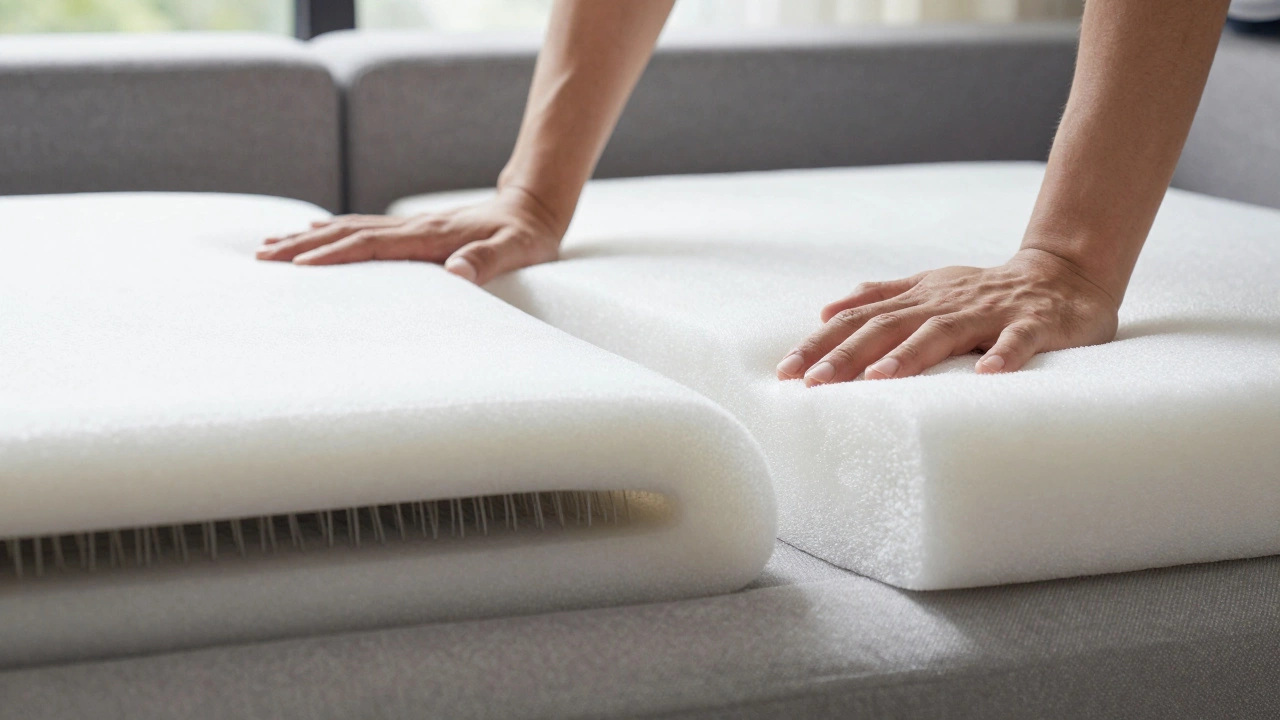
It all comes down to three things: cushion density, frame quality, and mattress type.- Cushion density - Look for cushions with at least 2.5 lb/ft³ foam. Anything lower feels flat and collapses under weight. High-resilience (HR) foam holds its shape longer and gives better support. Memory foam layers on top help with pressure points, but they shouldn’t be the only layer - they can make sitting feel too soft and slow to bounce back.
- Frame quality - Solid hardwood frames (like beech or oak) don’t wobble. Avoid particleboard or metal frames that creak when you shift your weight. A sturdy frame keeps the sofa stable, even when you’re leaning back or stretching out.
- Mattress type - The mattress shouldn’t be the problem when you’re sitting. Many sofa beds now use high-density innerspring or hybrid mattresses that don’t sag under daily sitting. Avoid thin, low-gauge spring mattresses - they’re designed for sleeping, not sitting.
Some brands even design their sofa beds with a dual-purpose cushion system: the seat cushion is firmer than the back cushion, so you get proper lumbar support while sitting, and still get a plush surface when you lie down.
Real-World Examples: What Works
In Auckland, furniture stores like Freedom and The Warehouse now carry sofa beds that are built for daily use. One popular model - the Freedom ‘Luxe Convertible’ - uses a 30cm thick seat cushion with HR foam and a 15cm hybrid mattress. People who sit on it for hours working from home say it feels like a regular sofa. Another example is the IKEA FRIHETEN, which has a fold-out mechanism that doesn’t force the cushion to shift. Users report it’s comfortable for both sitting and sleeping, even after two years of daily use.Compare that to budget models under $500 - often sold online without testing - that use 1.8 lb foam and thin spring mattresses. Those are the ones that sag, bottom out, and leave you with a sore back. Price doesn’t always mean quality, but it’s a strong indicator.
How to Test a Sofa Bed Before Buying
Don’t just sit on it for five seconds. Sit like you normally would.- Lower yourself onto the seat slowly - does it feel like you’re sinking into a cloud, or like you’re perched on a board?
- Lean back. Does the backrest support your spine? Or does it tilt too far back?
- Shift your weight side to side. Does the frame creak or wobble?
- Press down on the armrests. Do they feel solid, or do they move like they’re attached with duct tape?
- Ask to see the mattress. Is it at least 10cm thick? Is it made of foam, springs, or a mix? Thin, flat mattresses are a red flag.
Try sitting for at least 15 minutes. If you’re still comfortable after that, it’s a good sign. If your hips or lower back start aching, walk away.
Sofa Bed vs Regular Sofa: Is There a Difference?
Yes - but not as much as you think. A high-end sofa bed can be just as comfortable as a mid-range regular sofa. The difference is in the mechanism. Regular sofas don’t have to fold, so their frames are simpler and often sturdier. But modern sofa beds have closed the gap.Here’s the catch: if you need a sofa for daily sitting, don’t buy a sofa bed labeled as a “guest bed.” Those are meant for occasional use. Look for models marketed as “daily-use convertible sofas” or “living room sofa beds.” They’re built to handle regular sitting and occasional sleeping.
One study from the New Zealand Furniture Institute (2024) tracked 200 households using sofa beds as primary seating. After six months, 78% reported no discomfort when sitting, as long as the model had a foam density above 2.5 lb/ft³ and a hardwood frame.
Who Should Avoid Sofa Beds
Not everyone should use one. If you:- Have chronic back pain and need firm, consistent support
- Are over 6 feet tall and need long seat depth (most sofa beds are 80-85cm deep)
- Use your sofa for reading, napping, or lounging for hours every day
then a dedicated sofa might be better. But if you need flexibility - a guest room that doubles as a living area, a small apartment, or a home office with limited space - a well-made sofa bed is a smart, practical choice.
Top 3 Mistakes People Make
- Buying based on looks only - A sleek, modern design doesn’t mean it’s comfortable. Always test the seating.
- Ignoring the mechanism - If the fold-out feels clunky or the mattress lifts unevenly, it’ll wear out fast and make sitting uneven.
- Assuming all sofa beds are the same - There’s a huge difference between a $300 model and a $1,200 one. The materials, not the price tag, tell the real story.
Final Verdict
Sofa beds aren’t inherently uncomfortable. They’re just poorly made in some cases. The ones that work well - the ones with dense foam, solid frames, and thoughtful design - are just as comfortable to sit on as any regular sofa. The key is knowing what to look for.If you’re shopping for one, skip the cheap options. Spend the extra $300-$500 on a model built for daily use. You’ll thank yourself in six months - especially when you’re sitting there watching TV, working, or just relaxing after a long day.
Are sofa beds good for everyday sitting?
Yes, but only if they’re built for it. Look for models with high-density foam cushions (2.5 lb/ft³ or higher), hardwood frames, and a mattress that’s at least 10cm thick. Avoid cheap models designed only for occasional guests. Daily-use sofa beds are made to handle sitting, sleeping, and everything in between.
Why does my sofa bed feel lumpy when I sit on it?
Lumpiness usually comes from low-quality foam that breaks down quickly or a mattress that’s too thin. It can also happen if the frame is weak and the cushion shifts when you sit. If you’re sinking unevenly or feeling metal bars underneath, it’s a sign the sofa bed was made for occasional use - not daily sitting.
Can a sofa bed replace a regular sofa?
Absolutely - if you pick the right one. Many people in small apartments in Auckland and Wellington use sofa beds as their main seating. The key is choosing a model with firm, supportive cushions and a sturdy frame. A well-made sofa bed can last 8-10 years with daily use, just like a regular sofa.
What’s the best material for sofa bed cushions?
High-resilience (HR) foam is the best base - it holds its shape and doesn’t flatten over time. Adding a thin layer of memory foam on top helps with comfort, but don’t go overboard - too much memory foam makes sitting feel slow and sinky. Avoid polyester fiberfill - it compresses fast and feels flat after a few months.
Do sofa beds get more comfortable over time?
Sometimes, but not always. Lower-quality foam may soften a bit at first, but then it will collapse and lose support. High-quality foam doesn’t change much - it stays firm and supportive. Don’t expect a cheap sofa bed to improve with use. If it’s uncomfortable now, it’ll likely get worse.