Vinyl Wrap Compatibility Checker
Check if Your Furniture is Suitable for Vinyl Wrap
Answer a few questions about your furniture to see if vinyl wrap is a good option for your project.
You’ve got an old wooden storage cabinet, dresser, or shelf that’s seen better days. The finish is scratched, the color is dated, and replacing it feels like a waste of money. But you don’t want to paint it-too messy, too permanent. So you ask: Can you put vinyl wrap over wood? The short answer is yes. But not all wood surfaces are created equal, and skipping the right prep work can turn your DIY project into a peel-and-stick disaster.
Why Vinyl Wrap Works on Wood
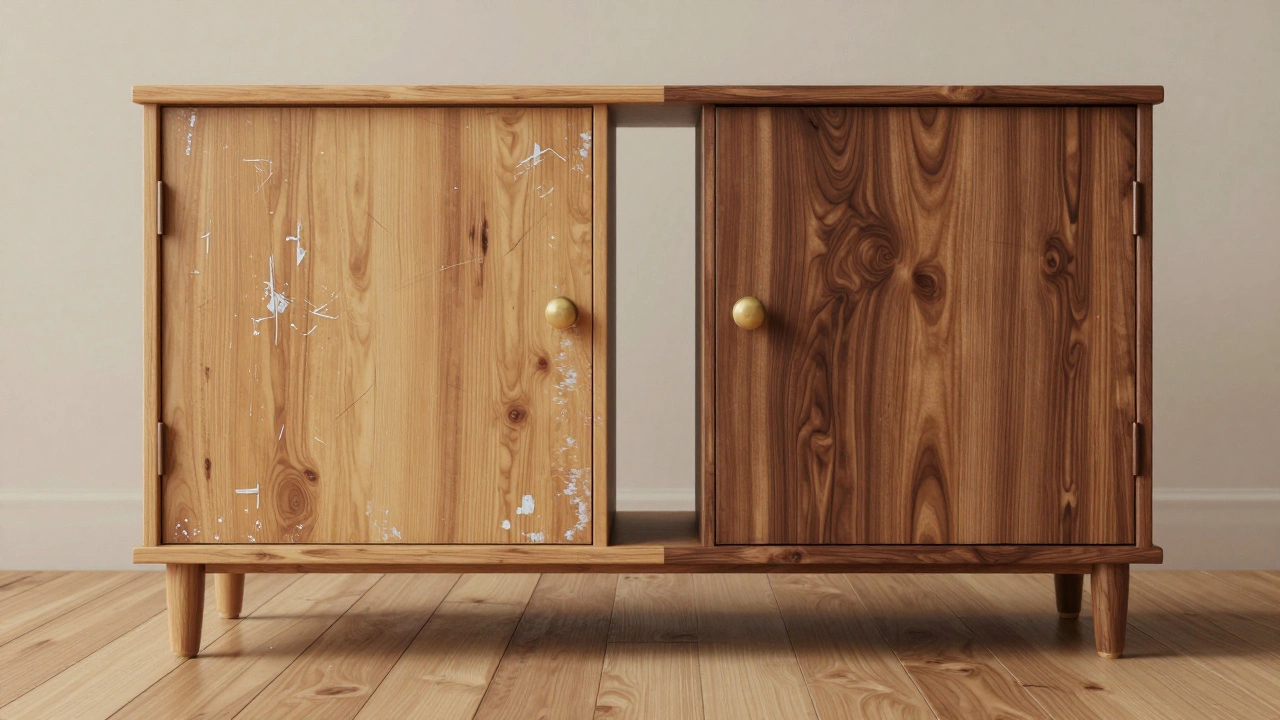
Vinyl wrap, also known as adhesive film or self-adhesive vinyl, is designed to stick to smooth, non-porous surfaces. Wood, especially finished wood, fits that description-if you treat it right. Unlike paint, vinyl wrap doesn’t require sanding down to bare wood. It doesn’t emit fumes. And if you mess up, you can peel it off without damaging the original surface. That’s why it’s become a go-to for renters, budget renovators, and anyone who wants to refresh storage furniture without buying new.Modern vinyl wraps come in hundreds of colors and textures: matte black, oak grain, brushed metal, even marble. You can turn a cheap particleboard dresser into something that looks like solid walnut for under $50. The key is matching the wood’s surface condition to the wrap’s requirements.
What Kind of Wood Works Best?
Not all wood is ready for vinyl wrap. Here’s what you need to look for:- Smooth, sealed surfaces - Lacquered, varnished, or painted wood is ideal. These finishes create a barrier that prevents the adhesive from soaking in.
- Flat panels - Drawer fronts, cabinet doors, and flat shelves are easiest. Curved edges or deep carvings make wrapping harder.
- Stable wood - Dry, solid wood without warping or swelling. Wet or damp wood will cause the wrap to bubble or lift over time.
Avoid wrapping:
- Raw, unfinished wood - it’s too porous and will absorb adhesive, leading to poor adhesion.
- Wood with deep scratches, gouges, or loose veneer - the wrap will follow every imperfection.
- Wood in high-moisture areas like bathrooms or kitchens unless you use marine-grade vinyl and seal the edges.
Step-by-Step: How to Wrap Wood Furniture
If your wood surface passes the test, here’s how to do it right:- Remove hardware - Take off handles, knobs, and hinges. Clean them separately. You’ll reattach them later.
- Clean the surface - Wipe down the wood with isopropyl alcohol (70% or higher). This removes dust, grease, and wax residue. Let it dry completely.
- Light sanding (optional) - If the surface feels glossy or slick, use 220-grit sandpaper to create a slight texture. Wipe away dust with a tack cloth.
- Measure and cut - Lay the vinyl wrap flat and measure each panel. Cut it 1-2 inches larger than needed. You can trim excess after applying.
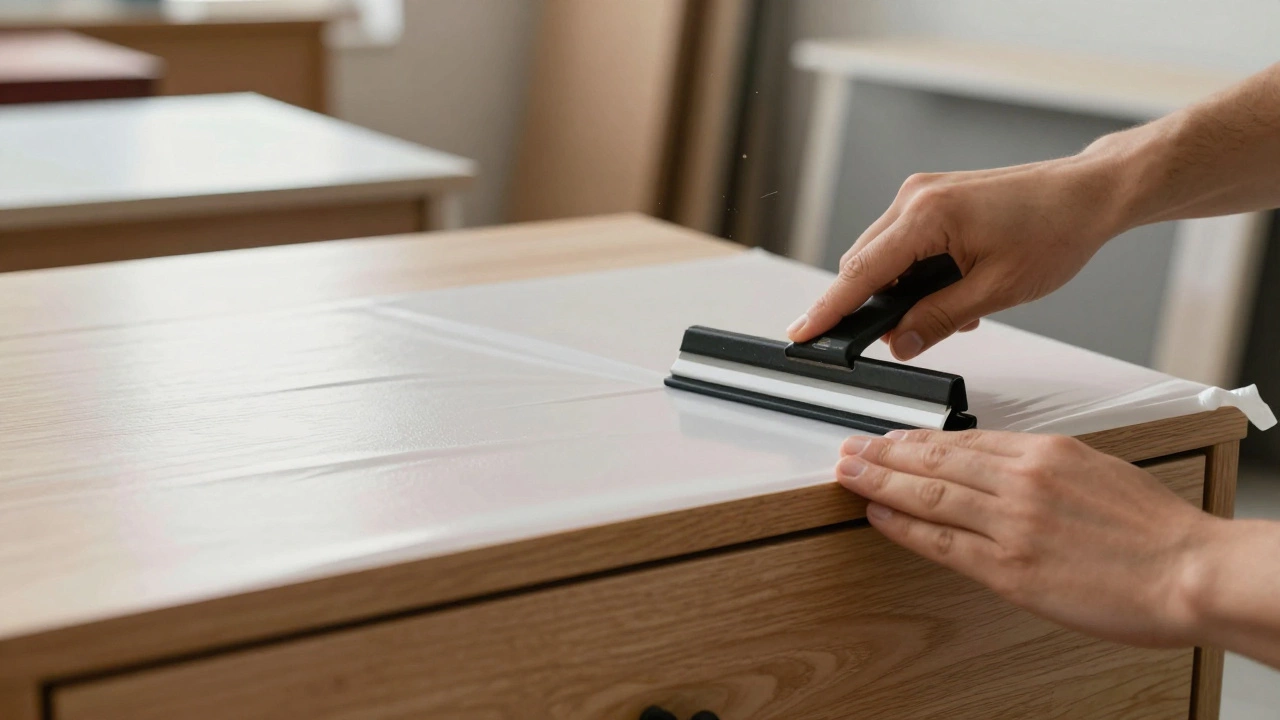
- Apply slowly - Start from one edge and use a squeegee or credit card to press the wrap down, working out bubbles as you go. Don’t stretch the material.
- Trim edges - Use a sharp utility knife to cut away excess along edges and corners. For inside corners, make small relief cuts to avoid lifting.
- Reattach hardware - Once the wrap is fully set (after 24 hours), reattach knobs and handles. Use the same holes if possible.
Pro tip: Work in a dust-free room with good lighting. Even a single speck of dirt under the wrap can create a permanent bubble.
Common Mistakes to Avoid
People think vinyl wrap is foolproof. It’s not. Here’s what goes wrong-and how to stop it:- Bubbling - Usually caused by dust or moisture. Always clean with alcohol, never water.
- Peeling at corners - Happens when the surface isn’t clean or the wrap isn’t pressed firmly. Use a heat gun on low to re-adhere lifted edges.
- Yellowing over time - Cheap vinyl can degrade in sunlight. Choose UV-stable, automotive-grade wrap for windows or sun-exposed furniture.
- Adhesive residue - If you ever remove the wrap, use a citrus-based adhesive remover. Don’t scrape with metal tools.
One user in Auckland wrapped a 1980s pine storage chest with a walnut vinyl film. Five years later, it still looks new-even through two moves. The only issue? A small corner lifted near the base where moisture pooled. They sealed the edge with clear silicone caulk and it’s been fine since.
How Long Does Vinyl Wrap Last on Wood?
High-quality vinyl wrap, applied correctly, lasts 5-10 years on indoor furniture. Factors that affect lifespan:- Exposure to sunlight - UV rays break down adhesive. Use wrap labeled “UV-resistant” for bright rooms.
- Humidity - Bathrooms and basements reduce lifespan. Seal edges with clear polyurethane if needed.
- Usage - A drawer front that opens and closes 100 times a week will wear faster than a side panel.
Commercial-grade wraps (like 3M or Avery Dennison) outlast budget options by 2-3 times. They cost more upfront but save money long-term.
Alternatives to Vinyl Wrap
If vinyl isn’t right for your piece, here are other options:| Method | Cost | Time | Removable? | Best For |
|---|---|---|---|---|
| Vinyl Wrap | $20-$80 | 2-4 hours | Yes | Smooth, flat surfaces, renters |
| Paint | $30-$100 | 1-3 days | No | Textured or carved wood |
| Wood Stain + Sealant | $40-$120 | 2-5 days | No | High-quality solid wood |
| Furniture Decals | $15-$50 | 1 hour | Yes | Small accents, not full surfaces |
Vinyl wrap wins for speed, cost, and reversibility. Paint gives you more color control. Stain enhances natural grain. Decals are great for adding patterns without covering the whole piece.
When Not to Wrap Wood
There are times when vinyl wrap is a bad idea:- If the wood is cracked, rotting, or swollen - fix the structure first.
- If you plan to sell the furniture soon - buyers may see wrap as a sign of poor quality.
- If the piece is heirloom-grade - wrapping can reduce its value.
- If you live in a humid climate and the furniture is in a basement - moisture will ruin the bond.
For antique or valuable pieces, consult a restorer. Vinyl wrap is for modern, functional furniture-not museum pieces.
Where to Buy Vinyl Wrap for Furniture
You don’t need to go to a specialty shop. Here’s where to find good options:- Amazon - Search for "automotive vinyl wrap" or "furniture wrap film". Look for 3M or Avery Dennison brands.
- Local sign shops - Many offer cut-to-size vinyl for DIYers. Ask for "calendared vinyl," not cast.
- Home improvement stores - B&Q, Home Depot, and Mitre 10 carry small rolls labeled for furniture.
- Specialty sites - WrapYourCar.com, Vinylmation, and DecalGirl have furniture-specific patterns.
Avoid cheap wraps from unknown brands on eBay or AliExpress. They often have inconsistent thickness and poor adhesive.
Final Thoughts
Yes, you can put vinyl wrap over wood-and if done right, it’s one of the smartest, cheapest ways to update storage furniture. It’s not magic, but it’s close. Clean the surface. Use quality material. Take your time. And you’ll get results that look custom, not cheap.It’s not a permanent fix, but for renters, students, or anyone who likes to change things up, it’s the perfect middle ground between buying new and painting over old.
Can you put vinyl wrap over painted wood?
Yes, vinyl wrap adheres well to painted wood as long as the paint is fully cured, not peeling, and clean. Use isopropyl alcohol to remove any wax or polish before applying. If the paint is glossy, lightly sand with 220-grit paper for better grip.
Does vinyl wrap damage wood when removed?
No, if applied correctly, vinyl wrap won’t damage the wood underneath. The adhesive is designed to release cleanly. Use a heat gun on low to soften the wrap and peel slowly. If any residue remains, wipe it off with citrus-based adhesive remover. Never use acetone or harsh chemicals.
Can you wrap wood with deep scratches or dents?
You can, but the wrap will follow the contours, making the damage visible. For minor scratches, fill them with wood filler and sand smooth before wrapping. For deep dents, repair them first-vinyl wrap doesn’t hide structural flaws.
Is vinyl wrap waterproof?
Most vinyl wraps are water-resistant, not waterproof. They can handle spills and light moisture, but prolonged exposure-like in a bathroom-can cause edges to lift. Seal the edges with clear silicone or use marine-grade vinyl if you need full waterproofing.
How do you clean vinyl-wrapped wood furniture?
Wipe with a damp microfiber cloth and mild soap. Avoid abrasive cleaners, scrubbing pads, or bleach. For matte finishes, use a microfiber duster to avoid streaks. Never use wax or polish-it can build up and dull the surface.
Can you wrap wood furniture with curved edges?
Yes, but it’s trickier. Use a heat gun to warm the vinyl as you apply it, making it more pliable. Work slowly, stretching the material gently over curves. Cut small slits along edges if needed to help it conform. Practice on a scrap piece first.
Will vinyl wrap hide the wood grain?
Yes, if you use a solid-color wrap. But if you choose a wood-grain vinyl, it will cover the original grain and replace it with a new pattern. The texture of the wrap will feel smooth, not like real wood.
If you’re thinking about wrapping your storage furniture, start with a small piece-like a drawer front-to test the process. You’ll be surprised how much difference a new surface can make.