Sofa Value Calculator
Calculate Your Sofa Investment
Your Results
Is $2000 too much for a sofa? If you’ve ever stood in a showroom staring at a sleek, deep-seated couch with real leather and solid wood legs, you’ve probably asked yourself that. You’re not alone. In Auckland, where space is tight and tastes are high, people are spending more on furniture than ever. But is $2000 a fair price-or just a fancy label slapped on a mass-produced frame?
What $2000 Actually Buys You Today
Back in 2015, $2000 would’ve bought you a top-tier sectional from a premium brand. Today, that same amount gets you a mid-to-high-end sofa set from a reputable local maker-or a well-built imported piece with quality materials. You’re not paying for a logo. You’re paying for durability, comfort, and craftsmanship that lasts.
Here’s what you typically get at this price point:
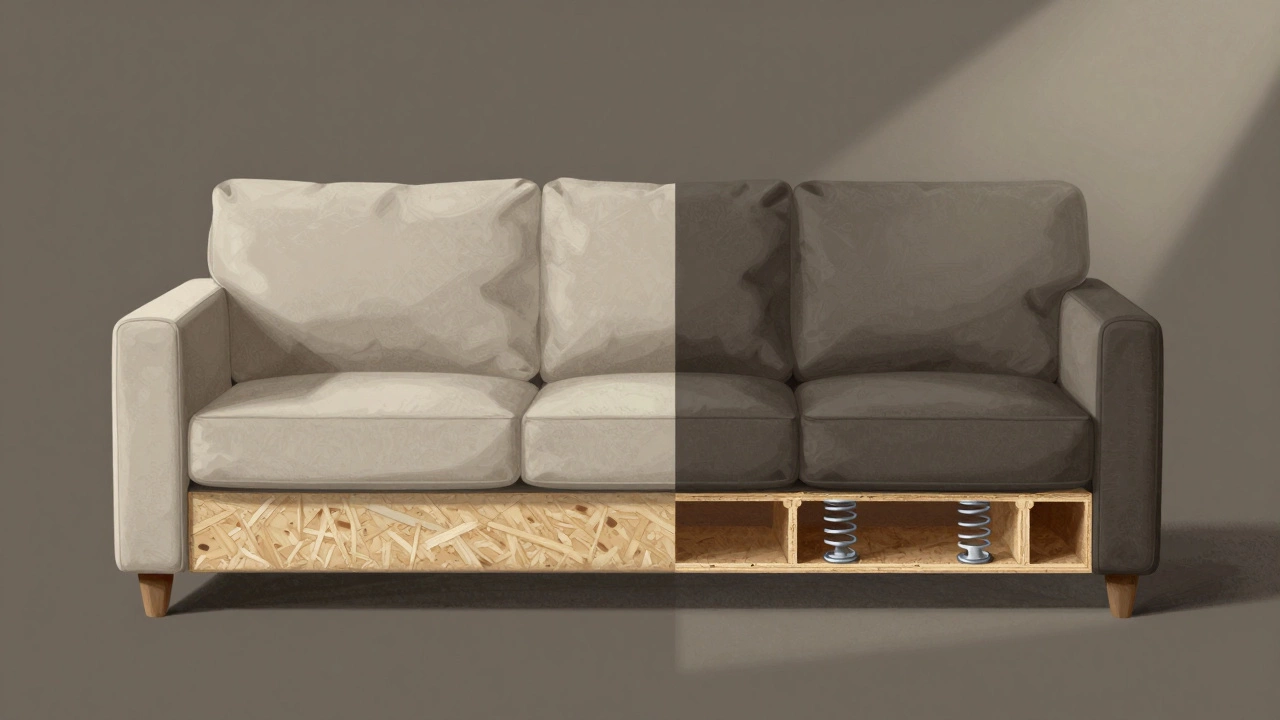
- Frame: Hardwood like kiln-dried oak or beech, not particleboard or plywood. No squeaks, no wobble after five years.
- Cushions: High-resiliency foam core with down-wrapped seats. Not just cheap polyfill that flattens in six months.
- Upholstery: Genuine top-grain leather, performance fabric like Crypton or Sunbrella, or tightly woven linen that resists pilling.
- Construction: Double-doweled joints, hand-tied springs, and reinforced corners. No staples holding the fabric in place.
- Warranty: At least 5 years on the frame, 2+ years on fabric and cushions.
Compare that to a $800 sofa from a big-box store. It might look nice on Instagram, but the frame is glued particleboard. The cushions are thin foam over a thin layer of fiber. The fabric? It’ll start to shine and pill after a year of regular use. You’ll be shopping again in 3-4 years.
Why People Think $2000 Is Too Much
It’s not the price that feels wrong-it’s the lack of transparency. Most people don’t know how sofas are made. They see a $2000 tag and think, “That’s just markup.” But here’s the truth: a $2000 sofa isn’t marked up 500%. It’s marked up maybe 100-150% at most.
Let’s break it down. A high-quality sofa costs about $800-$1,200 to make. That includes:
- Materials: Leather or performance fabric ($300-$600)
- Frame and springs ($200-$300)
- Labor: Skilled upholsterers working 15-20 hours per sofa ($250-$400)
- Shipping, taxes, overhead
That leaves $800-$1,200 for the retailer’s margin, marketing, and profit. That’s not outrageous. Compare it to a $1,500 pair of quality boots or a $2,500 mattress-both last 10+ years. A sofa gets more daily use than either.
Real-Life Examples from Auckland Homes
I’ve seen three families in Ponsonby and Mt. Eden make different choices. All had $2000 budgets.
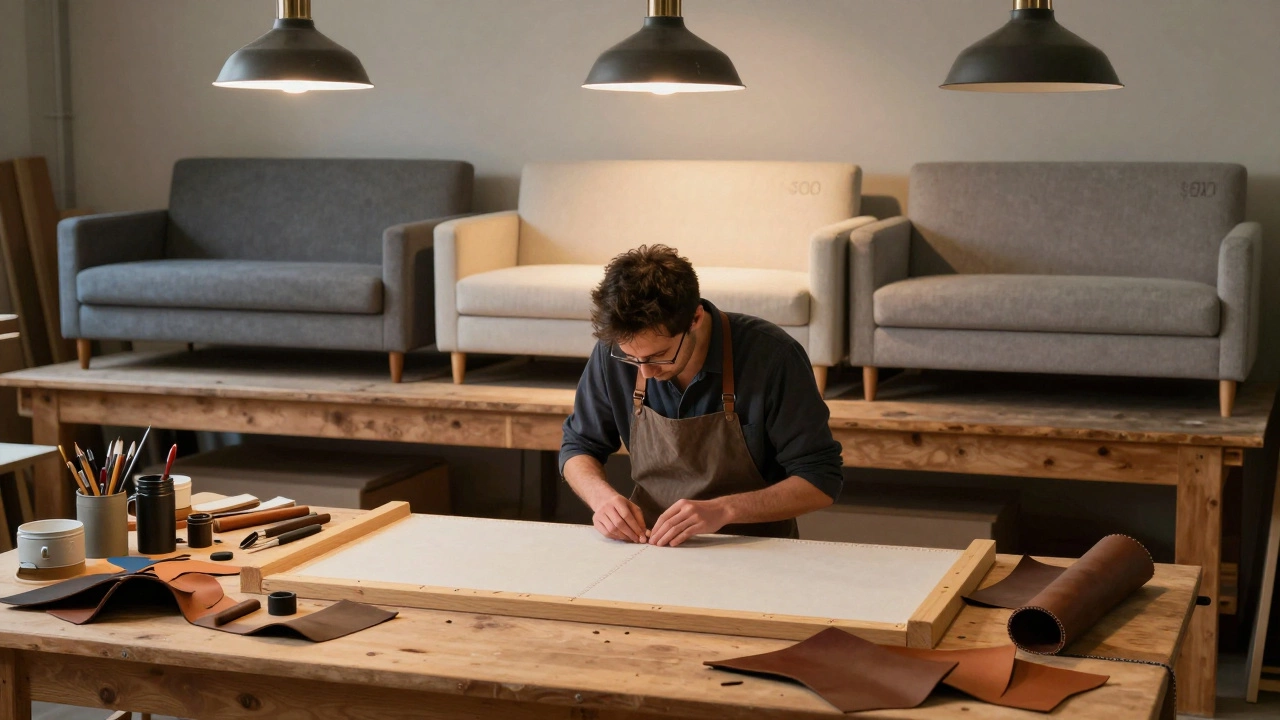
The first bought a $1,800 sectional from a local workshop in New Lynn. Made from reclaimed oak and Italian leather. Five years later, it still looks new. Their dog sleeps on it every night. No stains. No sagging.
The second bought a $1,400 sofa from a well-known online brand. It arrived with a crooked leg and a fabric defect. They returned it. The replacement took six weeks. They finally gave up and bought a $1,900 sofa from a local store. It’s been two years. No complaints.
The third bought a $700 sofa from a warehouse sale. It collapsed under their toddler’s weight after 14 months. They replaced it with a $2,100 piece. They’ve spent $2,800 total-and still have the same sofa.
Buying cheap doesn’t save money. It just spreads the cost over time.
When 00 Is Actually a Bargain
Here’s the real math: a $2,000 sofa that lasts 12 years costs about $167 a year. That’s less than $14 a month. For a piece of furniture you sit on for hours every day-eating, watching TV, reading, napping-that’s a steal.
Compare it to a $600 sofa that lasts 3 years. That’s $200 a year. $17 a month. You’re paying more over time. And you’re constantly dealing with the hassle of shopping, delivery, setup, and disposal.
Plus, a good sofa adds value to your home. Real estate agents in Auckland say a well-chosen sofa in the living room can make a space feel more inviting, even if it’s not the most expensive item in the room. It’s the anchor.
What to Watch Out For
Not every $2000 sofa is worth it. Here’s how to avoid getting fooled:
- Leather that’s “bonded” or “top-grain”: Ask if it’s full-grain. Bonded leather is scraps glued together. It cracks in a year.
- “Performance fabric” labels: Check the rub count. 30,000 double rubs is the minimum for home use. Anything below 15,000 is for light use only.
- Hidden fees: Delivery, assembly, or extended warranty can add $300-$500. Always ask for the total out-the-door price.
- Online-only brands: They often have no local service. If a seam splits, you’re stuck. Local makers offer free repairs for years.
Always sit on the sofa before you buy. Press your hands into the arms and back. Does it feel solid? Do the cushions bounce back? Can you feel the springs through the fabric? If not, walk away.
Alternatives to 00 Sofas
You don’t have to spend $2,000-but you should spend wisely.
- $1,200-$1,800: Solid hardwood frame, good foam, synthetic leather or durable linen. Great for apartments and families.
- $800-$1,200: Acceptable for short-term use, dorms, or rentals. Avoid if you plan to keep it longer than 3 years.
- $2,500+: Only if you want custom sizing, exotic materials, or designer names. Rarely worth it unless you’re building a luxury home.
For most people in New Zealand, $1,800-$2,200 is the sweet spot. You get quality without the designer markup.
Final Verdict: Is $2000 Too Much?
No. $2000 isn’t too much for a sofa-if you’re buying one that lasts.
It’s not about the price. It’s about what you’re paying for. If you’re buying a piece of furniture you’ll use every day for a decade, then $2000 is a smart investment. You’re not spending money. You’re saving it.
And if you’re still unsure? Go to a local workshop in Onehunga or Otahuhu. Sit on three sofas. Ask the maker how they build them. Watch them lift the cushion to show you the springs. If they’re proud of their work-and you feel the difference-then you’ll know. $2000 isn’t expensive. It’s just the price of not having to do it again.
Is $2000 too much for a sofa in New Zealand?
No, $2000 is not too much for a sofa in New Zealand if it’s made with quality materials and craftsmanship. At this price, you get a hardwood frame, high-density foam cushions, durable upholstery like top-grain leather or performance fabric, and a warranty that lasts 5+ years. Cheaper sofas often cost more over time because they wear out in 3-4 years, forcing you to replace them sooner.
What’s the difference between a $800 sofa and a $2000 sofa?
A $800 sofa usually has a particleboard or plywood frame, thin polyfill cushions that flatten fast, and low-grade fabric that pills or fades. A $2000 sofa has a kiln-dried hardwood frame, high-resiliency foam with down wrap, and fabric rated for 30,000+ double rubs. The $2000 sofa won’t sag, squeak, or stain easily-and it’ll last 10-15 years.
Should I buy a sofa online for $2000?
Be careful. Many online brands offer $2000 sofas with no local support. If the frame cracks or the fabric tears, you’re stuck paying for shipping and repairs yourself. Local makers in Auckland often include free repairs, fabric samples, and in-home delivery. You pay a little more upfront, but you avoid headaches later.
Is leather worth the extra cost over fabric?
If you have pets, kids, or spill coffee often, yes. Top-grain leather is naturally stain-resistant and lasts longer than most fabrics. It also ages beautifully. Performance fabric like Crypton is a great alternative-it’s easy to clean and doesn’t fade. Avoid bonded leather. It’s fake leather made from scraps and will crack within a year.
How long should a $2000 sofa last?
A well-made $2000 sofa should last 10-15 years with normal use. The frame should remain solid, the cushions should hold their shape, and the fabric should show minimal wear. Regular cleaning and rotating cushions can extend its life even further. If it starts to sag or squeak before 7 years, you likely got a poorly made one.