TV Stand Alternative Finder
Answer three simple questions to find the perfect non-traditional spot for your television.
Floor Space
I have very little floor room available.
Storage
I need to hide cables and consoles.
Budget
I want an affordable or free solution.
The Floating Shelf
Description goes here...
Pros
Cons
You stare at that empty corner of your living room, the TV box still on the floor, and realize you don’t want another generic piece of particle board. Maybe your space is too tight for a bulky cabinet, or maybe you just hate how traditional TV stands are furniture pieces designed specifically to hold televisions, often featuring storage compartments and shelves dominate the visual flow of a room. You’re not alone. More homeowners are looking for creative, space-saving, or aesthetically pleasing ways to display their screens without committing to standard retail options.
Finding a substitute isn't just about saving money; it’s about reclaiming control over your interior design. Whether you need a sturdy base for a heavy OLED panel or a sleek solution for a minimalist apartment, there are plenty of functional objects hiding in plain sight that can do the job better than a dedicated media unit. Let’s look at what actually works.
The Floating Shelf: The Minimalist’s Best Friend
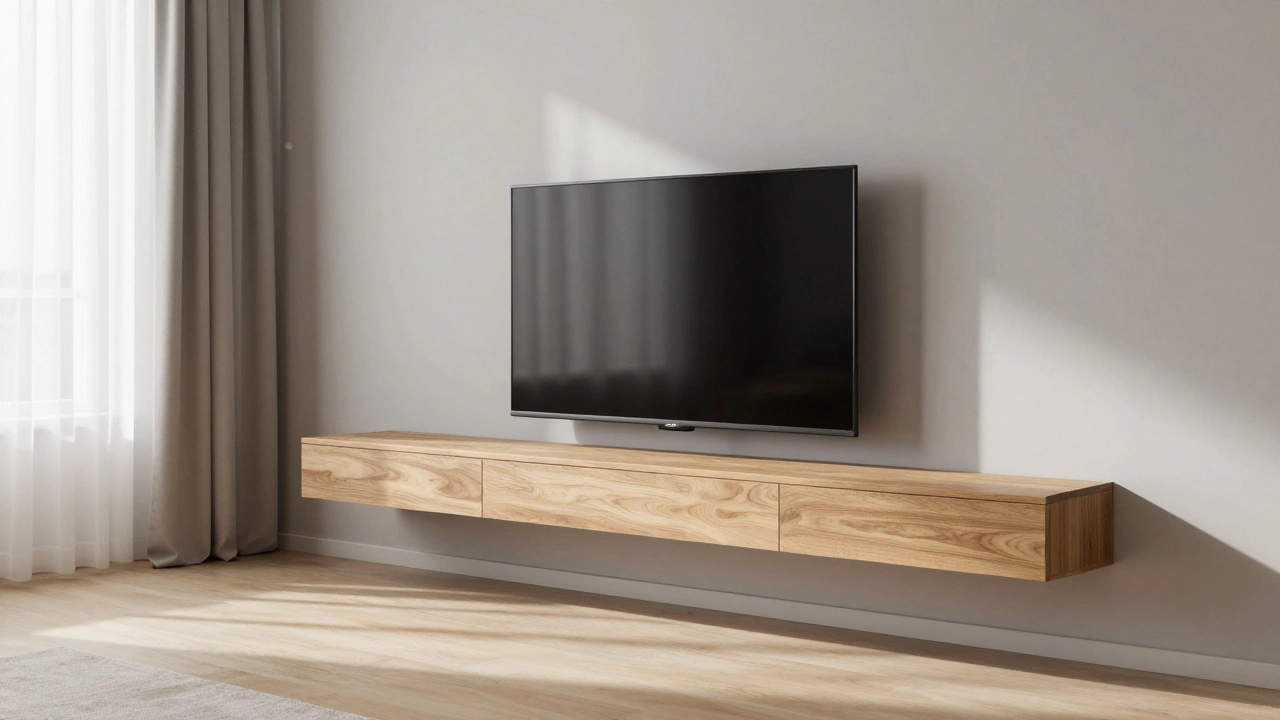
If you have wall space but zero floor space, a floating shelf is a wall-mounted storage unit with no visible brackets, creating the illusion that it floats in mid-air is your top contender. This is the go-to solution for apartments where every square inch counts. Unlike a traditional stand, it doesn’t break the line of sight across the room, making small spaces feel larger and airier.
The key here is structural integrity. You aren't just holding a remote control; you’re supporting potentially dozens of pounds of glass and electronics. Look for shelves made from solid hardwood like oak or maple, rather than thin MDF. If you’re installing this yourself, ensure you hit the wall studs. A single stud can easily support up to 70-80 pounds, which is more than enough for most TVs under 65 inches. For wider screens, you’ll need to anchor into two studs or use high-quality drywall anchors rated for heavy loads.
- Pros: Saves floor space, hides cables behind the wall, modern aesthetic.
- Cons: Requires precise installation, limited storage for consoles or soundbars.
- Best For: Wall-mounted TVs in small studios or open-plan living areas.
The Bookcase: Storage Meets Display
Why buy one piece of furniture when you can have two? A bookcase is a tall shelving unit used primarily for storing books, but versatile enough to hold media devices and decor is an underrated hero in the world of TV placement. It solves the clutter problem instantly. Instead of a dedicated media console that gathers dust, you get a library of books, vinyl records, or decorative boxes alongside your entertainment system.
This approach works best if you choose a bookcase with adjustable shelves. Modern TVs vary wildly in height, especially with their new VESA mounts. You’ll want a shelf that allows you to lower the TV closer to eye level while sitting on the sofa. A good rule of thumb is that the center of the screen should be at eye level when seated. If your bookcase is too tall, consider placing the TV on a lower shelf or using a riser block inside the case to adjust the height.
Just be mindful of weight distribution. Don’t stack heavy encyclopedias next to a lightweight 4K LED. Balance the load. If you’re going this route, a wide, low-profile bookcase often looks better than a narrow, towering one, as it mimics the proportions of a traditional media unit without the closed cabinets.
The Chest of Drawers: Vintage Charm and Hidden Cables
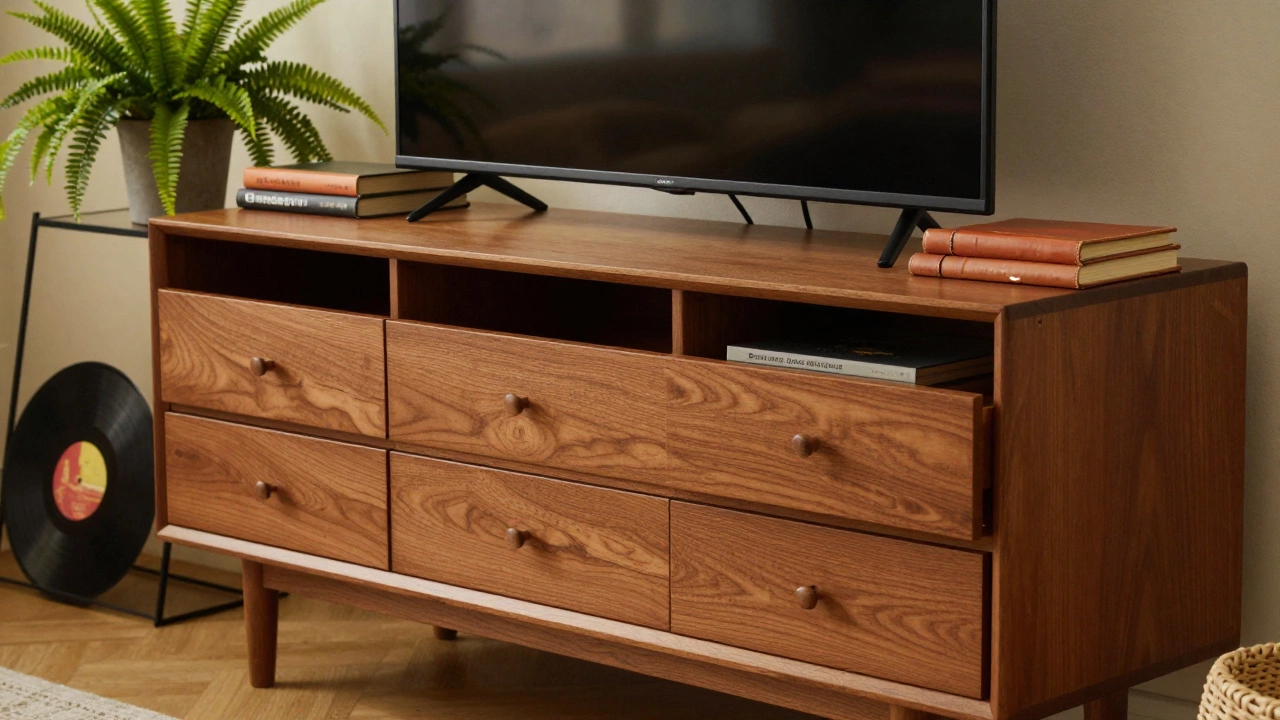
If you prefer a warmer, less sterile look, a vintage chest of drawers is a piece of furniture with multiple horizontal sliding drawers, traditionally used for clothing storage is a fantastic alternative. Mid-century modern teak chests or rustic wooden dressers add character that mass-produced TV stands simply can’t match. Plus, they offer deep, enclosed storage. That means your gaming consoles, streaming sticks, and tangled mess of HDMI cables can disappear completely.
The trick with a dresser is stability. Older furniture wasn’t built to withstand the front-heavy torque of a large flat-screen TV leaning forward slightly. To mitigate this, you might want to secure the TV to the back of the dresser with a simple anti-tip strap, especially if you have kids or pets. Also, consider drilling small holes in the back of the drawers or the main cabinet to run cables through neatly. It keeps the front looking clean and uncluttered.
This option is particularly popular in Auckland homes where mid-century furniture is abundant in second-hand markets. It’s sustainable, stylish, and often cheaper than buying new.
The Coffee Table: Low Profile Living
For those who watch TV while lounging on a sectional or beanbag, a large, sturdy coffee table is a low table designed to be placed in front of a sofa, often used for holding drinks, books, or occasionally media devices can work surprisingly well. This setup creates a relaxed, informal vibe. It’s perfect for smaller TVs, typically 32 to 43 inches, which are common in bedrooms or secondary living spaces.
However, this comes with ergonomic caveats. Your neck will thank you if you keep the TV low, but only if you’re also sitting low. If you’re propped up on high cushions, a coffee table setup will strain your cervical spine. Ensure the table surface is smooth and non-scratchy-glass tops can be slippery for plastic TV feet. A thick felt pad between the TV and the table is a cheap insurance policy against scratches.
This is also a great option for renters who don’t want to drill holes in walls for mounting or move heavy furniture around. Just make sure the table is wide enough so the TV doesn’t overhang dangerously.
The Console Table: Elegant and Slim
In entryways or narrow living rooms, a console table is a long, narrow table usually placed against a wall, often found in hallways or entryways offers a sophisticated alternative. These tables are designed to be shallow, meaning they won’t protrude far into your walking path. They often feature a single drawer or shelf underneath, providing just enough room for a soundbar or a few remotes.
Console tables come in various styles, from ornate Victorian designs to sleek contemporary metal frames. Because they are narrower than standard TV stands, they force you to keep your media setup minimal. You won’t have room for a PS5, a Xbox, and a Blu-ray player all at once. This limitation can be a benefit, encouraging a decluttered environment. Just double-check the depth; some console tables are only 12 inches deep, which might be too narrow for the feet of a larger TV.
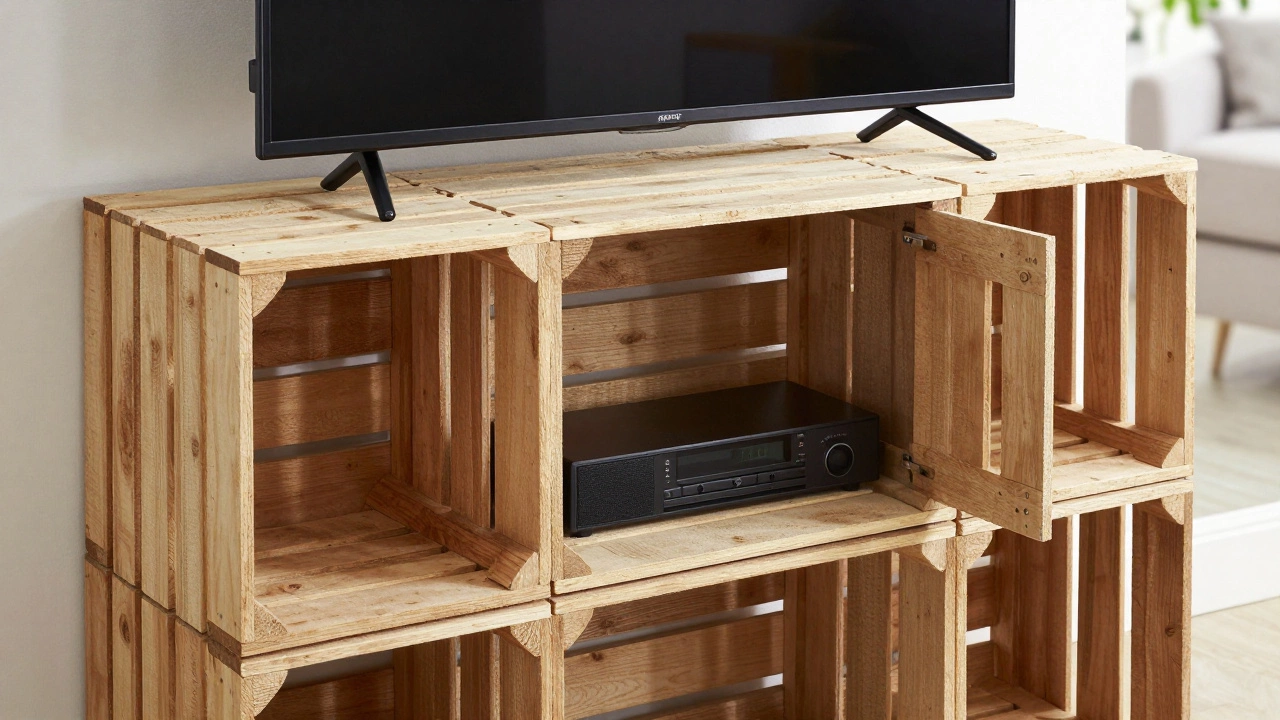
DIY Solutions: Pallets and Crates
If you enjoy a hands-on project, repurposing materials is a rewarding way to create a custom TV stand. Wooden pallets are flat transport structures consisting of a flat surface upon which goods can be stacked and handled by a forklift are widely available and can be sanded down to create a rustic, industrial look. Stack two pallets side-by-side, secure them with screws, and add caster wheels for mobility. It’s rugged, unique, and costs almost nothing.
Alternatively, wooden shipping crates can be arranged in a grid pattern. This modular approach lets you customize the width and height to fit your specific TV model. You can leave them open for a airy look or add doors for hidden storage. The key is ensuring the wood is treated and safe for indoor use-look for HT (Heat Treated) stamps on pallets to avoid chemical exposure.
| Alternative | Cost Range | Storage Capacity | Installation Difficulty | Best TV Size |
|---|---|---|---|---|
| Floating Shelf | $50 - $200 | Low | High (Wall Mount) | 32" - 65" |
| Bookcase | $100 - $500 | High | Low | 40" - 75" |
| Chest of Drawers | $150 - $600 | Medium | Low | 40" - 70" |
| Coffee Table | $50 - $300 | Very Low | None | 32" - 43" |
| Console Table | $100 - $400 | Low | None | 32" - 55" |
What to Avoid
Not every piece of furniture is suitable for holding a television. Avoid anything with a glass top unless it’s tempered and thick enough to support the weight without cracking. Glass can also become slippery, leading to accidental slides. Similarly, stay away from wobbly or unstable items like narrow end tables or chairs with uneven legs. A falling TV is a expensive accident waiting to happen.
Also, consider ventilation. Many modern TVs generate heat. Enclosed spaces without airflow, like a tightly packed cabinet with no gaps, can cause overheating. If you choose a chest of drawers, leave the door slightly ajar or cut vents in the back panel.
Can I put my TV on a floating shelf?
Yes, provided the shelf is securely anchored into wall studs and rated for the weight of your TV. Use heavy-duty brackets and ensure the shelf depth matches or exceeds the width of your TV's feet for stability.
Is a bookcase a good alternative to a TV stand?
Absolutely. A bookcase offers superior storage for media accessories and decor. Choose one with adjustable shelves to accommodate different TV heights and ensure the unit is stable and wide enough to prevent tipping.
How do I hide cables when using a non-traditional TV stand?
Use cable management sleeves or raceways to bundle wires together. If using a bookcase or dresser, drill small holes in the back to run cables internally. For floating shelves, install a cable management box behind the shelf to conceal connections.
Can I use a coffee table for a large TV?
It is not recommended for TVs larger than 43 inches due to stability and ergonomic concerns. Large TVs are heavy and top-heavy, making them prone to tipping on low, narrow surfaces. Additionally, viewing angles may be uncomfortable.
Do I need to secure my TV to the furniture?
If you have children, pets, or live in an earthquake-prone area like New Zealand, yes. Anti-tip straps are inexpensive and provide peace of mind. They attach to the back of the TV and the furniture or wall, preventing dangerous falls.