Coffee Table Height Calculator
How to Use This Tool
Enter your couch seat height and coffee table height to see if they create a comfortable, balanced arrangement based on design principles from the article.
Result
Enter your measurements to see results
Most people assume a coffee table should sit perfectly level with the couch. But what if your couch is low, and you want a coffee table that’s just a little taller? Can a coffee table be 2 inches higher than a couch? The short answer: yes, and it often works better than you think.
Why Height Matters More Than You Realize
It’s not just about looks. If your coffee table is too low, you’re constantly bending over to grab your drink. Too high, and your arms feel strained when you rest your elbows. The sweet spot isn’t magic-it’s physics. Your elbows should rest comfortably on the table when you’re seated, without hunching or reaching.
Standard couch seat height ranges from 15 to 18 inches off the floor. Most coffee tables sit between 16 and 18 inches. That means a table that’s 2 inches higher than your couch would be around 17 to 20 inches tall. That’s not out of line-it’s within the normal range for modern designs.
Think about it: a low-slung mid-century couch (15 inches) paired with a 17-inch table? That’s a classic combo. You’re not breaking rules-you’re following a design trend that’s been around for decades. Brands like IKEA, West Elm, and Herman Miller regularly offer tables 1 to 3 inches above standard couch height.
What Happens When You Raise the Table 2 Inches?
Let’s say your couch sits at 16 inches. You pick a coffee table at 18 inches. Here’s what changes:
- You can rest your arms naturally on the table without lifting your shoulders.
- Plates, books, or laptops sit closer to eye level, reducing neck strain.
- It’s easier to reach items without leaning forward-great for people with back issues.
- The table feels more integrated with the space, not like an afterthought.
It’s not just about comfort. Visually, a slightly taller table adds balance. Low couches can look sunken if paired with a too-low table. Raising the table by 2 inches lifts the whole room’s eye line. It makes the space feel more intentional.
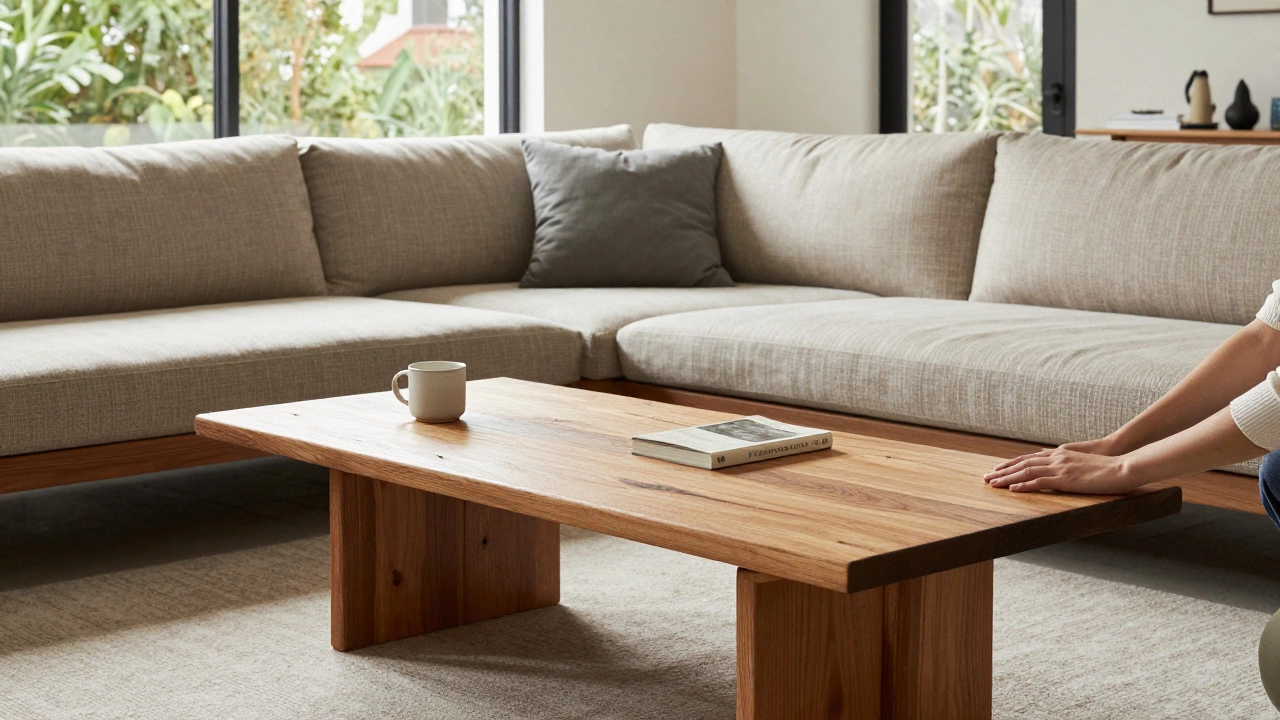
I’ve seen this work in real Auckland homes. A couple in Ponsonby had a deep, low-slung sectional. Their first coffee table was 15 inches. They kept knocking over mugs. They switched to a 17-inch reclaimed timber table. No more spills. No more hunching. They said it felt like the room finally "sat right."
When a 2-Inch Difference Doesn’t Work
There are exceptions. If your couch is already tall-say, 19 inches or higher-adding a 21-inch table will make the space feel unbalanced. You’ll be reaching up to grab your coffee, which defeats the purpose.
Also, if you have kids or pets, a higher table can be a hazard. A 2-inch rise might seem small, but for a toddler crawling around, it’s a trip risk. Same with large dogs. If your living room is a play zone, stick closer to couch height.
Another pitfall: mismatched proportions. A tall, narrow table on a wide sectional looks like a lonely island. A low, wide table on a narrow sofa feels cramped. Height isn’t the only factor-width and shape matter too.

How to Measure Correctly
Don’t guess. Measure your couch seat from the floor to the top of the cushion. Do it where people actually sit, not the armrest. Use a tape measure. Then measure your current or desired coffee table the same way.
Here’s a simple rule: the coffee table should be within 1 inch above or below the couch seat height. Two inches is the absolute max. Beyond that, it starts to feel awkward.
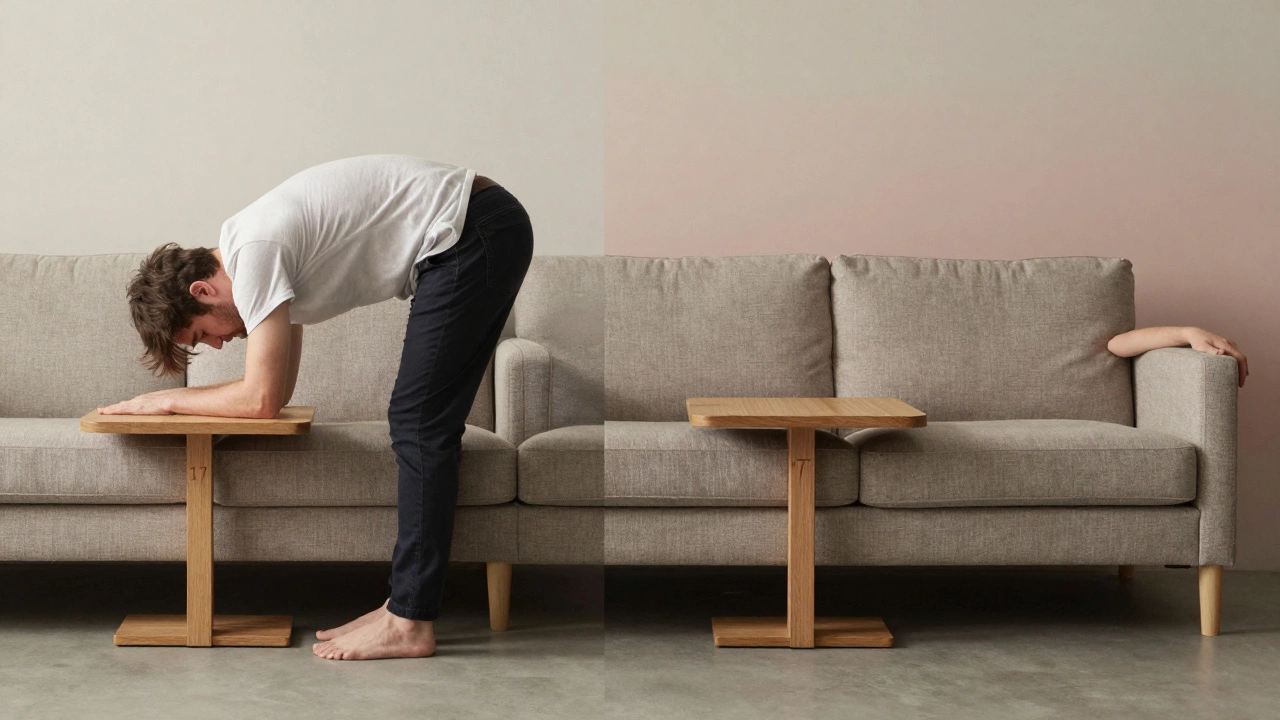
Pro tip: Sit on your couch with your arms relaxed. Place a book or magazine on your lap. That’s your ideal table height. If the book sits at your fingertips, you’re golden. If you have to lift your hands, the table’s too low. If you’re bending your elbows sharply, it’s too high.
Real Examples That Work
Here are three common setups that prove 2 inches higher works:
- Low sectional + 18-inch table: Popular in modern homes. The table lifts the visual weight, making the room feel more open.
- Mid-century sofa (16 inches) + 18-inch walnut table: A timeless pairing. The height difference adds subtle contrast without breaking the style.
- Sectional with removable cushions (17 inches) + 19-inch glass-top table: The glass keeps the table from feeling heavy. The extra height makes it easy to use as a workspace.
These aren’t outliers. They’re common in design magazines, showrooms, and real homes. You’ll find them in photos from the likes of Architectural Digest and Elle Decor-not because they’re trendy, but because they work.
What to Avoid
Don’t fall for the "match everything" myth. You don’t need your table, couch, and TV stand to be the same height. That’s outdated thinking from the 1980s. Modern interiors thrive on variation.
Avoid tables that are too wide. A table wider than two-thirds the length of your couch looks cluttered. A 2-inch height difference is fine, but if the table is too big, it’ll dominate the space.
Also, skip glass tables if you’re going higher. They can feel cold and ungrounded. Solid wood, stone, or metal tables with clean lines handle the extra height better.
Final Decision Checklist
Before you buy, ask yourself:
- Is my couch under 18 inches tall? If yes, a 2-inch taller table is safe.
- Do I sit upright or slump back? If you sit upright, a slightly higher table helps.
- Do I use the table for eating, working, or just drinks? Higher is better for tasks.
- Are there kids or pets? Stick to couch height or only 1 inch higher.
- Does the table look balanced with the couch? Step back and look from the doorway. If it feels right, it is.
There’s no rulebook that says coffee tables must match couches. Furniture design evolved because people wanted comfort, not perfection. A 2-inch difference isn’t a mistake-it’s a smart adjustment.
What If I Already Bought the Table?
Too late to return it? No problem. Try this:
- Add a rug under the table to visually anchor it.
- Place a stack of books or a tray on the table to create a lower surface for drinks.
- Use a table runner or cloth to soften the height difference.
Or, if you’re handy, add adjustable feet. Many modern tables have them. A 2-inch lift is easy with threaded metal inserts. You can even buy furniture levelers online for under $20.
It’s not about following rules. It’s about making your space work for you. If a 2-inch taller coffee table makes your mornings easier, your evenings more relaxed, and your guests less likely to spill their tea-then you’ve already won.