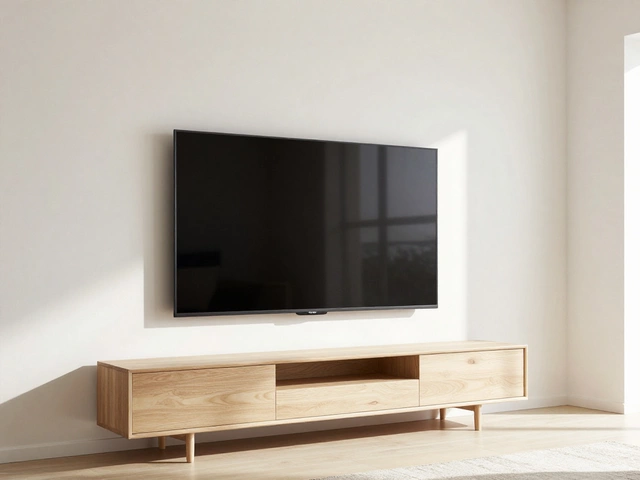
Does Your TV Stand Have to Match Your Coffee Table?
You've found the perfect piece for the center of your living room, but now you're staring at the wall where the television lives. There's an unspoken pressure, isn't there? The fear that if you buy a dark oak coffee table, but your entertainment unit is white lacquer, the whole room will scream "disaster." Here is the honest truth from a decade of designing spaces: No, they absolutely do not have to match. In fact, forcing a match often does your home more harm than good.
The Psychology of the "Matching Set"
For generations, we were sold on the idea of the "living room set." The sofa, the loveseat, the TV console, and the coffee table all came from the same catalog page, in the same upholstery or finish. This made shopping easy. You bought three or four pieces, and job done. There was no cognitive load involved in choosing colors or textures.
However, when you walk into a room where every wooden surface is the exact same shade of mahogany, it creates a box effect. It closes the room in. It lacks the visual rhythm that makes a space feel layered and collected over time. Think about the difference between a showroom floor and a real home. Showrooms sell the product; homes sell a lifestyle. To build that lifestyle, you need contrast.
Anchoring Through Material Family
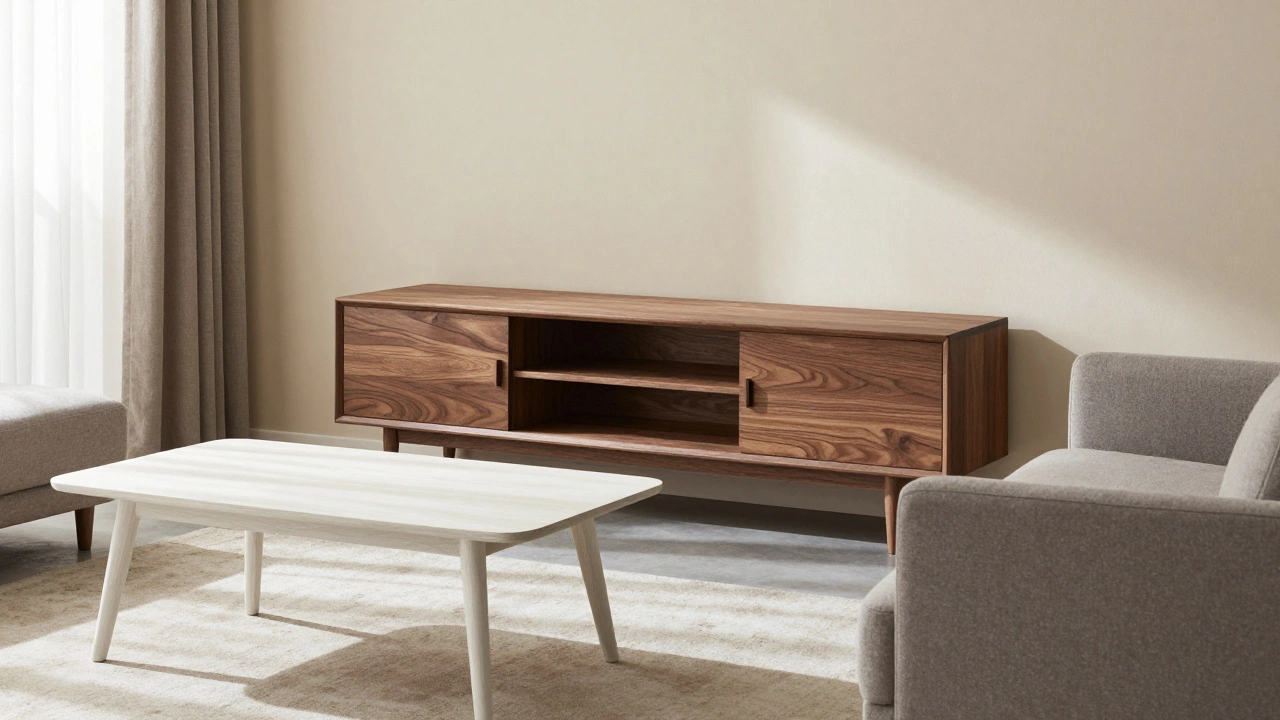
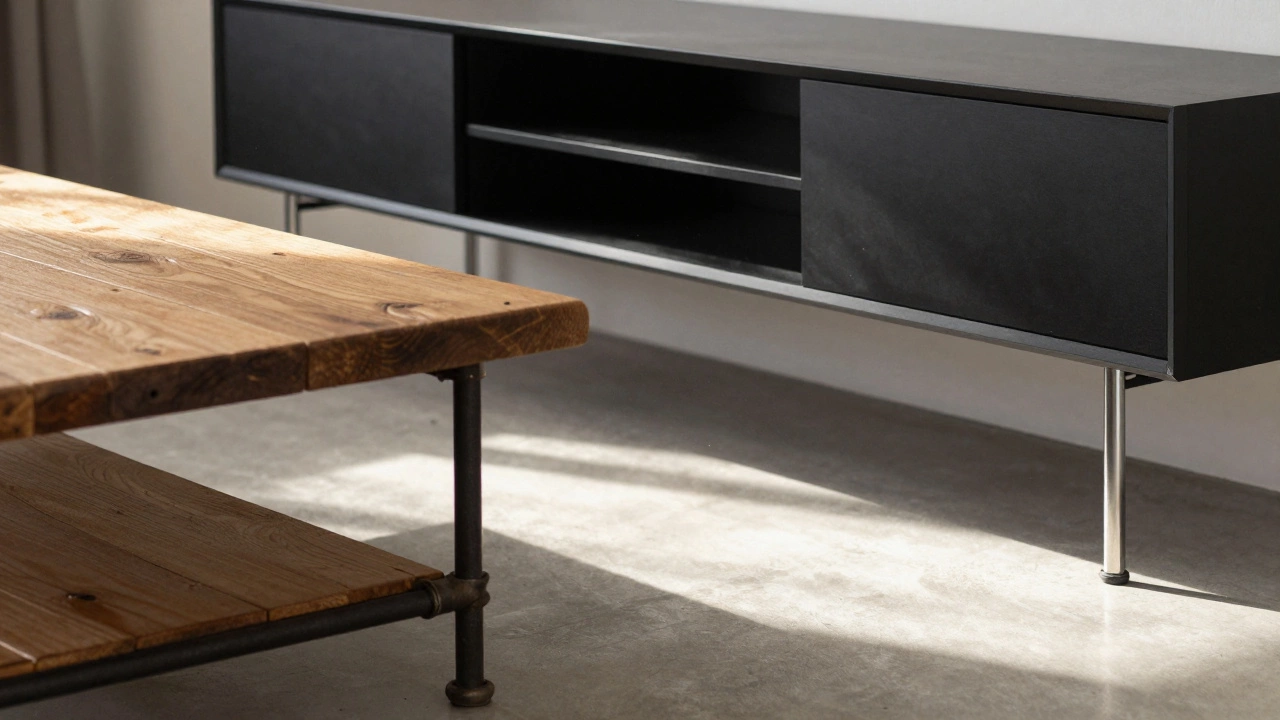
If they don't have to be identical twins, how do they relate? They need to speak the same language. This is where the concept of "family resemblance" comes in. Imagine your TV stand is made of solid walnut with black iron legs. You don't need a second walnut coffee table. You could have a glass-top table with a walnut frame, or perhaps a stone-topped table that sits on black iron legs. The visual conversation happens through shared elements, not identical copies.
The goal is to create a thread that ties the foreground to the background.
- Wood Grain: If one piece features heavy grain, echo it subtly elsewhere. A light driftwood shelf on the TV unit pairs well with a driftwood slat on the table.
- Metal Finishes: Hardware is the easiest connector. Brushed brass drawer pulls on the cabinet work perfectly with brass accents on the coffee table corners.
- Finish Texture: Avoid pairing high-gloss laminate with distressed barn wood. They fight each other for attention. Either both matte, or both glossy.
The Power of Negative Space
This is a rule often overlooked: look at the legs. The open space underneath your furniture determines how much light moves through the room. A common mistake is buying a bulky, blocky TV stand and a chunky solid-base coffee table. When placed near each other, they form a visual wall on the floor. This can make even a spacious living area feel cramped.
If you own a massive, heavy TV unit that extends deep into the room, counterbalance it with a lighter coffee table. Consider raised-edge designs, tapered wooden legs, or thin metal bases. This creates "breathing room." Conversely, if your media center is slim with wire shelves (like a popular Mid-Century Modern silhouette), don't hide it behind a heavy slab coffee table. Use a substantial table to anchor the front half of the room, giving the wall unit the air it needs to float visually.
Navigating Wood Tones
We often obsess over whether the wood tones clash. "Can I put an oak table next to a cherry cabinet?" The answer depends entirely on your intent.
| Base Furniture | ||
|---|---|---|
| Cool Tones | Walnut | Pairs with Gray Ash, Black Steel, Charcoal |
| White Oak | Works with Pale Pine, Silver, White Wash | |
| Rattan | Compatible with Wicker, Light Bamboo | |
| Espresso | Bonds with Dark Cherry, Copper, Bronze | |
If you want a curated look, try to stay within the same temperature zone. Warm woods (red cherry, pine, teak) clash with cool woods (gray washed oak, ash, birch). However, if you aim for an eclectic mix, that is where the fun lies. A rustic reclaimed wood TV stand against a sleek, lacquered coffee table creates a deliberate tension. Just ensure something else in the room bridges the gap, like a rug or artwork.
Height and Proportions Matter
While style gets the headlines, dimensions dictate comfort. The height relationship between your seating, table, and screen is functional art.
A coffee table typically sits 16 to 18 inches high. Your TV stand should be designed so the center of the screen is at eye level while seated. If you raise your TV stand too high to avoid clutter on the bottom shelves, but your coffee table is low, you create a floating disconnect. Try to keep the vertical "visual center" of the main mass of your furniture roughly aligned, or intentionally stagger them to lead the eye down to the coffee table layer.
Think about the depth. Deep media consoles (over 20 inches) demand larger coffee tables. If you place a small side-table-sized coffee table in front of a massive cabinet, the furniture looks toy-like. Match the "weight" of the objects, even if the shapes differ.
The Sofa Factor
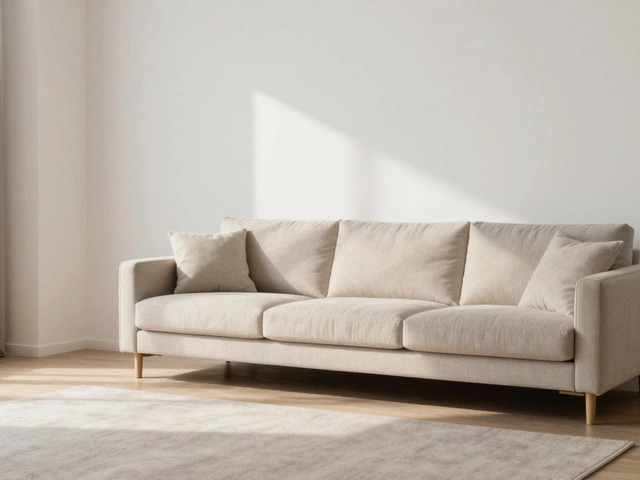
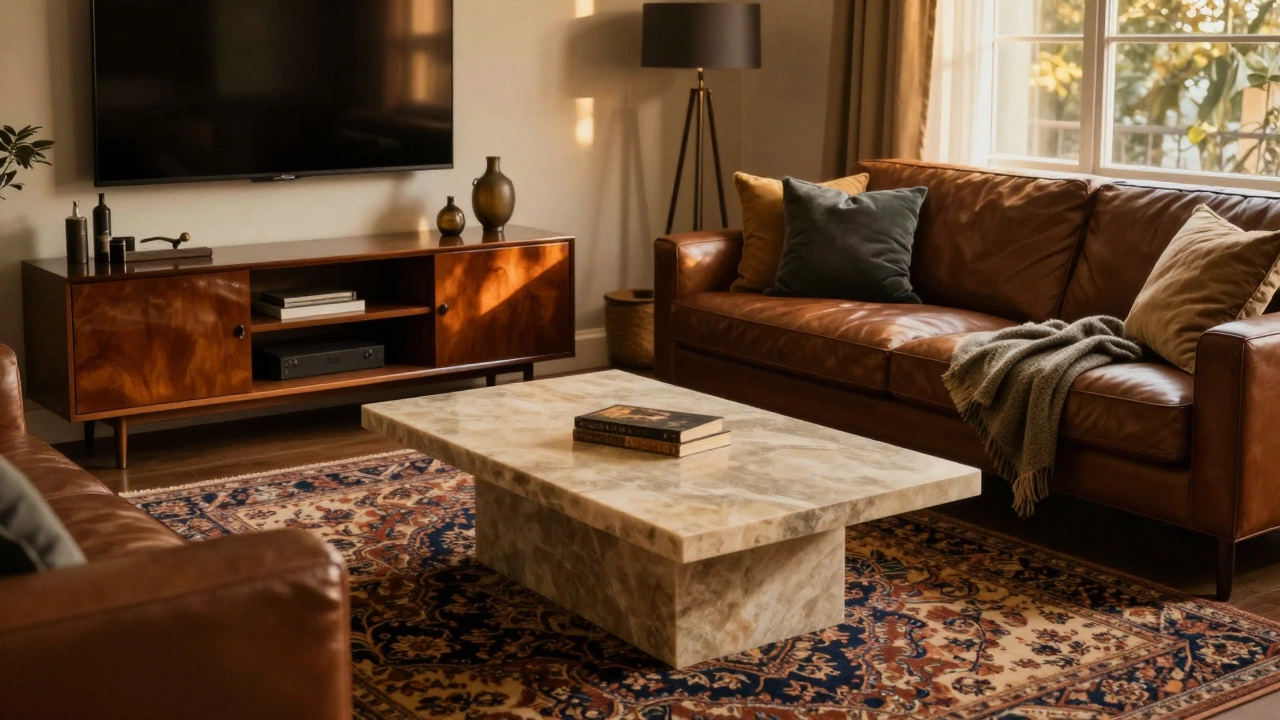
Your sofa is the glue that holds these two opposing forces-the screen and the gathering spot-together. If the coffee table and TV stand cannot agree on a color palette, use your sofa to mediate. For example, a neutral gray sectional can carry both a black industrial media console and a natural wood table. The upholstery becomes the neutralizer. This approach is particularly effective if you are renting and stuck with a landlord's ugly carpet.
Common Mistakes to Avoid
To ensure your living room doesn't look accidental but rather intentional, watch out for these traps:
- The Three-Finish Syndrome: Limit yourself to three primary finishes max. Wood, metal, and glass. Adding leather or velvet introduces texture, but keep the structural materials limited.
- The Metallic Mismatch: Don't pair gold with silver unless it's a very specific eclectic theme. Stick to one metal family throughout the hardware (handles, feet, trim).
- Scale Imbalance: Never let the coffee table dominate the TV stand in size unless the TV stand is minimal wall-mounted hardware.
Real-Life Application
Imagine you have an existing black TV stand with chrome legs. You need a new coffee table.
Option A (Strict Match): Buy another black table. It will blend in too much and look flat.
Option B (The Harmony Play): Buy a white or light wood coffee table with chrome legs. Now the metal ties them together, while the contrasting tops create depth. This is generally the stronger design choice.
Option C (The Contrast Play): Keep the chrome, but change the shape. If the TV stand is rectangular and angular, get a round or organic-shaped coffee table. Different shapes soften the boxiness of the electronics storage.
Styling Without Overthinking
If you are worried about the furniture feeling disjointed, bring in a rug. A large area rug anchors the zone. As long as the rug touches all four corners of both furniture pieces, they belong in the same zone regardless of their finish. Textiles are forgiving. If the wood tones are fighting, throw a wool blanket on the sofa or a cushion on the chair that picks up the hue of the darker piece.
Design is rarely about rigid rules anymore; it's about balance. Your eyes need a place to rest. By allowing the coffee table and TV stand to complement rather than clone each other, you invite interest into the room. You give the space a history, making it feel like a curated home rather than a staged showroom.
Can I mix warm and cool wood tones in the same room?
Yes, but proceed with caution. It usually requires a neutral element (like a gray sofa, rug, or wall color) to separate the two temperatures. Otherwise, the red tones in cherry wood may conflict with the blue-gray tones in oak, causing visual fatigue.
What is the most important dimension to match?
Proportional scale is more important than finish. A heavy, oversized coffee table will always overwhelm a delicate TV stand. Ensure the visual "weight" or volume of the furniture pieces is somewhat balanced across the room.
Should my coffee table be wider than my TV stand?
Generally, no. While it is possible in large rooms, standard rule-of-thumb suggests the coffee table should span about 2/3 the width of the sofa, and the TV stand should be close to the TV width. Usually, the TV stand ends up being the widest fixed object.
Is it okay to use metal and wood together?
Absolutely. Metal and wood pairings are highly versatile. An industrial pipe TV stand pairs beautifully with a natural wood coffee table. The key is to repeat the metal somewhere else in the room, such as lamp bases or picture frames.
How do I fix mismatched furniture I already own?
Introduce a third element that links them. A throw pillow that matches the coffee table, placed on a sofa near the TV stand, creates a triangle of association. You can also use rugs or wall art to bridge the gap between disparate finishes.