Sofa Longevity & Value Calculator
Your Sofa Details
Estimated Value Analysis
Fill out the details to see the projected lifespan and annual cost.
Quick Summary: What to Expect
- Budget sofas typically last between 2 and 5 years before showing significant wear.
- The frame material (particle board vs. kiln-dried wood) is the biggest predictor of longevity.
- Fabric choice and foam density determine when the "sag" happens.
- Regular maintenance can stretch a cheap couch's life by an extra year or two.
You've seen it happen: you buy a sleek, affordable couch that looks amazing in the showroom. Six months later, one cushion is permanently dipped, and the armrest is starting to pill. It feels like a rip-off, but the reality is that furniture is priced exactly for the materials used. If you're spending a fraction of the cost of a high-end piece, you're essentially trading long-term durability for immediate affordability. The real question isn't just how long it lasts, but when it becomes "unusable." For most budget pieces, that window hits around the 3-year mark.
The Anatomy of a Budget Sofa
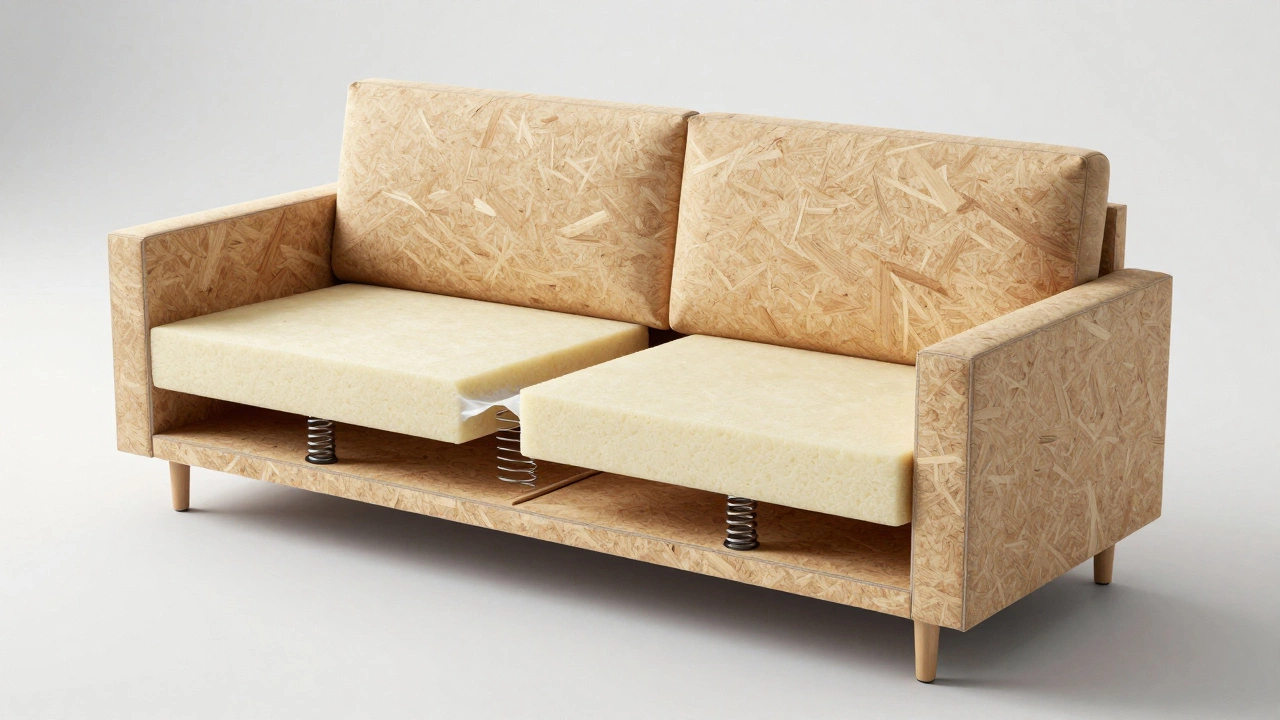
To understand why some couches crumble while others hold up, you have to look at what's inside. A cheap sofa is a piece of upholstered furniture designed for low-cost production, typically using engineered woods and synthetic foams. Unlike a heritage piece, these aren't built to be passed down to your kids.
The biggest culprit is often the Frame. High-end sofas use kiln-dried hardwoods. Budget versions often rely on Particle Board or MDF (Medium-Density Fibreboard). These are essentially glued-together sawdust. They are cheap and light, but they hate moisture and lack the structural integrity to handle heavy weight over years of use. If you hear a creak or a pop when you sit down, that's usually the engineered wood giving way.
Then there's the suspension. While a luxury sofa might use eight-way hand-tied springs, a budget option usually employs Sinuous Springs-essentially S-shaped wires stretched across the frame. These are efficient and a bit more durable than basic webbing, but they eventually lose their tension, leading to that dreaded "sink-hole" effect in the middle of the seat.
Decoding the Lifespan: The 2-to-5 Year Window
Why is the range so wide? Because a "cheap" sofa can vary wildly depending on how you use it. If you're a single person who uses the couch for reading a book twice a week, it might last five years. If you have three kids and a Golden Retriever, you're looking at a two-year countdown.
Here is how the decline usually happens:
- Year 1: The Honeymoon. Everything feels firm. The fabric is crisp. You're happy with the bargain.
- Year 2: The Sag. The Polyurethane Foam in the cushions starts to compress. You notice you're sitting an inch lower than you were on day one.
- Year 3: The Structural Shift. The frame starts to loosen. You might notice the sofa "rocks" slightly when you shift your weight. Fabric wear appears on the armrests.
- Year 4-5: The End Stage. The cushions no longer bounce back. The fabric is thinning or ripped in high-traffic areas. At this point, the cost of reupholstering it is higher than the cost of the original sofa.
| Attribute | Budget (Cheap) | Mid-Range | Luxury / Heirloom |
|---|---|---|---|
| Frame Material | Particle Board / Plywood | Hardwood / Plywood Mix | Kiln-Dried Hardwood |
| Cushion Fill | Low-Density Foam | High-Density Foam / Down Blend | Down / Memory Foam / High-Resiliency |
| Typical Lifespan | 2-5 Years | 7-12 Years | 20+ Years |
| Expected Cost | $200 - $800 | $1,000 - $3,000 | $4,000+ |
The Role of Fabric and Upholstery
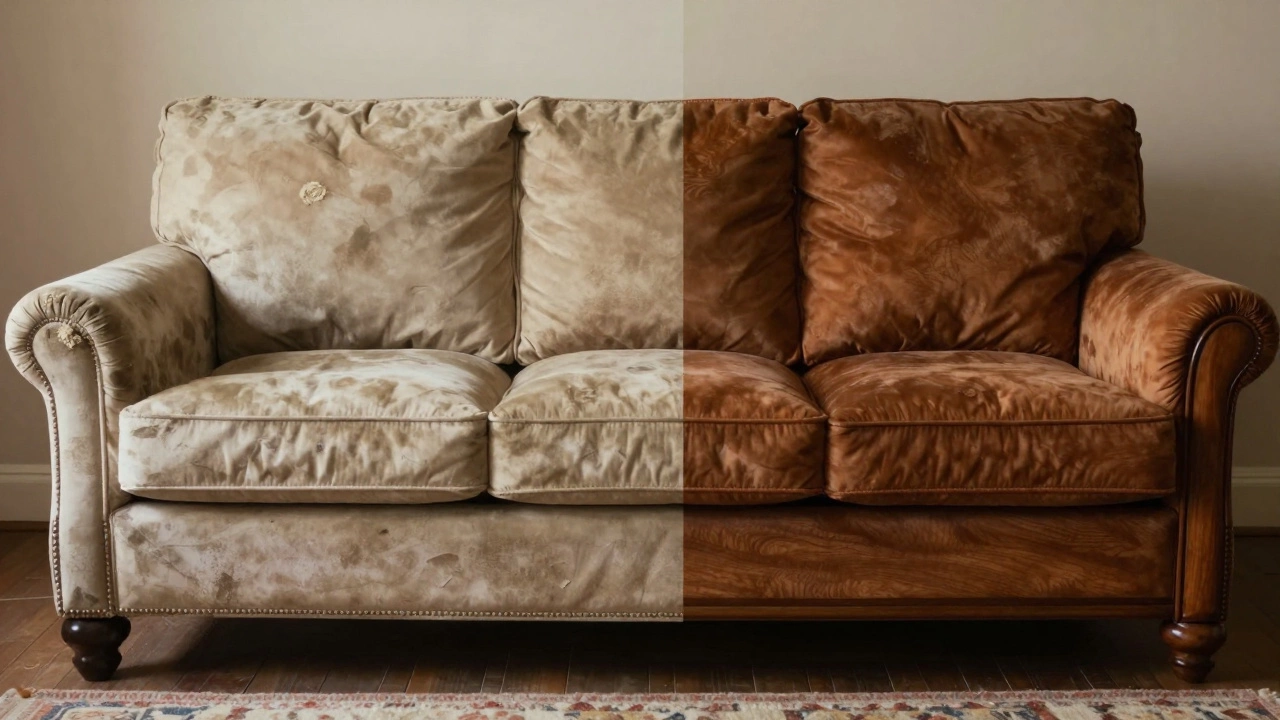
The visual death of a sofa often happens long before the structural death. Most cheap sofas use Polyester or low-grade blends. While these are durable in terms of abrasion, they are prone to "pilling"-those annoying little balls of fabric that form on the surface.
If you choose a light-colored fabric on a budget couch, the lifespan of its aesthetic appeal is drastically shortened. Cheap dyes fade faster in sunlight, and the fabrics aren't treated with high-end stain repellents. One spilled glass of red wine on a cheap polyester blend is often a permanent scar, whereas a high-end performance fabric (like those treated with Teflon or similar nanotechnology) would let the liquid bead up and slide off.
Think about the environment. If your sofa is placed directly in a sunny window, the UV rays will break down the synthetic fibers. Within two years, the side facing the window will be several shades lighter than the rest of the couch, making it look "old" even if the frame is still solid.
How to Make a Cheap Sofa Last Longer
You don't have to accept a two-year expiration date. A few simple habits can push a budget piece into that 5-year bracket. The most effective method is the "rotation strategy." Just like a mattress, sofa cushions should be flipped and rotated. If you always sit in the same spot, that specific area of foam will collapse while the rest of the sofa remains pristine. By rotating the cushions every few weeks, you distribute the weight more evenly.
Another pro tip is to use a Sofa Cover. It might not be the height of fashion, but protecting the fabric from direct skin oils and pet hair prevents the fibers from breaking down. If you have pets, a heavy throw blanket on the armrests-where dogs love to lean-can prevent the fabric from tearing.
Don't ignore the "wobble." If you notice the sofa starting to lean, check the legs. Many cheap sofas have legs that simply screw into the frame. Tightening these with a wrench or adding a small furniture glide can prevent the frame from twisting, which is often what leads to the particle board cracking.
When to Stop Repairing and Just Replace
There comes a point where trying to save a cheap sofa is a waste of money. The rule of thumb is the "50% Rule." If a repair (like replacing the foam or professional cleaning) costs more than 50% of what you'd pay for a new, similar sofa, toss it.
Structural failure is the red line. If the frame actually snaps-meaning the wood has split and the sofa is leaning at an angle-it's over. Fixing a particle board frame is nearly impossible because the material doesn't hold screws or glue once it has crumbled. You can't "patch" sawdust. On the other hand, if the only problem is a saggy cushion, you can buy high-density foam inserts online for a fraction of the cost of a new couch, effectively resetting the clock on your comfort.
Budgeting for the Future: The Cost-Per-Year Logic
When you're shopping for a cheap sofa lifespan, it helps to stop looking at the price tag and start looking at the cost-per-year.
Imagine you buy a sofa for $400. It lasts 3 years. Your cost is roughly $133 per year. Now imagine you spend $1,200 on a mid-range piece that lasts 10 years. Your cost is $120 per year. In this scenario, the "expensive" sofa is actually cheaper over time. This is the trap of budget furniture; it feels like you're saving money today, but you're actually paying a "replacement tax" every few years.
However, for certain life stages, the cheap sofa is the correct choice. If you're in a first apartment, moving every year, or have toddlers who treat the living room like a wrestling ring, investing $3,000 in a hardwood frame is a bad move. In those cases, the $400 sofa is a tool-you use it until it's exhausted and then replace it when your lifestyle stabilizes.
What are the warning signs that my cheap sofa is about to fail?
The most common signs are audible creaking when you sit down, a noticeable dip in the center of the seat that doesn't spring back, and fabric pilling or thinning on the armrests. If the sofa starts to "lean" to one side, it's a sign the internal frame is warping or breaking.
Can I replace the foam in a cheap sofa?
Yes, most budget sofas have removable cushion covers. You can measure the existing foam and order high-density polyurethane foam replacements online. This is one of the most cost-effective ways to extend the life of a budget couch.
Is fabric or leather better for a budget sofa?
At a low price point, "leather" is usually bonded leather or faux leather (PU). These often peel or crack within 2-3 years, which looks much worse than worn fabric. For the lowest budgets, a durable polyester fabric is generally a safer bet than a cheap faux leather.
Does the brand matter when buying a cheap sofa?
To an extent. Some big-box retailers have better quality control and standardized warranties. While the materials remain cheap, a reputable brand is more likely to use a plywood frame instead of pure particle board, which can add a year or two to the sofa's life.
How often should I clean a budget sofa to make it last?
Vacuuming the crevices weekly prevents grit and crumbs from acting like sandpaper on the fabric fibers. A light vacuuming every few days and a professional steam clean every two years can prevent the fabric from degrading prematurely.