Bedroom TV Stand Safety Calculator
TV Safety Check
Enter your TV and furniture specifications to check if your chosen alternative meets safety requirements.
Most people think you need a dedicated TV stand to put your TV in the bedroom. But what if your space is small, your budget is tight, or you just want something different? You don’t need a fancy console to hold your TV. There are plenty of real, functional, and stylish alternatives that work better than a standard TV stand in a cramped bedroom.
Bookshelves Work Better Than You Think
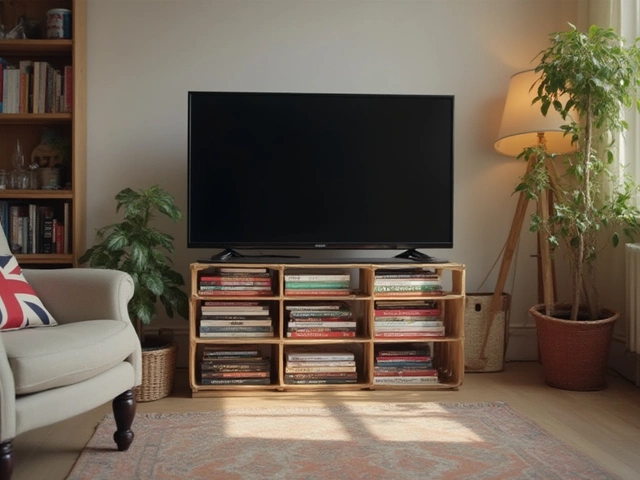
A solid bookshelf isn’t just for books. Many people use a narrow, sturdy bookshelf as a TV stand-and it’s one of the most popular hacks. Look for one with a flat top, at least 40 inches wide, and a weight capacity of 50 pounds or more. A 3- or 4-shelf unit from IKEA’s KALLAX series, for example, holds a 55-inch TV just fine. The open shelves underneath are perfect for game consoles, streaming boxes, or even a small soundbar. Bonus: you get storage without buying extra furniture.
Make sure the shelf is anchored to the wall. A top-heavy TV on an unsecured unit can tip. Use the included safety straps or a simple L-bracket. Also, avoid glass shelves. They look nice but aren’t strong enough for most TVs.
Use a Console Table From the Living Room
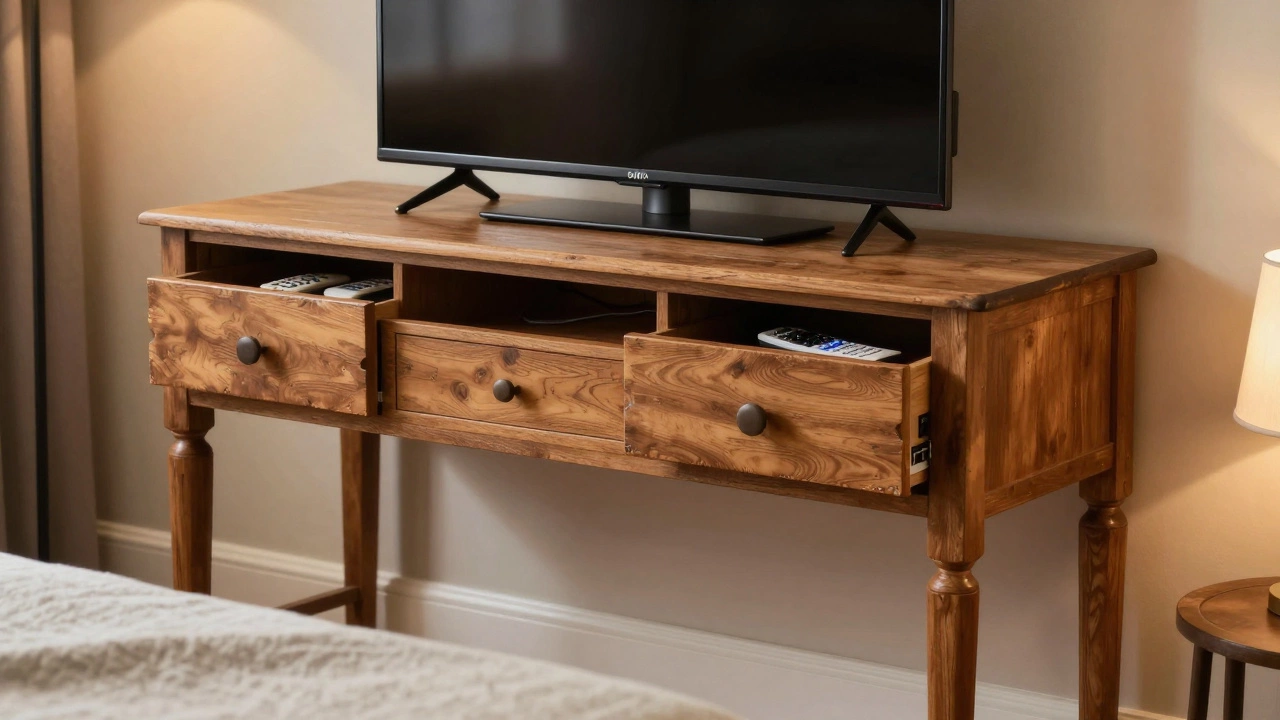
Got an old console table collecting dust in the living room? Move it to the bedroom. Console tables are designed to hold weight and often have drawers or shelves for cables and remotes. They’re usually 30 to 48 inches wide-perfect for most TVs. A wooden console from a thrift store can cost under $50 and looks way better than a plastic TV stand.
Check the height. A TV should sit at eye level when you’re lying down. Most console tables are 28 to 32 inches tall, which works well for a bed that’s 18 to 22 inches high. If it’s too low, put it on a riser or a sturdy crate. If it’s too high, use a low-profile media base underneath.
Media Chests Double as Storage and Stand
A media chest is basically a low dresser built for electronics. It’s wide, deep, and has closed storage to hide wires and devices. Many come with ventilation slots to keep your gear cool. Brands like Sauder and Ameriwood make affordable models under $200. You can also find used ones on Facebook Marketplace or Trade Me.
These are great if you want to keep your bedroom clutter-free. No exposed cords, no dusty remotes. Just a clean surface for your TV and everything tucked away. Some even have built-in cable management holes.
Repurpose an Old Dresser
Don’t throw out that old dresser. If it’s solid wood and stable, it can become a TV stand. Remove the top drawers if they’re in the way. Sand and paint it if you want a fresh look. A six-drawer dresser gives you tons of storage for clothes, blankets, or media gear.
Watch out for uneven tops. Use a level to check. If the surface isn’t flat, place a piece of plywood or a thick cutting board on top to create a stable platform. Also, make sure the TV’s weight doesn’t exceed the dresser’s load limit. A typical dresser can handle up to 100 pounds if it’s well-built.
Wall-Mounted Shelves Are Space-Savers
If your bedroom is tiny, skip the floor stand entirely. Install a floating shelf directly on the wall. Use heavy-duty brackets and anchor into studs. A 48-inch shelf made from 1.5-inch thick hardwood can easily hold a 65-inch TV. You’ll save floor space and get a sleek, modern look.
Mount the TV at least 36 inches above the floor for comfortable viewing from bed. Add a small shelf below for a soundbar or streaming device. You can even hide the wires inside the wall if you’re handy with a drywall saw. Just don’t go too wide-the shelf needs to be centered under the TV for balance.
Use a Coffee Table as a Low TV Stand
Yes, a coffee table can work. If you like watching TV from a recliner or lying on your side, a low table is fine. Look for one with a solid wood top and thick legs. Avoid glass or thin metal frames-they flex under weight and can wobble.
Place the TV on a foam pad or rubber mat to prevent scratches. Make sure the table is at least 10 inches deeper than your TV’s width so it doesn’t overhang dangerously. This setup works best with smaller TVs (under 50 inches) and in rooms with high ceilings. It’s not ideal for large rooms or if you have kids or pets around.
Build a Simple Wooden Platform
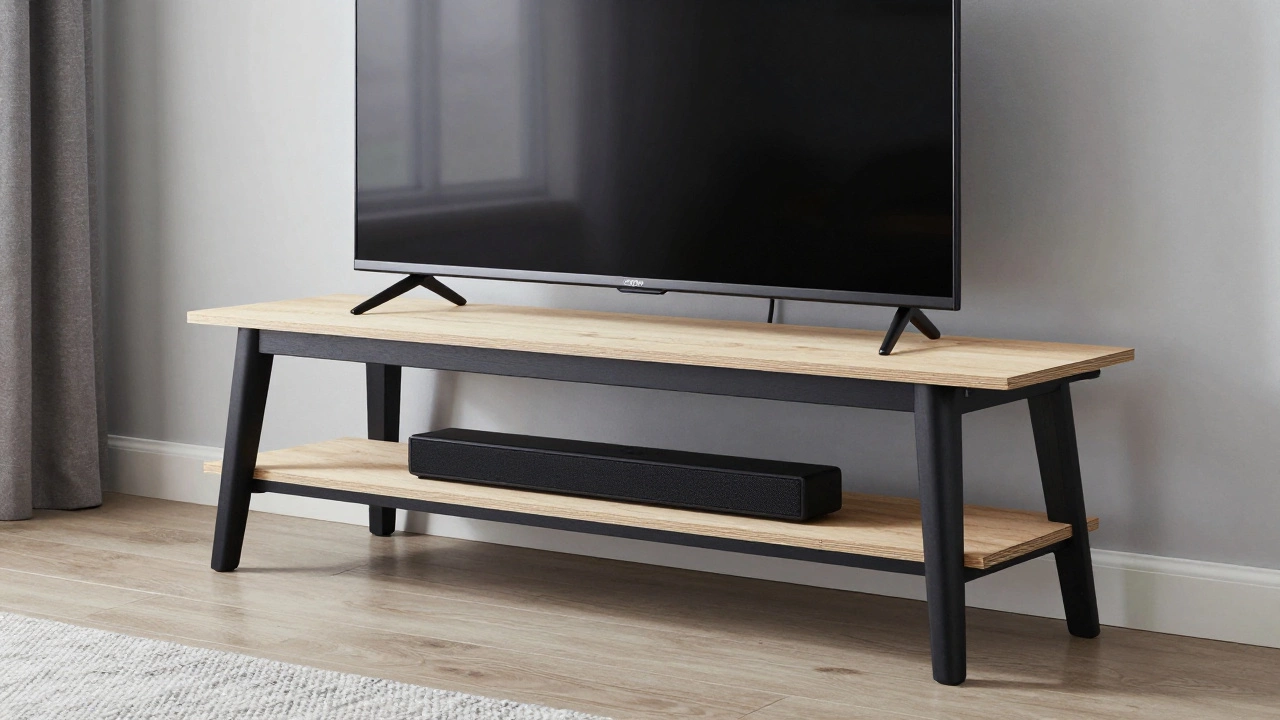
DIY doesn’t have to mean complicated. Buy two 2x4s and a sheet of 3/4-inch plywood from your local hardware store. Cut the wood to match your TV’s width, then screw the pieces together to make a flat base. Add four legs-either pre-made furniture legs or even sturdy wooden blocks. Paint or stain it to match your room.
This costs less than $40 and takes under two hours. You can customize the height, width, and color. It’s strong, stable, and completely unique. Add a small shelf underneath for extra storage. This is one of the best options if you like hands-on projects.
Use a Side Table With a Strong Top
A sturdy side table can work if it’s wide enough. Look for one with a solid wood or metal top, at least 36 inches wide. Avoid flimsy plastic or particleboard. A table from a hotel room or an old nightstand can be repurposed if it’s heavy-duty.
Place the TV in the center. Use anti-slip pads to keep it from sliding. This setup works best with smaller TVs (40 inches or less). It’s not ideal for heavy sound systems or multiple devices. But if you only need to hold a 32-inch TV and a Roku, it’s perfectly fine.
Try a Rolling Cart
A metal or wooden rolling cart, like the ones used in kitchens or workshops, makes a great mobile TV stand. You can roll it out when you want to watch and tuck it away when you don’t. Look for one with a top shelf at least 40 inches wide and a weight rating of 50+ pounds.
Some carts come with drawers or baskets for remotes, chargers, and DVDs. The wheels make it easy to move, but lock them if you’re watching something long. This is perfect for shared bedrooms or if you move your TV around often.
Use a Benches or Ottoman With a Flat Top
Not many people think of this, but a solid wooden bench or an ottoman with a flat, rigid top can hold a TV. You’ll need to add a thick, flat surface on top-like a piece of plywood or a large cutting board-to create a level platform.
This works best if your bed is low and you’re watching from a seated position. It’s not ideal for heavy TVs, but a 40-inch model is fine. You get extra seating and hidden storage underneath if the ottoman opens. Just make sure the base is strong enough. Test it with a heavy box before putting your TV on it.
What to Avoid
Not every piece of furniture is safe. Skip these:
- Thin particleboard stands-they warp under TV weight
- Decorative cabinets with glass doors-they’re not built for weight
- Wobbly folding tables-they’re unstable and dangerous
- TV stands with no ventilation-they trap heat and shorten your TV’s life
- Anything without a flat, level surface-your TV will tilt and look bad
Always check the weight limit. Most TVs weigh between 30 and 70 pounds. Add 10 pounds for a soundbar or mount. If the furniture can’t handle it, don’t risk it.
Final Tip: Measure Everything
Before you move anything, measure:
- Your TV’s width and depth
- The height from your bed to your eyes when lying down
- The space between your bed and the wall
- The weight of your TV and any accessories
A TV that’s too big for the stand looks awkward. One that’s too high makes you strain your neck. A stand that’s too narrow risks tipping. Don’t guess-measure twice, move once.
Is It Safe?
Yes-if you do it right. Any surface can hold a TV as long as it’s stable, level, and rated for the weight. The key is anchoring it. Use anti-slip pads, secure it to the wall if possible, and avoid anything that wobbles. A well-chosen alternative is just as safe as a store-bought stand-and often better looking and more useful.
People in Auckland, Wellington, and Christchurch are doing this all the time. You don’t need to spend $300 on a TV stand. Use what you’ve got. Be creative. Your bedroom will thank you.
Can I put a TV on a dresser?
Yes, as long as the dresser is solid, flat, and wide enough to support the TV’s weight. Most wooden dressers can hold up to 100 pounds. Make sure the top is level and use anti-slip pads. Avoid glass-topped or flimsy particleboard dressers.
Is a coffee table okay for a TV in the bedroom?
Only if it’s sturdy, wide enough, and the TV is small-under 50 inches. Coffee tables are low, so this works best if you’re watching from a recliner or lying on your side. Use a rubber mat to prevent scratches and make sure the table doesn’t wobble.
How do I hide the wires if I don’t use a TV stand?
Use cable clips to stick wires to the wall behind the TV. Run them through a hollow picture frame or behind a bookshelf. For a cleaner look, install a raceway-a plastic channel that sticks to the wall and hides cords. You can also use adhesive cord covers that match your wall color.
What’s the safest material for a DIY TV stand?
Solid wood or thick plywood (3/4 inch or more) is the safest. Avoid MDF or particleboard-they sag over time. For legs, use metal furniture brackets or thick wooden blocks. Always anchor the stand to the wall if it’s tall or top-heavy.
Can I use a bookshelf as a TV stand if it has open shelves?
Absolutely. Many people do. Just make sure the top shelf is wide enough, flat, and strong. Use a level to check for tilt. Secure the bookshelf to the wall with brackets. Open shelves let you see your devices, but keep cables neat with zip ties or clips.