Sofa Bed Matcher
Confused by terms like "futon," "sleeper," or "convertible"? Answer three quick questions to find the perfect match for your space.
Also known as:
Mechanism
Best For
Why this matches you:
You walk into a furniture store or scroll through an online catalog looking for that magical piece of furniture that turns your living room into a guest bedroom. You type "sofa bed" into the search bar, but you see terms like futon, pull-out couch, and convertible sofa. Are they all the same thing? Do they work the same way? And why does one cost $300 while another costs $1,500?
The confusion is real. In the furniture world, naming conventions are messy. Retailers often use these terms interchangeably to boost search visibility, but mechanically, they are very different animals. Knowing the right name helps you buy the right product. If you call a Futon a low-profile seating unit with a foldable mattress frame a "sleeper," you might end up with something that fits in your apartment but feels like sleeping on a plank. Conversely, if you want a true sleeper but buy a cheap click-clack chair, your guests will complain about their backs.
The Core Distinction: Mechanism Matters More Than Name
Before we list every synonym, let’s clear up the biggest misconception. The term "sofa bed" is an umbrella category. It describes any seating furniture that converts into a bed. However, the industry splits this category based on how the conversion happens. This mechanical difference dictates comfort, durability, price, and storage requirements.
Think of it like cars. A sedan and an SUV are both "cars," but they serve different purposes. Similarly, a Pull-out Sofa a sofa with a hidden metal frame and mattress underneath and a Click-Clack Chair a simple folding lounger with no separate mattress are both sofa beds, but they solve different problems.
Common Synonyms and Specific Types
When people ask, "What is a sofa bed also called?", they are usually trying to identify which mechanism they actually need. Here are the most common names you’ll encounter, broken down by what they actually do.
| Term | Mechanism | Comfort Level | Best For |
|---|---|---|---|
| Sleeper Sofa / Pull-out Couch | Hidden metal frame + separate mattress | High (if memory foam) | Regular guests, small apartments |
| Futon | Folding wooden/metal frame + thin mattress | Low to Medium | Budget buyers, studios, dorms |
| Convertible Sofa | Modular sections rearrange or unfold | Medium to High | Design-focused spaces, frequent use |
| Daybed | Static frame with trundle or full-width mattress | Medium | Dual-purpose rooms, home offices |
| Click-Clack / Lounger | Simple hinge mechanism, seat becomes backrest | Low | Occasional use, tight corners |
The Sleeper Sofa: The Gold Standard
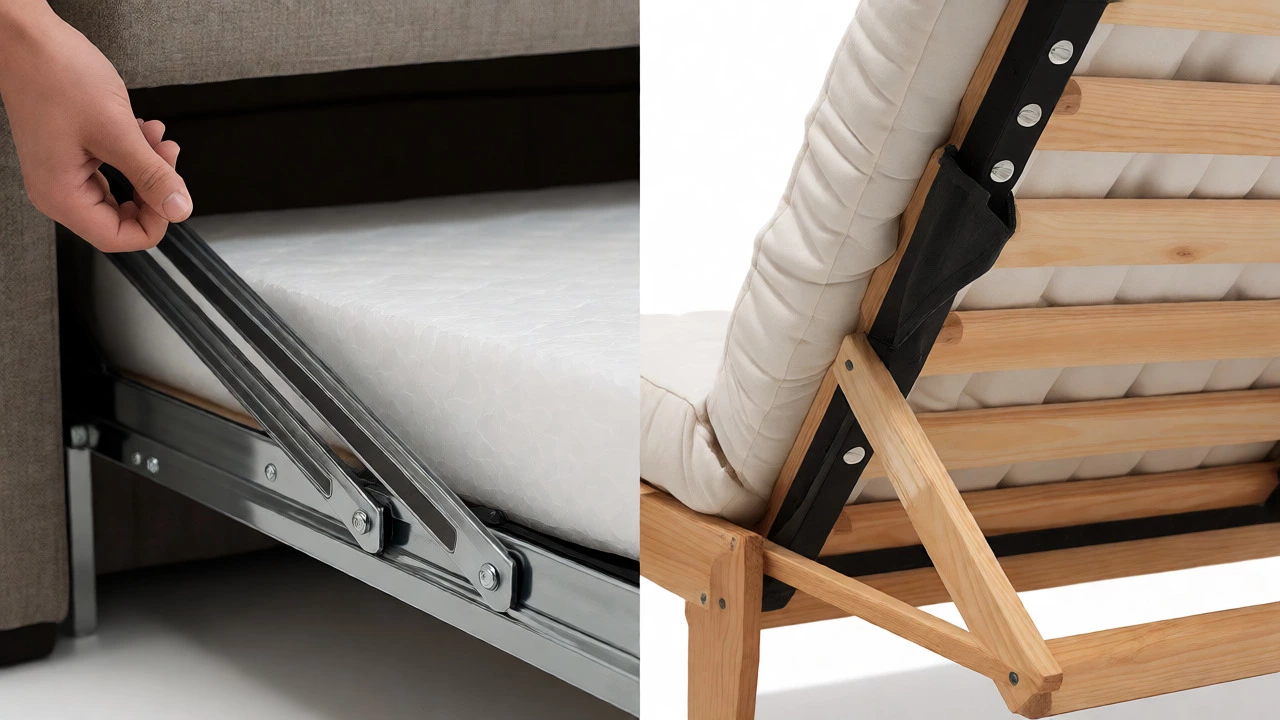
When someone says "sofa bed" in a general sense, they usually mean a Sleeper Sofa a upholstered sofa containing a folded metal frame and mattress. These are the heavyweights of the category. Inside the cushions, there is a steel accordion-style frame. When you pull a handle or lift a cushion, the frame unfolds, revealing a mattress that was previously folded in half or thirds.
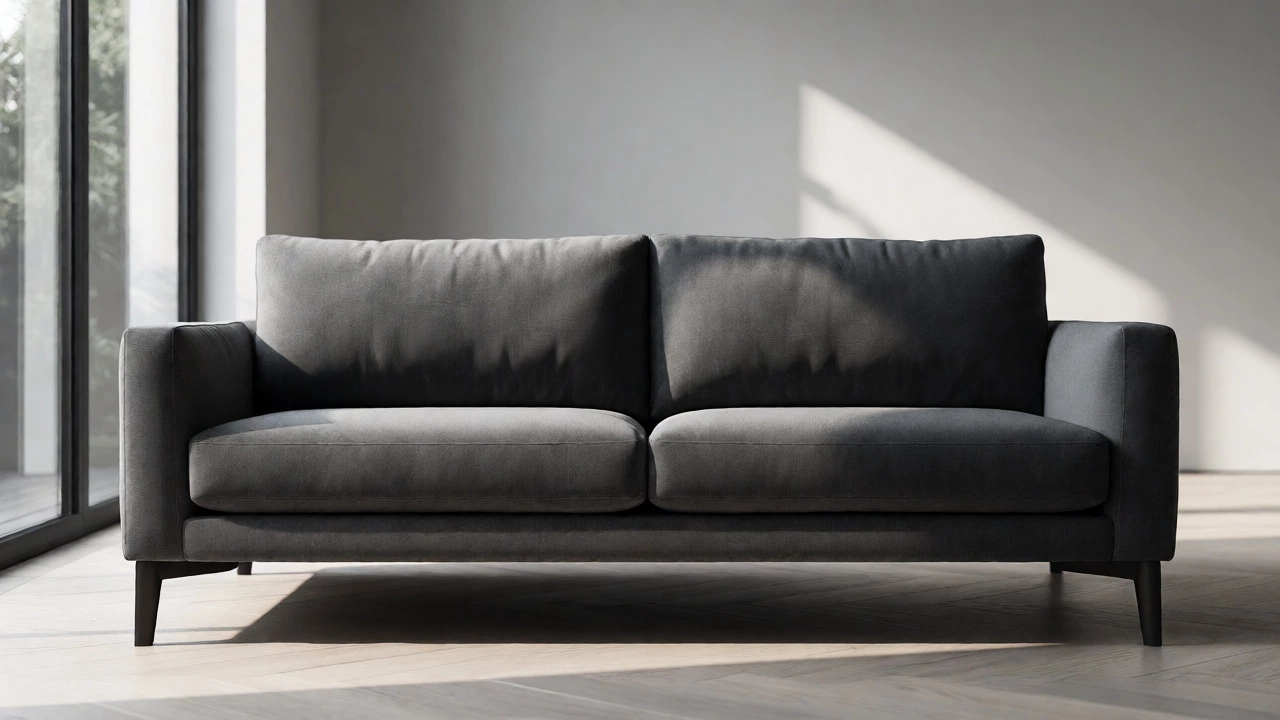
Why do people confuse these with other types? Because visually, from the front, a high-end sleeper looks exactly like a regular luxury sofa. You can’t tell it’s a bed until you open it. This makes them ideal for formal living rooms where aesthetics matter more than convenience.
However, not all sleepers are created equal. The quality hinges on two things: the frame and the mattress. Cheap models use rigid springs that dig into your hips. Better models use memory foam or latex layers over the coil system. If you plan to host guests more than twice a month, invest in a model with at least 4 inches of memory foam. Anything less, and you’re paying for the look, not the sleep.
The Futon: Misunderstood and Often Maligned
A Futon a Japanese-originated bedding system adapted for Western furniture as a folding frame with a thin mattress is arguably the most misnamed item in the category. In Japan, a futon is just a thick cotton mattress laid on the floor. In the West, specifically North America and Australia/NZ, it refers to a specific type of furniture: a wooden or metal frame that folds flat, with a single thin mattress attached to it.
Futons are often called "cheap sofa beds" because they lack the complex metal mechanism of a sleeper. They are lighter, easier to move, and significantly cheaper. But here is the catch: the mattress is part of the frame. When you sit, you sit on the edge of the mattress. When you sleep, you lie on the whole thing. Over time, the middle sags, and the slats beneath can poke through.
If you see the term "Japanese-style futon," be careful. Some retailers sell actual tatami mats and shikibuton mattresses under this label, which aren't furniture at all. Others sell the Western folding frame. Always check the dimensions and materials. If it has wooden slats visible when unfolded, it’s a Western futon. If it’s just a thick pad, it’s likely traditional bedding.
Convertible Sofas: The Modern Hybrid
As interior design trends shift toward minimalism and modularity, the term Convertible Sofa a modular or sectional sofa that transforms into a bed without a hidden pull-out mechanism has gained popularity. Unlike sleepers, these don’t hide a frame inside. Instead, they use clever engineering-like extending footstools, flipping backrests, or interlocking modules-to create a flat surface.
One popular subtype is the "chaise lounge converter." You pull the chaise section out, and it extends to form a twin-sized bed. Another is the "drop-down arm" sofa, where the arms lower to become side rails. These are often marketed as "designer sleeper sofas" because they don’t have the bulky, industrial look of a metal pull-out frame.
Are they comfortable? Surprisingly, yes, if designed well. Because there’s no metal grid underneath, manufacturers can use higher-density foam throughout. The downside? They take up more space when converted. A standard sofa might extend 6-8 feet, but a convertible sectional might require a larger footprint to lay flat. Measure your room before buying.
Daybeds and Trundles: The Static Alternatives
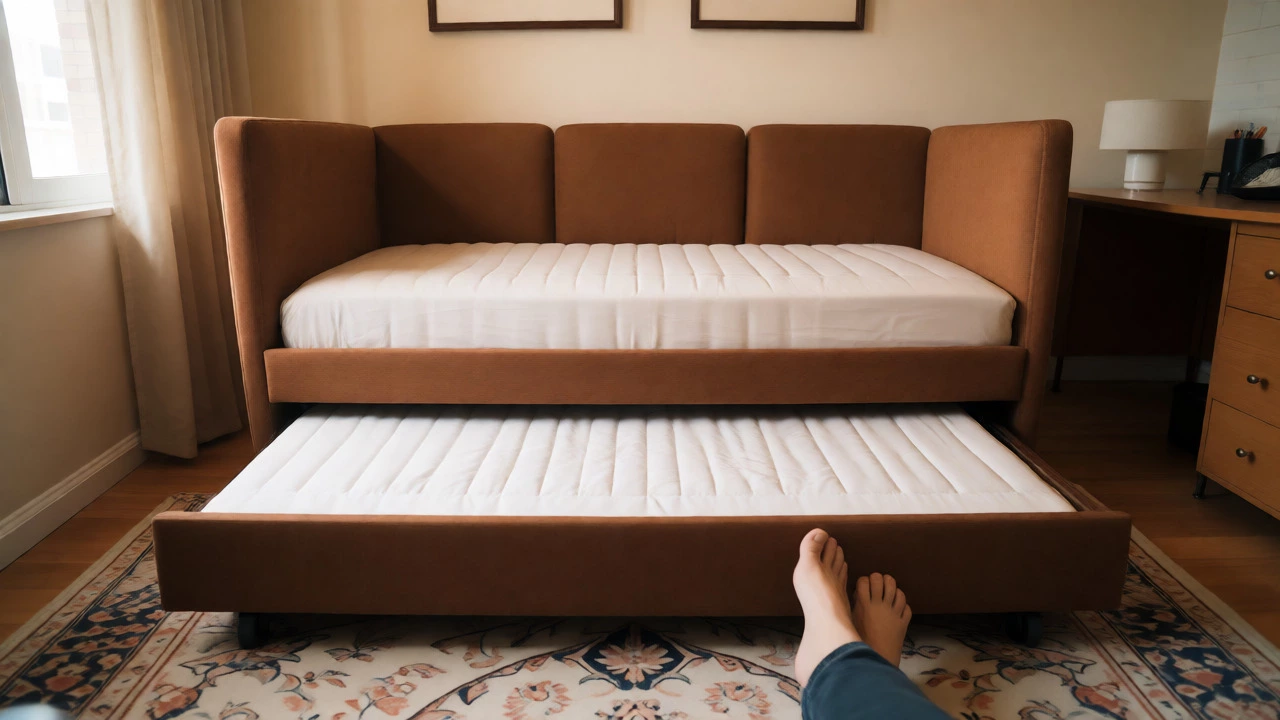
Not everything that sleeps needs to convert. A Daybed a multi-functional furniture piece resembling a sofa with three sides, often used as a bed is essentially a twin-sized bed dressed up as a couch. It has a backrest and two armrests (or one long back). It doesn’t transform; it just sits there.
Many daybeds come with a Trundle a secondary bed on wheels stored underneath the main bed. This is a second mattress on casters that rolls out from under the daybed. This setup is perfect for children’s rooms or home offices where you want permanent seating but occasional extra sleeping space. Since the main bed is always ready, you don’t have to deal with stiff mechanisms or latches.
Some people call these "loveseats with trundles" or "twin-size settees." If you see "settee," know that it’s just a fancy word for a small sofa. If it has a trundle, it’s effectively a compact guest bed solution.
Regional Differences: What’s in a Name?
Language varies by geography. In the UK, you might hear the term "sofa bed" used strictly for pull-outs, while "futon" is reserved for the folding frame type. In Australia and New Zealand, the terms are mixed, but "click-clack" is a very common colloquial term for the simple hinged loungers. In Canada, "davenport" is an old-fashioned term for a sofa, sometimes implying a convertible one, though rarely used today.
Be aware of marketing fluff. Online listings often stuff keywords. A listing titled "Luxury Velvet Futon Convertible Sleeper Sofa Bed" is probably just a sleeper sofa trying to capture traffic from people searching for futons. Ignore the jumble of words. Look at the photos and the description. Does it have a metal frame? Is the mattress separate? Those details reveal the truth.
How to Choose the Right Name (and Product) for Your Needs
Stop worrying about what the manufacturer calls it. Focus on your lifestyle. Ask yourself these three questions:
- How often will it be used? Daily use requires a robust mechanism and high-quality mattress. Occasional use allows for cheaper options like futons or click-clacks.
- Who is using it? Elderly guests or those with back pain need a firm, supportive surface (look for memory foam sleepers). Young students or casual guests might be fine with a standard spring futon.
- What is the space constraint? Small apartments benefit from vertical conversions or daybeds with trundles. Large living rooms can accommodate wide-sectional converters.
If you prioritize comfort and aesthetics, search for "memory foam sleeper sofa." If you prioritize budget and portability, search for "wooden futon frame." If you want flexibility and modern design, look for "modular convertible sectional." Using precise terms filters out irrelevant results and saves you hours of scrolling.
Frequently Asked Questions
Is a futon the same as a sofa bed?
No, they are different mechanisms. A sofa bed (or sleeper) typically hides a metal frame and a separate mattress inside the sofa structure. A futon consists of a folding frame with a thin mattress attached directly to it. Futons are generally cheaper and lighter but offer less support and durability than high-quality sleeper sofas.
What is the difference between a pull-out sofa and a convertible sofa?
A pull-out sofa has a hidden mechanism that slides out from under the seat cushions. A convertible sofa changes shape by moving its own parts, such as lowering backrests, extending footstools, or rearranging modular sections. Convertibles often look more seamless as sofas but may require more floor space when opened.
Are sofa beds good for everyday use?
Most sofa beds are designed for occasional use. Everyday use can wear out the mechanisms and flatten the mattress quickly. If you need daily sleeping, look for high-end models with pocket coils or dense memory foam, or consider a dedicated murphy bed instead. Check the warranty to see if it covers daily conversion cycles.
What does "click-clack" mean in furniture terms?
"Click-clack" refers to a simple folding mechanism found in budget-friendly sofa beds and loungers. The name comes from the sound the hinge makes when you adjust the position. The seat folds down to become the backrest, creating a flat surface. They are easy to operate but usually lack a separate mattress, resulting in lower comfort levels.
Can I replace the mattress in a sofa bed?
In many sleeper sofas, yes. You can often unzip the bottom fabric and swap the factory mattress for a custom-cut memory foam or latex topper. However, in futons, the mattress is usually integral to the frame and harder to replace without modifying the structure. Always measure the depth carefully before ordering replacements.