ADHD Seating & Movement Compatibility Finder
Answer the questions below to discover which seating or under-desk solution might best support your need for movement while working.
Your Work Environment
Your Movement Needs
Recommended Primary Solution
You are sitting in a meeting. Your boss is talking about quarterly projections. But your legs won't stop bouncing. You feel an irresistible urge to stand up, pace around the room, or maybe just rock back and forth in your seat. If you have Attention Deficit Hyperactivity Disorder (ADHD), this isn't just bad manners-it's a neurological need. This behavior is often called the "ADHD walk." It’s not actually a medical term found in diagnostic manuals, but it describes a very real phenomenon: the physical restlessness that comes with trying to sit still when your brain is screaming for movement.
Why does this happen? And more importantly, how can you manage it without getting sent home from work early? The answer lies less in willpower and more in understanding how your body processes stimulation. For many people with ADHD, movement isn't a distraction; it's the fuel that allows them to concentrate. When you take away the ability to move, you don't get calm focus. You get mental fog, irritability, and a total shutdown of executive function. Let's break down what the ADHD walk really is, why traditional seating fails, and how the right office chair can turn that restless energy into productive power.
The Science Behind the Need to Move
To understand the ADHD walk, you have to look at dopamine. Dopamine is a neurotransmitter that helps regulate pleasure, reward, and attention. In brains with ADHD, dopamine transmission is often inefficient. Think of it like a radio signal with too much static. To clear the static, the brain seeks external stimulation. Movement provides that stimulation. When you pace, tap your foot, or shift your weight, you are essentially giving your brain the chemical boost it needs to lock onto the task at hand.
This is known as self-stimulation, or stimming. While we often associate stimming with autism, it is highly prevalent in ADHD as well. The "walk" part of the phrase refers to the specific compulsion to leave a stationary position. Sitting still requires constant inhibitory control-essentially, your brain has to actively fight the urge to move. For someone with typical neurology, this takes little effort. For someone with ADHD, it drains cognitive resources. By the time you've spent all your mental energy forcing yourself to stay seated, you have nothing left for listening, analyzing, or problem-solving.
Research suggests that allowing controlled movement improves performance on cognitive tasks for individuals with ADHD. A study published in the Journal of Abnormal Child Psychology found that boys with ADHD performed better on tests when they were allowed to move their legs under the desk. The movement didn't distract them; it helped them pay attention. So, if you feel guilty about pacing during a phone call, remember: you aren't being lazy or unfocused. You are optimizing your brain chemistry.
Why Traditional Office Chairs Fail the ADHD Brain
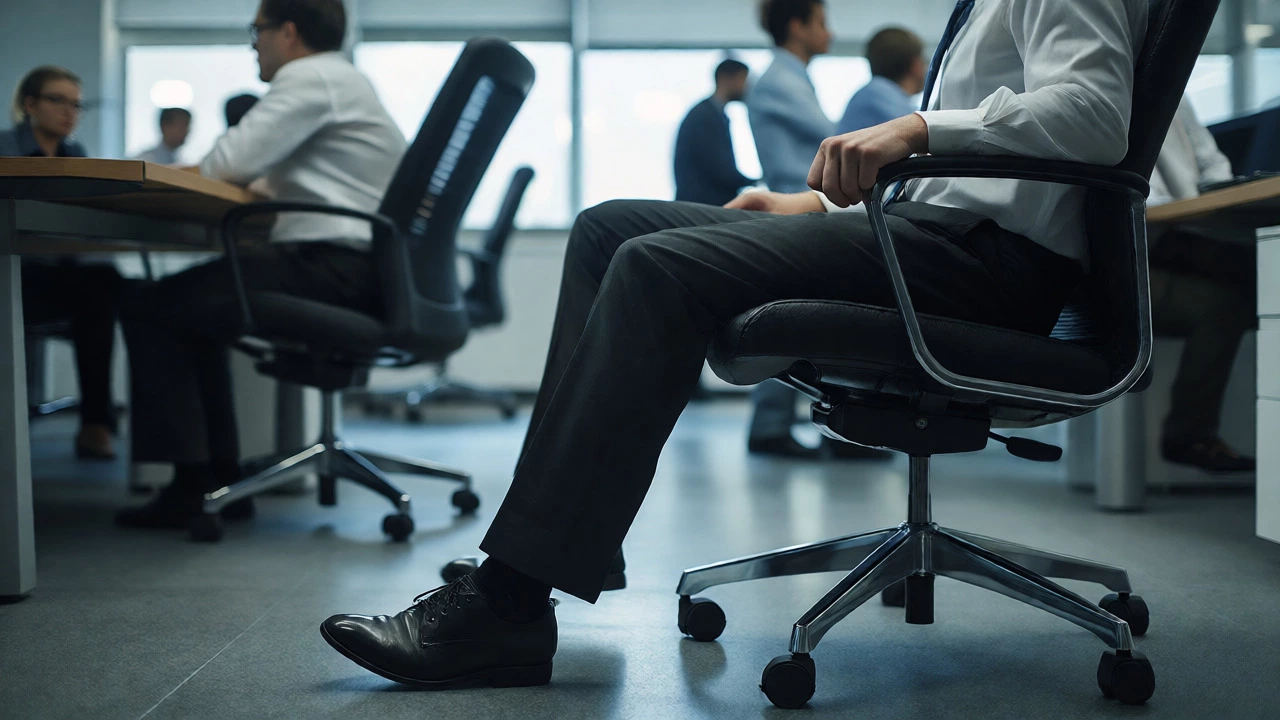
Most standard office chairs are designed for comfort, not for neurodivergent physiology. They prioritize plush cushions and static posture support. But for someone who needs to move, a plush, high-backed chair is a trap. It encourages slouching and locks your lower body in place. If you try to fidget in a heavy-duty executive chair, you might tip over, squeak loudly, or simply feel restricted. This restriction leads to frustration, which makes the fidgeting worse, creating a vicious cycle of discomfort and distraction.
The core issue is that traditional chairs assume the user is static. They are built for people who can sit for hours with minimal movement. They lack features that accommodate dynamic sitting. When you are forced into a static position, your body rebels. You start shifting every thirty seconds. You cross and uncross your legs. You bounce your heel. These micro-movements are attempts to self-regulate. If the chair doesn't allow for these movements safely and quietly, the environment becomes hostile to your productivity.
Furthermore, many office environments discourage visible movement. Pacing around the conference room might be seen as unprofessional. Rocking violently in a standard chair draws unwanted attention. This social pressure forces many people with ADHD to suppress their natural urges, leading to increased stress and reduced cognitive capacity by the end of the day. The solution isn't to suppress the urge, but to channel it through furniture that supports it.
Furniture Solutions: From Active Sitting to Footrests
If you can't walk around the office, you need a chair that lets you "walk" while you sit. This concept is often referred to as active sitting. There are several types of seating solutions designed specifically for people who need to move to think.
Saddle chairs are one option. Unlike traditional chairs, saddle chairs promote an open hip angle and engage your core muscles. Because you have to balance slightly, your body naturally makes small adjustments throughout the day. This keeps your blood flowing and your brain alert without requiring you to leave your seat. However, saddle chairs have a learning curve. If you use them incorrectly, they can cause back pain. They are best used in short bursts or combined with other ergonomic supports.
Another popular choice is the kneeling chair. These chairs distribute weight between your buttocks and knees. Like saddle chairs, they encourage forward-leaning posture and minor pelvic movements. The rocking motion available on many kneeling chairs can satisfy the urge to sway or bounce. Just be cautious with knee health; prolonged use on hard surfaces can cause patellar tendonitis. Pairing a kneeling chair with a soft mat or using it for only part of the day is a smart strategy.
For those who prefer a more conventional look, look for chairs with a synchronized tilt mechanism. This feature allows the seat and backrest to recline together, enabling you to lean back and rock gently. High-quality ergonomic chairs, such as those made by Herman Miller or Steelcase, often include adjustable tension controls so you can set the resistance level to match your weight and desired range of motion. This allows for subtle, quiet fidgeting that goes unnoticed by colleagues but satisfies your sensory needs.
The Role of Footrests and Under-Desk Tools
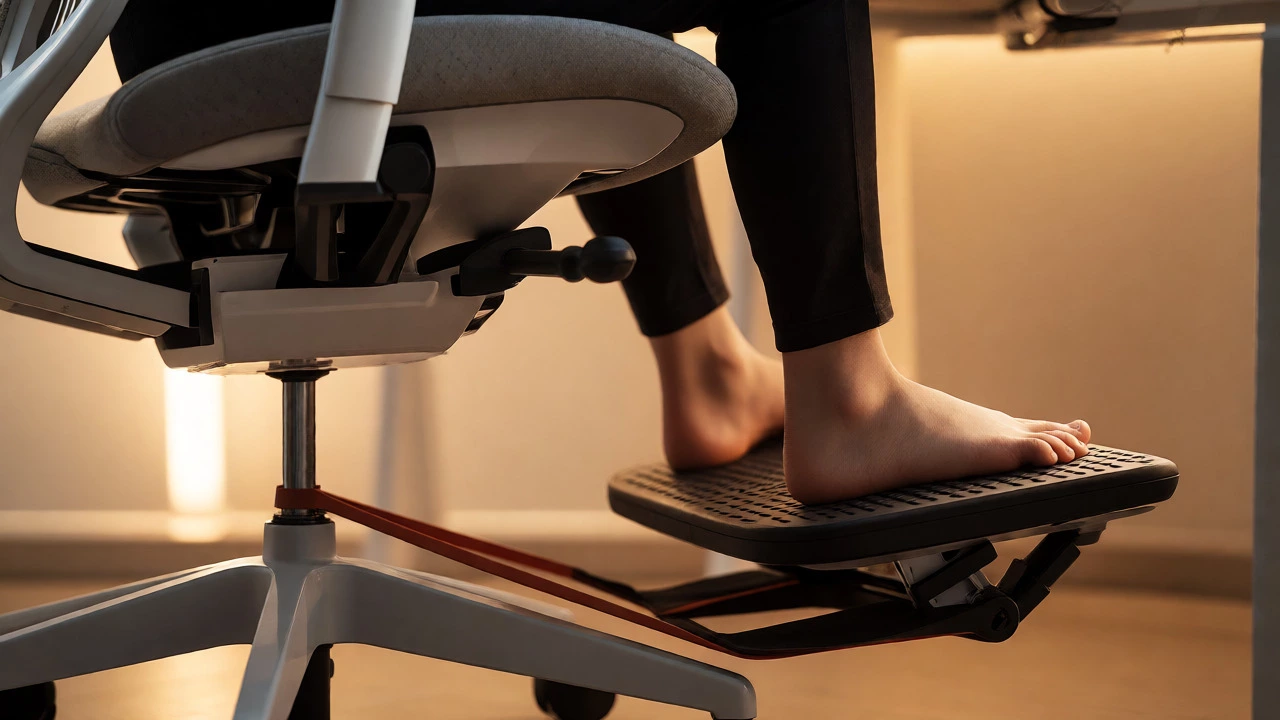
Sometimes, the upper body can stay still, but the legs need freedom. This is where under-desk accessories become game-changers. A simple footrest can make a massive difference. If your feet dangle or press flat against the floor, you lose stability. A footrest gives you something to push against, allowing you to pump your ankles or rotate your feet without sliding out of your chair.
Beyond basic footrests, there are specialized tools designed for fidgeters:
- Under-desk elliptical pedals: These are compact cycling machines that fit under your desk. Pedaling at a low intensity increases blood flow to the brain and burns off excess energy. Many users report improved concentration after twenty minutes of gentle pedaling.
- Balance boards: Standing desks paired with a wobble board allow you to shift your weight constantly. This engages stabilizer muscles and keeps the mind engaged. It’s perfect for calls where you don’t need to type heavily.
- Cable ties or resistance bands: Some people tie a resistance band around the legs of their chair. Looping it around their feet allows them to pull against the band, providing proprioceptive input (deep pressure) that is calming for the nervous system.
These tools transform the act of sitting from a passive state into an active one. Instead of fighting your body, you work with it. The key is finding the right level of stimulation. Too little, and you’re bored. Too much, and you’re distracted. Experimentation is necessary to find your sweet spot.
Comparing Seating Options for ADHD Users
Choosing the right chair depends on your specific symptoms and work environment. Not every solution works for everyone. Here is a breakdown of common options based on their ability to support movement and focus.
| Chair Type | Movement Capability | Learning Curve | Best For | Potential Drawback |
|---|---|---|---|---|
| Standard Ergonomic Chair | Low to Medium (Tilt/Rock) | None | General office use; mild fidgeting | Can feel restrictive if adjustment is poor |
| Saddle Chair | High (Core engagement) | Medium | Short tasks; high-energy phases | Uncomfortable for long sitting periods |
| Kneeling Chair | Medium (Pelvic rocking) | Medium | Forward-focus tasks; writing | Knee strain over time |
| Ball Chair (Stability Ball) | Very High (Constant balance) | Low | Active brainstorming; casual settings | Can roll away; lacks lumbar support |
| Task Chair with Footrest | Low (Ankle/leg movement) | None | Typing-heavy roles; conservative offices | Doesn't address upper body restlessness |
Notice that no single chair is perfect. The most effective setup often involves mixing and matching. For example, you might use a high-end ergonomic chair for deep work sessions where you need back support, but switch to a standing desk with a balance board for creative meetings. Flexibility is crucial because your energy levels and sensory needs fluctuate throughout the day.
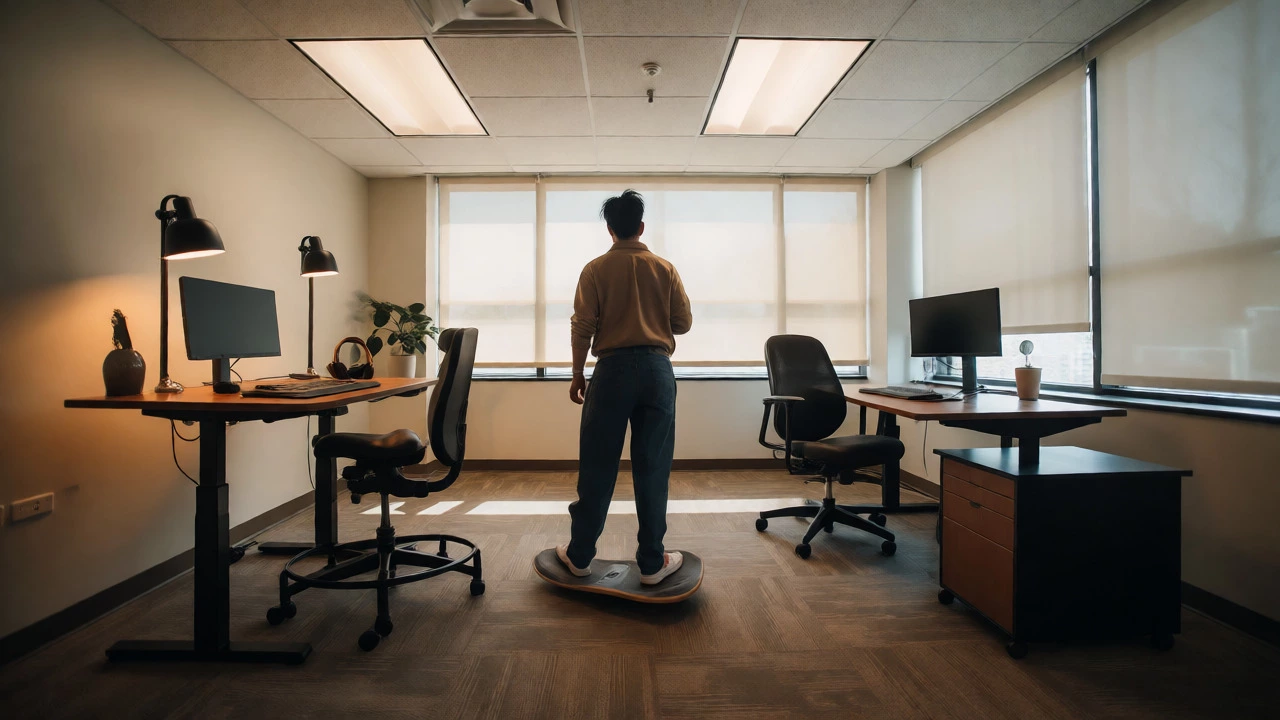
Creating an ADHD-Friendly Workspace
Your chair is just one piece of the puzzle. The entire workspace should minimize friction and maximize sensory regulation. Lighting, noise, and layout all play a role in whether you feel compelled to pace or able to settle.
Start with lighting. Fluorescent lights can be harsh and distracting for people with sensory sensitivities. Try to use warm, dimmable lamps instead of overhead glare. Natural light is ideal, but if you’re working near a window, ensure you can control the brightness with blinds. Visual clutter also competes for attention. Keep your desk surface clear except for the immediate task at hand. If you need visual aids, keep them organized in drawers rather than scattered across the desktop.
Noise control is equally important. Open-plan offices are nightmares for many people with ADHD. The ambient chatter and sudden noises trigger the orienting response, pulling your focus away from your work. Noise-canceling headphones are a standard tool, but consider white noise or brown noise apps. Brown noise, in particular, has gained popularity in the ADHD community for its ability to mask distractions and promote calm. It sounds like a distant waterfall or heavy rain, providing a consistent auditory blanket that helps quiet internal thoughts.
Finally, design your space to allow for easy transitions. If you know you’ll need to stand up frequently, keep your path clear. Don’t block your exit with bags or cables. Make it easy to grab a water bottle, stretch, or step outside for two minutes. Reducing the logistical barriers to movement reduces the mental cost of taking a break, making you more likely to take it before you reach a breaking point.
Practical Tips for Managing the ADHD Walk at Work
Even with the best chair, you can’t always move freely. Meetings, presentations, and collaborative spaces often require stillness. Here are some strategies to manage the urge when you’re stuck in a static environment.
- The Two-Minute Rule: If you feel the urge to pace building up, excuse yourself for two minutes. Walk to the bathroom, get water, or just stand in the hallway. Short bursts of movement reset your dopamine levels and allow you to return to the table focused.
- Micro-Fidgets: Learn to fidget invisibly. Squeeze a stress ball under the table. Press your feet firmly into the floor. Clench and release your glutes. These actions provide sensory input without drawing visual attention.
- Agree on Movement Norms: If you work in a team, communicate your needs. Say something like, “I concentrate better when I’m moving. Is it okay if I pace while I listen?” Most reasonable managers will agree. Framing it as a productivity tool rather than a behavioral quirk changes the perception.
- Use Timers: Set a timer for 45 minutes. Work intensely until it goes off, then stand up and move for five minutes. Knowing a break is coming makes the period of stillness easier to endure.
Remember, the goal isn’t to eliminate movement entirely. It’s to integrate it into your workflow so it enhances rather than hinders your performance. The ADHD walk isn’t a flaw to be fixed; it’s a feature of a brain that thrives on engagement. By respecting that need and designing your environment to support it, you can turn restlessness into your superpower.
Is the ADHD walk the same as Restless Legs Syndrome?
No, they are different conditions, though they can coexist. The ADHD walk is driven by a need for cognitive stimulation and dopamine regulation. Restless Legs Syndrome (RLS) is a neurological disorder characterized by uncomfortable sensations in the legs and an uncontrollable urge to move them, often worsening at night. While both involve movement, ADHD-related pacing is usually linked to boredom or intense focus, whereas RLS is often triggered by relaxation or sleep preparation.
Can a standing desk help with the ADHD walk?
Yes, standing desks can be very helpful. They allow for weight shifting, leg tapping, and stepping side-to-side, which satisfies the need for movement. However, standing for too long can lead to fatigue. The best approach is often a sit-stand desk that allows you to alternate positions throughout the day, preventing both the stagnation of sitting and the exhaustion of prolonged standing.
Are fidget spinners good for adults with ADHD?
Fidget spinners can be useful for some adults, but they vary in effectiveness. For some, the visual and tactile feedback helps maintain focus. For others, the spinner itself becomes a distraction. Larger, quieter fidget tools like putty, textured rings, or weighted lap pads are often more discreet and effective in professional settings than spinning toys.
How do I explain my need to move to my boss?
Frame it as a productivity strategy. Explain that you produce higher quality work when you are physically engaged. Offer compromises, such as wearing headphones to block out distractions while you move, or agreeing to remain seated during critical client-facing moments. Emphasize that movement helps you sustain attention, not detract from it.
Do weighted blankets help with sitting still?
Weighted blankets or vests can provide deep pressure stimulation, which has a calming effect on the nervous system. While primarily used for sleep, some people use weighted lap pads while sitting at their desks. The added weight can reduce the urge to fidget by providing a sense of security and grounding, similar to a hug.