Posture Damage Calculator
How Bad Is Your Sitting Posture?
Calculate the neck strain and potential health impacts of forward head posture based on the latest research.
Input Your Posture
Results
Research shows: 15 degrees = 12kg load, 30 degrees = 27kg load.
Based on your input, your neck carries .
Health Risks
Recommendations
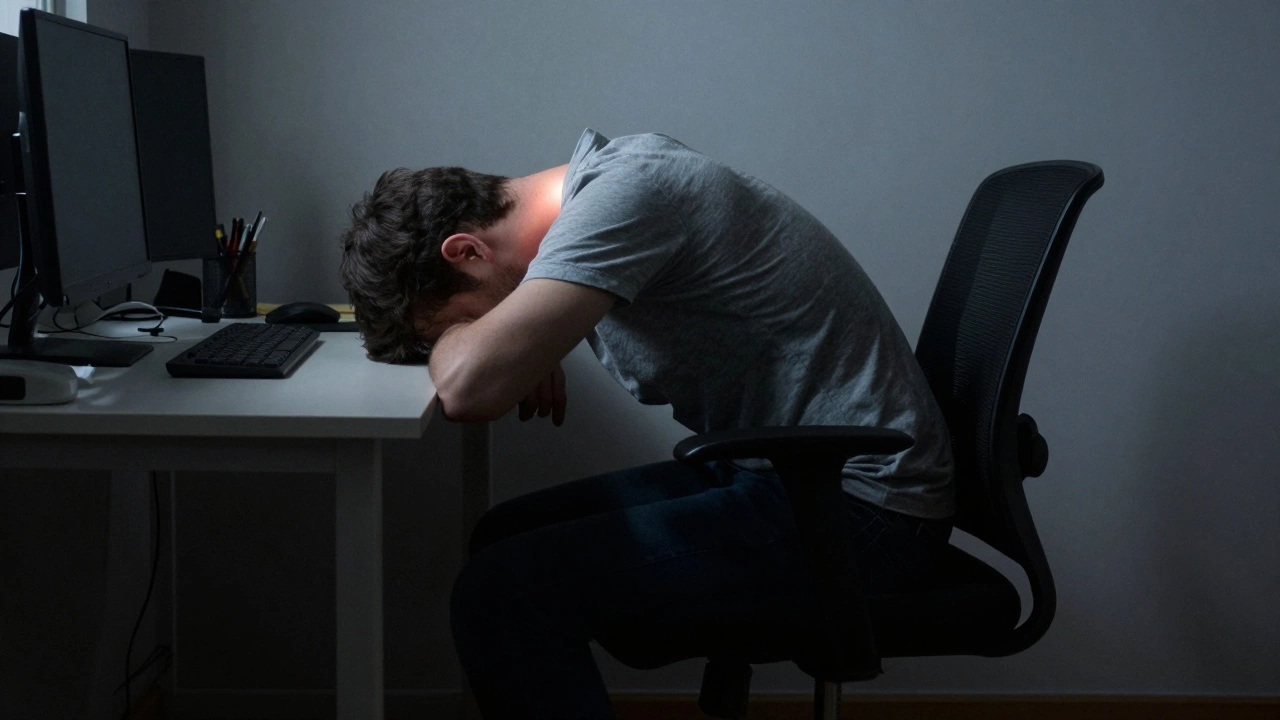
You sit for hours every day. Maybe you’re at a desk, scrolling through emails, or glued to a Zoom call. You don’t think about it-until your lower back starts aching, your neck feels tight, or your legs go numb. That’s not just discomfort. It’s your body screaming that your sitting position is wrecking you. And the worst offender? Slouching with your head jutted forward and your pelvis tilted backward.
Why Slouching Is the Worst
Slouching isn’t just ‘bad posture.’ It’s a full-body chain reaction. When you slump into your chair, your spine loses its natural S-curve. Your thoracic spine rounds out, your lumbar spine flattens, and your pelvis tucks under. That’s the setup for chronic pain. But the real killer? The forward head posture. Your head weighs about 5 kilograms. When you lean it forward just 15 degrees, your neck muscles have to support the equivalent of 12 kilograms. At 30 degrees? That’s 27 kilograms. Your neck isn’t built for that kind of load.
Studies from the Journal of Physical Therapy Science in 2023 tracked office workers who sat more than six hours a day. Those with forward head posture showed 68% more neck and shoulder pain than those who sat upright. And it’s not just muscles. Slouching compresses your discs, pinches nerves, and reduces lung capacity by up to 30%. Your diaphragm can’t expand properly. You’re not just slumped-you’re suffocating slightly with every breath.
What Happens to Your Body When You Slouch
- Your hip flexors tighten and shorten, pulling your pelvis out of alignment.
- Your glutes go quiet. They stop firing because they’re not needed in a slumped position.
- Your lower back muscles overwork to compensate for the lack of pelvic support, leading to disc herniation over time.
- Your shoulders roll forward, squeezing nerves in your neck and upper back-this is where headaches and tingling arms start.
- Your digestive organs get squished. Slouching reduces blood flow to your gut, which can cause bloating and slow digestion.
It’s not just a ‘bad habit.’ It’s a slow-motion injury. A 2024 study from the University of Auckland’s Human Movement Lab found that people who sat slouched for over four hours daily were three times more likely to develop chronic lower back pain within a year than those who maintained neutral posture. And the damage? It doesn’t go away after you stand up. Your muscles remember the slouch. Your ligaments stretch out. Your joints stiffen.
How You Get Here
You didn’t wake up one day and decide to slouch. It happened slowly. Maybe your chair doesn’t support your lower back. Maybe your monitor is too low, forcing you to crane your neck. Or maybe you’ve been working from the couch, legs tucked under you, phone in hand. These aren’t just ‘comfortable’ positions-they’re posture traps.
Most office chairs sold today are designed for looks, not health. They have shallow seats, no lumbar adjustment, or worse-fixed, rigid backs that force you into a backward tilt. You end up sliding forward, grabbing the armrests for support, and hunching over your keyboard. Your arms are too far forward. Your wrists bend. Your shoulders hunch. Your spine curves like a question mark.
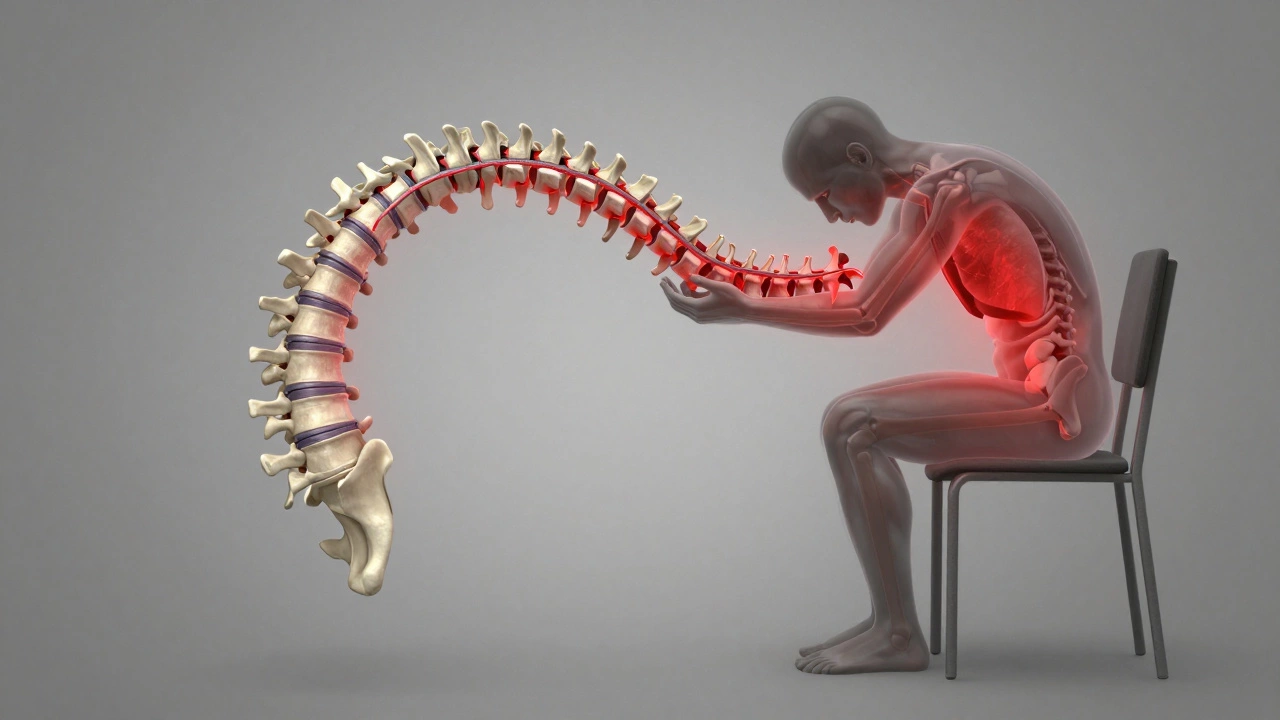
The Domino Effect
Slouching doesn’t just hurt your back. It messes with everything else. Your hips get tight, so your knees take extra pressure. Your feet flatten because your weight shifts forward onto the balls of your feet. Your jaw clenches because your neck tension triggers tension headaches. Your breathing gets shallow, which spikes your stress hormones. You’re not just sitting-you’re building a whole system of pain.
One client I worked with-let’s call her Lisa-had sciatica. She thought it was from lifting heavy boxes. Turns out, she’d been sitting slouched for eight hours a day, five days a week, for seven years. Her piriformis muscle had tightened from the pelvic tilt, pinching her sciatic nerve. She didn’t need surgery. She needed to sit differently. After three weeks of posture resets and a lumbar support cushion, her pain dropped by 80%.
What to Do Instead
It’s not about sitting perfectly straight like a soldier. It’s about balance. Your spine should have its three natural curves: a slight inward curve at the neck, a gentle outward curve at the upper back, and a slight inward curve at the lower back. To get there:
- Place your feet flat on the floor, hips slightly higher than your knees. If your chair is too high, use a footrest.
- Adjust your chair so your lower back is supported. If your chair doesn’t have lumbar support, roll up a towel and tuck it behind your lower spine.
- Keep your computer screen at eye level. Your chin should be parallel to the ground-not tucked or jutting out.
- Your elbows should be at 90 degrees, wrists neutral. No reaching.
- Change positions every 20 minutes. Stand, stretch, walk. Even for 30 seconds.
Don’t wait for pain. Your body doesn’t warn you. It just breaks.

What to Avoid
- Sitting on the edge of your chair-this removes all back support.
- Crossing your legs for long periods-it twists your pelvis and compresses nerves.
- Leaning on one armrest-it pulls your spine sideways.
- Using a chair with no backrest at all-it forces your core to work overtime.
- Slumping into a ‘zero gravity’ recliner at your desk-it looks cool, but it flattens your lumbar curve.
There’s no such thing as a ‘relaxed’ slouch. That’s just your body collapsing under the weight of poor design.
Fixing It Takes Two Things
First, your chair. If it doesn’t have adjustable lumbar support, armrests, and seat depth, it’s not fit for eight-hour days. Look for chairs that meet the ANSI/BIFMA X5.1 standard for ergonomic office seating. Brands like Herman Miller, Steelcase, and even budget options like Secretlab have models that adjust to your spine-not the other way around.
Second, your awareness. Set a timer. Every 20 minutes, stand up. Stretch your arms overhead. Roll your shoulders. Tilt your pelvis forward a few times. You’re not taking a break-you’re resetting your spine.
It’s not about being perfect. It’s about being consistent. One small correction, repeated daily, is better than one heroic posture fix that you abandon after a week.
Final Thought
You spend a third of your life sitting. That’s 80,000 hours over 30 years. If you’re slouching through even half of that, you’re not just tired-you’re worn down. Your body isn’t asking for a new chair. It’s asking for respect. Give it a position that lets it breathe, move, and stay whole. Because the most unhealthy sitting position isn’t just bad for your back. It’s stealing years from your life, one slouch at a time.