Bookcase Stability Calculator
Add items to see how they affect your bookcase's center of gravity.
Top Shelves (Unstable)
Bottom Shelf (Stable)
Place heavy items at the bottom for safety.
You’ve just arranged your favorite novels on the middle shelves and placed your delicate ceramics up high. But what about that awkward, hard-to-reach space at the very bottom? It’s easy to ignore, but leaving it empty is a missed opportunity-and potentially a safety hazard. The bottom shelf of a bookcase is the lowest horizontal surface of a shelving unit, designed to bear significant weight and provide stable support for the entire structure. Getting this right isn’t just about aesthetics; it’s about physics, accessibility, and making your life easier.
If you’re wondering what belongs down there, the answer is simple: anything too heavy to lift, too bulky to display, or too valuable to leave exposed. Let’s break down exactly how to use this prime real estate effectively.
The Golden Rule: Weight Distribution and Stability
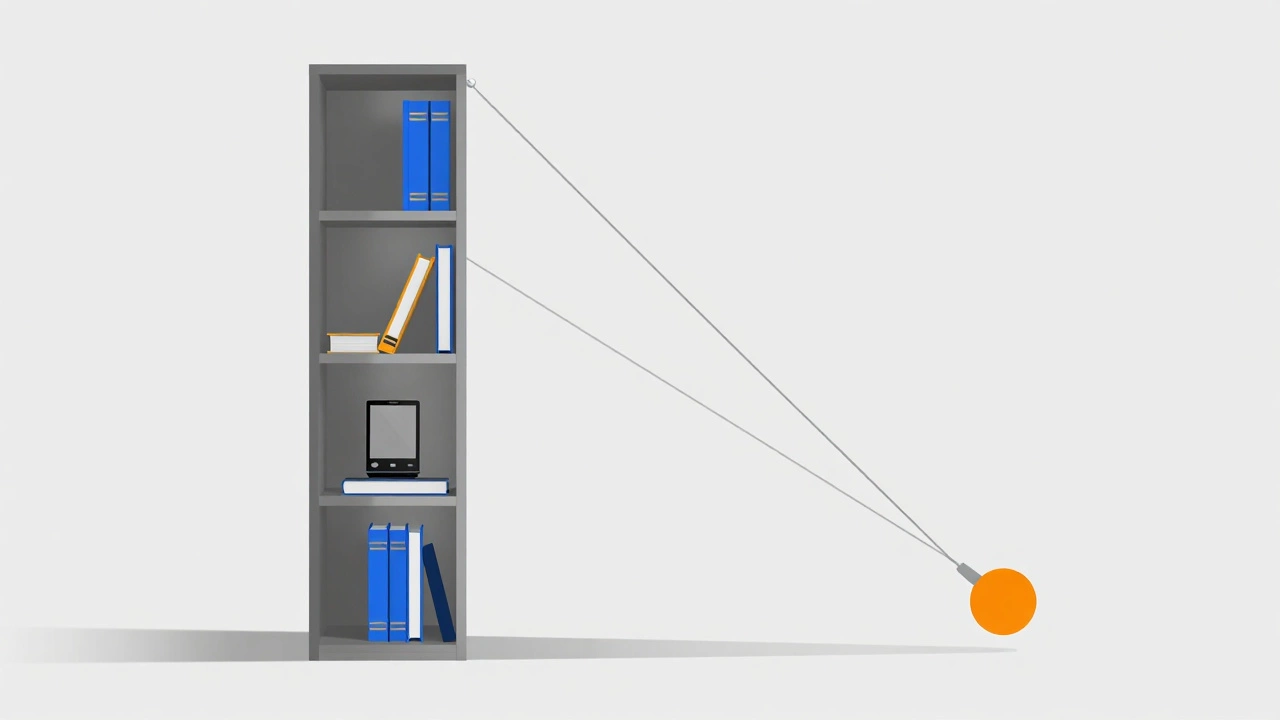
Before you shove any old box under there, consider the engineering behind your furniture. Most bookcases are top-heavy by nature. When you fill the upper shelves with books, decor, or media equipment, the center of gravity shifts upward. This makes the unit prone to tipping, especially in homes with kids or pets who might climb on it.
Placing heavy items on the bottom shelf acts as a counterweight. It lowers the center of gravity, anchoring the unit firmly to the floor. If you have a tall, narrow bookcase, this step is non-negotiable for safety. Always ensure the heaviest objects are at the base. Think of it like a pyramid: wide and heavy at the bottom, light and airy at the top.
- Books: Hardcovers and encyclopedias are dense. A full stack can weigh 10-20 kg (22-44 lbs).
- Media Equipment: Soundbars, gaming consoles, and DVD players add substantial mass.
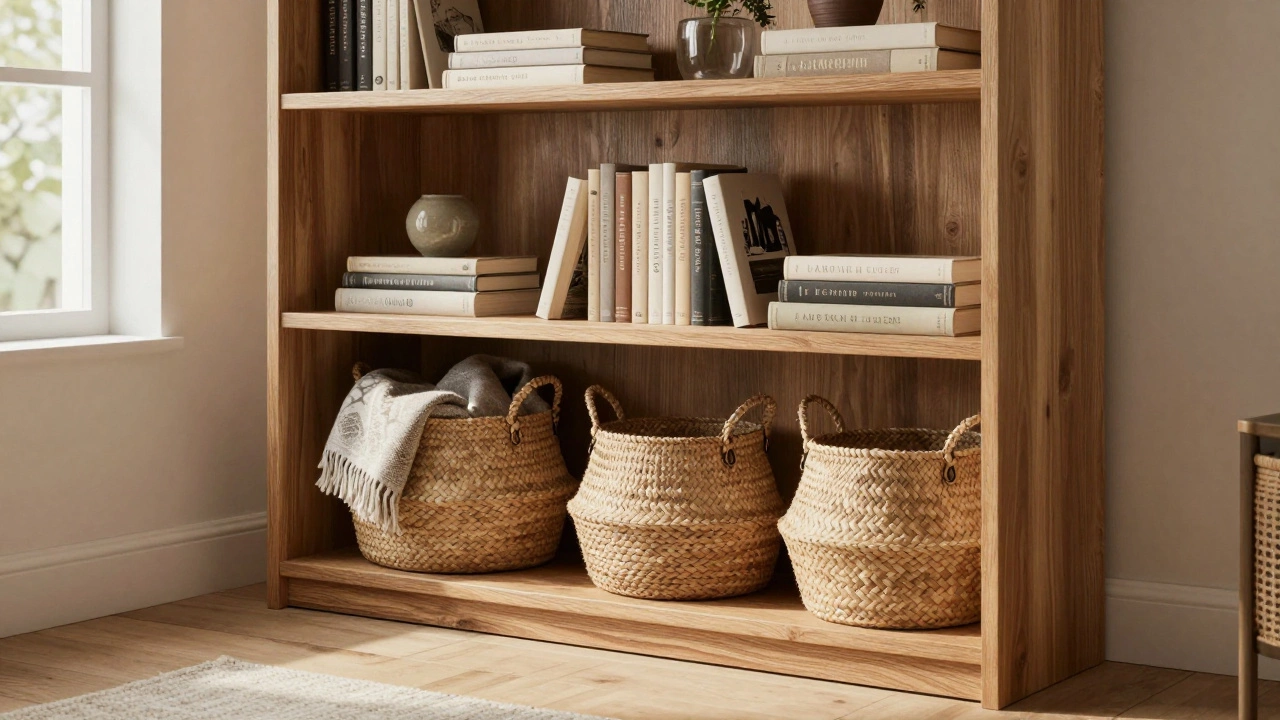
- Baskets: Woven baskets filled with blankets or toys provide both weight and organization.
Never place lightweight, unstable items like small figurines or empty boxes on the bottom if they can be knocked over easily. They serve no structural purpose and create clutter.
Practical Storage Solutions for the Base
The bottom shelf is often hidden from view when you sit on a sofa or chair. This makes it the perfect spot for "out of sight, out of mind" storage. You don’t need everything to look curated here. In fact, hiding functional items improves the visual appeal of the rest of the unit.
Here are some practical ideas that work well in most homes:
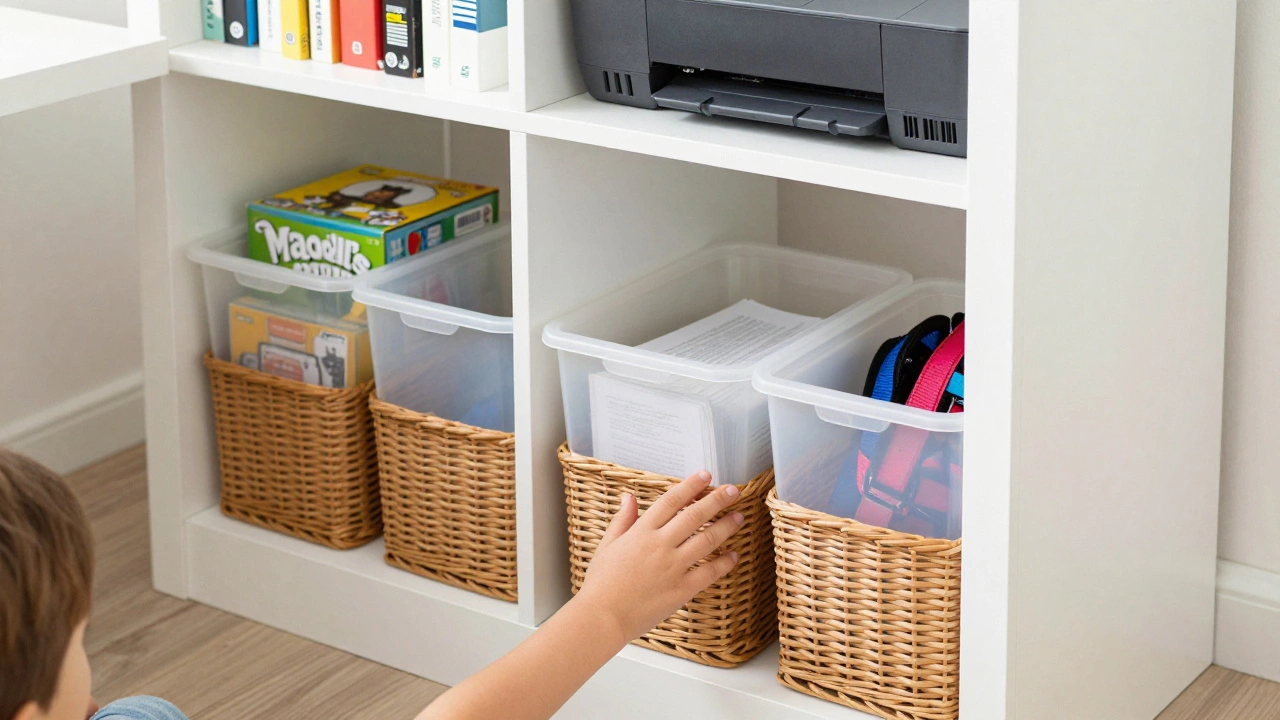
- Cleaning Supplies: Keep a vacuum cleaner attachment, dustpan, or microfiber cloths in a basket here. It’s within reach but not distracting.
- Pet Accessories: If you have a dog, store their leash, collar, or treat bags here. It keeps these items organized and away from curious hands.
- Office Essentials: For home offices, use this space for printer paper reams, ink cartridges, or filing cabinets. These items are heavy and rarely needed daily.
- Toys and Games: Board games and large toy sets fit perfectly here. Use lidded bins to keep them tidy and prevent spills.
The key is containment. Loose items will scatter and make the area look messy. Use uniform containers-baskets, bins, or boxes-to create a clean line along the bottom edge.
Aesthetic Choices: When to Display vs. Hide
Not every bookcase needs to be purely functional. Sometimes, the bottom shelf becomes part of the room’s design scheme. If your bookcase is low-profile or sits against a wall where the bottom is visible, you might want to style it rather than hide clutter.
In these cases, opt for items that add texture and visual interest without being fragile. Large decorative boxes, stacks of oversized coffee table books, or even a potted plant can work well. However, avoid placing water-heavy plants directly on wooden shelves without a tray, as moisture can warp the wood over time.
| Use Case | Pros | Cons | Best For |
|---|---|---|---|
| Heavy Books | Stabilizes unit, maximizes storage | Can look cluttered if unorganized | Home libraries, study rooms |
| Storage Bins | Hides clutter, versatile | Takes up vertical space | Families with kids, multi-purpose rooms |
| Decorative Boxes | Enhances aesthetics, hides contents | Less storage capacity | Living rooms, formal spaces |
| Electronics | Easy access to cables, heavy weight | Dust accumulation, heat buildup | Media centers, entertainment hubs |
Consider the material of your bookcase. Solid wood can handle more weight than particle board or MDF. If your unit is made of cheaper materials, avoid stacking multiple heavy boxes on one corner, as this can cause sagging or collapse over time.
Safety Considerations for Homes with Children
If you have young children, the bottom shelf is a high-risk zone. Kids are naturally drawn to what’s at their eye level, which is often the bottom of adult-sized furniture. This means two things: first, never store hazardous materials here, and second, secure the bookcase to the wall.
Anti-tip brackets are essential. Even with heavy items on the bottom, a determined child can pull the unit forward. Anchor the bookcase to a stud in the wall using a furniture strap. It’s a simple fix that prevents serious accidents.
Also, avoid storing small, choking-hazard items in open bins on the bottom shelf. Use lidded containers instead. If you must store something dangerous, like cleaning chemicals, keep them locked away or on a higher shelf that is inaccessible to little ones.
Accessibility and Ergonomics
Think about how often you’ll need to access the items on the bottom shelf. If it’s for everyday use, like grabbing a blanket or a game, ensure the container is easy to pull out. Avoid deep, narrow bins that require digging. Wide, shallow baskets are better for visibility and access.
For items you rarely touch, such as seasonal decorations or archival documents, deeper storage is fine. Label your bins clearly so you know what’s inside without having to move everything around. This saves time and reduces frustration.
If you have mobility issues, consider keeping frequently used items on higher shelves. The bottom shelf should reserve its space for heavier, less-frequently-used goods. Don’t force yourself to bend down repeatedly for things you need daily.
Maintaining Cleanliness and Airflow
The bottom shelf tends to collect dust faster than other areas because it’s close to the floor. Vacuum cleaners pick up debris, and foot traffic kicks up particles. To combat this, choose closed containers over open baskets. Lids act as barriers against dust.
If you store electronics here, ensure there’s enough airflow. Overheating can damage devices. Leave a few inches of space between the back of the unit and the wall. Avoid covering vents with fabric or paper.
Regularly check for signs of moisture or mold, especially in humid climates like Auckland. Wood can swell and rot if it stays damp. Use silica gel packets in enclosed boxes to absorb excess humidity.
Common Mistakes to Avoid
Many people make the same errors when organizing their bookcases. Here are a few pitfalls to watch out for:
- Ignoring Weight Limits: Don’t overload a single shelf beyond its rated capacity. Distribute weight evenly across the width of the unit.
- Using Fragile Containers: Glass jars or thin plastic bins can crack under pressure. Opt for sturdy wicker, metal, or thick plastic.
- Blocking Access: Don’t push items all the way to the back. Leave enough room to pull them out without disturbing the rest of the collection.
- Neglecting Anchoring: Never skip securing the bookcase to the wall, regardless of what’s on the bottom shelf.
By avoiding these mistakes, you’ll extend the life of your furniture and keep your home safer and more organized.
Can I put a TV on the bottom shelf of a bookcase?
Yes, but only if the shelf is sturdy enough to support the TV's weight and dimensions. Ensure the TV fits comfortably without overhang. Also, make sure the bookcase is anchored to the wall to prevent tipping. Avoid placing the TV on particle board shelves unless they are reinforced.
Should I leave the bottom shelf empty?
Leaving the bottom shelf empty can make the bookcase look unbalanced and less stable. It’s better to use it for heavy storage or decorative items. If you prefer an open look, use large, stylish boxes to maintain structure while hiding clutter.
How do I prevent my bookcase from tipping over?
The most effective method is to anchor the bookcase to a wall stud using anti-tip brackets. Additionally, place heavy items on the bottom shelves to lower the center of gravity. Avoid letting children climb on the unit.
What is the best type of basket for the bottom shelf?
Choose baskets made of durable materials like seagrass, cotton rope, or rigid plastic. Look for handles for easy pulling. Lidded options help contain dust and keep contents tidy. Ensure the basket fits snugly to prevent shifting.
Can I store food items on the bottom shelf?
It’s not recommended due to potential pest infestations and temperature fluctuations. If you must store pantry items, use airtight containers and keep them away from walls. Regularly inspect for signs of bugs or moisture.