Lazy Boy Recliner Noise Diagnostic Tool
Diagnose Your Recliner Noise
Select the type of noise you hear and where it occurs to get specific repair guidance
Your Solution
1Check for loose parts
Inspect all visible screws and bolts, especially around the lever assembly and backrest hinges. Tighten any that feel loose with a Phillips head screwdriver.
2Apply lubricant correctly
Use a dry silicone spray (not WD-40) on metal-to-metal contact points: pivot pins, lever linkage, and spring hooks. Apply light, even coats and work the mechanism 10 times after application.
3Check for damaged parts
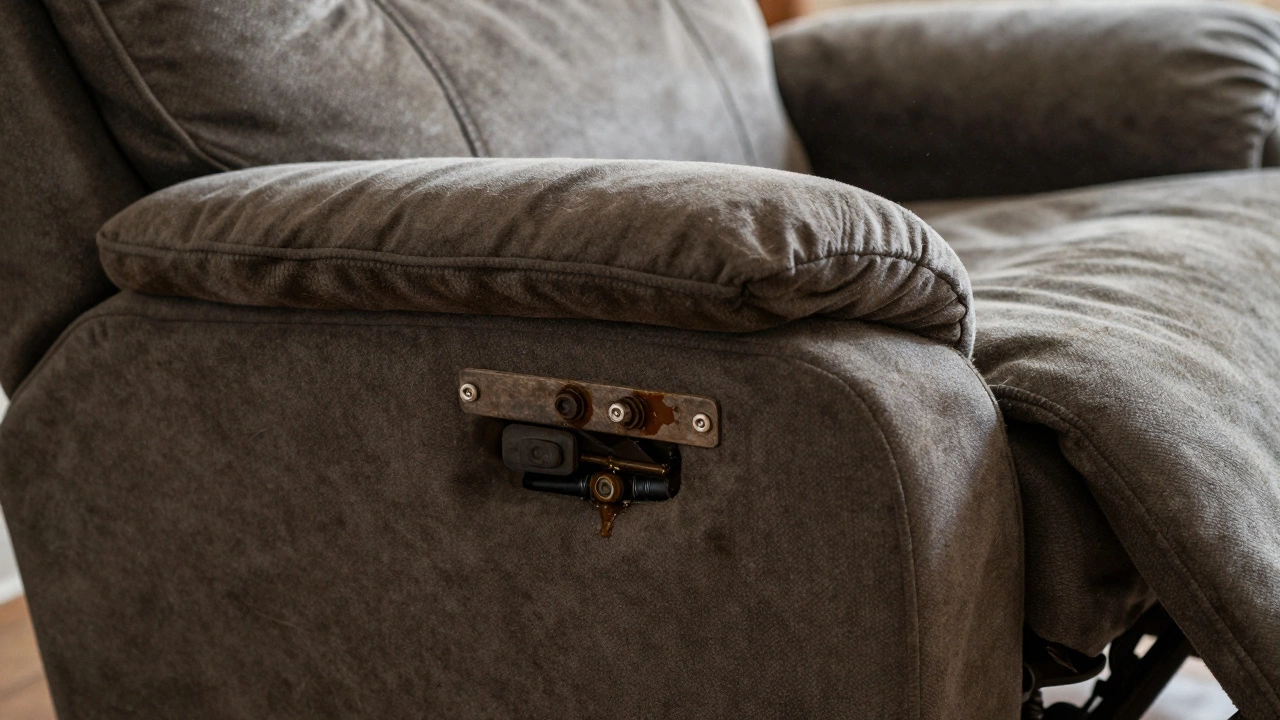
Look for cracked or missing plastic bushings (small white or black rings around metal rods). If damaged, replacement bushings cost under $5 and can be found online.
Ever sat down in your Lazy Boy recliner, leaned back, and heard a loud clunk-squeak-creak like a rusty gate opening in the middle of the night? You’re not alone. Thousands of people own Lazy Boy recliners - known for comfort and durability - but many end up frustrated by the noise. It’s not normal. And it’s not just ‘old age.’ There are real, fixable reasons why your recliner sounds like a haunted house.
What’s Making That Noise?
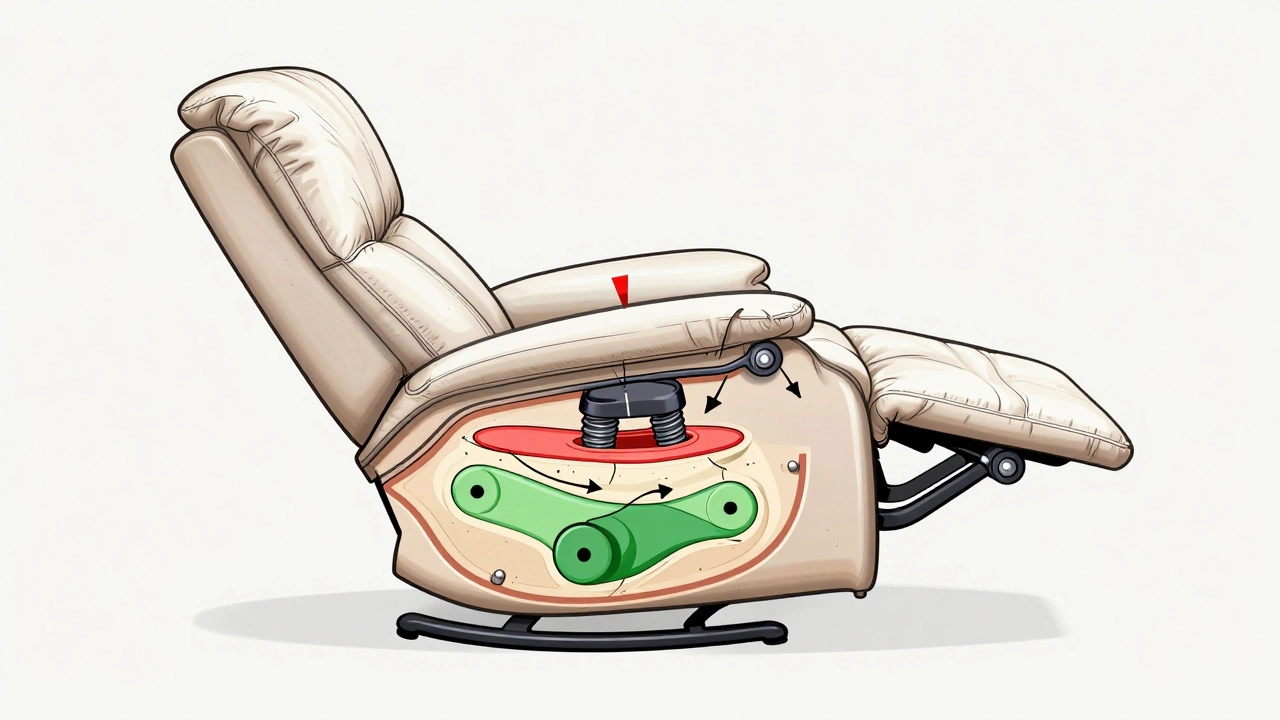
Most Lazy Boy recliners use a manual lever mechanism with metal parts sliding against each other. Over time, those parts wear down, get dirty, or lose lubrication. The noise isn’t random - it’s physics. When metal rubs against metal without enough grease, it squeaks. When plastic parts crack or loosen, they rattle. When springs fatigue, they groan under pressure. The most common culprits:- Friction between metal pivot points - where the footrest connects to the frame
- Loose screws or bolts - especially around the lever assembly and backrest hinges
- Worn or broken springs - the ones that help the reclining motion
- Fractured plastic bushings - small but critical parts that cushion movement
- Dust and debris buildup - pet hair, fabric fibers, and dirt grinding between moving parts
Lazy Boy uses high-quality materials, but even the best hardware needs maintenance. If you’ve had your recliner for 5+ years and never cleaned or lubricated it, noise is inevitable.
Why Does It Happen More in Some Models?
Not all Lazy Boy recliners are the same. The PowerRecline models with electric motors rarely make noise - unless the motor gear is failing. But the manual lever models - especially older ones like the La-Z-Boy Classic or Wall Hugger - are the ones that creak the most. Why? Because they rely entirely on mechanical leverage. No electricity. No quiet motors. Just springs, levers, and pivots. That’s great for reliability - but if you sit on it daily, those parts get worked hard. A person who weighs over 200 pounds and leans back quickly? That’s extra stress on the mechanism.Also, cheaper fabric covers - like polyester blends - trap more dust and pet hair than leather or performance fabrics. That grime gets pushed into the moving parts, acting like sandpaper.
How to Fix It (Without Calling a Pro)
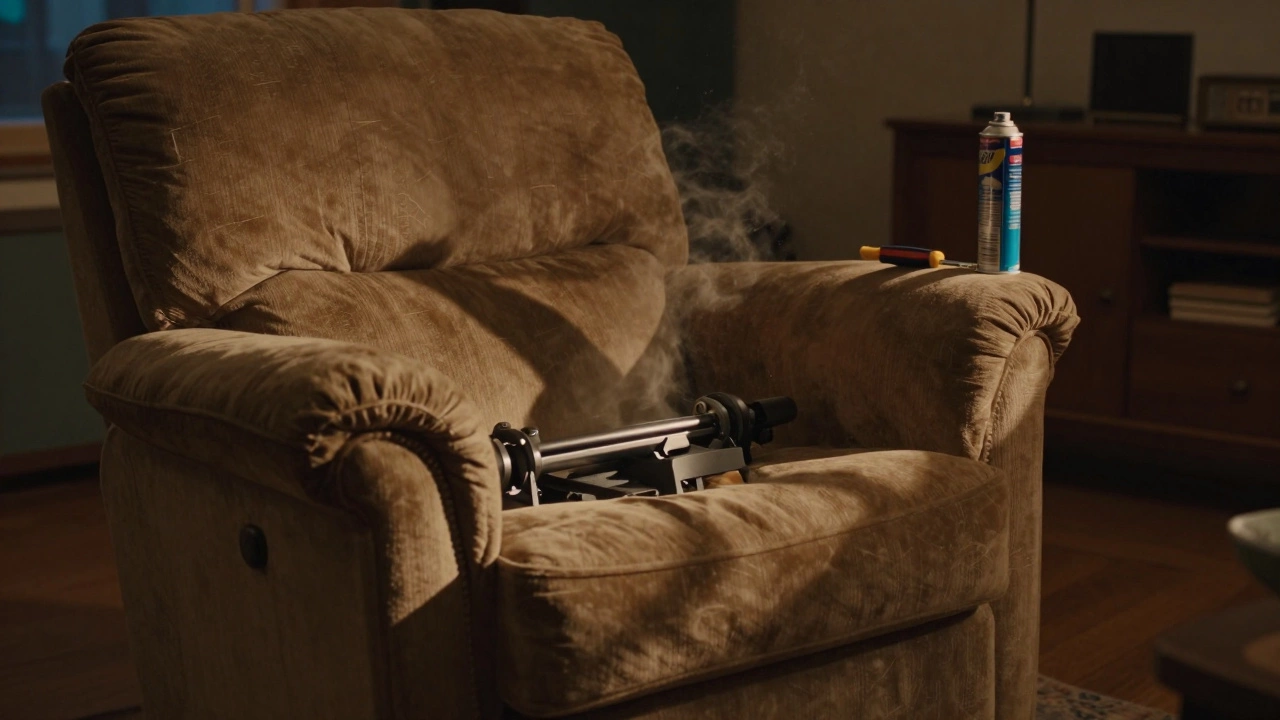
You don’t need to replace your recliner. Most noise issues can be fixed in under 30 minutes with basic tools.- Remove the cover (if possible). Lift the seat cushion and look underneath. You’ll see the metal frame and mechanism. Don’t force anything - just gently pull back the fabric enough to see the pivot points.
- Locate the squeaky spots. Slowly recline and listen. Note where the noise comes from - is it the footrest? The backrest? The side lever?
- Tighten all visible screws. Use a Phillips head screwdriver. Focus on the lever arm, the footrest hinge, and the backrest frame. Even a half-turn can stop a rattle.
- Apply lubricant. Use a dry silicone spray (not WD-40). Spray it lightly on metal-to-metal contact points: the pivot pins, the lever linkage, and the spring hooks. Let it sit for 5 minutes, then move the recliner back and forth 10 times to work it in.
- Check for broken plastic parts. Look for cracked or missing bushings - small white or black rings around metal rods. If one’s gone, the metal is grinding directly on the frame. Replacement bushings cost under $5 online.
- Clean the mechanism. Use a soft brush or compressed air to blow out dust from the crevices. Vacuum around the base and under the seat. This stops new grime from building up.
Do this every 6-12 months, and your recliner will stay quiet for years.
What Not to Do
People make the same mistakes over and over.- Don’t use WD-40. It’s a solvent, not a lubricant. It cleans away old grease and leaves metal bare. That makes noise worse over time.
- Don’t ignore small sounds. A faint click today can become a broken spring tomorrow.
- Don’t overload it. Lazy Boy recommends a max weight of 300 lbs for most manual models. Exceeding that stresses the frame and accelerates wear.
- Don’t sit on the armrests. That puts sideways pressure on the frame, bending internal parts.
When to Call a Technician
If you’ve tried everything and the noise is still there - or worse, the recliner doesn’t lock in place or feels unstable - it’s time to call a professional. The issue might be:- A broken tension spring
- A cracked steel frame
- Worn-out gear teeth in the lever mechanism
These aren’t DIY fixes. But before you buy a new chair, check if your recliner is still under warranty. Lazy Boy offers a limited lifetime warranty on the frame and mechanism for the original owner. If you bought it new and still have the receipt, you might get free repair or replacement.
Preventing Noise Before It Starts
The best fix is prevention.- Use a microfiber cloth to wipe down the base of your recliner weekly. It stops dust from getting inside.
- Keep pets off the recliner if they shed a lot. Pet hair is a silent killer of mechanisms.
- Apply silicone spray every 6 months - even if it’s not noisy yet.
- When reclining, use the lever slowly. Don’t just flop back. Controlled movement reduces stress.
- Buy models with leather or performance fabric. They’re easier to clean and trap less debris.
Lazy Boy recliners are built to last 15-20 years. The noise isn’t a sign of failure - it’s a warning. Treat it like a car that needs an oil change. A little care now saves you from a big replacement cost later.
Is It Worth Repairing?
A new Lazy Boy recliner costs between $800 and $2,000. A professional repair? Around $150-$300. A DIY fix? Under $20 in supplies.If your recliner still feels comfortable, supports your back well, and the fabric isn’t torn - fix it. Don’t toss it. These chairs are made to be repaired. Many people have 10-, 15-, even 20-year-old Lazy Boys that still work perfectly after a simple lubrication.
Think of it this way: you wouldn’t throw out a car because it squeaked. You’d check the suspension. Same logic applies here.
Why does my Lazy Boy recliner squeak only when I lean back?
That’s because the main mechanism - the lever, pivot pins, and springs - only engage when you recline. The noise comes from metal parts rubbing together under pressure. If it only happens during reclining, the issue is almost always in the reclining mechanism, not the seat or armrests.
Can I use olive oil or coconut oil to lubricate my recliner?
No. Oils like olive or coconut will attract dust, turn sticky, and eventually go rancid. They can also damage fabric and leather over time. Always use a dry silicone spray designed for furniture mechanisms. It doesn’t attract dirt and won’t degrade materials.
Is it normal for a new Lazy Boy recliner to make noise?
No. A brand-new recliner should be quiet. If it squeaks out of the box, something is misaligned or improperly assembled. Contact the retailer or Lazy Boy customer service. You’re likely covered under warranty, and they’ll send someone to fix it at no cost.
What’s the best lubricant for Lazy Boy recliners?
The best option is a dry silicone spray, like 3-IN-ONE Dry Lubricant or Blaster Dry Lube. These are designed for furniture, won’t stain fabric, and don’t attract dirt. Avoid oil-based lubes, grease, or WD-40.
How long should a Lazy Boy recliner last?
With proper care, a Lazy Boy recliner can last 15 to 20 years. The frame and mechanism are built to handle decades of use. The fabric and cushion foam are the first things to wear out - not the structure. Regular cleaning and lubrication will extend its life significantly.
Next Steps
If your recliner is noisy, start today. Grab a silicone spray, a screwdriver, and 20 minutes. Clean the mechanism, tighten the screws, and lubricate the pivot points. You’ll be amazed how much quieter it gets.And if you’re shopping for a new one, look for models with a lifetime warranty on the frame and performance fabric. Skip the cheap imitations. A real Lazy Boy, properly maintained, will outlast most other recliners on the market - and stay quiet the whole time.