Furniture Storage Lifespan Calculator
Estimated Lifespan
Preservation Tips:
You’ve moved, renovated, or inherited a piece you don’t need right now. You put it away, thinking you’ll use it again. But how long can furniture last in storage before it becomes unsalvageable junk? The short answer is: it depends entirely on what the furniture is made of and where you put it.
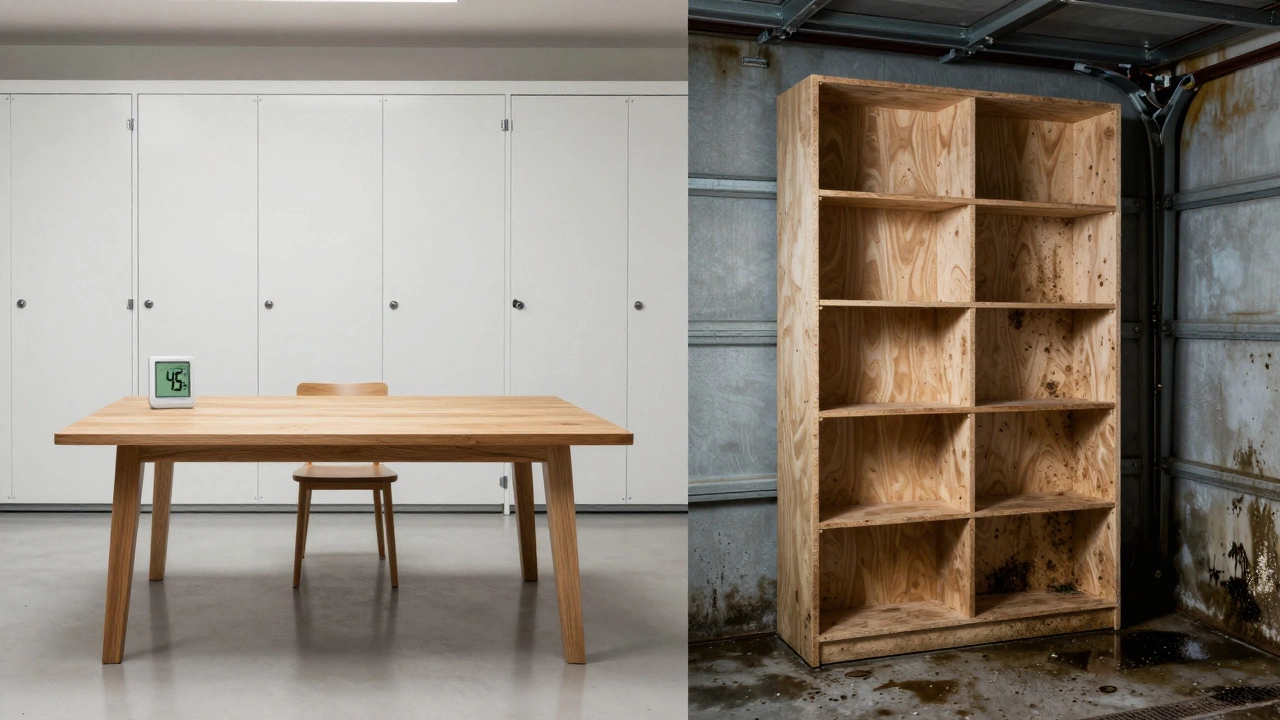
If you leave a solid oak table in a dry, climate-controlled unit for five years, it will likely look almost new when you pull it out. If you leave a cheap particleboard bookcase in a damp garage for six months, it might swell beyond repair. There is no single expiration date for stored furniture. Instead, there are critical thresholds determined by material science and environmental control.
The Enemy Isn't Time-It's Environment
Time itself doesn't rot wood or rust metal. Environmental factors do. When you store furniture, you are fighting against three primary enemies: moisture, temperature fluctuations, and pests. Understanding these forces helps you predict how long your items will survive.
Moisture is the biggest threat. Wood absorbs humidity from the air. In high-humidity environments, like an unconditioned shed in Auckland during summer, wood expands. If it stays swollen too long, joints loosen, veneers peel, and mold begins to grow. Mold doesn't just stain; it eats cellulose, weakening the structural integrity of the wood. Upholstery is even more vulnerable. Fabric holds moisture longer than wood, creating a perfect breeding ground for mildew that can permanently ruin cushions within weeks if left in damp conditions.
Temperature swings cause materials to expand and contract repeatedly. This stress cracks finishes, splits wood, and weakens glue bonds. A self-storage unit that goes from freezing at night to scorching during the day puts your furniture through thermal shock cycles every 24 hours. This accelerates aging significantly compared to a stable indoor environment.
Does climate-controlled storage really matter?
Yes, especially for long-term storage over six months. Climate control maintains consistent humidity (usually between 40-50%) and temperature, preventing wood warping, metal corrosion, and fabric mold. For short-term moves under 90 days, standard storage may suffice if the items are well-packed.
Lifespan Estimates by Material Type
Different materials degrade at different rates. Knowing what your furniture is made of allows you to set realistic expectations for its storage life.
| Furniture Material | Ideal Conditions (Climate-Controlled) | Poor Conditions (Damp/Garage) | Primary Failure Point |
|---|---|---|---|
| Solid Hardwood (Oak, Walnut) | 10+ Years | 2-3 Years | Joint loosening, finish cracking |
| Softwood (Pine, Fir) | 7-10 Years | 1-2 Years | Warping, insect damage |
| Particleboard/MDF | 3-5 Years | 6-12 Months | Swelling, delamination |
| Upholstered (Fabric) | 5-7 Years | 3-6 Months | Mold, pest infestation |
| Leather | 10+ Years | 2-4 Years | Drying, cracking, staining |
| Metal (Steel/Iron) | Indefinite | 1-3 Years | Rust, paint chipping |
Note that "ideal conditions" mean a clean, dry, climate-controlled space with minimal light exposure. "Poor conditions" refer to uninsulated garages, sheds, or non-climate-controlled units where humidity exceeds 60% regularly.
Wood Furniture: The Delicate Balance
Wood is hygroscopic, meaning it naturally seeks equilibrium with the surrounding air. Solid wood furniture, like a classic dining table made of Oak, can handle minor humidity changes better than engineered woods. However, prolonged imbalance causes serious damage.
In storage, you want the wood to remain stable. If you store solid wood in a very dry environment (below 30% humidity), it may shrink enough to crack. If it’s too humid (above 60%), it swells. The sweet spot is 45-55% relative humidity. Most modern climate-controlled storage facilities maintain this range automatically.
Engineered woods like Particleboard and MDF are far less forgiving. These materials are made from wood fibers bonded with resin and pressed into sheets. They absorb moisture quickly because they lack the natural grain structure of solid wood. Once the edges get wet, they swell irreversibly. Even in ideal storage, particleboard has a shorter lifespan due to potential off-gassing of formaldehyde over many years, though this is rarely a health risk unless the unit is poorly ventilated.
To extend the life of wood furniture in storage:
- Clean and wax the surface before storing to seal the pores.
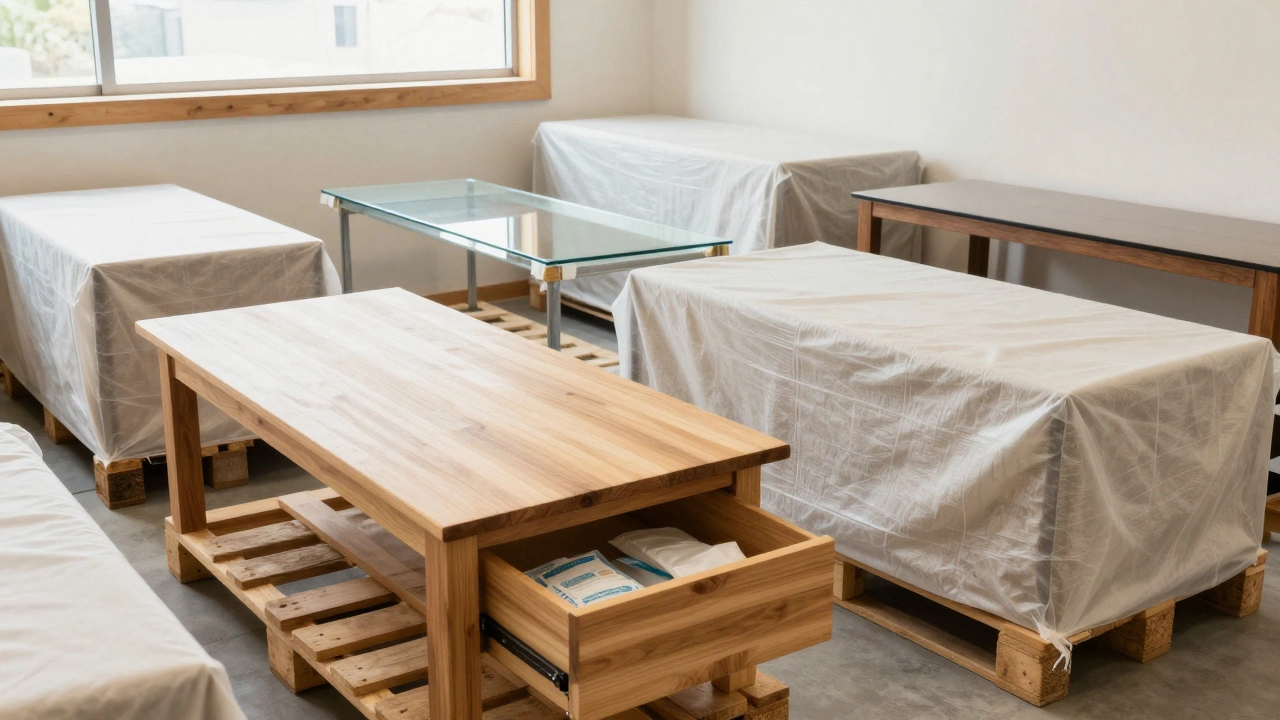
- Place silica gel packets inside drawers and cabinets to absorb ambient moisture.
- Never place wood directly on concrete floors. Use pallets or plastic sheeting to prevent capillary action of moisture from the ground.
Upholstery and Fabrics: The Mold Risk
Fabric-covered furniture presents a unique challenge. Unlike wood, fabric cannot be easily sealed. It breathes, trapping dust, oils, and moisture deep within the fibers. If you store a sofa without cleaning it first, body oils and food residues attract pests and accelerate decay.
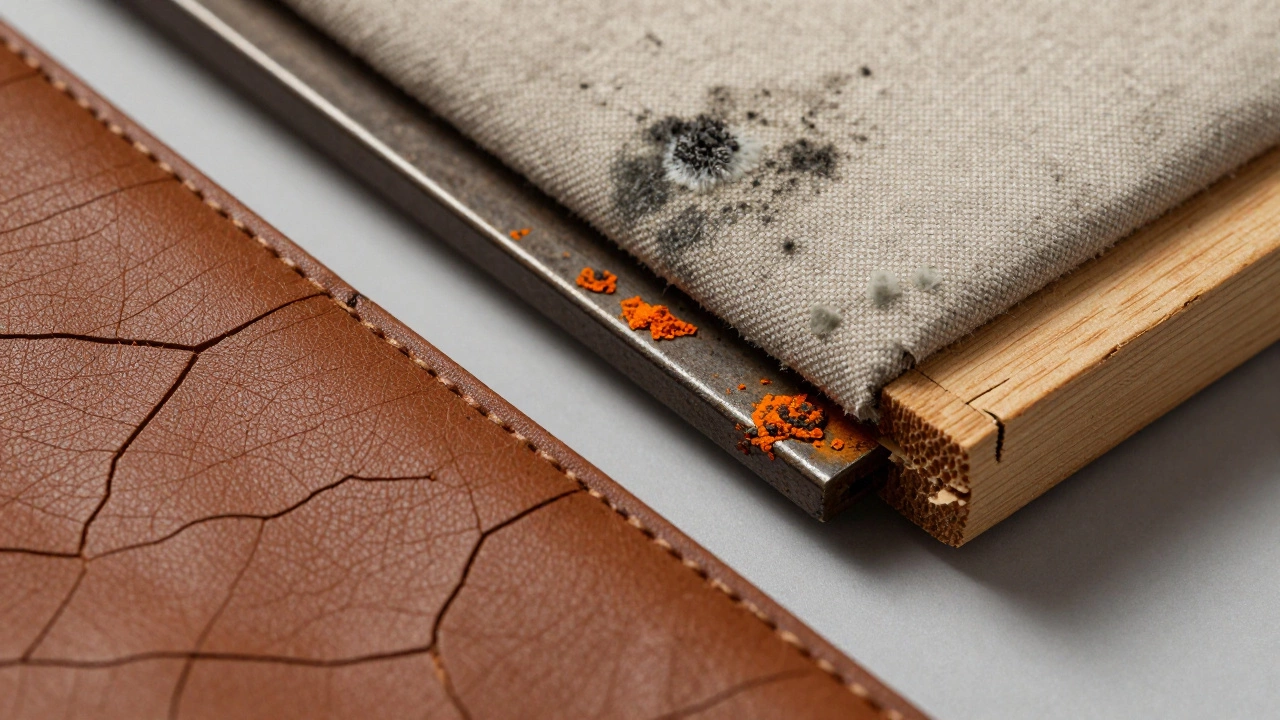
The biggest risk for upholstered items is mold. Mold spores are everywhere, but they need moisture to activate. In a damp storage unit, a fabric armchair can develop visible black mold spots in as little as two weeks. Once mold sets in, it penetrates the padding and frame, making professional restoration difficult and often impossible.
To protect upholstery:
- Professional cleaning is mandatory before storage. Remove all stains and odors.
- Use breathable covers. Plastic wraps trap moisture inside, creating a greenhouse effect that promotes mold. Cotton or canvas covers allow air circulation.
- Elevate the furniture. Place it on blocks or pallets to keep it off the floor and allow air to circulate underneath.
- Add cedar blocks or lavender sachets to deter moths and carpet beetles, which love natural fibers like wool and cotton.
Leather: Drying vs. Cracking
Leather furniture is durable but sensitive to extreme conditions. In storage, leather faces two threats: drying out and cracking, or becoming sticky and moldy. High-quality full-grain leather can last decades if stored correctly. Bonded leather, however, tends to peel and flake after a few years, even in good conditions.
Leather needs some humidity to stay supple. If the storage area is too dry, the leather loses its natural oils and becomes brittle. Conversely, high humidity causes the tannins in the leather to break down, leading to discoloration and stickiness. Always condition leather before storing it with a high-quality leather conditioner. This replenishes oils and creates a protective barrier.
Store leather pieces away from direct sunlight, even indirect UV light from windows can fade and dry out leather over time. Wrap them in acid-free tissue paper or breathable cloth, never plastic.
Metal and Glass: Rust and Scratches
Metal furniture is generally robust, but iron and steel are prone to rust if exposed to moisture. Aluminum and stainless steel are more resistant but not immune to oxidation. In coastal areas like Auckland, salt in the air accelerates corrosion. Even indoors, if the storage unit has poor ventilation, condensation can form on metal surfaces overnight.
To prevent rust:
- Apply a thin layer of furniture wax or oil to bare metal parts.
- Check painted finishes for chips. Touch up any scratches immediately to prevent underlying metal from corroding.
- Keep metal furniture elevated and spaced apart to allow airflow.
Glass tables require careful handling. The glass itself doesn't degrade, but the frames often do. Metal frames rust, and wooden frames warp. Store glass tables vertically if possible, using edge protectors and blankets. Never stack heavy items on top of glass-topped furniture, as the pressure points can cause spontaneous cracking over time due to micro-fractures expanding.
Preparation Steps That Extend Life
How you prepare your furniture matters as much as where you store it. Skipping these steps can cut the lifespan of your items in half.
1. Deep Cleaning
Dirt and grime hold moisture. Vacuum upholstery thoroughly, including crevices. Wipe down wood and metal surfaces with appropriate cleaners. For wood, use a damp cloth followed by a dry one to remove residue. Avoid harsh chemicals that strip protective finishes.
2. Disassembly
Break down large items whenever possible. Removing legs from tables, detaching doors from wardrobes, and taking apart bed frames reduces stress on joints and makes packing easier. Label all hardware bags and tape them securely to the corresponding piece. Keep instructions handy if available.
3. Proper Wrapping
Use moving blankets, bubble wrap, or stretch wrap for protection. Stretch wrap is excellent for keeping dust off and holding disassembled parts together, but ensure it’s not too tight, which could damage finishes. For wood, avoid wrapping tightly around corners where pressure marks can occur.
4. Strategic Placement
When placing furniture in the storage unit, think about weight distribution. Heavier items go on the bottom. Leave space between items and walls to allow air circulation. Don’t stack items higher than necessary, as compression can deform softer materials like mattresses and cushions.
Signs Your Stored Furniture Is Failing
Even with best efforts, some degradation is inevitable. Regularly inspect your stored items if you plan to keep them for more than a year. Look for these warning signs:
- Musky Odor: A musty smell indicates mold growth, even if you can’t see it yet. Address this immediately by airing out the unit and treating affected areas.
- Visible Stains: Water rings, dark spots, or white powdery residue on wood suggest moisture intrusion or mold.
- Loose Joints: If drawer slides feel gritty or table legs wobble, the wood has expanded or contracted unevenly.
- Fabric Sagging: Cushions that don’t bounce back may have internal spring damage or foam breakdown.
- Rust Flakes: Small orange flakes on metal surfaces indicate active corrosion that will spread if untreated.
If you notice any of these issues, take action quickly. Move the furniture to a drier location, clean affected areas, and consider applying protective treatments. Delaying response can turn minor problems into total loss.
When to Let Go
Sometimes, the cost of restoration exceeds the value of the furniture. Ask yourself: Is this piece irreplaceable? Does it have sentimental value? If not, and it’s showing significant signs of decay, it might be better to donate or recycle it. Holding onto damaged furniture takes up valuable storage space and risks contaminating other items.
For high-value antiques or designer pieces, consult a professional conservator before attempting DIY repairs. Incorrect treatment can permanently devalue these items. Specialized conservation techniques can stabilize fragile materials and halt further deterioration.
Can I store furniture outside?
Only if it’s specifically designed for outdoor use. Indoor furniture exposed to rain, sun, and temperature extremes will degrade rapidly. Even covered patios offer insufficient protection from humidity and UV rays. For indoor pieces, always use enclosed storage.
How often should I check on stored furniture?
Inspect at least once every three months. Check for moisture, pests, and structural integrity. More frequent checks are needed in humid climates or if storing in non-climate-controlled units.
Is insurance worth it for stored furniture?
Yes, especially for valuable or irreplaceable items. Standard home insurance may not cover items in storage facilities. Review your policy and consider additional coverage through the storage provider or a separate rider.
What’s the best way to store a mattress?
Clean it thoroughly, then wrap in a breathable mattress bag. Store flat on a clean, dry surface. Avoid folding or compressing memory foam mattresses, as this can damage the internal structure. Coil springs are more resilient but still benefit from upright or flat storage.
Can I use dehumidifiers in my storage unit?
Some storage facilities allow portable dehumidifiers, but check their rules first. Ensure proper ventilation to avoid electrical hazards. Silica gel packs and moisture-absorbing crystals are safer alternatives for smaller spaces.