Coffee Table Calculator
Find Your Perfect Coffee Table
Calculate ideal size and placement based on your couch dimensions
Getting the right coffee table to go with your couch isn’t about matching styles perfectly-it’s about creating a space that feels natural, functional, and visually calm. Too many people buy a coffee table because it looks nice in a store, then realize it’s too small, too tall, or just doesn’t sit right next to their couch. The result? A living room that feels off, even if every piece is expensive. Here’s how to fix that.
Start with the right size
Your coffee table should be about two-thirds the length of your couch. If your couch is 8 feet long, aim for a table around 5 to 6 feet. That leaves enough space on either side for movement and lamps or books. A table that’s too short makes the couch look like it’s floating. One that’s too long crowds the space and makes walking around awkward.
Height matters just as much. The top of your coffee table should be within an inch or two of your couch seat height. Most couches sit between 16 and 18 inches high. That means your table should be 15 to 18 inches tall. If your table is too high, your arms will hit it when you lean back. Too low, and you’ll be bending over every time you reach for your coffee.
Leave room to move
Don’t cram the table right up against the couch. Leave at least 14 to 18 inches between the front edge of the couch and the table. That’s enough space for legs to stretch out comfortably, or for someone to walk past without bumping into the table. If you have a larger room and a bigger couch, you can go up to 20 inches. But don’t go beyond that-you’ll make the space feel empty and disconnected.
Think about how you use the room. If you have kids or pets, you might want a little more clearance. If you entertain often and need to pull out ottomans or side tables, give yourself room to maneuver. A cramped coffee table setup makes even the most stylish room feel cluttered.
Match proportions, not styles
You don’t need your coffee table to match your couch in color or material. In fact, mixing textures often looks more intentional. A sleek glass table works great with a chunky linen sofa. A heavy wooden table balances a modern leather sectional. The key is proportion, not pattern.
Look at the weight of each piece. A light, airy couch (think mid-century with thin legs) pairs well with a table that has visual lightness-glass, acrylic, or thin metal. A bulky, deep-seated sofa with thick arms needs something grounded: solid wood, stone, or a thick metal frame. If your couch feels heavy, your table should feel sturdy. If your couch feels light, your table can feel airy.
Shape matters more than you think
Rectangular tables work best with straight-lined couches. It’s simple, clean, and balanced. But if your couch is curved or L-shaped, consider a round or oval table. It softens the lines and prevents sharp corners from sticking out awkwardly into walkways.
Round tables are also great for small spaces or rooms with lots of foot traffic. No sharp edges means fewer bumps and bruises-especially helpful if you have kids or older guests. Oval tables give you the benefits of both: more surface area than a circle, but without the harsh angles of a rectangle.
A square table can work with a square sectional, but only if the room is also square or symmetrical. In most living rooms, a square table looks stuck. Stick to rectangles or circles unless your layout is intentionally geometric.
Consider function over form
What do you actually use your coffee table for? If you’re someone who reads, snacks, or works from the couch, you need surface space. A large, low table with a smooth top is ideal. If you mostly use it for decorative items-vases, books, a single lamp-then a smaller table with character works fine.
Storage is another factor. Do you need hidden compartments? A lift-top table? A shelf underneath? If you have blankets, remotes, or kids’ toys that pile up, choose a table with drawers or an open shelf. A solid top with no storage will just become a dumping ground.
Don’t forget clearance under the table. If you have a deep couch or sit with your legs out, make sure your feet can slide under the table without hitting anything. Tables with thin legs or open bases give more legroom than solid ones.
Color and material harmony
Color doesn’t need to match-it needs to connect. If your couch is navy blue, don’t go for a navy table. Instead, pick up a tone from the rug, the throw pillows, or the wall color. A warm walnut table ties in with a cream rug. A black metal table echoes the legs of your floor lamp.
Materials create rhythm. If your couch is fabric, try a wood or stone table to add contrast. If your couch is leather, a glass or metal table keeps it from feeling too heavy. If your couch has a pattern, go solid on the table. If your couch is solid, you can play with texture on the table-woven baskets, carved wood, or a marble top.
Finish matters too. A glossy table reflects light and makes a room feel bigger. A matte finish absorbs light and feels cozier. Choose based on your lighting and mood. North-facing rooms with less sunlight benefit from glossy surfaces. South-facing rooms with bright light can handle matte finishes without feeling dull.
Real examples that work
Here’s what actually works in real homes:
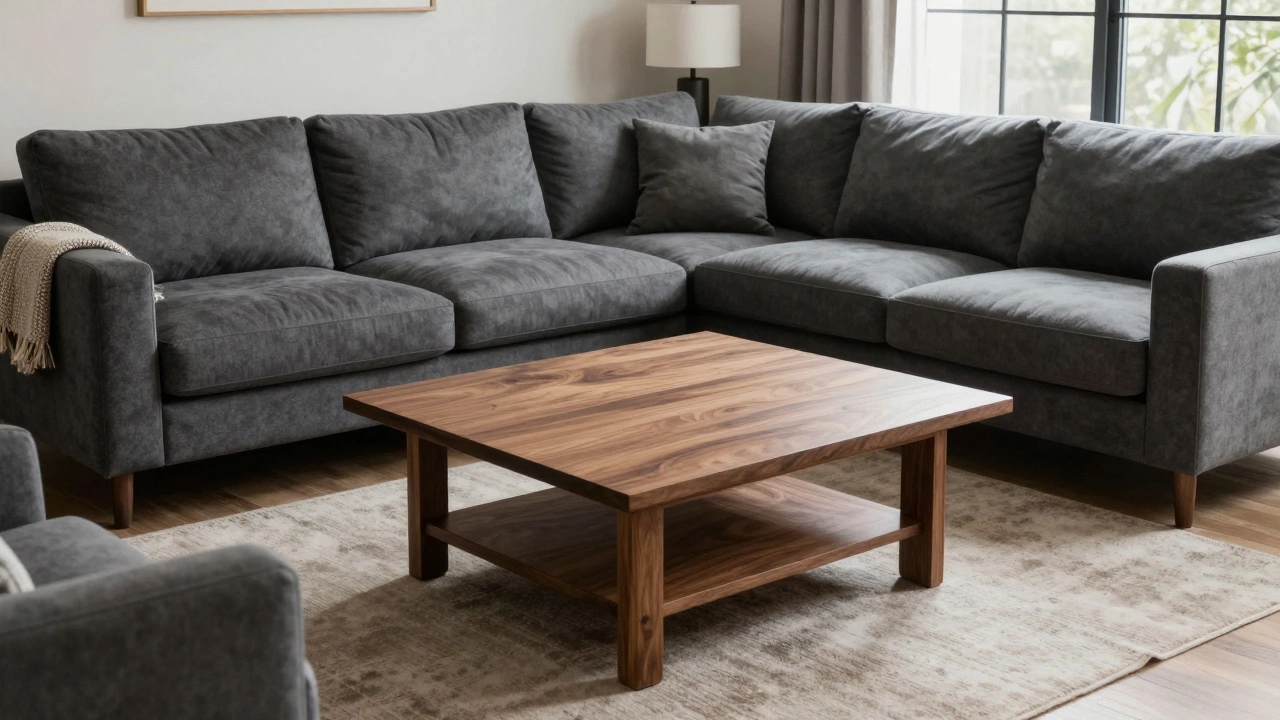
- A 72-inch long, 16-inch high walnut table with a matte finish under a deep gray sectional. The table’s warmth softens the cool tones of the couch.
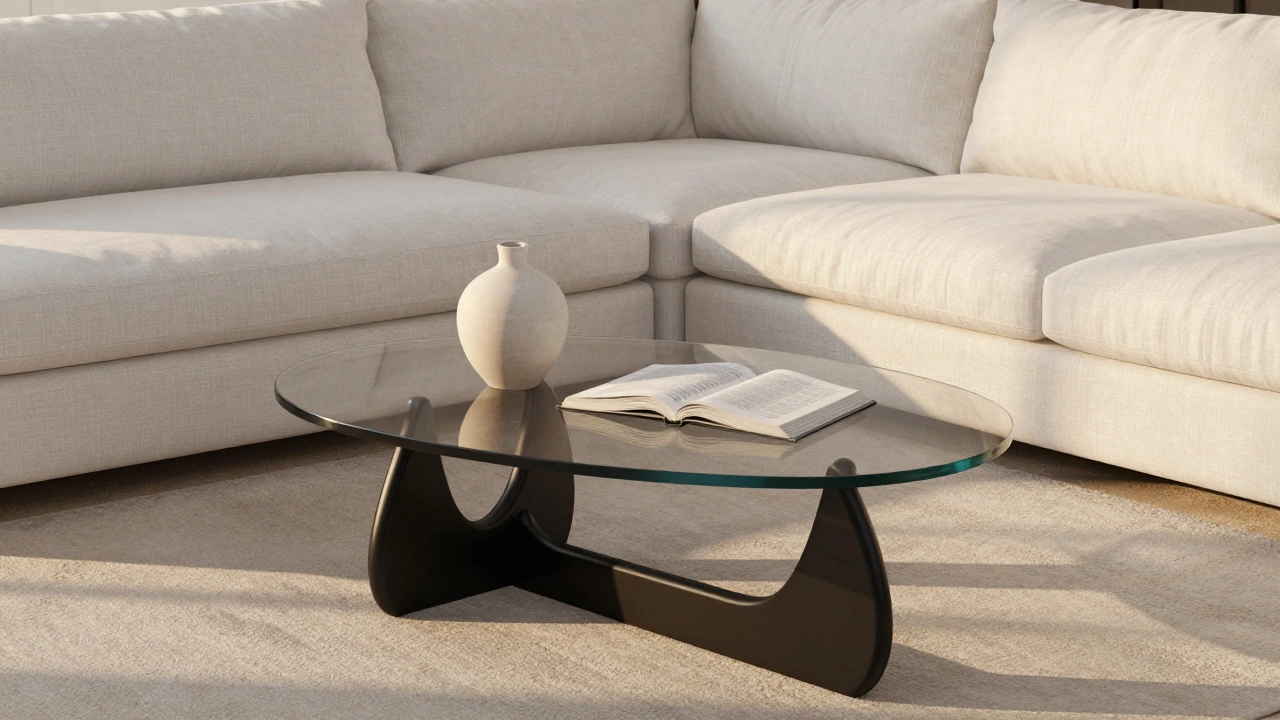
- A 48-inch round glass table with a black metal base next to a white linen sofa. The transparency keeps the space open, and the black base grounds the look.
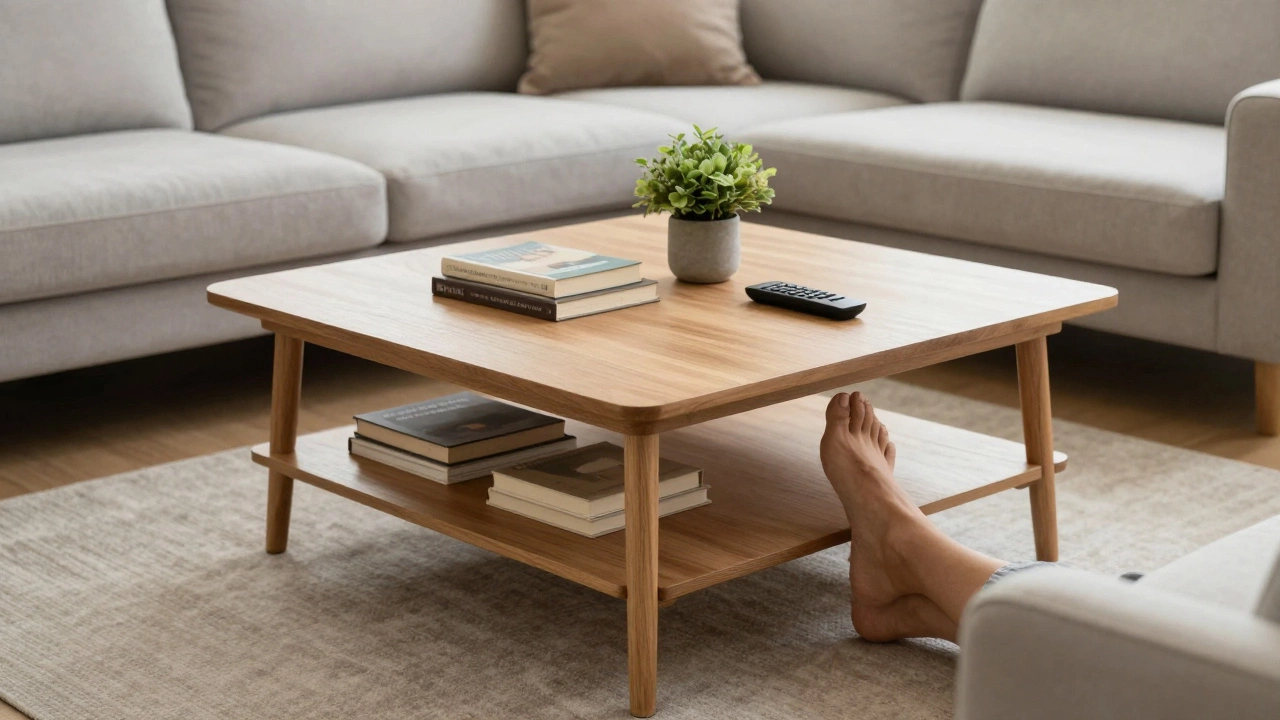
- A low, 20-inch high, square oak table with open shelves under an L-shaped sectional. It holds books, remotes, and a small plant-no clutter, no fuss.
- A 60-inch long, 17-inch high marble-top table with brass edges beside a dark brown leather sofa. The metallic edge adds a touch of luxury without overwhelming.
None of these are perfect matches. But they all feel intentional. That’s the goal.
Common mistakes to avoid
- Choosing a table based on what’s on sale. Sales don’t fix bad proportions.
- Going for the biggest table you can fit. Bigger isn’t better if it blocks movement.
- Matching wood tones exactly. That looks like a furniture catalog, not a lived-in home.
- Ignoring height. A table that’s too high or too low breaks the visual flow.
- Forgetting about legroom. You’ll notice it every time you sit down.
Test before you buy. Lay down masking tape on the floor to mark where the table would go. Sit on your couch and see how it feels. Move around the space. Does it feel open? Does it feel stuck? If you’re unsure, wait. A good coffee table is worth the patience.
Final tip: Let the room breathe
The best coffee table setups don’t scream for attention. They quietly hold everything you need and disappear into the background. When your table works right, you don’t think about it. You just feel comfortable.
Don’t overthink it. Measure your couch. Check the height. Leave room to move. Pick a shape that fits your space. Choose materials that complement, not copy. And remember-your living room isn’t a showroom. It’s your place to relax. Make it work for you, not the other way around.
How far should a coffee table be from the couch?
Leave 14 to 18 inches between the front of the couch and the coffee table. This gives enough space for legs to stretch and people to walk past comfortably. In larger rooms or with deeper sofas, you can go up to 20 inches, but avoid going beyond that or the space will feel disconnected.
Should a coffee table match the couch in color?
No, it doesn’t need to match. In fact, contrasting colors often look more intentional. Instead of matching, pull a color from your rug, pillows, or walls to create harmony. A navy couch pairs well with a warm wood table, not another navy piece.
What shape coffee table works best with an L-shaped couch?
A round or oval coffee table works best with an L-shaped couch. It softens the angular lines and prevents sharp corners from sticking into walkways. A rectangular table can work if it’s placed along the longer side of the L, but avoid placing it in the corner where it creates a tight, awkward space.
Is a glass coffee table a good choice?
Yes, if your room is small or you want to keep the space feeling open. Glass tables reflect light and make a room feel larger. They work best with solid, heavy couches like leather or linen. Avoid glass if you have young kids or pets-safety and durability matter.
Can I use two coffee tables instead of one?
Yes, especially with large sectionals or in wide living rooms. Two smaller tables-one on each side of the couch-can offer more flexibility. Use matching styles or complementary materials. Just make sure they’re the same height and not too close together, or they’ll look cluttered.