Bookcase Tip-Over Risk Calculator
Assess Your Bookcase Stability
Risk Assessment
Based on your inputs, your bookcase's stability risk level is:
Recommendations
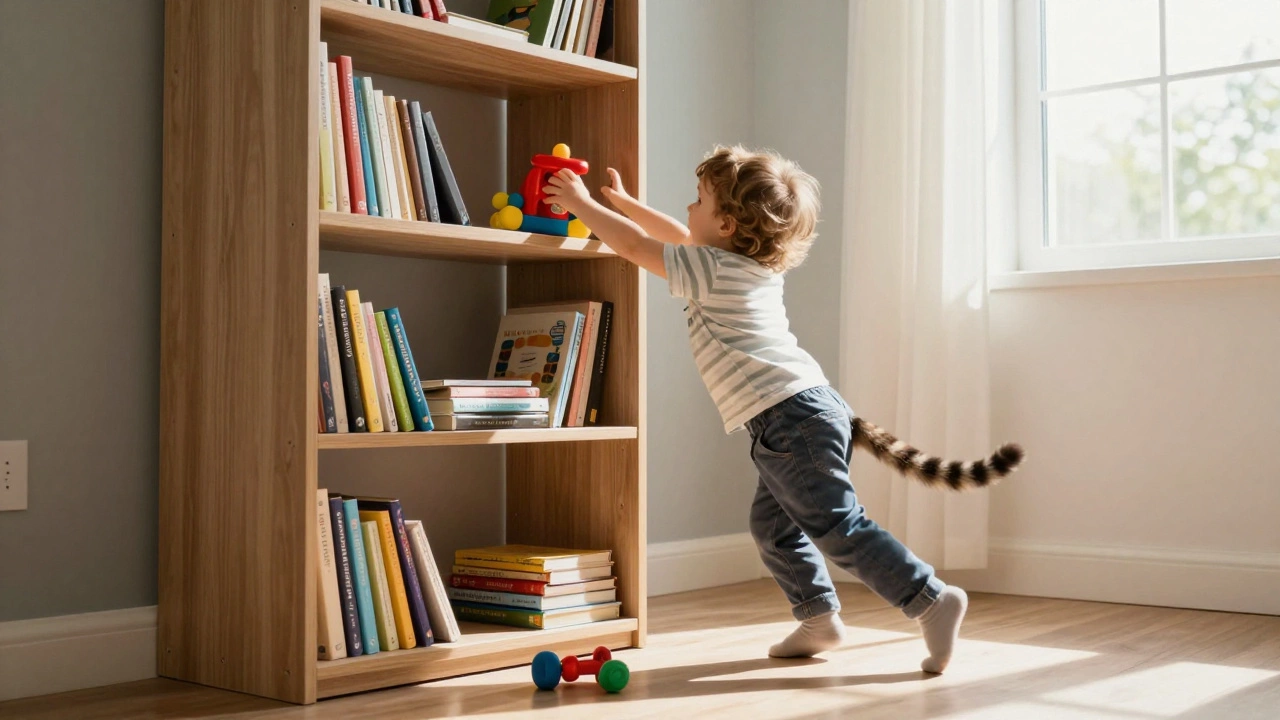
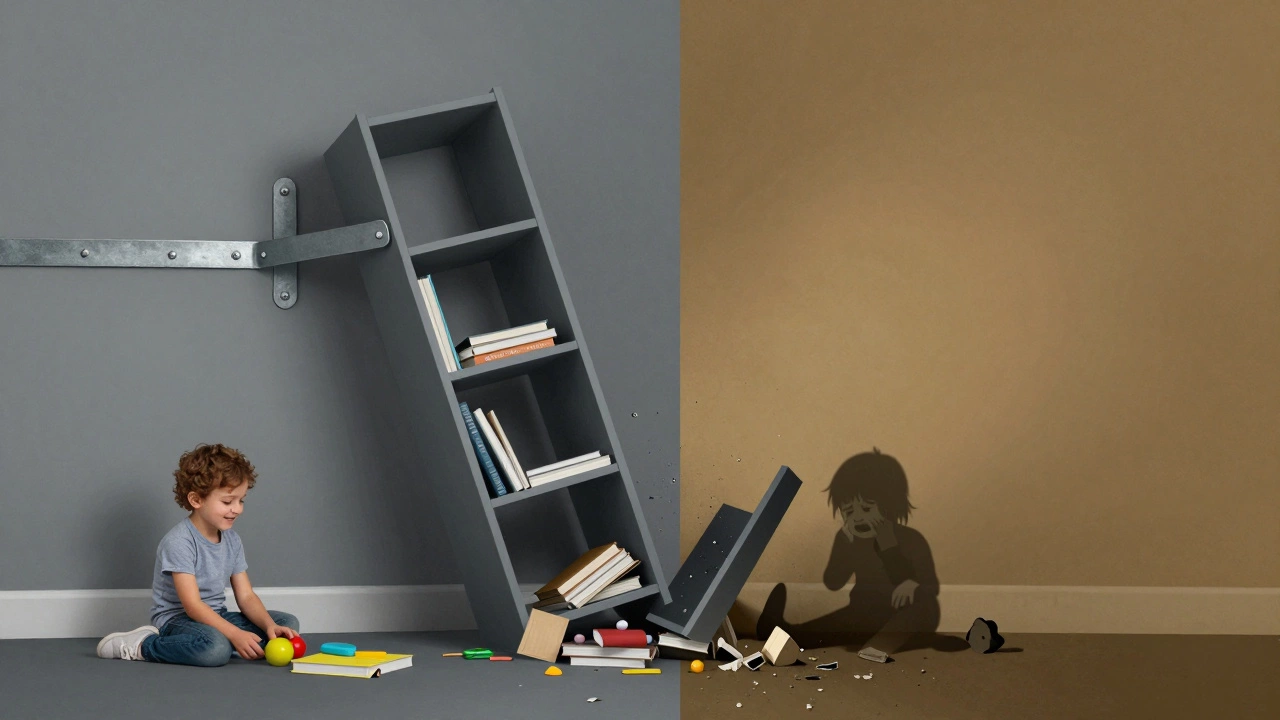
Every year, over 17,000 people visit U.S. emergency rooms because of falling furniture. Most of them aren’t adults reaching for a top shelf-they’re kids under six, playing or climbing, and a bookcase topples on them. Freestanding bookcases are especially risky. They’re tall, heavy on top, and often placed against walls that don’t go all the way to the ceiling. If you’ve ever seen a child’s toy chest slide off a high shelf and crash to the floor, imagine that same weight-maybe 150 pounds-landing on a toddler’s head. This isn’t a rare accident. It’s predictable. And it’s preventable.
Why Freestanding Bookcases Are Dangerous
Freestanding bookcases aren’t built to be stable on their own. They’re designed to look nice, hold books, and fit into empty corners. But their center of gravity is high. A single heavy book on the top shelf, a curious cat jumping up, or a child pulling on a lower shelf can shift the balance. Once the base starts to tilt, gravity takes over. The whole unit can flip in under a second.
Studies from the Consumer Product Safety Commission show that bookcases, dressers, and TV stands account for nearly half of all furniture-related injuries in children under five. The most common injuries? Head trauma, neck injuries, and broken bones. Even a bookcase that seems sturdy can fall if it’s not anchored. Weight doesn’t save you. A 300-pound oak bookcase can still tip if the base isn’t locked to the wall.
What You Need to Secure a Bookcase
Securing a bookcase isn’t about fancy tools or expensive hardware. You need three things:
- A wall anchor kit (usually includes straps or brackets and screws)
- A stud finder (to locate wall studs behind drywall)
- A drill and appropriate drill bits (for wood or drywall)
You can buy a kit for under $10 at any hardware store. Look for ones labeled “furniture anti-tip” or “anti-tip straps.” Avoid cheap plastic straps that snap under pressure. Metal-reinforced straps or rigid brackets are far more reliable. Some kits come with double-sided tape for temporary use, but tape isn’t enough for long-term safety.
Step-by-Step: How to Anchor Your Bookcase
Follow these steps exactly. Skipping one step could mean the difference between safety and disaster.
- Move the bookcase away from the wall. Clear everything off the shelves. This makes it easier to work and prevents damage.
- Use a stud finder to locate the wall studs. Slide it along the wall where the back of the bookcase will sit. Mark the center of each stud with a pencil. Most studs are 16 inches apart. You need at least one stud to anchor to.
- Place the bookcase back against the wall. Make sure it’s level. Use a small bubble level on top of the unit. If it leans, adjust the floor with felt pads or shims.
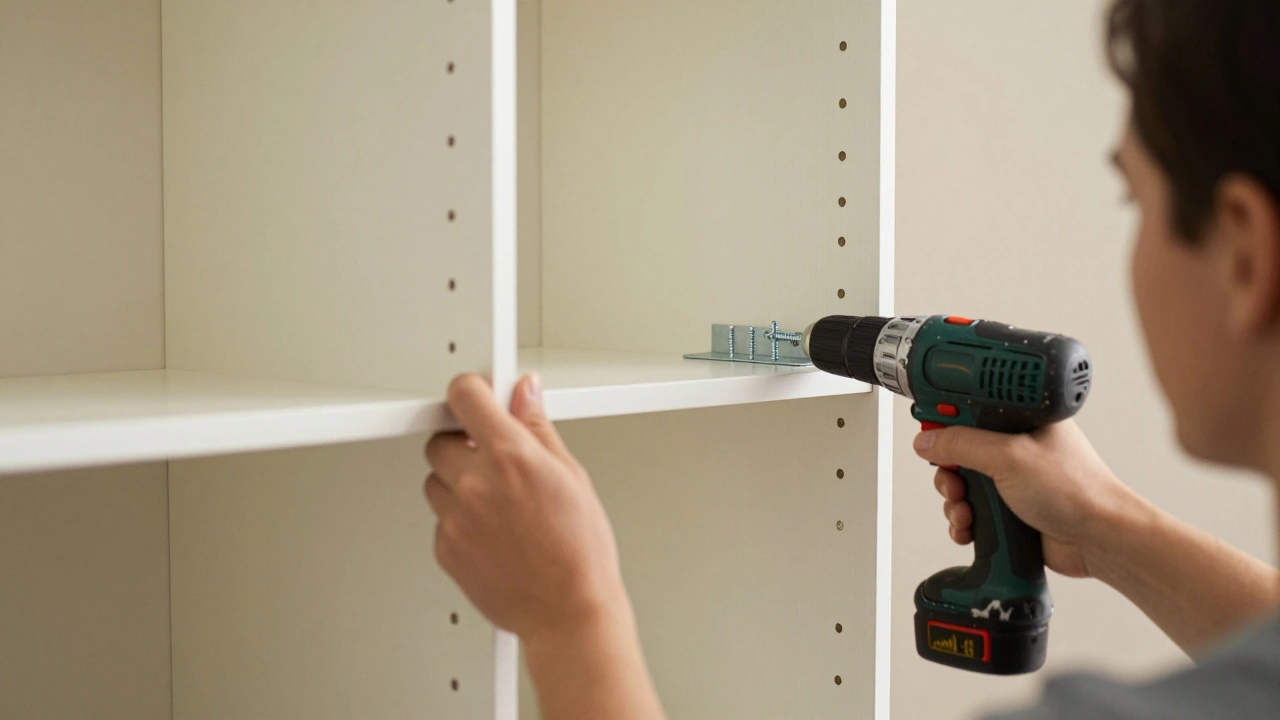
- Attach the anchor bracket or strap to the back of the bookcase. Most kits include a metal bracket that screws into the frame. Use the longest screws the kit provides-usually 2 inches. Drive them into the wood frame, not just the thin particle board backing.
- Drive the wall anchor into the stud. If you’re using a metal bracket, screw it directly into the stud. If you’re using a strap, loop it around the bracket and attach the hook to a wall screw driven into the stud. Do NOT anchor into drywall alone. Drywall screws will pull out under stress.
- Tighten everything. The strap or bracket should be taut, not loose. You shouldn’t be able to wiggle the bookcase side to side.
- Test it. Give the top of the bookcase a firm push. It shouldn’t move more than a quarter inch. If it does, recheck your anchors.
What If You Can’t Find a Stud?
Not every wall has studs in the right place. If your bookcase sits between studs, or you’re renting and can’t drill into the wall, you still have options.
- Use a top-of-wall anchor. Some kits let you screw into the ceiling or crown molding. This works if your ceiling is solid and the bookcase is flush against the wall.
- Install a floor-to-ceiling brace. These are adjustable metal rods that push between the floor and ceiling, holding the bookcase upright. They’re visible, but effective. Look for ones rated for 200+ pounds.
- Place heavy items on the bottom shelves. Lower the center of gravity. Keep books, DVDs, and heavy decor on the lowest two shelves. Put lightweight items like photo frames or small plants on top.
- Use double-sided mounting tape rated for furniture. Products like 3M Command™ Heavy-Duty Strips can help, but they’re a last resort. They work best on smooth surfaces and won’t hold up over time under constant pressure.
Special Cases: IKEA, Vintage, and Tall Units
Not all bookcases are the same. Some need extra care.
- IKEA PAX or KALLAX: These units come with wall anchors. Use them. IKEA’s instructions are clear, and their brackets are designed for their specific frame. Don’t skip this step. Over 100,000 IKEA dressers were recalled between 2016 and 2020 for tip-over risks. Bookcases follow the same rules.
- Vintage wooden bookcases: Older units often have thin, brittle wood. Don’t drill into the back panel. Instead, attach the anchor to the side frame or use a floor-to-ceiling brace. If the back is lath or cardboard, reinforce it with a thin plywood panel first.
- Tall, narrow bookcases: Units taller than 6 feet are 3x more likely to tip. If you have one, anchor it at two points-top and middle. Use two straps or brackets. Don’t rely on one anchor.
What About Pets and Kids?
Even if you don’t have kids, pets can be a hidden risk. Cats love climbing bookshelves. Dogs may jump to reach a treat on top. A single leap can shift the weight enough to start a fall.
Here’s what to do:
- Keep toys, treats, or dangling objects off the top shelf. Don’t tempt them.
- Use childproof latches on lower doors if your bookcase has them.
- Train pets not to jump on furniture. Use positive reinforcement. It’s easier than replacing a broken bookcase-and a broken bone.
When to Replace Instead of Anchor
Not every bookcase is worth saving. If your unit:
- Is made of particle board with thin, flimsy sides
- Has cracks in the wood or broken joints
- Was never designed to be anchored (like some decorative units with open backs)
- Is over 20 years old and shows signs of warping
Then it’s time to replace it. Buy a new one with built-in anchoring hardware. Look for models that meet ASTM F2057 safety standards. That’s the industry benchmark for furniture stability. It’s not a marketing gimmick-it’s a test. Units that pass are designed to stay upright even when a 50-pound weight is pulled from the top drawer.
Final Check: Is Your Bookcase Safe?
Do this once a year:
- Re-tighten all anchor screws. Wood can settle. Screws can loosen.
- Check for wall damage. If the drywall around the anchor is cracked, the screw may not be holding.
- Move heavy items to the bottom. Rebalance the load.
- Test it again. Push the top. If it moves, fix it now.
Securing a bookcase takes 20 minutes. The cost? Under $15. The risk of not doing it? A child’s life, a pet’s injury, or your own. It’s not about being paranoid. It’s about being smart. Furniture doesn’t fall because it’s old. It falls because it’s not anchored. And once it falls, it’s too late to fix it.
Can I just use furniture glue or adhesive strips to secure a bookcase?
No. Adhesives like furniture glue, double-sided tape, or Command strips are not designed to hold heavy, top-heavy furniture under stress. They may hold temporarily, but they degrade over time, especially with temperature changes or humidity. In a tip-over test, these fail within seconds. Only mechanical anchors-screws into studs or metal brackets-provide reliable safety.
Do I need to anchor a short bookcase under 4 feet tall?
Yes, if it’s freestanding. Even short units can tip if they’re narrow or loaded unevenly. A 3-foot bookcase filled with heavy textbooks on the top shelf can still flip over if a child pulls on it. The CPSC recommends anchoring all freestanding furniture taller than 30 inches, regardless of appearance.
Can I anchor a bookcase to a plaster wall?
Yes, but you need the right hardware. Plaster walls are brittle. Use toggle bolts or molly anchors rated for at least 100 pounds. Avoid regular drywall screws-they’ll pull through. Find the stud behind the plaster if possible. If not, use two heavy-duty anchors spaced apart to distribute weight. Always test the anchor with a pull test before loading the bookcase.
Is it safe to put a TV on top of a freestanding bookcase?
Never. A TV adds significant weight high up, raising the center of gravity. Even if the bookcase is anchored, the added weight and leverage make it far more likely to tip. TVs should only be mounted on walls or placed on low, stable TV stands designed for their weight. Putting a TV on a bookcase is one of the most dangerous furniture mistakes you can make.
What if I rent and can’t drill into the wall?
Use a floor-to-ceiling brace or a heavy-duty anti-tip kit designed for renters. These use tension, not screws, to hold the unit in place. Some are adjustable and leave no damage when removed. You can also place the bookcase against a load-bearing wall and fill the bottom shelves with heavy items to lower the center of gravity. Always check your lease agreement first, but safety should never be sacrificed.