Fitted Wardrobe Cost Calculator
Everyone talks about how amazing fitted wardrobes are-maximized space, sleek look, everything in its place. But here’s the truth most salespeople won’t tell you: fitted wardrobes aren’t the perfect solution they’re made out to be. They can lock you into expensive, inflexible designs that don’t adapt as your life changes. If you’re thinking about installing one, you need to know what you’re signing up for beyond the glossy brochures.
They’re Expensive-and Hard to Walk Away From
Fitted wardrobes aren’t just pricey upfront; they’re a long-term financial commitment. A basic custom unit can cost anywhere from $2,000 to $6,000, depending on materials and size. High-end options with full lighting, mirrored doors, and soft-close mechanisms can easily hit $10,000 or more. That’s more than most people spend on a full bedroom set off the shelf.And here’s the kicker: once it’s installed, you’re stuck. Unlike freestanding wardrobes you can move or resell, fitted units are built into your walls. If you ever move, you can’t take it with you. You either leave it behind (which might not add value to the home) or pay a contractor to rip it out and rebuild it at your new place-often costing more than the original installation.
They Don’t Adapt to Your Changing Needs
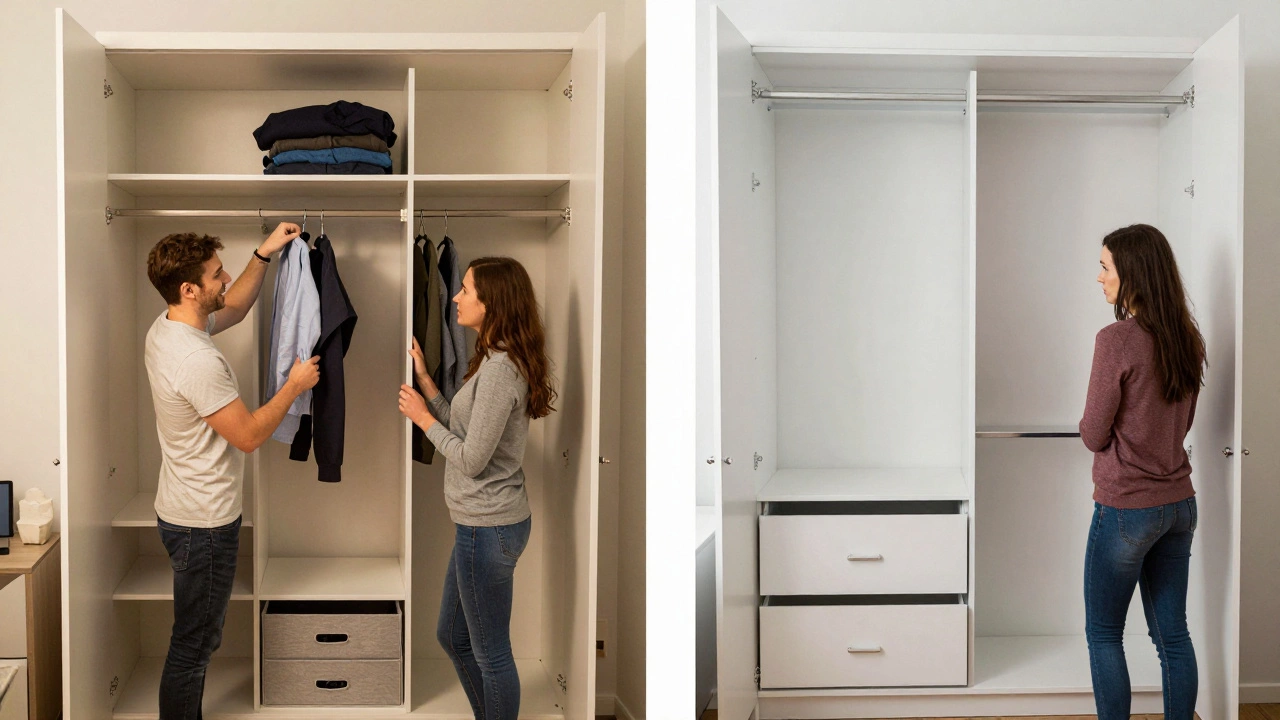
Life changes. You start with a few shirts and jeans. Then you get married, have kids, collect seasonal gear, or pick up a new hobby like hiking or photography. A fitted wardrobe designed for your 20s might be useless in your 40s.Most fitted units have fixed shelving, hanging rails, and drawers placed in positions chosen at the time of installation. If you suddenly need more space for long dresses or bulky winter coats, you can’t just rearrange the inside like you would with a standard wardrobe. You’d need to hire someone to redesign it-which costs nearly as much as building a new one.
One homeowner in Manchester installed a fitted wardrobe with deep drawers for folded sweaters. Five years later, she switched to a capsule wardrobe and only needed hanging space. The drawers sat empty. She couldn’t convert them without spending another $1,500.
They Can Make Small Rooms Feel Smaller
Fitted wardrobes are often sold as space-savers. But if they’re poorly designed or placed, they can make a room feel cramped. A full-height unit that runs from floor to ceiling with no gaps creates a visual wall. In small bedrooms, this blocks natural light and makes the space feel enclosed.Also, if the wardrobe sticks out even slightly from the wall-due to misalignment or uneven flooring-it becomes an obstacle. People bump into the doors. Vacuum cleaners get stuck. You lose usable floor space around it. A freestanding wardrobe, by contrast, can be pulled away from the wall for cleaning or repositioned if you rearrange the room.
Repair and Maintenance Are a Nightmare
A drawer in a freestanding wardrobe breaks? You replace the drawer. A hinge snaps? You swap it out. Simple.With a fitted wardrobe, everything is custom. If one door warps, the entire system might need adjustment. If a sliding track jams, you can’t just buy a replacement part from a hardware store-you need the original manufacturer or a specialist who knows your exact model. Replacement parts are often discontinued after a few years, leaving you with no options.
One couple in Leeds had a fitted wardrobe with a faulty sliding mechanism. The company that installed it went out of business two years later. They spent $800 just to get a technician to assess it-and still couldn’t fix the problem without replacing the whole track system.
Installation Is Messy, Disruptive, and Permanent
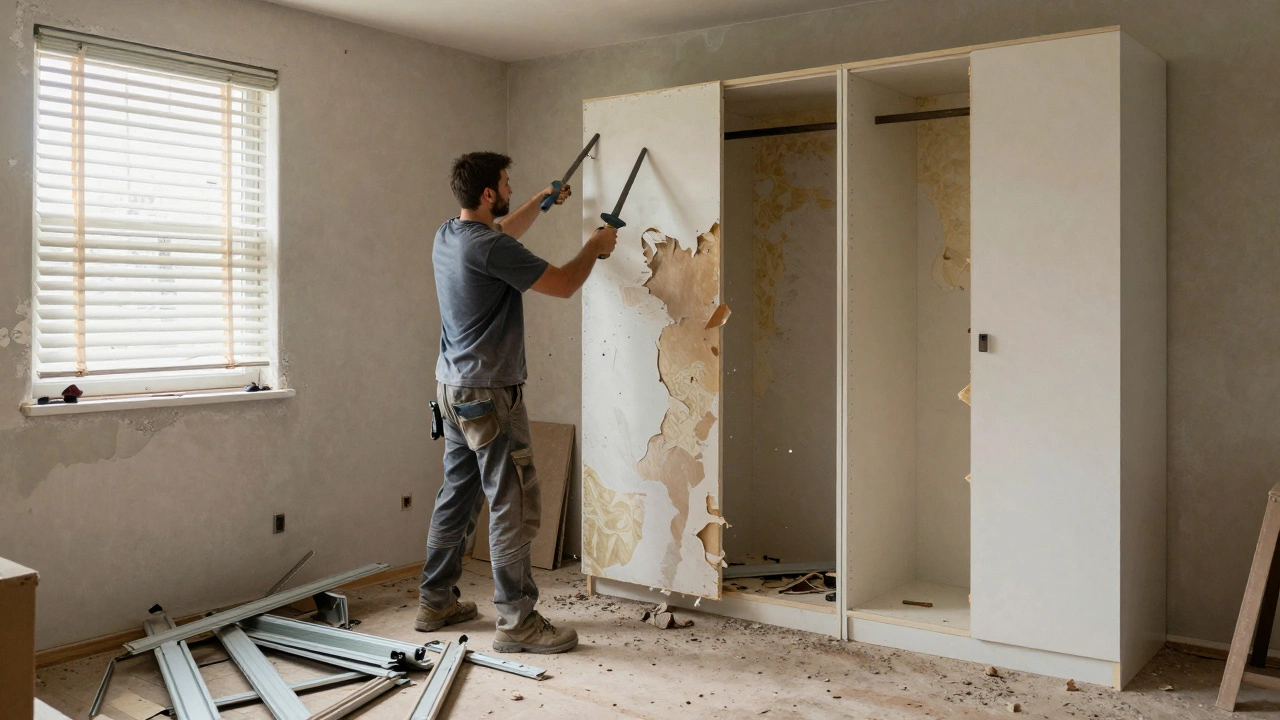
Installing a fitted wardrobe isn’t like assembling IKEA furniture. It requires carpenters, measurements to the millimeter, and often structural changes to the room. Walls may need reinforcing. Electrical outlets might get covered. Baseboards get cut or removed. Dust, noise, and disruption last for days.And once it’s in? You can’t undo it without damaging your walls. Drywall gets torn. Paint gets ruined. Flooring can be scratched or lifted. If you ever decide you hate it, removing it leaves behind a patchwork of repairs that rarely match the original finish.
They Hide Poor Storage Design
A lot of fitted wardrobes look great but are poorly organized inside. Designers focus on the exterior-mirrored doors, clean lines, hidden handles-and forget how you actually use the space.Common issues:
- Too many shallow drawers that can’t hold folded jeans
- Hanging rails too low for long coats
- Shelves too deep-items get lost in the back
- No lighting, making it hard to find things in the evening
- Doors that open inward, blocking access to the rest of the room
Many people end up using the bottom of their fitted wardrobe as a dumping ground because the internal layout doesn’t match their habits. You end up paying for luxury-and then buying a second storage solution anyway.
You Lose Flexibility for Future Renovations
What if you want to expand your bedroom? Add an en-suite bathroom? Move a window? A fitted wardrobe becomes an obstacle. You can’t easily remove it to make room for new plumbing, electrical, or structural work.One homeowner in Birmingham planned to convert her closet into a small bathroom. The fitted wardrobe had been installed just three years earlier. She spent $3,200 to remove it, repair the wall, and install a new freestanding unit elsewhere. The original unit had no resale value.
They Don’t Always Increase Home Value
Real estate agents often claim fitted wardrobes add value. But that’s not always true. Buyers have different tastes. A dark oak fitted wardrobe might look outdated next to a modern minimalist bedroom. A unit with too many drawers might feel cluttered to someone who prefers open shelving.In fact, some buyers actively avoid homes with built-ins because they know they’ll have to pay to remove them. A 2024 survey of UK homebuyers found that 38% said they’d be less likely to buy a property with non-removable wardrobes unless they were in excellent condition and matched their style.
Alternatives Worth Considering
Before you commit, think about these options:- Modular wardrobes (like IKEA PAX or similar systems) let you customize without permanent installation. You can reconfigure them, move them, or sell them later.
- Freestanding wardrobes with adjustable shelves and sliding doors offer flexibility and can be replaced every 5-10 years as styles change.
- Walk-in closets with open shelving and hanging rods give you total control over layout and are easier to modify later.
These alternatives cost less upfront, are easier to maintain, and adapt to your life as it changes.
Final Thought: Is It Worth It?
Fitted wardrobes look impressive. They’re marketed as the ultimate in smart storage. But they’re also high-risk, high-cost, and low-flexibility. If you’re planning to stay in your home for 15+ years, have a very specific storage need, and know exactly how you’ll use the space, then maybe it’s worth it.But if you’re unsure, young, plan to move, or just want to keep your options open? Save your money. Go with something you can move, fix, or replace. Your future self will thank you.
Are fitted wardrobes worth the cost?
Only if you plan to stay in your home for over a decade and have very specific, unchanging storage needs. For most people, the high upfront cost, lack of flexibility, and difficulty reselling or moving make them a poor investment. Modular or freestanding alternatives offer similar benefits without the long-term lock-in.
Can you remove a fitted wardrobe without damaging the wall?
It’s nearly impossible. Fitted wardrobes are anchored to walls, floors, and sometimes ceiling. Removal usually tears drywall, damages flooring, and leaves behind holes for electrical or plumbing lines. Repairs are costly and rarely match the original finish perfectly.
Do fitted wardrobes increase home value?
Not reliably. While they may appeal to some buyers, many others see them as outdated or inflexible. A 2024 survey showed 38% of UK buyers were less likely to purchase a home with built-in wardrobes unless they were in excellent condition and matched their personal style. In some cases, they can even deter buyers.
What’s the most common problem with fitted wardrobes?
The most common issue is inflexibility. Once installed, you can’t easily change the layout. Shelves and rods are fixed, so if your storage needs change-like needing more hanging space for long coats or fewer drawers-you’re stuck. Repairing or modifying them is expensive and often requires the original manufacturer.
How long do fitted wardrobes last?
Well-made fitted wardrobes can last 20-30 years, but that doesn’t mean they stay useful. Hardware like sliding tracks and hinges often fail after 8-12 years. Parts become obsolete, and styles go out of fashion. Many people replace them long before they physically break because they no longer fit their lifestyle.