Furniture Storage Material Guide
Your Preservation Plan:
Select your furniture and storage details to see the professional preservation recommendations.
You're moving, renovating, or maybe just clearing out a room, and suddenly you're staring at a massive oak dining table and a plush velvet sofa wondering where on earth they're going to go. Most people just throw a sheet over things and hope for the best, but that's a fast track to mold, scratches, and warped wood. If you want your favorite pieces to actually survive the wait, you need a plan that goes beyond just finding a dry spot.
Quick Takeaways for Furniture Preservation
- Clean every surface thoroughly before packing to prevent permanent stains.
- Use breathable covers instead of plastic wrap for upholstered items.
- Store heavy items at the bottom and avoid stacking fragile pieces.
- Control the temperature and humidity to stop wood from cracking or warping.
- Disassemble large items to save space and prevent structural stress.
Preparing Your Pieces for the Long Haul
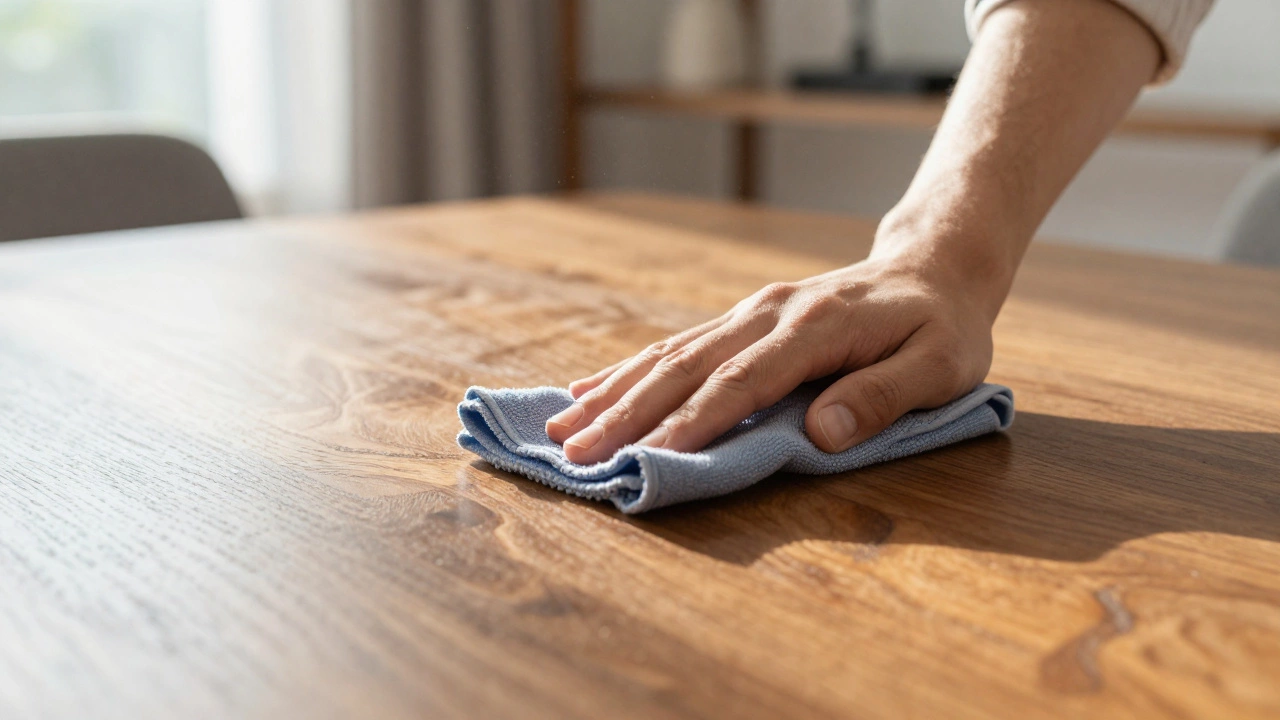
Before you even think about moving a chair, you have to get it clean. Dust and grime might seem harmless, but when you wrap them in plastic or blankets, you're essentially sealing that dirt into the finish. For Hardwood Furniture, use a damp cloth and a mild soap. Avoid heavy chemicals that could strip the varnish.
If you've got a sofa or a mattress, vacuum every crevice. Insects like moths or silverfish love undisturbed fabric, and a storage unit can become a buffet if you aren't careful. Once clean, let everything dry completely. Putting a piece of furniture into storage while it's even slightly damp is the easiest way to invite mold into your life.
The Art of Wrapping and Protecting
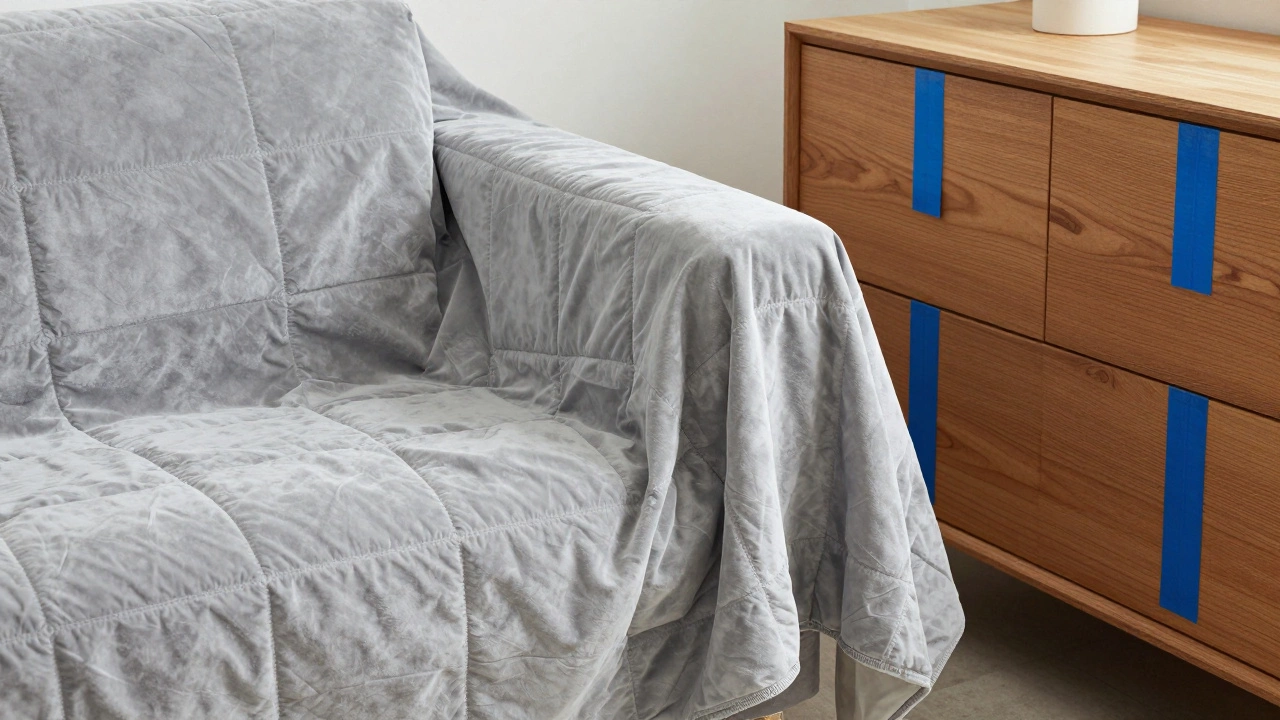
Different materials require different shields. If you use the wrong wrap, you might cause more damage than if you used nothing at all. For example, wrapping a leather couch in tight plastic wrap can trap moisture and lead to peeling or mildew. Instead, use Moving Blankets. These are heavy-duty, quilted fabrics designed to absorb shocks and prevent scratches during transit and storage.
For wooden tables and dressers, consider Stretch Wrap only for holding things in place, not as a primary seal. Use acid-free packing paper for delicate surfaces. If you're storing a dresser, don't leave the drawers empty if they're prone to sliding out; either remove them entirely or secure them with painter's tape, which doesn't leave a sticky residue.
| Furniture Type | Recommended Wrap | Avoid Using | Reason |
|---|---|---|---|
| Leather Sofas | Breathable Cotton Sheets | Plastic Wrap | Prevents moisture buildup and peeling |
| Wooden Tables | Moving Blankets + Cardboard | Direct Plastic Contact | Prevents scratches and chemical reactions |
| Upholstered Chairs | Plastic Furniture Covers (Ventilated) | Cheap Garbage Bags | Keeps dust out while allowing airflow |
| Glass Tops | Bubble Wrap + Heavy Cardboard | Thin Blankets | Provides impact resistance against breaks |
Choosing the Right Storage Environment
Where you put your stuff matters as much as how you wrap it. A damp garage or a freezing attic is a nightmare for furniture storage. Wood is organic; it expands in humidity and shrinks in the cold. If the temperature swings too wildly, you'll see cracks appearing in the joints of your chairs or the tabletop of your desk.
If you're renting a Self-Storage Unit, look for one that is climate-controlled. This means the facility maintains a steady temperature and humidity level, usually between 65 and 85 degrees Fahrenheit. This is non-negotiable for antiques, high-end leather, or anything made of solid mahogany or walnut.
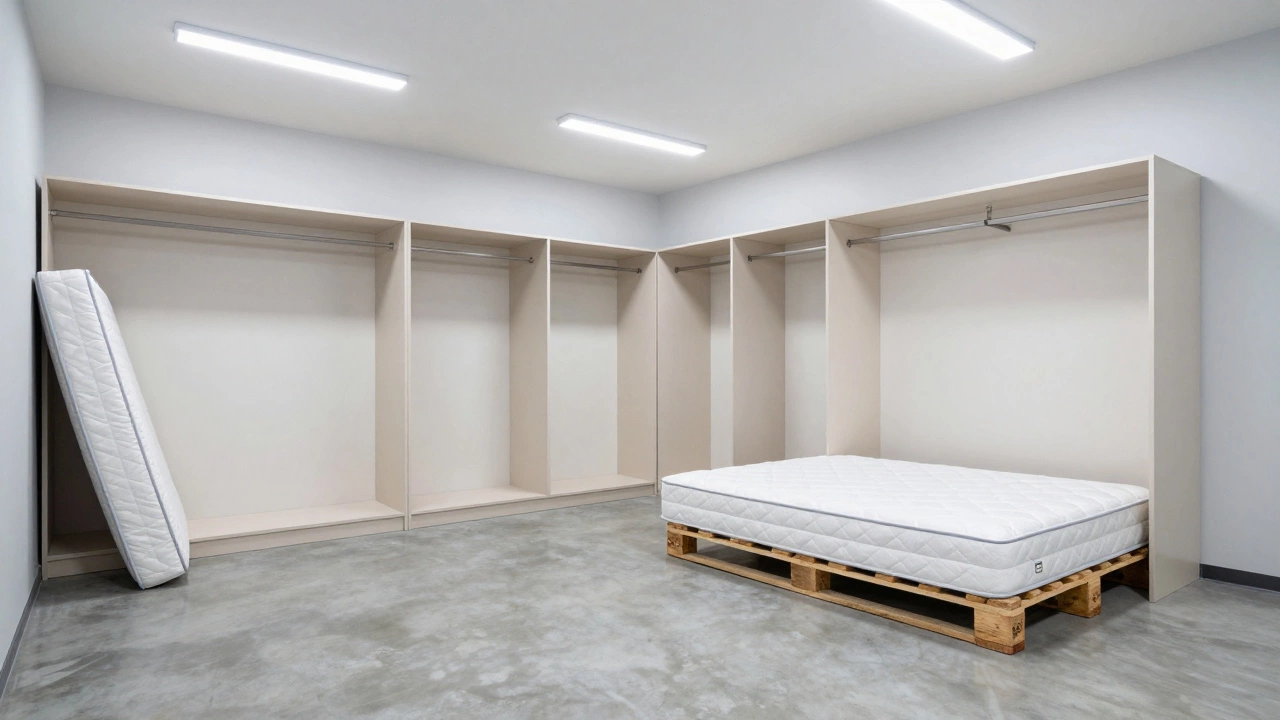
If you're storing items in a basement, keep them off the floor. Use Pallets or plastic shelving to create a gap between the furniture and the concrete. Concrete seeps moisture, and that moisture will travel straight up into the legs of your furniture, causing rot or black mold.
Smart Layout and Space Management
Don't just cram everything into the unit and shut the door. You need a logical layout. Start with the heaviest, bulkiest items at the back and bottom. Think of it like a puzzle. Large wardrobes and bed frames should be placed against the walls to keep the center clear for easier access.
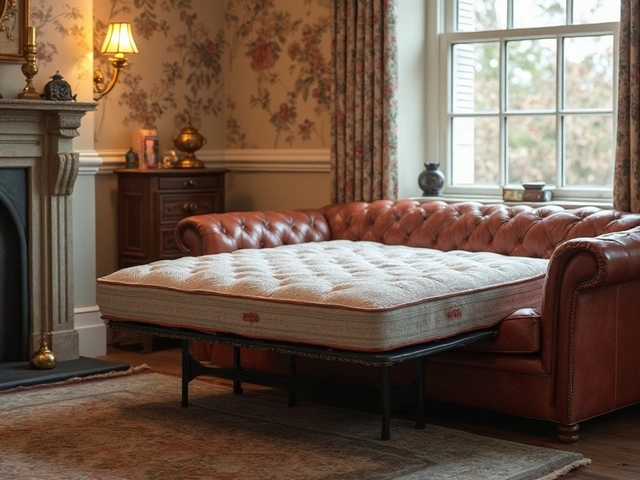
When it comes to stacking, be ruthless. Never put a heavy box on top of a wooden chair; you'll crush the frame or bend the legs. If you must stack, use sturdy shelving units. For mattresses, store them on their edge rather than flat. Storing a mattress flat for months can cause it to warp or create a permanent dip in the center due to the weight of other items potentially leaning against it.
Handling Disassembly and Hardware
Taking things apart isn't just about saving space-it's about safety. A fully assembled dining table is a sail in a windstorm and a liability in a tight storage unit. Use a hex key or screwdriver to break down bed frames and tables. But here is where most people mess up: the screws.
Never throw screws and bolts into a random junk drawer. Use small, labeled Ziploc Bags. Tape these bags directly to a large piece of the furniture they belong to. There is nothing more frustrating than finding a beautiful bed frame three years later and realizing you have no idea which screws go into which holes.
Common Pitfalls to Avoid
One big mistake is over-tightening wraps. If you wrap a sofa so tightly in plastic that it can't breathe, you're creating a greenhouse effect inside the wrap. If there's even a hint of moisture, you'll find a colony of mold when you unwrap it. Always leave a little room for air to circulate.
Another error is ignoring the "settling" period. If you've just moved a heavy dresser into a new environment, let it sit for a day before you wrap it tight. This allows the wood to adjust to the ambient humidity. Also, avoid using adhesives like duct tape directly on finished wood. The residue is a nightmare to remove and often rips the veneer right off the surface.
Can I store furniture in a garage?
You can, but it's risky. Garages usually lack climate control, meaning your furniture is exposed to extreme heat and humidity. This can lead to wood warping and fabric mildew. If you must use a garage, use heavy-duty moving blankets, keep items on pallets, and use a dehumidifier to keep the air dry.
How do I protect furniture from pests in storage?
Deep cleaning is your first line of defense. Vacuum everything and consider using cedar blocks or lavender sachets in upholstered pieces, as these naturally repel moths. Avoid using mothballs in enclosed plastic wraps, as the smell is nearly impossible to remove from fabric later.
How long can furniture be stored before it degrades?
In a climate-controlled environment, high-quality furniture can last indefinitely. However, in non-controlled areas, you may see signs of degradation (like drying leather or warping wood) within 6 to 12 months. It's a good idea to check on your items every few months to ensure no leaks or pests have entered the space.
What is the best way to store a mattress?
Store it on its side or flat on a pallet. Use a high-quality, breathable mattress cover to prevent dust and bugs from getting in. Avoid wrapping it airtight in plastic, as this can trap moisture and lead to mold growth inside the mattress layers.
Do I need to wax my furniture before storing it?
A fresh coat of high-quality furniture wax can provide an extra layer of protection against moisture and dust. However, make sure the wax is completely cured and dry before you wrap the piece. If you wrap "tacky" wax, the wrapping material will stick to the finish and peel it off.
Next Steps for Different Scenarios
If you're moving for a few weeks: Stick to moving blankets and a clean, dry room. You don't need full climate control for short bursts, but keep things off the floor.
If you're storing for a year or more: Invest in a professional climate-controlled unit. The cost of the monthly rent is far lower than the cost of replacing a warped dining set or a moldy sofa.
If you're storing heirlooms: Use acid-free paper and archival-grade covers. Avoid all plastics that aren't specifically designed for long-term museum-style storage.