Sofa Placement Decision Tool
Room & Lifestyle Factors
VERDICT
Select factors below
Check the boxes that apply to your living room situation to see our recommendation.
The Great Living Room Debate: Window vs. Wall
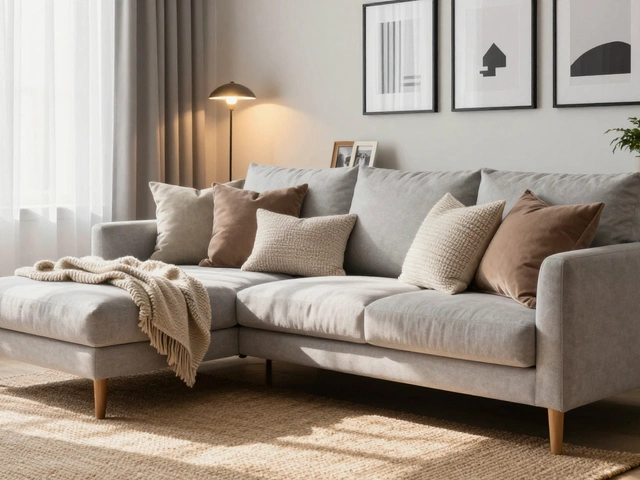
You’ve just bought a new sofa is a comfortable piece of seating furniture designed for multiple people to sit on. It looks great in the showroom. But now you’re standing in your empty living room, staring at that big window, and wondering: should I face it toward the view or push it against the wall?
This isn’t just about aesthetics. It’s about how you actually live in your space. Placing your sofa incorrectly can make a cozy room feel cramped, or a spacious room feel cold and disconnected. The right position changes the entire energy of the room.
There is no single "correct" answer that works for every home. The best choice depends on your room’s shape, your daily habits, and what you want the space to feel like. Let’s break down the pros and cons of both options so you can decide with confidence.
Option 1: Facing the Window (The View-Centric Approach)
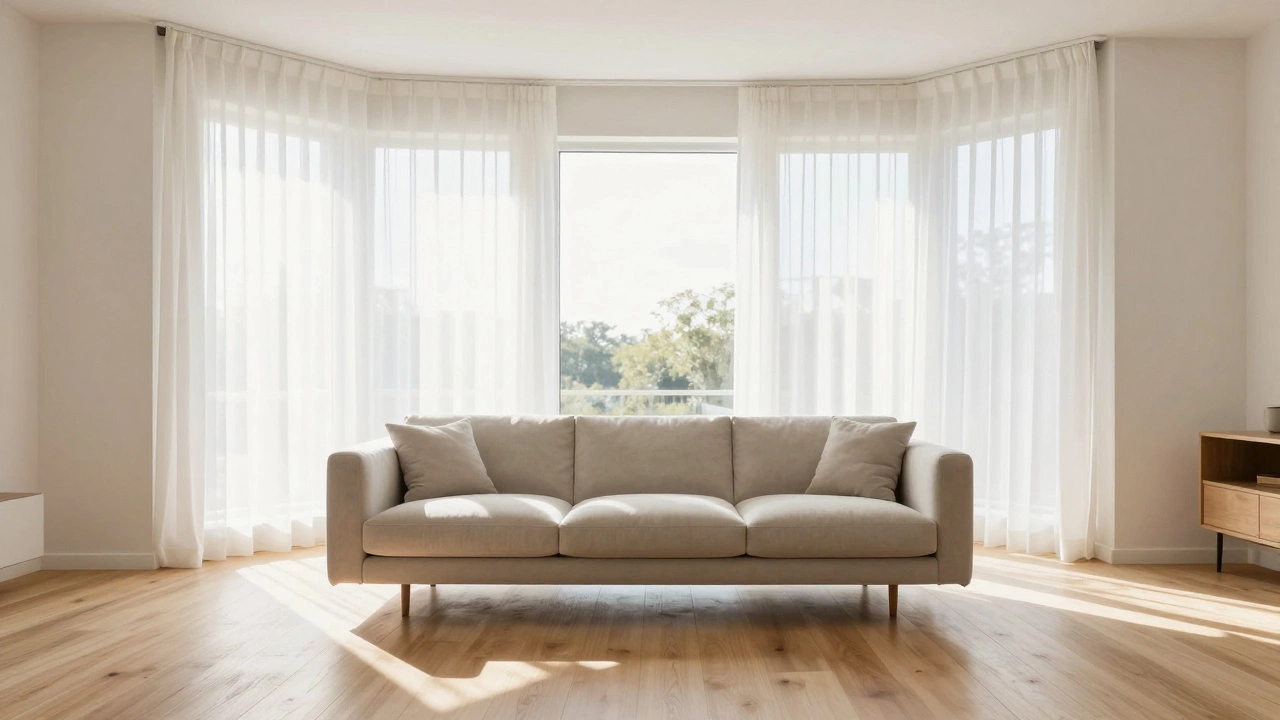
Placing your sofa directly in front of the window, facing into the room, is a bold move. It turns the window into a backdrop rather than a boundary. This setup is popular in modern open-plan living spaces where natural light is prized.
| Advantages | Disadvantages |
|---|---|
| Maximizes natural light in the seating area | Fewer wall options for artwork or shelving |
| Creates a strong focal point if the view is nice | Can cause glare on TVs placed opposite |
| Makes small rooms feel larger and airier | May block airflow from heating or AC units |
| Encourages conversation away from walls | Feeling exposed if privacy glass is lacking |
When this works best: If you have a beautiful garden, city skyline, or park view, facing the window allows everyone sitting to enjoy it. It also helps if your living room is narrow. By pulling the sofa away from the wall, you create depth. Just ensure you have sheer curtains or blinds to manage glare during the day.
The risk: If your TV is on the wall opposite the window, you might struggle with screen reflection. Also, some people feel uneasy without a solid wall behind them-it’s a primal instinct called "prospect-refuge theory." You want a clear view (prospect) but a safe back (refuge). A floating sofa removes that refuge.
Option 2: Facing Away from the Window (The Traditional Anchor)
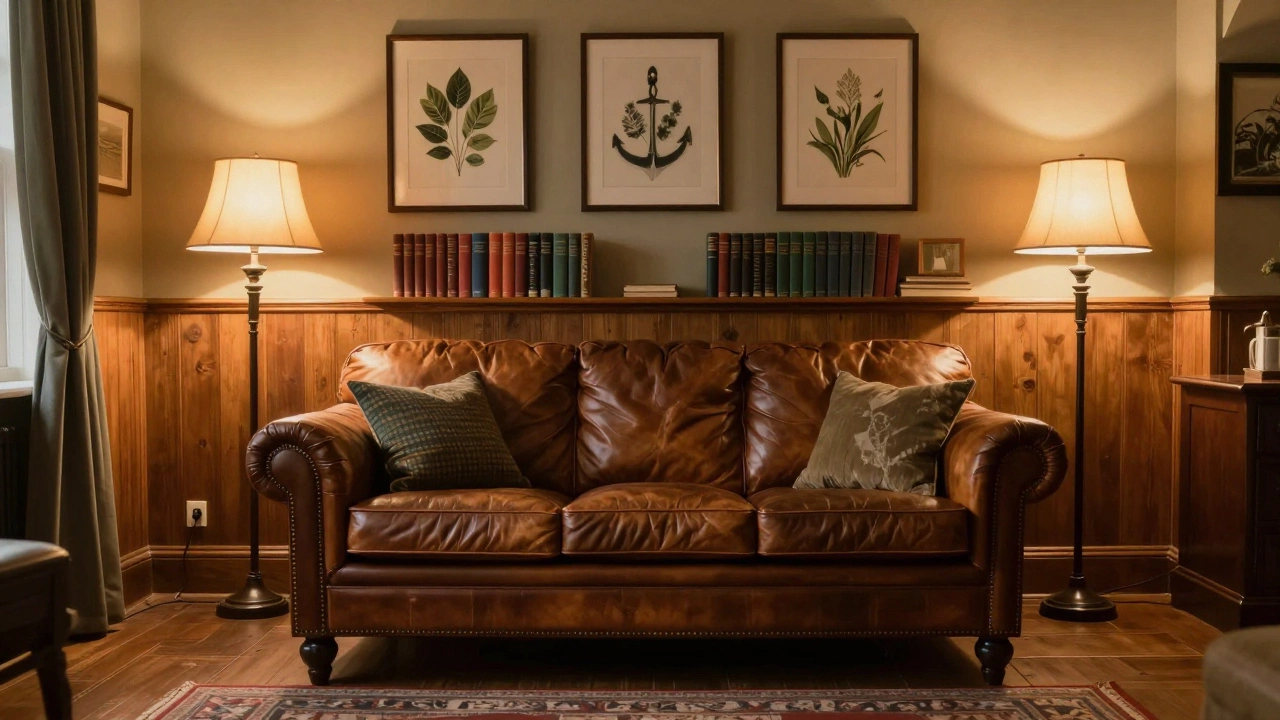
Placing the sofa against the longest wall, usually perpendicular to the window, is the classic layout. It anchors the room and provides a sense of stability. This is the go-to choice for traditional living rooms and family dens.
| Advantages | Disadvantages |
|---|---|
| Provides a solid "backing" for security | Can make the room feel smaller if too close to wall |
| Easier to hang art or shelves behind sofa | Natural light may not reach the seating area evenly |
| Better control over TV viewing angles | May block traffic flow if the room is tight |
| Creates distinct zones in large rooms | Can feel static or rigid in open plans |
When this works best: If your primary activity is watching TV, reading, or working on a laptop, this position often offers better lighting control. You avoid direct sunlight hitting your screens. Plus, having a wall behind you lets you display framed photos or books, adding personality to the space.
The risk: In smaller rooms, pushing the sofa flush against the wall can make the space feel boxy. Designers recommend leaving a 4-6 inch gap between the sofa and the wall. This small trick makes the room look bigger and prevents dust buildup.
Key Factors That Decide Your Layout
Before you drag that heavy furniture around, consider these three critical factors. They will tell you which direction wins.
1. The Traffic Flow
Walk through your room. Where do people naturally enter and exit? Your sofa shouldn’t block the main path. If placing it against the wall forces guests to squeeze past it to get to the kitchen, that’s a bad sign. If facing the window creates a clear, wide walkway around the perimeter, that’s a win. Always prioritize movement. A beautiful layout fails if nobody can walk through the room comfortably.
2. The Focal Point
What draws your eye when you walk in? Is it the fireplace? The TV? The window view? Or maybe a stunning piece of art? Your sofa should face the most important element.
- If the TV is king: Place the sofa facing the TV, regardless of the window. Use anti-glare coatings or position the TV away from direct sun.
- If the fireplace is central: Arrange seating in an L-shape or U-shape around it. The window becomes secondary.
- If the view is stunning: Face the window. Add a coffee table to anchor the group and keep people engaged with each other while enjoying the scenery.
3. Room Shape and Size
Square rooms are forgiving. Rectangular rooms need strategy. In a long, narrow living room, placing the sofa along the long wall can make the room feel even longer and thinner. Instead, try angling the sofa slightly or placing it perpendicular to the long wall to break up the length. In a small square room, floating the sofa (facing the window) can actually make the space feel more open by revealing floor space underneath.
Alternative Layouts: Breaking the Rules
Sometimes neither facing nor away works perfectly. Here are two hybrid approaches used by professional interior designers.
The Angled Sofa
If your room has awkward corners or odd angles, don’t force a 90-degree fit. Angle the sofa slightly toward the center of the room. This creates a dynamic conversation circle and softens hard lines. It’s perfect for rooms with diagonal windows or sloped ceilings.
The Floating Island
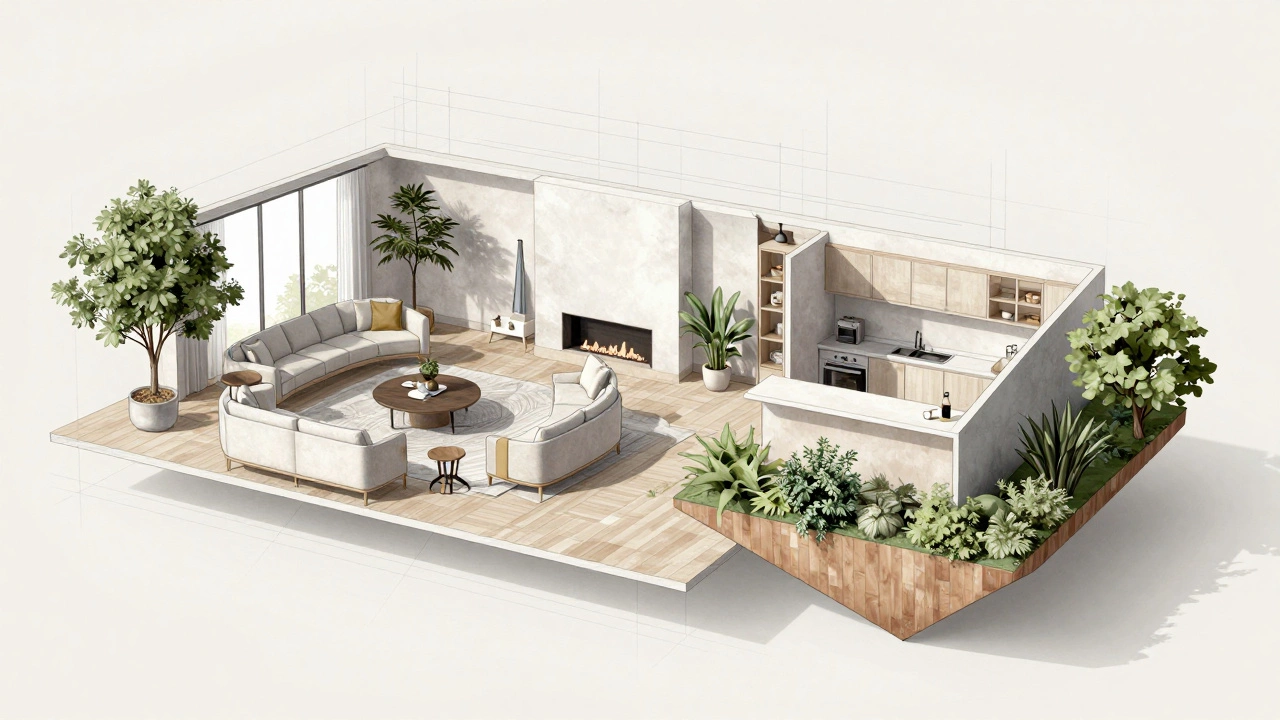
In large open-plan areas, the sofa doesn’t need to touch any wall. Place it in the middle of the room, facing a specific zone (like a dining area or fireplace). Use a rug to define the "island." This creates separate functional zones without building walls. It’s ideal for modern homes where the living room merges with the kitchen.
Common Mistakes to Avoid
Even with the best intentions, easy errors can ruin your layout. Watch out for these:
- Blocking outlets: Check where your power sockets are before moving the sofa. If you place it against a wall with no outlets, you’ll be tripping over extension cords to charge phones or lamps.
- Ignoring the rug size: Your rug should anchor the seating area. All front legs of the sofa should rest on the rug. If the rug is too small, the sofa will look disconnected and float awkwardly.
- Forgetting ceiling height: High ceilings demand vertical balance. If you place a low sofa against a high wall, add tall bookshelves or vertical art to fill the void. Low ceilings benefit from lower-profile sofas placed closer to the floor.
- Overlooking HVAC vents: Don’t place your sofa directly in front of a heating or air conditioning vent. It reduces efficiency and makes the air circulate poorly.
Quick Decision Checklist
Still unsure? Run through this quick mental checklist:
- Is the view outside worth looking at? Yes → Face the window.
- Do you watch TV more than 5 hours a week? Yes → Face away from the window (or use blackout blinds).
- Is the room narrow? Yes → Float the sofa to create width.
- Do you feel insecure without a wall behind you? Yes → Place against the wall.
- Is there a fireplace? Yes → Arrange around the fire, ignore the window.
Should my sofa face the TV or the window?
Prioritize your primary activity. If you watch TV frequently, face the TV to reduce glare and improve viewing comfort. If you entertain guests and enjoy natural light, face the window. You can compromise by placing the sofa at an angle if both are important.
How far should the sofa be from the window?
If facing the window, leave at least 12-18 inches between the sofa and the window frame to allow for curtains and airflow. If placed perpendicular to the window, ensure it doesn’t block access to the sill or plants.
Can I put a sofa against a window wall?
Yes, but it’s rarely ideal. It blocks light and makes the room feel smaller. Only do this if the room is very large or if you need to create a distinct separation between zones. Leave a small gap to prevent heat damage to the fabric.
What is the best way to arrange a sofa in a small living room?
In small rooms, floating the sofa (pulling it away from the wall) can make the space feel larger. Use a light-colored rug and keep the coffee table low to maintain sightlines. Avoid bulky armchairs that block pathways.
Does Feng Shui say anything about sofa placement?
Feng Shui recommends placing the sofa against a solid wall for support and stability. It advises against facing the door directly (the "poison arrow") or having your back to the entrance. If you must float the sofa, ensure you have a visual connection to the door.