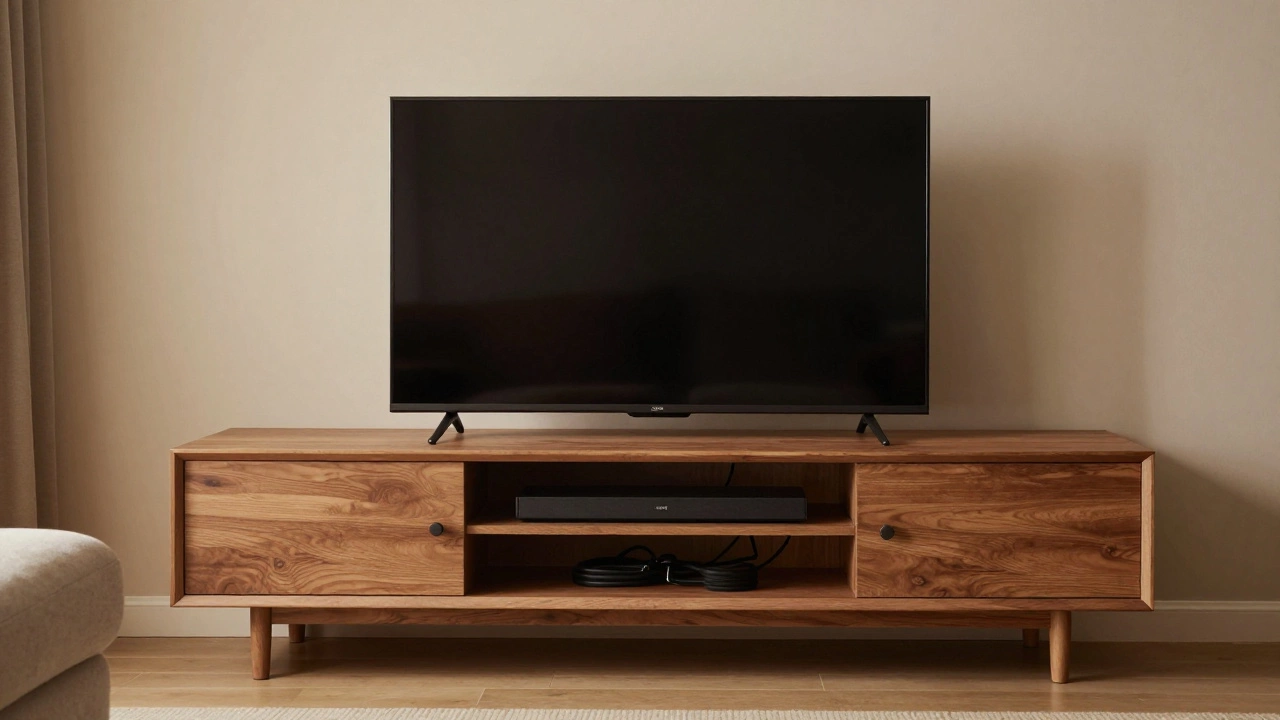
How Big Does a TV Stand Need to Be for a 65-Inch TV?
A 65-inch TV needs a stand at least 67 inches wide for safety and function. Learn the ideal width, depth, height, and how to avoid common mistakes when choosing a TV stand.
When you buy a new TV, the TV stand, a base designed to hold and support a television, often comes with the TV but rarely matches your room’s layout or style. Also known as a TV console, it’s not just a piece of furniture—it’s the foundation for your viewing experience. A stand that’s too narrow, too shallow, or too weak can turn your new 75-inch screen into a safety hazard or an eyesore. The truth? Most people pick a stand based on looks, not measurements—and regret it later.
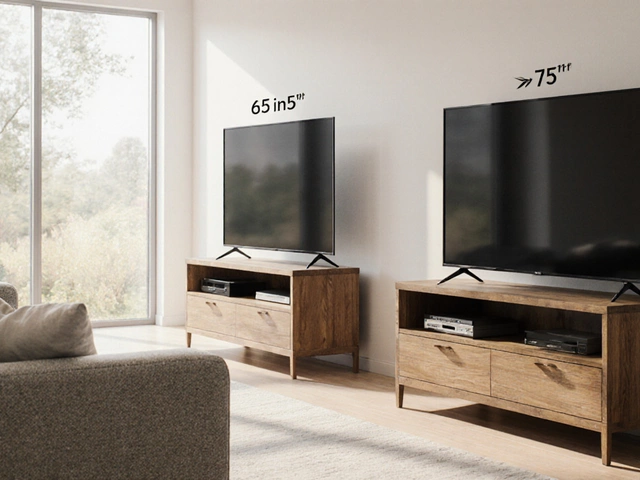
The right TV stand dimensions, include width, depth, and weight capacity, all of which must match your TV’s VESA pattern, footprint, and heft. A 65-inch TV might seem small, but its base can be over 40 inches wide. A 75-inch model? That’s closer to 50 inches—and needs a stand that’s at least 5 inches wider on each side for stability. Weight matters too. Many stands claim to hold 100 pounds but wobble under a 70-pound TV with a soundbar attached. And depth? If your stand is too shallow, your TV will stick out, blocking vents or making cables a nightmare to manage.
It’s not just about the TV. Your room layout, how you arrange seating, lighting, and other furniture, directly affects what stand size will work. A stand that fits in a showroom might block a window or crowd a doorway in your home. You also need room for streaming boxes, game consoles, and speakers underneath or beside it. That’s why people who switch from wall-mounting to using a stand often realize they didn’t plan for the extra space it takes up.
And then there’s the question of style versus function. A sleek, minimalist stand might look great, but if it doesn’t have cable management or enough clearance for ventilation, you’ll end up with overheating gear and tangled wires. Meanwhile, a bulky entertainment center might hold everything—but if it’s too deep, you’ll be leaning forward to see the screen. The best solution? Measure your TV’s base first, then check the stand’s specs before you buy. Don’t trust the box label—measure the TV’s own footprint.
What you’ll find below are real-life examples of what works—and what doesn’t. From how a 75-inch TV needs a wider stand than you think, to why putting a TV on a narrow console can damage your back from craning your neck, these posts cut through the noise. You’ll learn how to avoid common mistakes, spot hidden risks, and pick a stand that actually fits your space, your gear, and your life—not just your budget.
A 65-inch TV needs a stand at least 67 inches wide for safety and function. Learn the ideal width, depth, height, and how to avoid common mistakes when choosing a TV stand.

15 Oct
Space‑Saving Coffee Table Shapes: Which Uses the Least Footprint?
30 Oct
How Much Bigger Is a 75-Inch TV Than a 65-Inch? Size, Space, and Stand Fit Explained

2 Oct
Should I Wrap My Couch in Plastic for Storage? Pros, Cons & Best Practices

5 Mar
What Type of Office Chair Is Best for Sitting All Day?

5 Jan
Does Medicare Pay for Recliners for Seniors? Here's What You Need to Know