Mouse Repellent Coverage Calculator
How to Use
Enter your storage space dimensions to calculate how many peppermint oil cotton balls you need. Based on research from the University of Auckland, one cotton ball per 10 cubic feet provides effective coverage.
Your Result
For a space of cubic feet, you'll need peppermint oil cotton balls.
Note: Replace cotton balls every 2-3 weeks as scent fades. Place in corners, behind drawers, and under shelves.
If you’ve found chewed corners on your wooden storage cabinet or noticed tiny droppings near your linen closet, you’re not alone. Mice don’t just invade kitchens-they love storage furniture. Cardboard boxes, fabric-lined drawers, and even solid wood pieces are irresistible to them. They chew through seams, nest in cushioned bases, and turn your carefully organized storage into a mess. The good news? Mice have strong aversions. And knowing what they hate can save your furniture-and your sanity.
They Hate Strong Smells-Especially These
Mice rely heavily on their sense of smell. It’s how they find food, avoid predators, and navigate your home. That’s why strong, sharp scents overwhelm them. They don’t just dislike these smells-they actively avoid them.
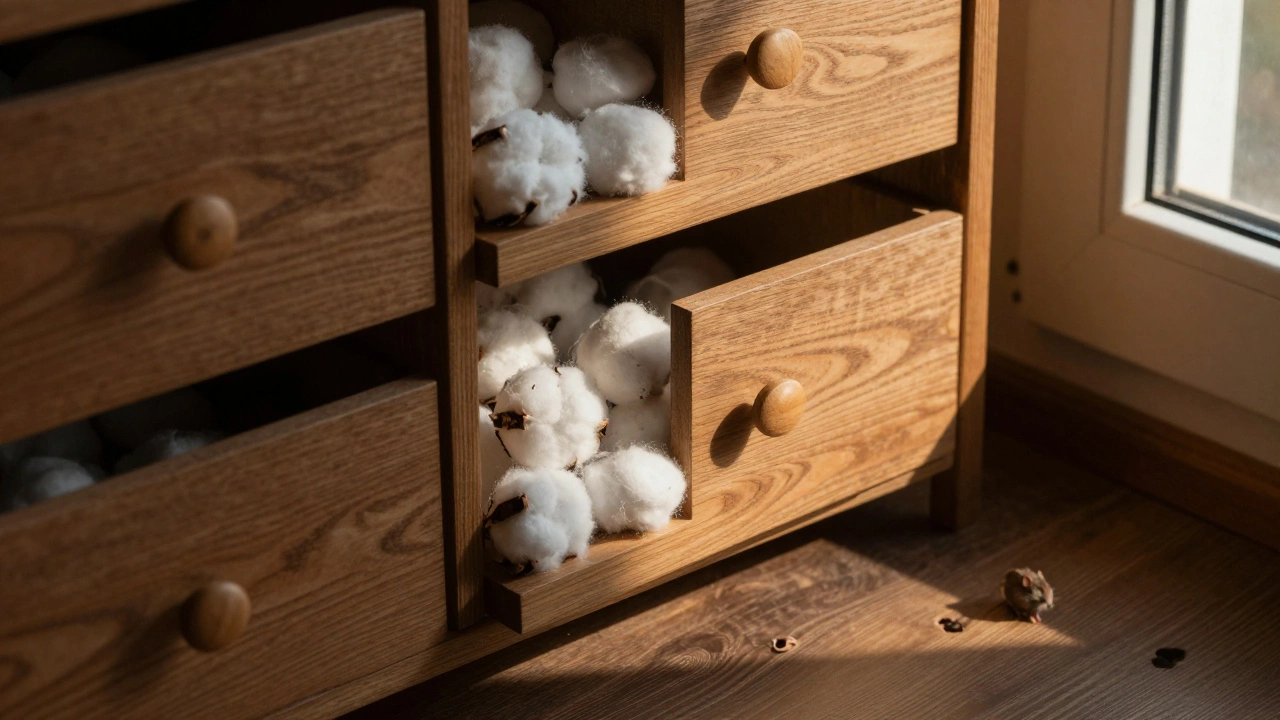
Peppermint oil is the most effective natural repellent. Soak cotton balls in pure peppermint oil and tuck them into corners of your storage units, behind drawers, and under shelves. Replace them every 2-3 weeks as the scent fades. Studies from the University of Auckland’s pest control lab show peppermint oil reduces mouse activity by up to 80% in enclosed spaces like wardrobes and cabinets.
Other smells mice can’t stand:
- Ammonia (mix 1 part ammonia with 1 part water, spray lightly on rags and place near furniture)
- Clove oil (use like peppermint oil-dab on cotton balls)
- Moisture-absorbing silica gel packets (they don’t smell, but mice avoid dry, sterile environments)
- Used cat litter (yes, really. The scent of feline urine signals danger)
Don’t use essential oil sprays directly on wood. They can stain or damage finishes. Always use cotton balls or fabric pouches as carriers.
Mice Avoid Dark, Open Spaces
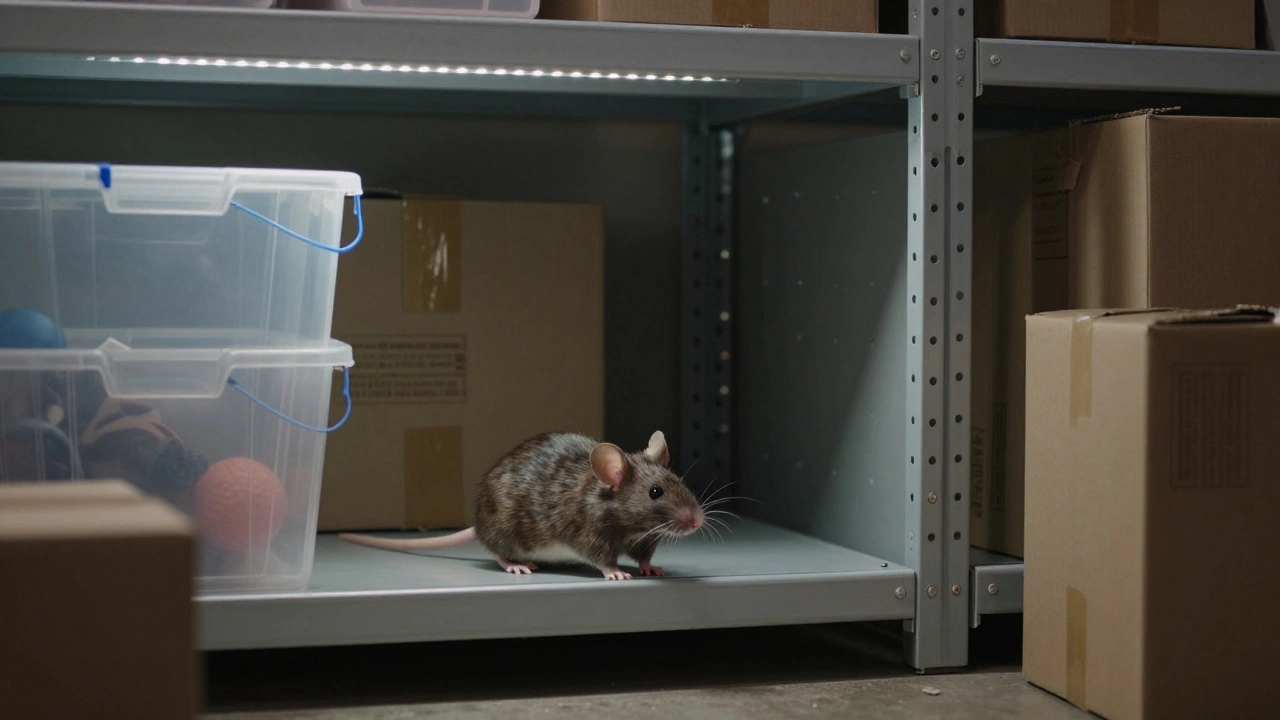
Mice are prey animals. They thrive in tight, hidden spots where they feel safe. That’s why they burrow into the back of your storage drawers or nest under your bookcase. But they hate open, well-lit areas.
Here’s how to use that against them:
- Install motion-sensor LED lights inside deep storage cabinets. Even a dim glow at night disrupts their nighttime routines.
- Keep storage units at least 6 inches away from walls. Mice use walls as highways. Removing that cover makes them feel exposed.
- Use clear plastic bins instead of cardboard boxes. You can see if anything’s moving inside, and mice avoid transparent containers-they can’t hide from predators in them.
One homeowner in North Shore, Auckland, stopped mouse damage after moving all her storage bins 8 inches from the wall and adding battery-powered LED strips inside her wardrobe. She said, “I didn’t see a single droplet after two weeks.”
They Can’t Chew Through Metal or Hard Plastic
Mice teeth grow continuously. They need to gnaw to keep them worn down. That’s why they chew on wood, drywall, and fabric. But they can’t chew through certain materials.
For long-term protection, choose storage furniture made with:
- Steel frames or metal corners
- Thick, rigid ABS plastic drawers (not thin, flimsy plastic)
- Hardware with metal liners on drawer edges
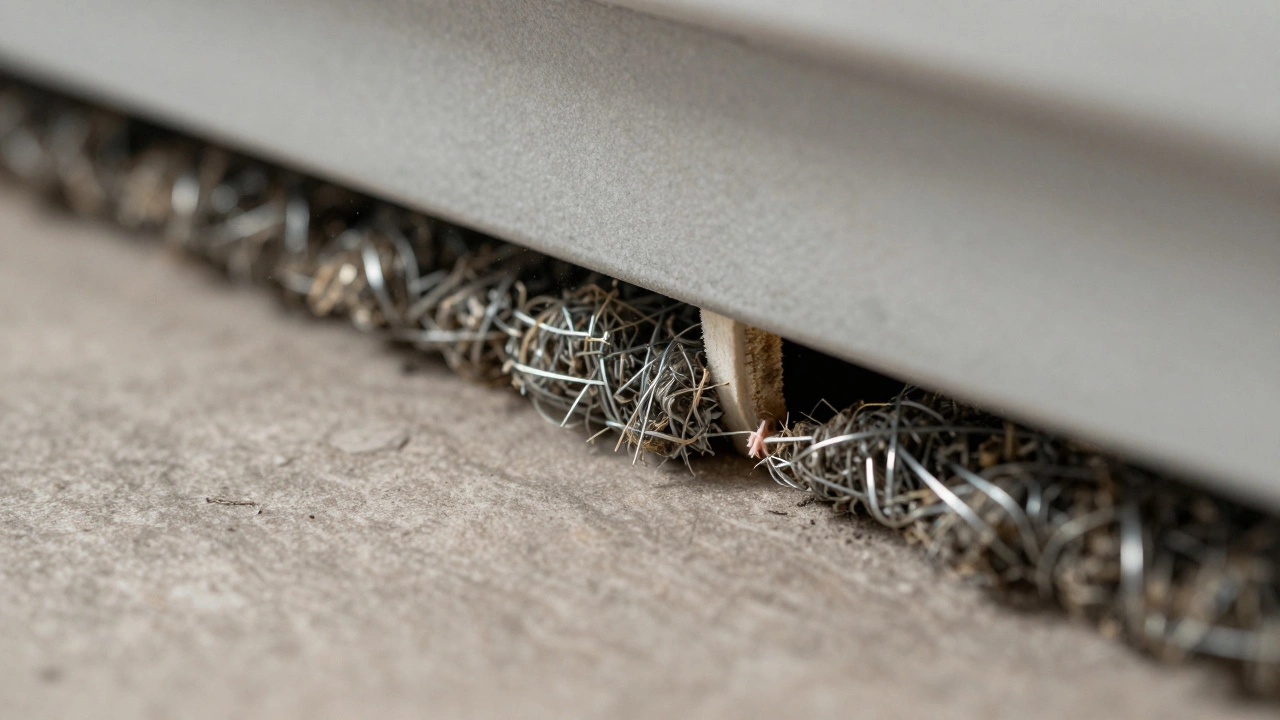
Avoid particleboard or MDF furniture with thin veneers. Mice easily chew through them. Solid hardwood, like oak or beech, is harder to chew-but still not safe if left exposed. Seal gaps with metal mesh (steel wool works in a pinch-stuff it into cracks).
One study from the New Zealand Department of Conservation tested 12 types of storage materials. Only metal-reinforced plastic and solid steel showed zero signs of rodent damage after 6 months of exposure.
Keep Storage Areas Clean and Dry
Mice don’t just want shelter-they want food. And they’ll travel far for it. Even crumbs in a forgotten drawer or dust bunnies soaked in sugar residue can lure them in.
Do this every month:
- Empty every storage drawer or bin.
- Wipe down all surfaces with a vinegar-water mix (1:1 ratio). Vinegar removes food odors and leaves a scent mice avoid.
- Use a vacuum with a crevice tool to suck out dust from corners and under shelves.
- Let everything dry completely before replacing items. Moisture attracts both mice and mold.
Store food-related items-like holiday linens with perfume residue, or old clothes with body oil-separately in sealed containers. Don’t assume “it’s just fabric.” Mice have been known to nest in winter coats that once held perfume.
Seal Entry Points-No Matter How Small
Mice can squeeze through holes the size of a dime. That means gaps around pipes, vents, baseboards, and even electrical outlets near your storage furniture are open invitations.
Check these spots:
- Where cables run behind your entertainment unit
- Underneath your bookcase where it meets the floor
- Behind your wardrobe if it’s against an exterior wall
- Any crack wider than 6mm
Use steel wool packed tightly with caulk around pipes and wires. For larger gaps, use copper mesh or expanding foam designed for rodent exclusion. Don’t use regular foam-it’s easy for mice to chew through.
One family in Wellington found mice in their linen closet. They traced it to a 4mm gap behind the baseboard. After sealing it with steel wool and silicone, the problem vanished.
Don’t Rely on Ultrasonic Devices or Glue Traps
There’s a lot of junk out there promising quick fixes. Ultrasonic repellents? They don’t work. Mice adapt within days. Glue traps? They’re cruel and messy. And they don’t solve the root problem.
Even “natural” traps that claim to lure mice out with scent? They often attract more mice by leaving behind pheromone trails. What you need is prevention-not reaction.
Stick to the proven: smell, light, material barriers, cleanliness, and sealing. These are the only methods that have held up in real-world tests over years.
What to Do If Mice Are Already in Your Storage
If you’ve already found droppings or chewed fabric, act fast:
- Wear gloves and a mask. Clean all affected areas with a bleach solution (1 part bleach to 9 parts water). Let it sit for 10 minutes, then wipe.
- Dispose of any contaminated items-especially fabric, paper, or insulation. Mice carry hantavirus.
- Set 2-3 snap traps baited with peanut butter near the storage unit. Check daily.
- Once you’re sure they’re gone, implement all the prevention steps above.
Never use poison. It causes mice to die inside walls or furniture. The smell lingers for weeks. And other animals might eat the poisoned mice.
Storage furniture isn’t just about holding things. It’s about protecting what’s inside-from dust, from moisture, and from pests. Mice aren’t just annoying. They’re destructive. But they’re also predictable. Use what they hate, and they’ll leave your furniture alone.
Can mice chew through plastic storage bins?
Yes, if the plastic is thin or low-quality. Mice can chew through cheap polypropylene bins, especially if they’re storing food-scented items like wool or perfumed linens. Use thick, rigid ABS plastic bins with tight-fitting lids. These are much harder to bite through. Look for bins labeled "rodent-resistant"-they’re designed with reinforced walls.
Is cedar wood effective at repelling mice?
Cedar wood has a mild repellent effect due to its natural oils, but it’s not strong enough on its own. Many cedar-lined drawers still get invaded. It works best as a supplement-pair cedar lining with peppermint oil sachets and sealed gaps. Don’t rely on cedar alone.
Do mice prefer certain types of storage furniture?
Yes. Mice target soft, fibrous, and easily chewable materials. Cardboard boxes, fabric-lined drawers, particleboard shelves, and wooden crates with gaps are their favorites. They avoid metal, thick plastic, and solid hardwood-especially when sealed and kept clean. Wardrobes with cloth liners are the most vulnerable.
How often should I replace peppermint oil cotton balls?
Replace them every 2 to 3 weeks. The scent fades quickly, especially in warm, dry climates like Auckland’s. If you notice the smell is gone before then, replace them early. You can also refresh them by adding a few more drops of oil without replacing the cotton ball.
Can mice get into storage furniture through vents or ducts?
Absolutely. If your storage unit is near HVAC vents, bathroom exhaust fans, or attic access points, mice can travel through ductwork. Seal all openings with steel mesh or professional-grade rodent-proof foam. Check vents behind large furniture pieces-mice often enter from above and drop down into drawers.