Corner Sofa Size Calculator
Measure Your Space
Enter your room dimensions to determine the ideal corner sofa size. The calculator uses New Zealand's 2024 corner sofa standards.
Recommended Sofa Size
Max Length: -
Ideal Depth: -
Space for Movement: -
Sofa Type: -
Based on 2024 trends: 18" (45cm) clearance on all sides, ideal sofa depth 22-24" (56-61cm)
Visual representation of sofa placement will appear here
Corner sofas aren’t just furniture anymore-they’re the backbone of how people live in their homes today. In 2024, the trend isn’t about size alone. It’s about smart design, flexible layouts, and spaces that feel lived-in, not staged. If you’ve been thinking about replacing your old sofa, you’re not alone. More people are ditching boxy, bulky sectionals for pieces that adapt to real life: small apartments, remote work zones, and families who want comfort without clutter.
Compact L-Shaped Designs Are Taking Over
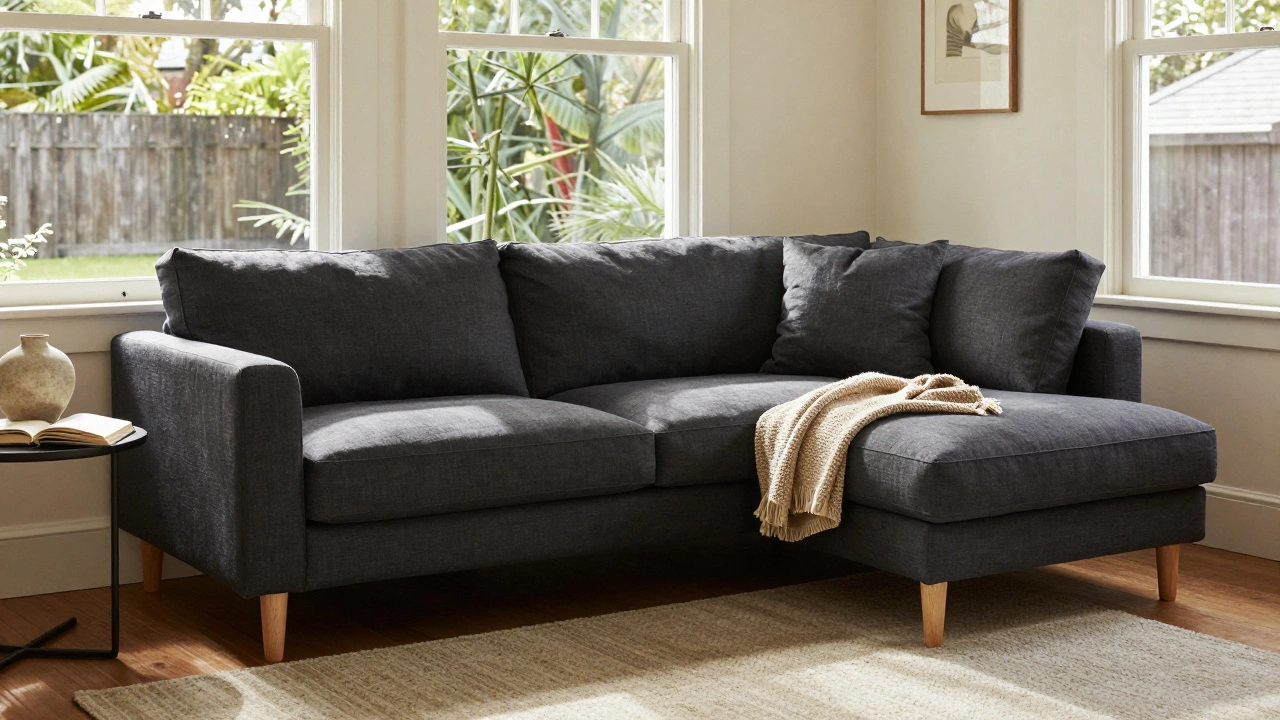
Big, sprawling L-shaped sofas used to be the go-to for living rooms. But in 2024, space is at a premium. Even in homes with decent square footage, people are choosing smaller, more proportioned corner sofas. Brands like IKEA, Article, and local New Zealand makers are seeing a 40% spike in sales for models under 9 feet long. These aren’t tiny-they’re thoughtfully scaled. A 7.5-foot corner sofa with a chaise on one side and a low arm on the other fits perfectly in Auckland’s typical 1970s bungalow or a modern apartment. The key? Deep seats (at least 22 inches) and low backs that don’t block windows or make the room feel cramped.
What’s new? Modular options. Instead of buying one big unit, you can start with a corner piece and add a single seat or ottoman later. That means you can adjust as your needs change-maybe you start single, then get a partner, then a kid. The sofa grows with you.
Low-Profile Frames Are the New Standard
Remember those high-backed, overstuffed corner sofas from the 2010s? They’re fading fast. In 2024, the look is clean, grounded, and minimal. Sofa frames sit closer to the floor-often with exposed wooden legs or slim metal feet. This creates a sense of airiness. It’s not just about style; it’s about function. Low profiles make it easier to see over the back when watching TV, and they let light flow through the room.
Materials matter too. Frame wood is usually oak, ash, or walnut-natural tones, not stained black or glossy white. Metal legs are powder-coated in matte charcoal or brushed brass, never chrome. Even the cushions are flatter. High-loft foam is out. Medium-density foam with a feather-wrapped core is in. It holds shape longer and doesn’t look like a marshmallow.
Reversible and Convertible Features Are Everywhere
People don’t just want a sofa-they want a multi-tool. In 2024, corner sofas with built-in storage are no longer a luxury. Look for models with lift-up ottomans that double as hidden bins for blankets, toys, or remote controls. Some even have pull-out trays underneath the armrests for snacks or books. One popular design from a Wellington-based maker includes a hidden drawer under the chaise that fits a full-size pillow and a small tablet charger.
And yes, reversible sections are common now. You can flip the chaise from left to right without needing to buy a whole new set. That’s huge for renters or people who rearrange rooms often. One customer in Christchurch told me she swaps the chaise every season to match the sunlight pattern in her living room. Simple, smart, and practical.

Upholstery Is All About Texture and Durability
Color? Still mostly neutrals-charcoal, oat, warm taupe, and deep olive. But texture is where the real trend is. Velvet is back, but not the shiny kind. Think crushed, matte velvet that looks lived-in from day one. Linen blends are huge too, especially those with a slight slub or weave variation. They don’t look perfect, and that’s the point.
Stain resistance is non-negotiable. Brands now use water-repellent treatments that don’t feel plasticky. You can spill coffee, wipe it up, and the fabric still breathes. One test by Consumer NZ found that certain performance fabrics (like Crypton or Sunbrella) survived 50+ spills without staining or fading. That’s not marketing-it’s reality.
Leather is still popular, but only if it’s full-grain and has a natural patina. Faux leather? Still around, but it’s getting harder to justify. Real leather ages better, lasts longer, and costs less over time. A good leather corner sofa in 2024 starts around $1,800 and lasts 10-15 years. A cheap synthetic one? You’ll replace it in five.
Smart Integration Is Quietly Growing
You won’t see a corner sofa with built-in speakers or USB ports plastered across every showroom-but they’re there. More people are asking for discreet charging pads hidden in the armrests. Some models now include a hidden slot for wireless chargers under the side table. Others have a small, recessed compartment for a soundbar or Bluetooth speaker that tucks neatly under the chaise.
These aren’t gimmicks. They’re responses to how people actually use their living rooms. No one wants wires hanging off the side of their sofa. The trend is integration without intrusion. If you’re buying a new corner sofa, ask if the manufacturer offers custom add-ons. Many local makers in Auckland and Dunedin will build in a charging slot for $50 extra.

Why This Matters for Your Space
Corner sofas in 2024 aren’t just about looking good. They’re about making your home work better. A well-chosen piece can turn a awkward corner into a cozy reading nook, create a natural separation between living and dining areas, or even become a guest bed with a pull-out mattress (a feature that’s seeing a 25% rise in demand).
Before you buy, measure twice. A sofa that’s 10 inches too long can block a door or make walking around the room feel like a maze. Check the depth-22 to 24 inches is ideal for lounging. And don’t skip the fabric test. Sit on it. Lie on it. Push your feet into it. If it feels like a hug, it’s probably the right one.
What’s Not Trending Anymore
Big, square armrests? Gone. Overly ornate stitching? Out. Matching ottomans that look like they came from a catalog? Getting rare. The vibe now is relaxed, imperfect, and personal. You’re not buying a showroom display-you’re buying a piece that fits your rhythm.
Also, avoid anything labeled “luxury modern” unless you can touch the fabric. That term is often used for cheap materials dressed up with glossy finishes. Real quality shows in the stitching, the weight of the frame, and how the cushions bounce back after you sit on them.
Where to Look in New Zealand
Local makers are leading the charge. Companies like Freemans in Auckland, Harbour Furniture in Wellington, and Tranquil Living in Christchurch offer custom corner sofas with natural materials, ethical sourcing, and delivery across the country. You can even pick your fabric and leg style online and get a sample sent to your door.
Big retailers still have options, but they’re often mass-produced. If you want something that lasts, supports local craft, and feels unique, go small. Many of these makers offer 10-year warranties on frames and 5-year guarantees on fabric.
Are corner sofas still popular in 2024?
Yes, more than ever. Corner sofas are the most popular living room furniture choice in New Zealand in 2024, especially in urban homes. Their ability to maximize seating in tight spaces and create defined zones makes them ideal for modern lifestyles.
What’s the best fabric for a corner sofa in 2024?
Linen blends and matte velvet are top choices. Both offer texture, comfort, and durability. For families or pets, look for performance fabrics like Crypton or Sunbrella-they repel stains, resist fading, and breathe naturally. Avoid shiny or overly smooth synthetics-they show wear fast.
Should I get a corner sofa with a chaise?
If you like to stretch out or use your sofa for napping, yes. A chaise adds serious comfort and doubles as a footrest. Just make sure it’s reversible so you can switch sides depending on your room layout or sunlight direction. Avoid chaises that are too deep-they can make the sofa feel unbalanced.
How do I know if a corner sofa will fit my room?
Measure the corner space first. Leave at least 18 inches of clearance on all sides for walking. Then check the depth-22 to 24 inches is ideal. Don’t just go by the listed dimensions; ask for a diagram showing how the sofa sits in a 3x4 meter room. Many makers offer free virtual placement tools online.
Is it worth paying more for a custom corner sofa?
Absolutely. A custom sofa made with solid wood, high-density foam, and quality fabric will last 10-15 years. Mass-produced ones often start sagging after 3-5. You’ll save money over time, reduce waste, and get a piece that truly fits your space and style. Plus, many local makers let you choose every detail-from leg height to cushion firmness.
When you’re ready to buy, skip the flashy ads. Look for makers who show their materials, their process, and their warranty. A good corner sofa isn’t just a purchase-it’s an investment in how you live every day.