Recliner Position Safety Calculator
Calculate Your Recliner Safety
Enter your current position parameters to determine if it's safe for elderly users. Two positions are strongly discouraged: fully reclined with legs elevated and slumped sideways with twisted hips.
Position Assessment
Many older adults rely on recliner chairs for comfort, especially when resting in bed or sitting for long periods. But what many don’t realize is that certain positions in a recliner-or even just lying back in bed-can do more harm than good over time. For seniors, safety and circulation matter more than just feeling cozy. Two positions, in particular, are strongly discouraged: fully reclined with legs elevated and slumped sideways with hips twisted.
Why Fully Reclined with Legs Elevated Is Risky
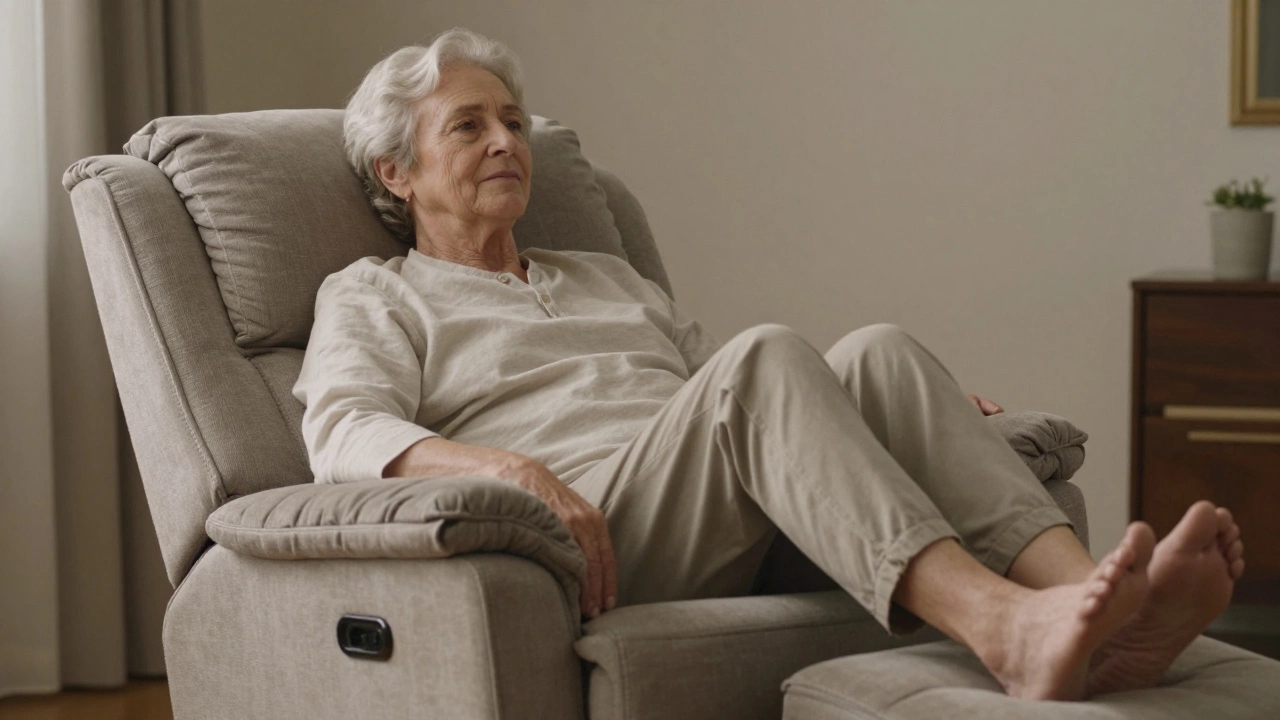
It’s common to see seniors prop their legs up on a footrest while leaning back in a recliner, thinking it helps with swelling or relaxation. But when the back is fully reclined-especially beyond 135 degrees-and the legs are raised higher than the heart, it creates a dangerous situation for circulation and breathing.
Studies from the American Heart Association show that this position increases pressure on the lower back and can reduce blood flow to the legs by up to 40% in older adults. The veins in the legs struggle to push blood back to the heart, which raises the risk of deep vein thrombosis (DVT), especially in those with limited mobility. Add to that the fact that many seniors take blood thinners or have diabetes, and this position becomes a silent hazard.
It also compresses the diaphragm. When you lie flat or nearly flat, the abdominal organs press upward against the lungs. For someone with COPD or heart failure-common conditions in people over 70-this makes breathing harder. Many seniors wake up gasping or with chest tightness after napping this way, not realizing it’s the position, not their condition, causing the problem.
Instead of fully reclining, aim for a 110-120 degree angle. This keeps the spine aligned, reduces pressure on the lungs, and still allows the legs to rest comfortably on a footrest without elevation beyond hip level.
The Danger of Slumped Sideways with Twisted Hips
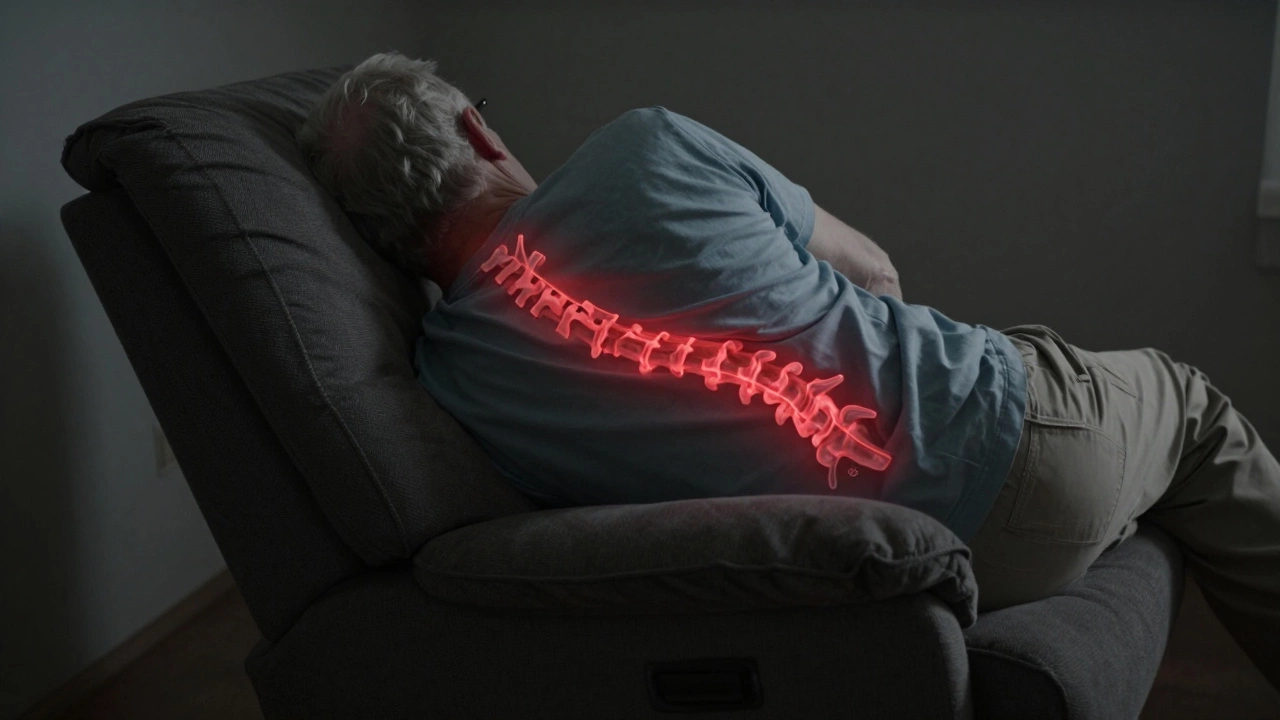
Another common habit? Slumping sideways in a recliner, one leg bent under the body, the other stretched out, and the torso twisted to one side. It feels natural-like sinking into a cloud. But for elderly bodies, this is a recipe for injury.
The spine is not designed to twist under load, especially when the pelvis is uneven. When the hips are rotated and the spine is bent sideways, it puts uneven pressure on the lumbar discs. Over time, this can lead to herniated discs, nerve pinching, or chronic lower back pain. In seniors with osteoporosis, even minor twisting can cause vertebral fractures.
Plus, this position cuts off circulation to the hip joint and compresses the sciatic nerve. Many seniors report numbness in the thigh or foot after sitting this way, which they dismiss as "just falling asleep wrong." But repeated episodes can lead to permanent nerve damage or muscle atrophy.
And here’s something most don’t think about: falling out. Recliners with wide, soft cushions make it easy to slide sideways. Once off-balance, seniors often can’t right themselves quickly. Falls from recliners are one of the top causes of hip fractures in people over 75, according to data from New Zealand’s Accident Compensation Corporation.
Use a recliner with a firm backrest and armrests that support upright posture. If you need to rest sideways, use a wedge pillow to keep the spine neutral and the hips aligned. Never let one leg tuck under the body.
What Should Seniors Do Instead?
Comfort doesn’t have to mean danger. Here are three simple, safe alternatives:
- Use a wedge pillow under the knees-not the feet. This supports the lower back and keeps the hips level without elevating the legs too high.
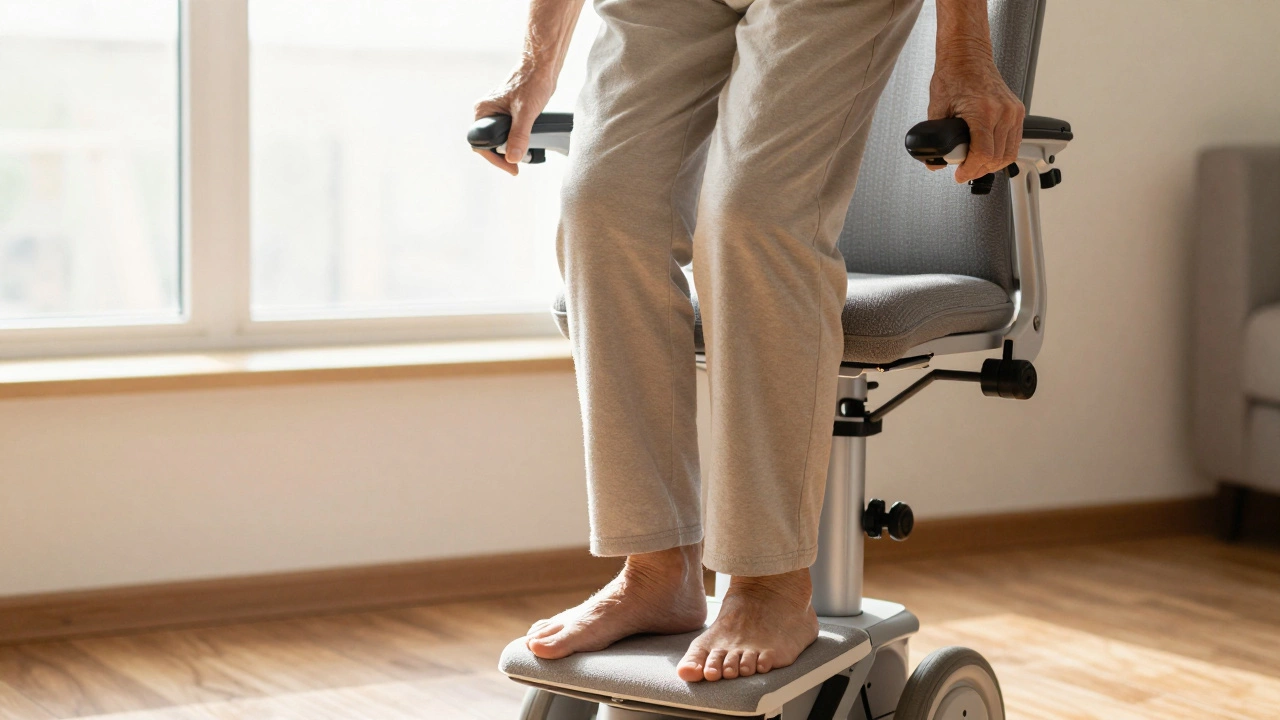
- Choose a recliner with a lift function. These chairs slowly raise you to a standing position, reducing strain on the knees and hips when getting up.
- Set a 30-minute limit. Even the best recliner position shouldn’t be held for hours. Get up, walk to the kitchen, stretch your arms, and move your ankles every half hour.
For those with arthritis or joint stiffness, a heated seat cushion can help relax muscles without forcing the body into bad angles. Just make sure it doesn’t cause overheating-many seniors have reduced sensitivity to heat and can burn themselves without realizing it.
Signs You’re in a Dangerous Position
Not all risks are obvious. Watch for these warning signs:
- Numbness or tingling in one leg or foot that lasts more than 10 minutes after standing
- Increased shortness of breath when lying back
- Pain in the lower back that doesn’t go away after standing up
- Feeling dizzy or lightheaded when getting up from the chair
- Swelling in the ankles that appears after sitting for more than an hour
If any of these happen regularly, it’s not "just aging." It’s your body telling you the position is wrong. Talk to a physiotherapist or occupational therapist. They can recommend a chair that fits your body-not the other way around.
What to Look for in a Recliner for Seniors
Not all recliners are created equal. Here’s what to check before buying:
- Seat height: Should be 18-20 inches off the floor. Too low makes standing hard; too high makes feet dangle.
- Armrest height: Should allow elbows to rest at 90 degrees when seated.
- Back support: Must curve to support the natural S-shape of the spine.
- Recline angle: Maximum 120 degrees. Avoid zero-gravity or fully flat settings.
- Lift mechanism: Optional but highly recommended for those with mobility issues.
- Fabric: Non-slip, breathable material to prevent sliding and overheating.
Brands like La-Z-Boy and Pride Mobility offer models designed specifically for seniors. Look for chairs labeled "geriatric-friendly" or "post-surgical support." They’re built with safety in mind, not just comfort.
Final Thought: Comfort Shouldn’t Cost You Mobility
Sitting in a recliner shouldn’t feel like a trade-off between rest and risk. The goal isn’t to avoid lounging-it’s to lounge safely. Two positions, in particular, are too dangerous to ignore: fully reclined with legs raised and slumped sideways with twisted hips. Both can lead to long-term damage, falls, or even hospitalization.
Small changes-adjusting the angle, using a pillow, setting a timer-can make all the difference. Your body doesn’t need to be flattened to feel relaxed. It just needs to be supported.
Is it safe for elderly people to sleep in a recliner chair?
Occasional napping in a recliner is fine, but sleeping in one all night isn’t recommended. Recliners don’t support the spine the way a mattress does, and staying in one position for hours increases pressure on joints and reduces circulation. If you must sleep in a recliner, use a wedge pillow under the knees and keep the back at no more than a 110-degree angle. Always consult a doctor if you rely on a recliner for sleep due to breathing or pain issues.
Why do my legs feel numb after sitting in a recliner?
Numbness usually means a nerve is compressed-often the sciatic nerve or the peroneal nerve behind the knee. This happens when you sit with one leg crossed, bent under you, or with your knees elevated too high. The pressure cuts off blood flow and signals to the nerves. Standing up and gently stretching usually fixes it. If it happens often, it’s a sign your chair isn’t supporting your posture correctly.
Can recliners cause back pain in older adults?
Yes, especially if the chair lacks proper lumbar support or encourages slouching. Many recliners are designed for short-term relaxation, not long-term use. Sitting in a reclined position without spine alignment puts extra stress on the lower back discs. Over time, this can lead to degeneration, herniation, or muscle strain. Look for chairs with adjustable lumbar support and avoid those that let you sink too far back.
Are lift recliners worth the cost for seniors?
If you have trouble standing from a seated position, yes. Lift recliners reduce the risk of falls by 60% according to a 2023 study in the Journal of Geriatric Physical Therapy. They also help maintain independence. While they cost more-usually $1,200 to $2,500-they can prevent costly hospital visits from hip fractures. Many insurance plans cover them if prescribed by a doctor for mobility issues.
How often should seniors change positions in a recliner?
Every 30 minutes. Even the best chair can cause problems if you stay still too long. Get up, walk to the bathroom, stretch your arms overhead, or do ankle rolls while seated. Movement keeps blood flowing and joints loose. Set a timer if you tend to get lost in a book or TV. Your body will thank you.