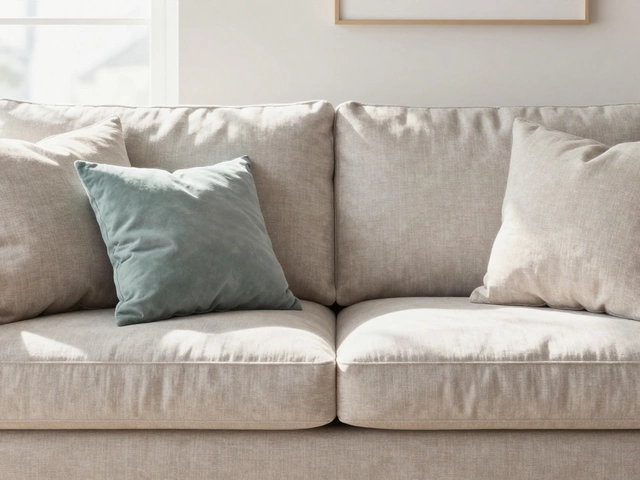
Have you ever walked into a showroom and instantly felt the difference between a cheap sofa and one that looks like it cost ten times more? It’s not just the price tag. It’s the way light rolls off the fabric, how the legs are shaped, even how the cushions sit when no one’s sitting on them. A sofa that looks expensive doesn’t scream luxury-it whispers it. And once you know what to look for, you’ll see it everywhere.
Material Matters More Than You Think
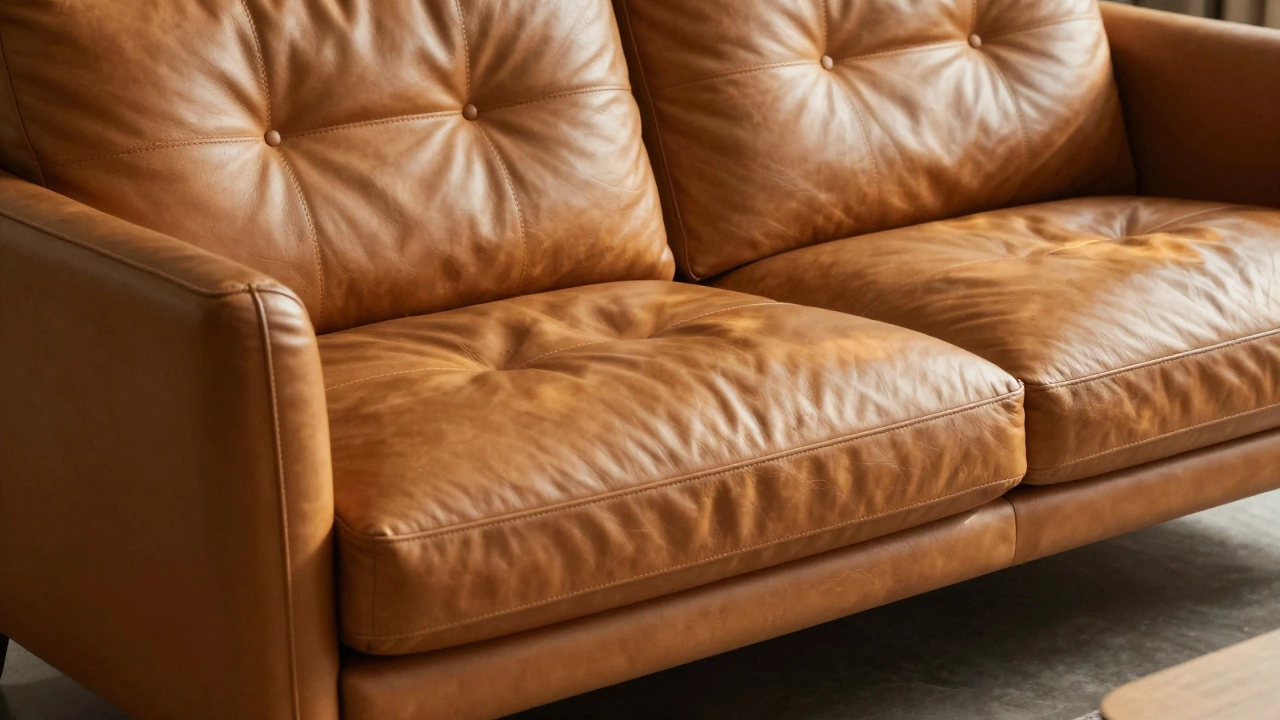
Most people assume leather means expensive. But not all leather is created equal. Full-grain leather, the top layer of the hide, has natural texture, slight imperfections, and ages beautifully. It’s the kind of leather used in high-end cars and designer furniture. It costs more because it’s rarer and harder to work with. You’ll pay extra for it, but you’ll also notice the difference: it breathes, it softens over time, and it doesn’t peel or crack after two years like bonded or top-grain leather often does.
For fabric lovers, look for natural fibers like wool, linen, or cotton blends with a high thread count-think 300+ threads per square inch. These fabrics feel substantial, hold their shape, and don’t pill easily. Synthetic blends like polyester or microfiber might look fine at first, but they flatten out, show wear in high-use areas, and reflect light in a flat, cheap way. Luxury fabrics have depth. They catch light differently, creating subtle shadows and highlights that make the sofa feel alive.
Construction Is the Silent Signature
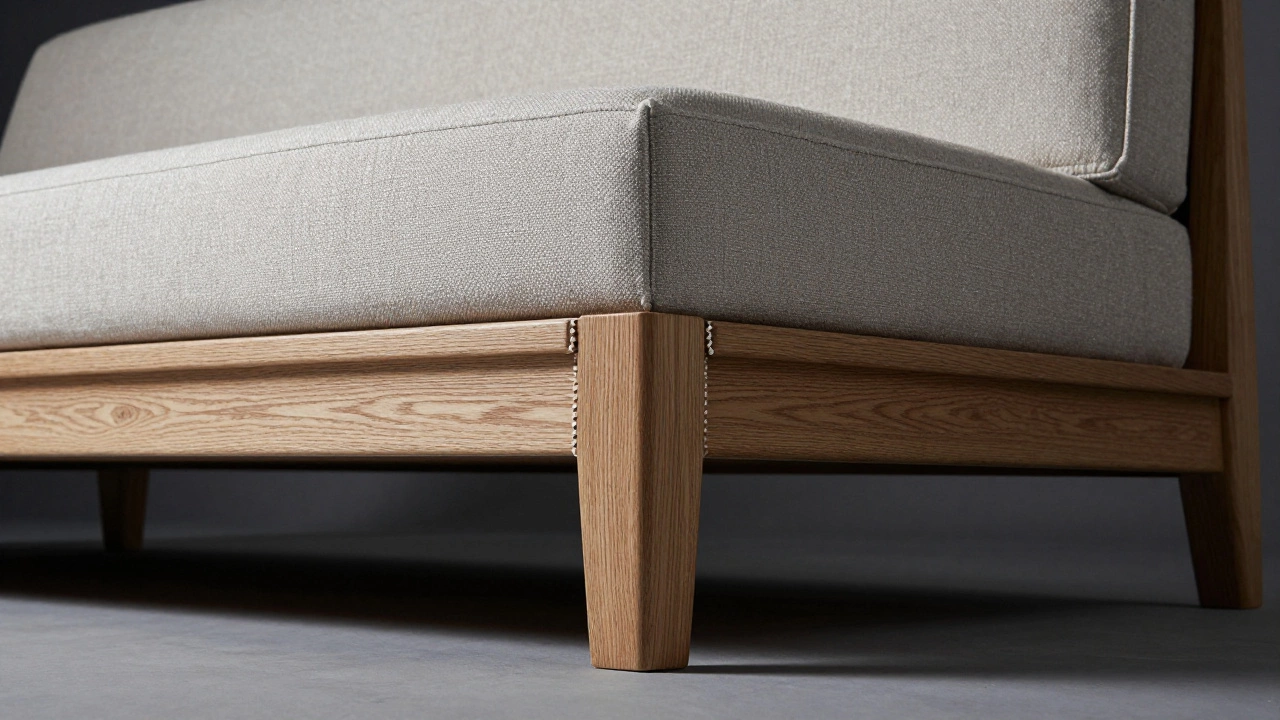
Look under the sofa. Seriously. Lift the cushion and peek underneath. If you see plywood or particleboard, that’s a red flag. High-end sofas use kiln-dried hardwood frames-oak, maple, or beech. These woods don’t warp, they don’t creak, and they last decades. Cheaper frames use softwood or engineered wood glued together. They’re faster to assemble, cheaper to source, and they fall apart faster.
Check the joints. Expensive sofas are held together with corner blocks, dowels, and glue-not just staples or nails. You can often spot these details if you look closely. Some brands even use hand-tied eight-way springs under the cushions. These aren’t just for comfort; they create a responsive, sculpted seat that doesn’t sag. In budget sofas, you’ll find sinuous springs-wavy metal wires stretched across the frame. They’re fine for short-term use, but they lose tension over time and make the sofa feel flat and lifeless.
Proportions and Silhouette Speak Volumes
A sofa that looks expensive doesn’t try too hard. It’s balanced. The arm height is just right-not too tall, not too low. The back is slightly lower than the arms, creating a gentle slope that invites you to lean back. The legs? They’re not hidden. They’re designed to be seen. Thin, tapered legs in brass, walnut, or matte black metal make the sofa feel light, even if it’s heavy. That visual lift gives the illusion of space and sophistication.
Compare that to a boxy, bulky sofa with thick, chunky legs. It looks like it’s trying to look heavy, not elegant. Luxury furniture avoids bulk. It’s about negative space-the empty areas around the form-that make the shape feel intentional, not accidental. Think of it like a well-tailored suit: the cut matters more than the fabric.
Details Are the Difference
Small things make the biggest impact. Look at the stitching. On a high-end sofa, the seams are straight, tight, and evenly spaced. The thread color matches the fabric perfectly. You won’t see loose threads or mismatched stitching. Some brands even use double-stitching on stress points like the arms and back seams. That’s not just durability-it’s a sign they care.
What about the trim? Welt cord (also called piping) is a thin rope of fabric wrapped around the edges. On a luxury sofa, it’s hand-sewn and perfectly aligned with the seams. On a budget one, it’s stapled on crooked or looks like an afterthought. Same goes for buttons. Hand-tufted buttons, especially on a Chesterfield-style sofa, aren’t just decorative. They hold the upholstery in place and create that classic dimpled look. Each button is individually stitched through the foam and frame. It takes hours per sofa. You can’t fake that kind of labor.
Color and Finish Are Strategic
Expensive-looking sofas rarely come in loud, trendy colors. They stick to neutrals-charcoal, oat, taupe, deep navy, or warm gray. These colors don’t date. They blend. They make the room feel calm and curated. Bright white? It’s hard to maintain. Neon green? It screams bargain bin.
Even the finish on the legs matters. A brushed brass leg looks more refined than shiny gold. A matte black metal leg feels modern and intentional. A stained walnut leg looks warm and natural. Painted or lacquered finishes on cheap legs often chip or look plastic. Real wood grain shows through. That’s the kind of detail that tells you someone spent time choosing it.

It’s Not About Brand-It’s About Intent
You don’t need to buy a $5,000 sofa from a famous designer to get that expensive look. Many small, independent makers offer the same quality at a fraction of the cost. What they all have in common is intentionality. They don’t cut corners. They don’t mass-produce. They focus on materials, craftsmanship, and proportion.
Ask yourself: Does this sofa feel like it was made to last? Do the materials feel rich, not just new? Does the shape feel thoughtful, not just functional? If the answer is yes, you’ve found it. You don’t need a logo to know something is good. Sometimes, the quietest pieces are the most expensive-looking.
What to Avoid
Here’s what kills the luxury vibe instantly:
- Plastic or chrome legs that look like they came from a discount store
- Uniform, machine-perfect stitching that looks too perfect to be real
- Cushions that look like they’re stuffed with foam scraps
- Patterned fabrics with cheap-looking prints (especially florals or geometrics with low contrast)
- Too many throw pillows-more than three or four starts to look cluttered, not curated
Less is more. A sofa that looks expensive doesn’t need accessories. It needs space to breathe.
How to Test a Sofa Before You Buy
Here’s how to spot quality in 60 seconds:
- Press down on the arms and back-do they feel solid? Or do they flex like cardboard?
- Check the underside: is the frame wood or particleboard?
- Run your hand over the fabric-does it feel thick and textured, or thin and plasticky?
- Look at the legs-are they attached with screws or just glued? Are they real wood or painted plastic?
- Ask: Is the stitching even? Are the buttons hand-tufted? Does the fabric drape naturally?
If it passes even four of these, you’re looking at something worth considering.