Back-Friendly Recliner Calculator
Recliner Evaluation Tool
How back-friendly is your recliner? Answer a few simple questions to calculate your personal back health score based on ergonomic principles.
Your Back Health Assessment
Ever sat down in a Lazy Boy recliner after a long day and felt your back sigh in relief-only to wake up the next morning with stiffness that feels like you slept on a rock? You’re not alone. Millions of people buy Lazy Boy recliners for comfort, but a growing number wonder: are Lazy Boy recliners bad for your back? The answer isn’t simple. Some models help. Others hurt. It all comes down to how you use them, which one you pick, and whether your body actually needs that kind of support.
Why People Think Recliners Are Bad for Your Back
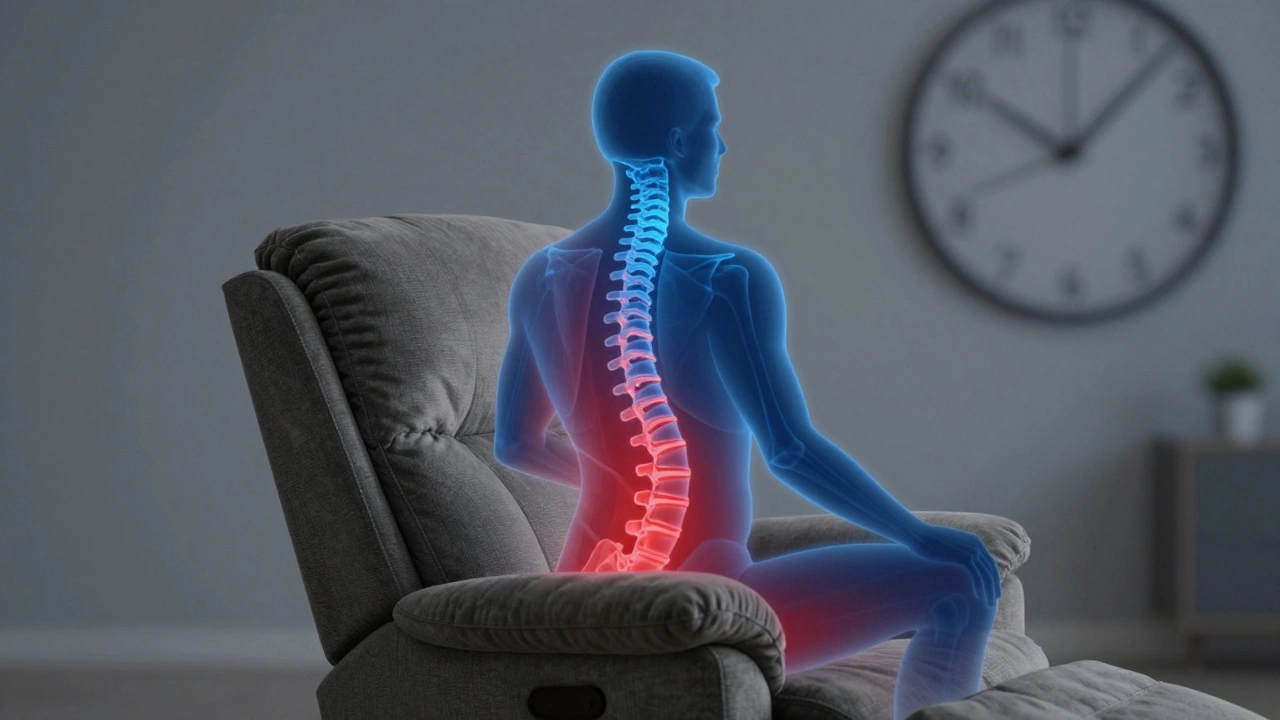
The idea that recliners cause back pain comes from a few real-world problems. First, many people sink into them too far. When you slump with your legs elevated and your spine curved into a C-shape, your lower back loses its natural curve. That puts pressure on your discs and strains your muscles. It’s like sitting in a hammock that doesn’t hold your spine up-just lets it sag. Second, some older or cheaper recliners don’t have proper lumbar support. If the backrest is flat or too shallow, your lower spine gets no push against it. That means your core muscles have to work overtime just to keep you upright. Over time, that leads to fatigue and pain. And then there’s the habit of staying in them too long. One study from the University of Sydney found that people who sat in recliners for more than three hours a day without changing position had a 40% higher chance of developing chronic lower back discomfort compared to those who moved regularly. It’s not the chair itself-it’s the lack of movement.How Lazy Boy Recliners Are Actually Designed
Lazy Boy didn’t build recliners to hurt your back. In fact, their mid-to-high-end models are engineered with ergonomics in mind. Most feature adjustable lumbar support, padded armrests, and a reclining mechanism that lets you find a neutral spine position. The company even partners with physical therapists to test their designs. Take the Lazy Boy LaZBoy Endurance is a high-end recliner with dual-zone lumbar support, adjustable headrest, and a recline angle that promotes spinal alignment. It was developed after testing over 500 body types and uses memory foam in the seat and back to distribute pressure evenly. This isn’t just a fancy chair-it’s built like a therapeutic seat. Even their budget models, like the Lazy Boy Classic is a basic recliner with fixed lumbar support and a 135-degree recline angle, designed for occasional use, include a slight backward tilt that takes pressure off the lower spine compared to upright chairs. The key difference between a good and bad recliner isn’t the brand-it’s whether the chair supports your body’s natural shape. Lazy Boy gets this right in most of their current lineup.What Makes a Recliner Good for Your Back
Not all recliners are created equal. Here’s what actually helps your spine:- Lumbar support that fits your lower back-not too high, not too low. It should press gently into the small of your back, not your ribs.
- Recline angle between 110 and 135 degrees-this reduces disc pressure by up to 75% compared to sitting upright, according to research from the Spine Research Institute.
- Footrest that elevates your legs to hip level-this takes strain off your lower back by balancing your pelvis.
- Adjustable headrest-so your neck doesn’t tilt forward or backward unnaturally.
- Seat depth that leaves 2-4 inches between your knees and the edge-if your legs are too cramped or too stretched, your hips get pulled out of alignment.
Who Should Avoid Lazy Boy Recliners
Some people should think twice before buying one:- People with severe spinal stenosis-a reclined position can narrow the space around the spinal nerves even more.
- Those recovering from a herniated disc-unless cleared by a physical therapist, deep reclining can increase disc pressure.
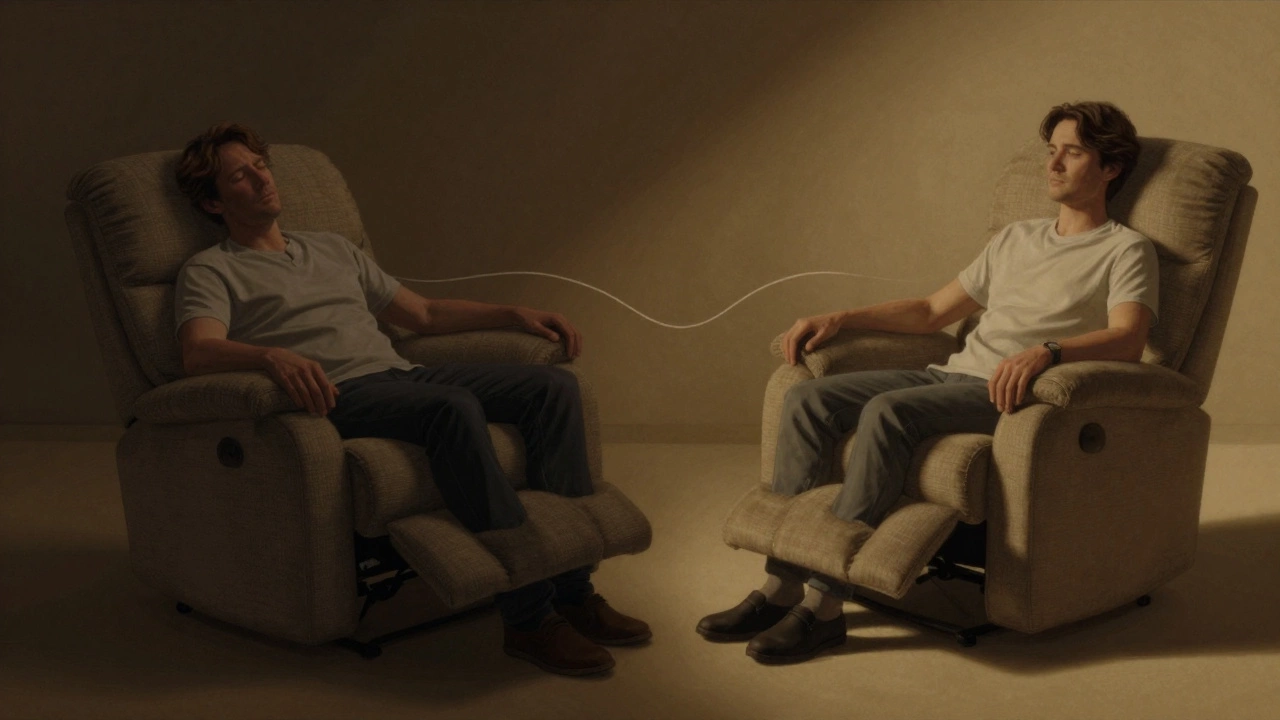
- Anyone who uses the recliner as a bed-sleeping in a recliner for hours disrupts spinal alignment and can lead to chronic pain.
- People with weak core muscles-if you can’t engage your abs, a recliner might encourage slouching that your body can’t correct.
How to Use a Lazy Boy Recliner Without Hurting Your Back
Even the best chair won’t save you if you use it wrong. Here’s how to sit right:- Adjust the recline so your feet rest flat on the footrest, knees slightly lower than your hips.
- Make sure your lower back is pressed into the lumbar support. If you can slide your hand between your back and the chair, it’s too loose.
- Keep your shoulders relaxed, not hunched. Your head should be aligned with your spine-not jutting forward.
- Set a timer for 30 minutes. Get up, walk around, and stretch your hips and lower back.
- Don’t use it to watch TV for three hours straight. Switch positions. Stand up. Walk. Your spine needs motion, not just support.
Lazy Boy vs. Other Recliner Brands
How does Lazy Boy stack up against the competition?| Brand | Lumbar Support | Recline Range | Adjustable Headrest | Memory Foam | Price Range |
|---|---|---|---|---|---|
| Lazy Boy | Adjustable on most models | 110°-150° | Yes on mid/high-end | Yes on premium models | $800-$2,500 |
| La-Z-Boy (non-US variants) | Fixed, basic | 110°-135° | Only on top models | No | $500-$1,200 |
| ErgoChair Pro | Dynamic, pressure-sensitive | 100°-140° | Yes | Yes | $1,500-$2,800 |
| Big & Tall Recliners (e.g., Catnapper) | Extra-wide, firm | 105°-145° | Yes | Yes | $900-$2,200 |
What to Look for When Buying a Lazy Boy Recliner
If you’re shopping, here’s what to test:- Try it in the store. Sit in it for at least 10 minutes. Don’t just test the recline-sit upright, then recline slowly.
- Check the lumbar support. Place your hand behind your lower back. Can you feel firm, even pressure? Or does it feel like you’re floating?
- Look for the “Zero Gravity” setting on newer models. This elevates your legs above your heart and reduces spinal compression.
- Ask about the frame. Hardwood frames last longer and hold shape better than particleboard.
- Check the warranty. Lazy Boy offers 10-year warranties on frames and mechanisms-this tells you they stand behind their build quality.
Alternatives If Recliners Aren’t Right for You
If your back pain persists even with a good recliner, consider these options:- Ergonomic office chairs-like the Herman Miller Aeron or Steelcase Leap. They’re designed for long-term upright posture.
- Zero gravity chairs-used in physical therapy clinics. They take all pressure off the spine.
- Standing desks with footrests-if you sit too much, standing part of the day helps.
- Yoga and core strengthening-a strong core is the best back support you can have.
Are Lazy Boy recliners bad for your back?
Not inherently. Lazy Boy recliners can be great for your back if they have proper lumbar support, a good recline angle, and you use them correctly. But cheap models without support, or using them for hours without moving, can cause or worsen back pain. It’s about fit, function, and habits-not the brand.
What’s the best Lazy Boy recliner for lower back pain?
The LaZBoy Endurance or Power Lift models with dual-zone lumbar support are top choices. They’re designed with input from physical therapists and include memory foam and adjustable positioning to reduce pressure on the spine. Avoid basic models without adjustable lumbar support if you have chronic pain.
Can you sleep in a Lazy Boy recliner without hurting your back?
Occasionally, yes. But sleeping in a recliner every night is not recommended. Your spine needs to lie flat during deep sleep to maintain alignment. Recliners keep your body in a bent position, which can lead to stiffness, muscle imbalance, and long-term posture issues. Use a proper mattress instead.
How long should you sit in a recliner each day?
No more than 1-2 hours total per day, broken into 20-30 minute sessions. After each session, stand up, stretch your hips, and walk around for 5 minutes. Sitting still for long periods-even in a good chair-is the real enemy of spinal health.
Do Lazy Boy recliners come with a warranty?
Yes. Most Lazy Boy recliners come with a 10-year warranty on the frame and mechanism, and 5 years on the upholstery. This reflects their durability and confidence in their build quality. Always keep your receipt and register your product online.