Sofa Fit Calculator for 10x10 Storage Unit
Enter your sofa's dimensions to determine if it will fit standing up or laying flat in a standard 10x10 unit (10ft x 10ft floor, 8ft ceiling).
1. Sofa Dimensions
2. Analysis & Visualization
Quick Tips:
- Standing: Best for space efficiency. Ensure height < 96" (8ft).
- Flat: Takes more floor space but easier access.
- Door Check: The smallest dimension must pass through the door width when angled or upright.
You are standing in your living room, staring at that three-seater sofa you just bought or the one you need to stash while renovating. You have booked a 10x10 storage unit, which is basically a small bedroom-sized box. The panic sets in: will it fit? Can you even get through the door without scratching the drywall? The short answer is yes, but only if you know exactly what "fit" means. It’s not just about squeezing it in; it’s about keeping it accessible and safe from dust, pests, and the crushing weight of other boxes.
Most people underestimate how bulky soft furniture actually is. A standard three-seater sofa isn't just a rectangle; it has depth, armrests, and legs that add inches you didn’t account for. If you’ve ever tried to move a couch through a narrow hallway, you know the struggle. Doing it into a storage unit adds another layer of complexity because you can’t see the back wall until you’re already inside. Let’s break down the math, the angles, and the practical tricks to make sure your couch doesn’t become a Tetris nightmare.
The Hard Numbers: Does Your Sofa Fit?
A 10x10 storage unit offers 100 square feet of floor space. But here is the catch: most units have an 8-foot ceiling. This vertical limit changes everything. You aren’t just looking at floor area; you are looking at volume and clearance. To determine if your specific piece of furniture works, you need to measure three things: length, depth, and height. Do not guess. Grab a tape measure and write these numbers down before you load up a truck.
| Sofa Type | Average Length (inches) | Average Depth (inches) | Fits Standing? | Fits Flat? |
|---|---|---|---|---|
| Love Seat (2-seater) | 54-60 | 30-35 | Yes | Yes |
| Standard Loveseat | 60-72 | 32-38 | Yes | Yes |
| Small 3-Seater | 72-84 | 34-40 | Yes | Yes |
| Large 3-Seater | 84-96 | 38-42 | Maybe (tight) | Yes |
| Sectional (Single Piece) | 90+ | Varies | No | Depends on disassembly |
As the table shows, anything under 84 inches long is generally safe. Once you cross the 90-inch mark, you are entering danger territory. Why? Because you need walkway space. If you push a 9-foot couch against the back wall, you might block access to the rest of the unit. In Auckland, where many storage facilities are older buildings with slightly narrower doors, always check the door width too. Standard storage unit doors are usually around 5 to 6 feet wide. If your couch is wider than that when turned sideways, you have a problem.
Orientation Matters: Standing Up vs. Laying Down
This is the biggest decision you will make. Most people instinctively want to lay their couch flat on the floor. It feels stable. It protects the legs. But laying a couch flat consumes massive amounts of floor space. A 6-foot deep couch laid flat takes up half your 10x10 unit instantly. You lose all ability to stack boxes behind it or beside it effectively.
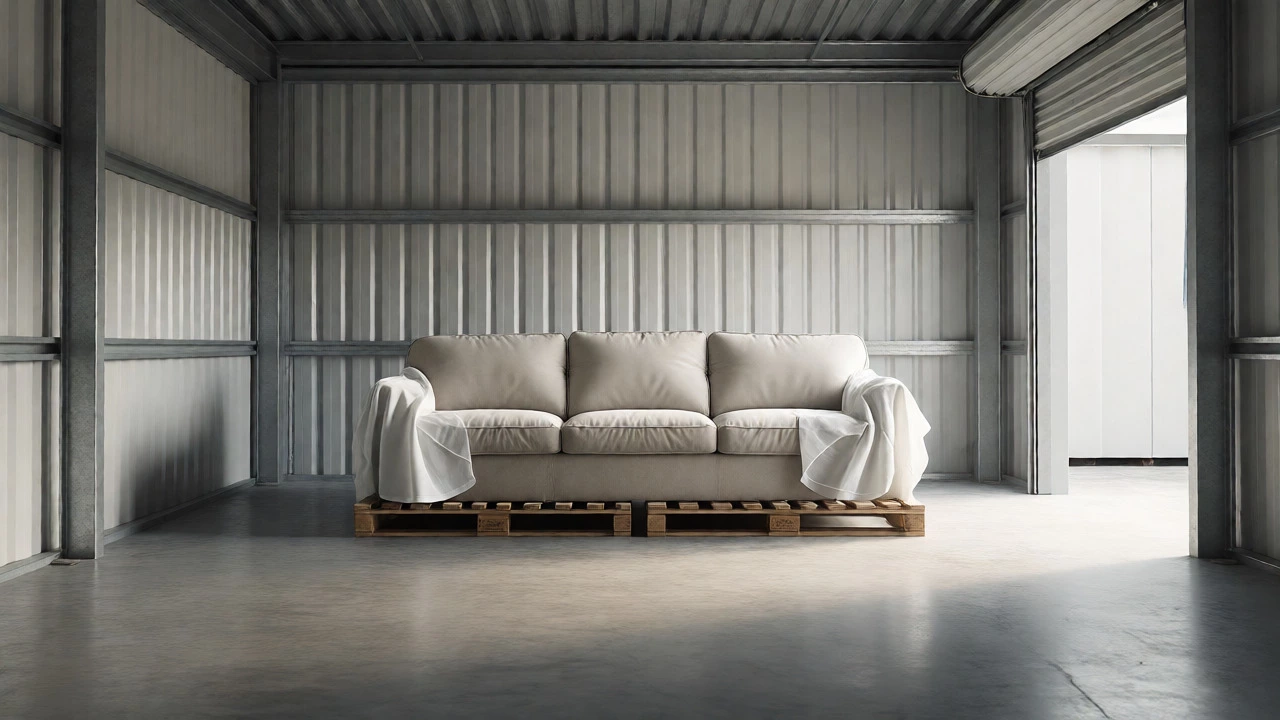
Standing the couch up against the wall is almost always the smarter move for a 10x10 unit. Here is why: it frees up the center of the room. You can slide smaller items like lamps, chairs, or boxes underneath the overhang of the seat cushions. However, there is a risk. If the floor is concrete (which it usually is), moisture can seep into the fabric from below. Also, if the unit gets bumped, a tall, top-heavy couch can tip. To mitigate this, use wooden pallets or plastic skids to raise the couch off the ground by at least two inches. This creates an air gap, preventing mold and rot, which is crucial in our humid New Zealand climate.
If you must lay it down, do it only if you are storing the couch alone or if you have a modular sectional that breaks apart. Never lay a heavy couch directly on bare concrete. Always put a tarp or old sheets down first. Dust settles, and spiders love dark, undisturbed spaces. A barrier saves you hours of cleaning later.
Preparation: Cleaning and Protection
You cannot just throw a dirty couch into a sealed box for six months and expect it to look new when you take it out. Mites, bacteria, and food crumbs thrive in closed environments. Before you move, vacuum every crevice. Use the upholstery attachment. Get under the cushions. If you have pets, consider using an enzyme cleaner on any spots. You don’t want a smell baking in during summer heat.
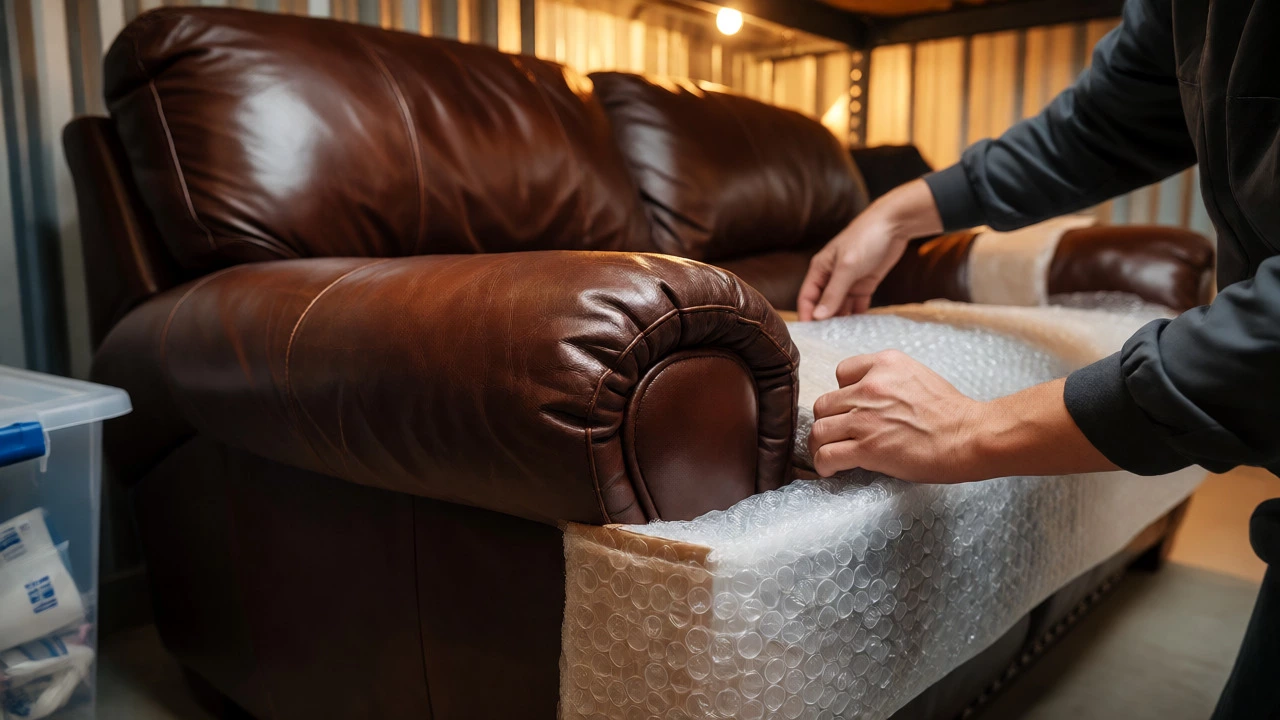
Next, protect the fabric. Plastic wrap is popular, but it traps moisture. If you wrap a damp couch in plastic, you create a greenhouse effect. Mold will grow within weeks. Instead, use breathable cotton drop cloths or specialized furniture blankets. Secure them with packing tape or rubber bands, but avoid putting sticky tape directly on delicate fabrics like velvet or silk. For leather couches, apply a conditioner before covering them. Leather dries out and cracks if left unused for long periods. Conditioning keeps the material supple.
Don’t forget the legs. Wooden legs can scratch the concrete floor, and they can also snap if the couch is dragged. Remove detachable legs if possible. Store them in a labeled bag taped to the underside of the couch so you don’t lose them. If the legs are fixed, wrap them in bubble wrap or cardboard sleeves.
Loading Strategy: The Tetris Approach
Once the couch is prepped, getting it into the unit requires technique. You cannot just shove it in. You need to pivot. Enter the unit backward if possible. This gives you better visibility of the rear corners. Have a helper outside guiding the front end. Communication is key. Shout instructions clearly. "Left! Stop! Back up!"
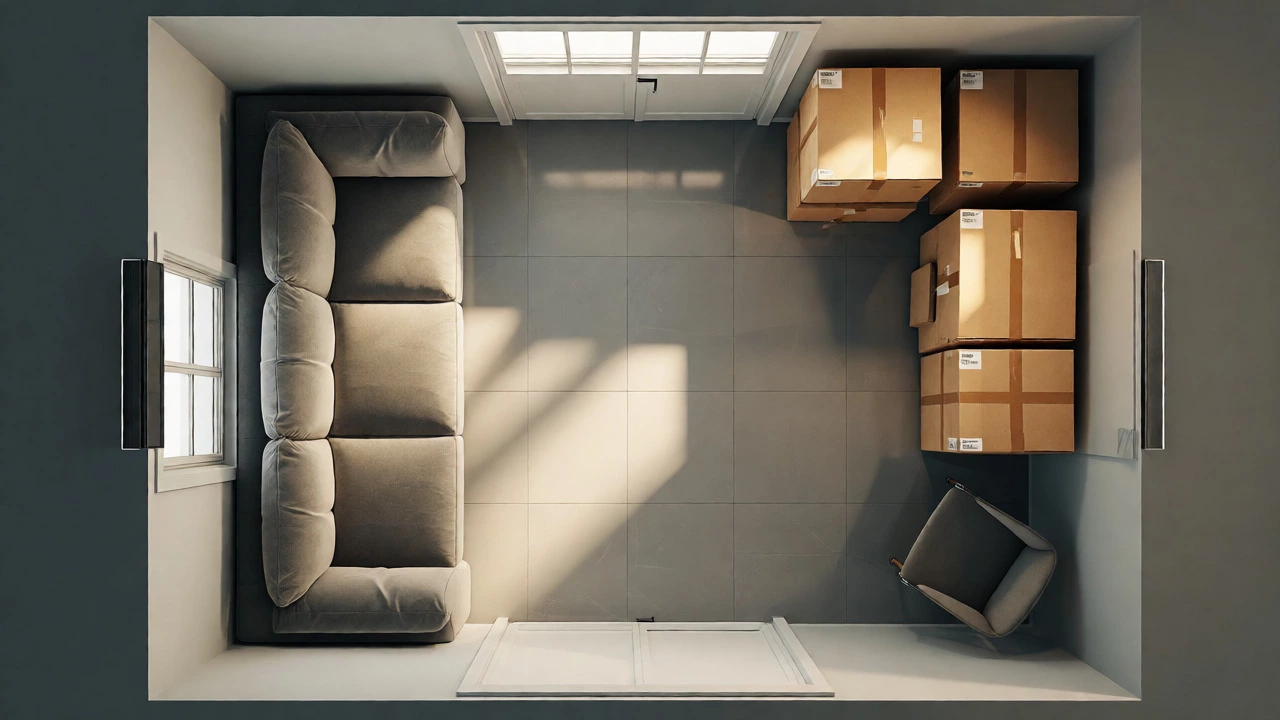
Position the couch against the longest wall. This maximizes your remaining open space. Leave at least 12 inches of clearance between the couch and the side walls if you plan to store other items next to it. If you are stacking boxes on top of the couch, ensure the frame is sturdy enough to hold the weight. A cheap particle-board frame might bow under heavy boxes. Test it by pressing down firmly on the seat. If it creaks loudly or flexes, do not stack anything heavier than pillows on top.
Consider adding a secondary layer of protection for the arms and back. These are high-contact areas. If you are storing other furniture nearby, someone might brush against your couch. A simple blanket draped over the back acts as a bumper guard. It costs nothing and prevents abrasions.
Climate Control and Pest Prevention
In Auckland, humidity is a real threat to stored furniture. Non-climate-controlled units can fluctuate wildly in temperature and moisture. Wood expands and contracts; fabric absorbs water vapor. If your budget allows, opt for a climate-controlled unit. It’s worth the extra cost to save a $1,000 sofa. If you are stuck with a non-climate unit, take extra precautions.
Use silica gel packets or moisture absorbers (like DampRid) placed around the unit. Replace them every few months if you visit. Pests are another issue. Mice and cockroaches love the warmth and shelter of a stuffed sofa. Seal any gaps in the unit door. Place mothballs or cedar blocks near the base of the couch. Cedar is natural and smells better than chemical repellents. Avoid placing food items in the same unit unless they are in hard plastic bins. Crumbs attract ants, and ants find their way into everything.
When Not to Use a 10x10 Unit
While a 10x10 is versatile, it isn’t magic. If you have a large sectional with multiple pieces, chaise lounges, and ottomans, you might run out of space quickly. Each piece needs to be wrapped and protected individually. Three separate sections might eat up 80% of your floor space, leaving no room for anything else. In this case, you might need to disassemble the sectional. Many modern sectionals bolt together. Unscrew the connectors, wrap each piece separately, and store them vertically. This turns one giant obstacle into three manageable columns.
Also, consider accessibility. If you need frequent access to the items behind the couch, a 10x10 becomes frustrating. You’ll have to climb over or move the couch every time. If you are storing seasonal items you won’t touch for a year, this is fine. If you are running a business and need weekly access, invest in a larger unit or organize differently.
Can I store a sleeper sofa in a 10x10 unit?
Yes, but it depends on the mechanism. Sleeper sofas are often deeper and heavier than standard couches. Measure the depth with the mattress folded in. If it exceeds 40 inches, standing it upright might be difficult due to weight distribution. Ensure the locking mechanism is secure so it doesn’t unfold unexpectedly during transit or storage. Wrap the metal frame parts carefully to prevent rust.
How much does it cost to rent a 10x10 storage unit in Auckland?
Prices vary significantly based on location and climate control. As of 2026, expect to pay between $150 and $300 NZD per month for a standard non-climate unit. Climate-controlled units can range from $250 to $450 NZD. Always ask about insurance requirements and whether the quote includes GST.
Should I remove the cushions from my sofa before storing?
It is highly recommended. Removing cushions reduces the overall bulk, making it easier to maneuver the frame. It also prevents the foam from compressing unevenly under the weight of the frame if stacked. Store the cushions in clear plastic bags or breathable bins. Label them so you know which cushion goes where when you reassemble the sofa.
What is the best way to cover a leather couch for storage?
Leather requires breathability. Do not use plastic wrap as it traps moisture and causes mildew. Use a cotton sheet or a dedicated breathable furniture cover. Condition the leather thoroughly before covering to keep it from drying out and cracking. Check the unit periodically for signs of dryness or discoloration.
Can I stack boxes on top of my stored couch?
Only if the couch has a solid, rigid frame. Press down on the backrest and seat to test stability. If it flexes or creaks, avoid stacking heavy items. Light items like pillows, bedding, or light clothing in bins are usually safe. Keep the weight evenly distributed to prevent damage to the upholstery.