55-Inch TV Height Calculator
Enter Your Details
Measure from the floor to your eyes while sitting in your primary viewing spot.
Visual Preview
Recommended Height
0 inches from floor
0 inches from floor
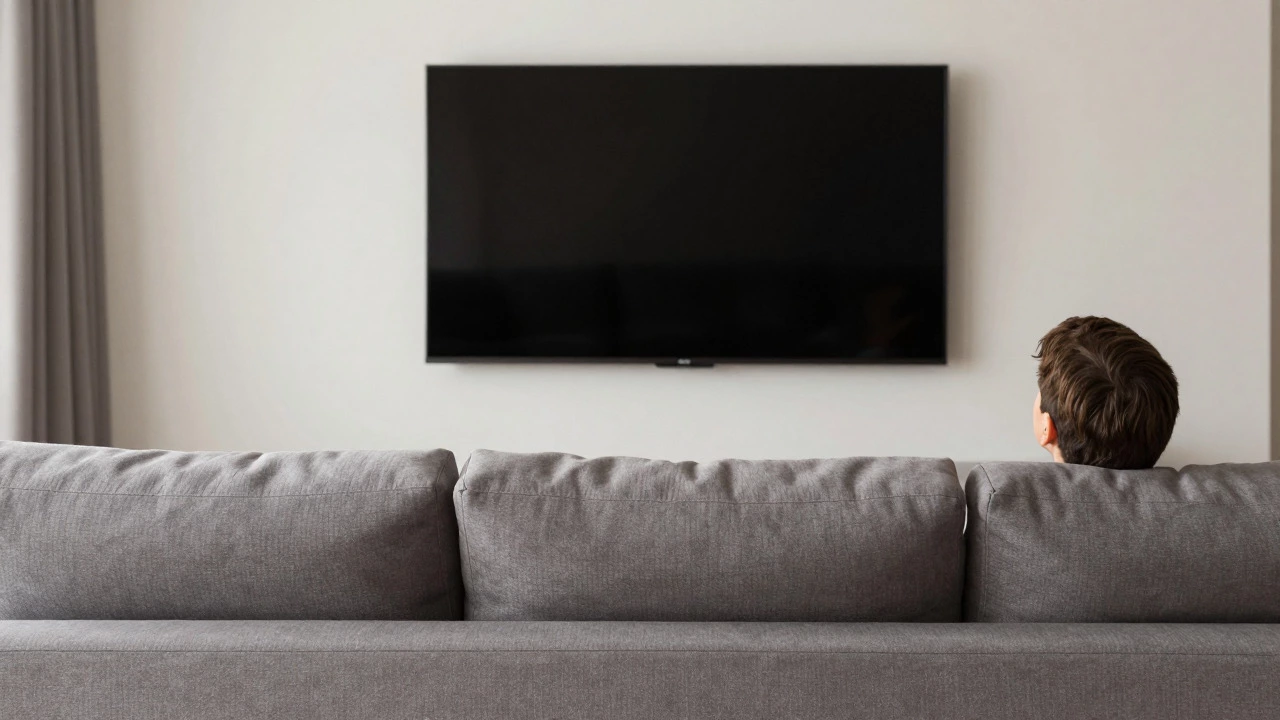
Picture this: you’ve just bought that sleek new 55-inch television, mounted it on the wall, and settled into your favorite armchair. You press play, lean back, and immediately feel a twinge in your neck. Why? Because the screen is too high. Or maybe it’s too low, forcing you to crane your head forward. Getting the height of a TV off the floor right isn’t just about aesthetics; it’s about comfort, health, and actually enjoying what you’re watching.
If you are wondering how high off the floor a 55 TV should be, the short answer is: the center of the screen should align with your eyes when you are seated. For most people, this means the bottom of the TV sits between 24 and 30 inches from the floor. But since every living room-and every human body-is different, we need to dig a bit deeper to find your perfect spot.
The Golden Rule: Eye Level Alignment
The single most important factor in determining TV height is your own physiology. Specifically, where your eyes sit when you are relaxed in your primary seating position. Ergonomists and interior designers agree on one core principle: the center of your television screen should be at or slightly below your natural eye level.
Why the center? Because when you watch TV, your gaze naturally drifts across the screen. If the center is aligned with your eyes, you look straight ahead for dialogue scenes and slightly down for action shots, which is the most neutral and comfortable position for your cervical spine. If the TV is too high, you tilt your head back, compressing the vertebrae in your neck. Too low, and you hunch forward, straining your shoulders and upper back.
To measure this accurately, sit in the chair or sofa where you spend the most time. Have someone mark the wall at the exact height of your pupils while you are sitting normally-not slouching, not standing up straight. That mark is your target. For an average adult male, this is often around 42 to 48 inches from the floor. For women or those using lower-profile sofas, it might be closer to 36 to 42 inches.
Calculating the Exact Mounting Height for a 55-Inch TV
Knowing your eye level is step one. Step two is translating that into the physical position of the TV itself. A 55-inch TV refers to the diagonal measurement of the screen. To find out how high the bottom of the TV needs to be, we need to calculate its vertical height.
Most modern TVs have a 16:9 aspect ratio. Here is the math broken down simply:
- Total Screen Height: Approximately 27 inches (excluding the bezel).
- Center Point: Half of that height is roughly 13.5 inches.
- Bezel and Stand Depth: Add another 1-2 inches if you are using a TV stand rather than wall-mounting, as the base adds height.
So, if your eye-level mark is at 42 inches, you want the center of the screen at 42 inches. This means the top of the screen should be at 55.5 inches (42 + 13.5) and the bottom of the screen should be at 28.5 inches (42 - 13.5). Therefore, the bottom edge of your 55-inch TV should sit approximately 28 to 30 inches off the floor.
| Your Seated Eye Level | Target Screen Center | Bottom of 55" TV (Wall Mount) | Bottom of 55" TV (On Stand) |
|---|---|---|---|
| 36 inches (Low Sofa/Recliner) | 36 inches | 22.5 inches | 20-21 inches |
| 42 inches (Standard Armchair) | 42 inches | 28.5 inches | 26-27 inches |
| 48 inches (Dining Chair/Upholstered Bench) | 48 inches | 34.5 inches | 32-33 inches |
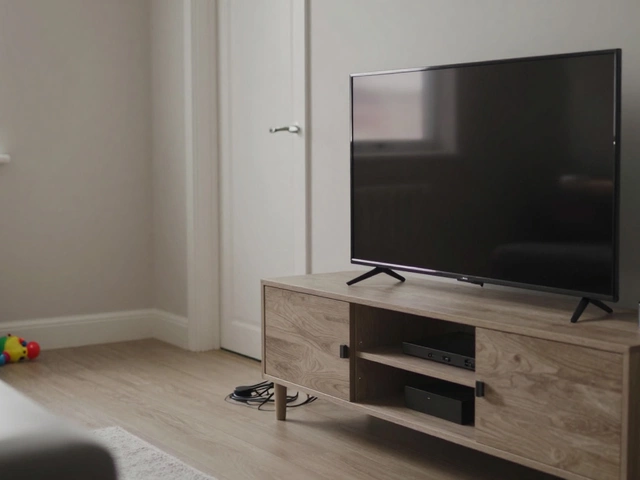
Note the difference between wall mounting and placing on a TV stand. When on a stand, the TV’s base lifts the screen higher. If your calculated bottom-edge height is 28 inches, but your TV stand is 24 inches tall, the TV will sit perfectly. However, if your stand is only 18 inches tall, the TV will be too low. Conversely, if the stand is 30 inches tall, the TV will be too high. This is why measuring your existing furniture before buying a new TV is crucial.
Wall Mount vs. TV Stand: Which Fits Your Space?
The choice between mounting your TV on the wall or placing it on a piece of furniture significantly impacts the final height and viewing experience. Each option has distinct advantages depending on your room layout and personal preferences.
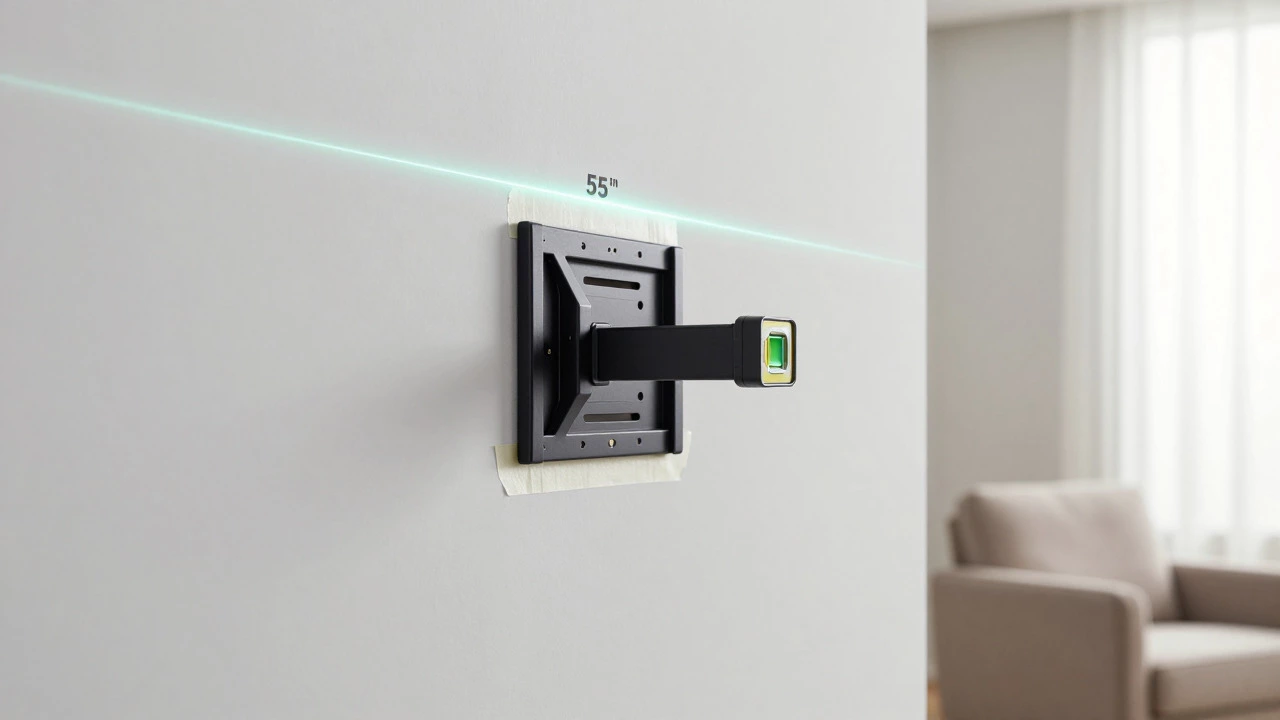
Wall Mounting offers precise control over height. You can drill studs exactly where your eye-level calculation dictates. It also saves floor space, making it ideal for smaller rooms or open-plan living areas where every square foot counts. Full-motion mounts allow you to tilt the screen down if it must be mounted slightly higher due to architectural features like fireplaces or windows. However, installation requires finding wall studs, managing cable concealment, and ensuring the mount supports the weight of a 55-inch model, which can range from 30 to 50 pounds.
TV Stands provide flexibility. You can move the entire setup if you rearrange your furniture. They also offer storage for gaming consoles, soundbars, and media devices, keeping clutter hidden behind doors or inside cabinets. The downside is fixed height. A standard TV console is usually between 18 and 24 inches tall. For a 55-inch TV, this often results in a screen that is too low unless you choose a taller cabinet or place the TV on a riser. If you opt for a stand, ensure it is wide enough-ideally at least 45 inches-to support the TV securely without overhang.
Special Scenarios: Fireplaces, Multi-Zone Rooms, and Gaming
Not every living room is a blank canvas. Many homeowners face specific challenges that complicate the simple "eye level" rule.
The Fireplace Problem: Hanging a TV above a fireplace is aesthetically pleasing for some but ergonomically disastrous for others. Fireplaces are typically positioned high on the wall. If you mount a 55-inch TV above a mantel, the bottom of the screen might start at 48 inches or higher. This forces viewers to look up, leading to neck strain after just 20 minutes. If you must do this, consider a tilting mount to angle the screen downward by 15-20 degrees. Alternatively, install a gas fireplace insert that allows for lower mounting heights, or use a projector instead.
Multi-Zone Viewing: What if you watch TV from both the sofa and the dining table? In this case, compromise is key. Aim for the eye level of the primary seating area (usually the sofa). Then, adjust the secondary seating. If the dining chairs are higher, the TV will appear lower, which is generally more comfortable than looking up. If the sofa is very low (like a floor cushion style), the TV will appear high, so consider a recliner with adjustable headrests to mitigate the strain.
Gaming and Interactive Use: Gamers tend to lean forward and focus intently on the screen. A slightly lower mounting height can help maintain a direct line of sight without excessive neck extension. Additionally, ensure there is enough clearance behind the TV for ventilation and cable management, especially if using a VESA mount that pulls the screen away from the wall.

Common Mistakes to Avoid
Even with the best intentions, people often make errors when positioning their TVs. Here are the most frequent pitfalls:
- Ignoring the Stand Height: Assuming the TV’s height is measured from the floor. Remember, if you use a stand, add the stand’s height to the TV’s base height.
- Mounting Based on Standing Height: We walk around our homes standing, but we watch TV sitting. Always measure from a seated position.
- Neglecting Viewing Distance: While height is critical, distance matters too. For a 55-inch TV, the optimal viewing distance is between 6 and 10 feet. If you sit closer than 5 feet, the pixels may become visible, and peripheral vision can cause eye fatigue. If you sit further than 12 feet, the image may lack detail.
- Forgetting Cable Management: A messy bundle of cables behind the TV can push the screen further from the wall, altering the perceived height and balance. Use cable sleeves or in-wall kits to keep things tidy.
Final Checks Before You Drill
Before you commit to drilling holes or lifting heavy furniture, perform a dry run. Use painter’s tape to mark the intended position of the TV on the wall. Sit in your usual spot and stare at the taped outline for five minutes. Does your neck feel neutral? Do you have to tilt your head? If yes, adjust the tape up or down by an inch and try again.
Also, check for obstructions. Ensure no lamps, shelves, or decorative items block the view from any seat in the room. And don’t forget about ambient light. Position the TV so that windows are behind you or to the side, not directly in front, to reduce glare. Glare can force you to squint and adjust your posture, negating all the ergonomic benefits of proper height alignment.
Getting the height right transforms your TV from a piece of technology into a seamless part of your home entertainment experience. It prevents pain, enhances immersion, and ensures that your investment in a high-quality display pays off in comfort. Take the time to measure, calculate, and test. Your neck will thank you.
What is the ideal height for a 55-inch TV on a stand?
The ideal height depends on your seated eye level. Generally, the bottom of a 55-inch TV on a stand should be between 24 and 30 inches from the floor. This places the center of the screen at approximately 42-48 inches, which aligns with the average person's eye level when seated on a standard sofa or armchair.
Should the TV be higher or lower than eye level?
The center of the TV should be at or slightly below your eye level. Looking slightly down is more natural and less straining for the neck than looking up. If the TV is centered exactly at eye level, you can glance down for action scenes without craning your neck back.
How far back should a 55-inch TV be from the wall?
If wall-mounted, a 55-inch TV should be as close to the wall as possible, typically 1-2 inches, using a low-profile mount. This reduces glare and creates a cleaner look. If on a stand, the distance depends on the depth of the stand and the TV's kickstand, usually ranging from 4 to 8 inches from the wall.
Is it bad to watch TV with your neck tilted up?
Yes, consistently tilting your head up to watch a TV that is mounted too high can lead to chronic neck pain, stiffness, and headaches. This posture compresses the cervical spine and strains the muscles in the back of the neck. Over time, it can contribute to poor posture and discomfort even when not watching TV.
Can I mount a 55-inch TV above a fireplace?
You can, but it is often not recommended for ergonomic reasons. Fireplaces are usually positioned high, forcing the TV above eye level. If you must do this, use a full-motion tilting mount to angle the screen downward. Consider the heat output of the fireplace as well, as excessive heat can damage electronic components over time.
What is the best viewing distance for a 55-inch TV?
For a 55-inch 4K TV, the optimal viewing distance is between 6 and 10 feet. Sitting closer than 5 feet may allow you to see individual pixels, while sitting further than 12 feet may reduce the immersive quality of the image. Adjust based on your personal preference and visual acuity.