TV Height Calculator
Find the exact spot to mount your TV so the center aligns with your seated eye level. This prevents neck strain and ensures a comfortable viewing experience.
Your Setup
Recommended Placement
Input Error
Please enter valid numbers for both fields.
General Guidelines
- The center of the screen should be at eye level when seated.
- Avoid mounting above fireplaces unless using a full-motion tilt mount.
- Viewing distance for 65" TV: 8–13.5 feet.
You’ve just unboxed that shiny new 65-inch TV, and now you’re staring at your living room wall wondering: where exactly does this thing go? It’s not just about making it fit; it’s about avoiding neck strain during your next binge-watch session. Getting the height wrong is one of the most common home theater mistakes people make. Too high, and you feel like you’re watching a billboard. Too low, and you’re hunching over like you’re doing homework.
The short answer? For most people, the center of your screen should sit roughly 42 inches off the floor when seated. But that number shifts depending on your sofa, your ceiling height, and whether you’re mounting it or putting it on a stand. Let’s break down exactly how to find that sweet spot so your setup looks professional and feels comfortable.
Why Eye Level Matters More Than You Think
Your eyes naturally want to look straight ahead or slightly downward. When you tilt your head up for extended periods, you engage muscles in your neck and upper back that aren’t designed for sustained tension. This leads to what experts call "text neck" but for TV watchers-chronic stiffness and headaches after long viewing sessions.
According to ergonomic standards from organizations like the Human Factors and Ergonomics Society, the optimal vertical gaze angle is between 15 and 30 degrees below horizontal. In plain English: you should be looking slightly down at the center of the screen, not up at it. If you have to lift your chin to see the top of the frame, the TV is too high. If you’re craning your neck forward to see the bottom, it’s likely too low or too far away.
| Seating Type | Average Eye Height (from floor) | Recommended TV Center Height | Notes |
|---|---|---|---|
| Standard Sofa | 38-42 inches | 42 inches | Most common scenario |
| Lounge Chair | 34-38 inches | 38 inches | Sink deeper into seat |
| Dining Chair | 42-46 inches | 46 inches | Upright posture |
| Floor Cushions | 24-30 inches | 30 inches | Low-profile setups |
Calculating Your Specific Height
Don’t rely on generic rules if your furniture doesn’t match the average. Here’s how to measure your specific situation in three easy steps:
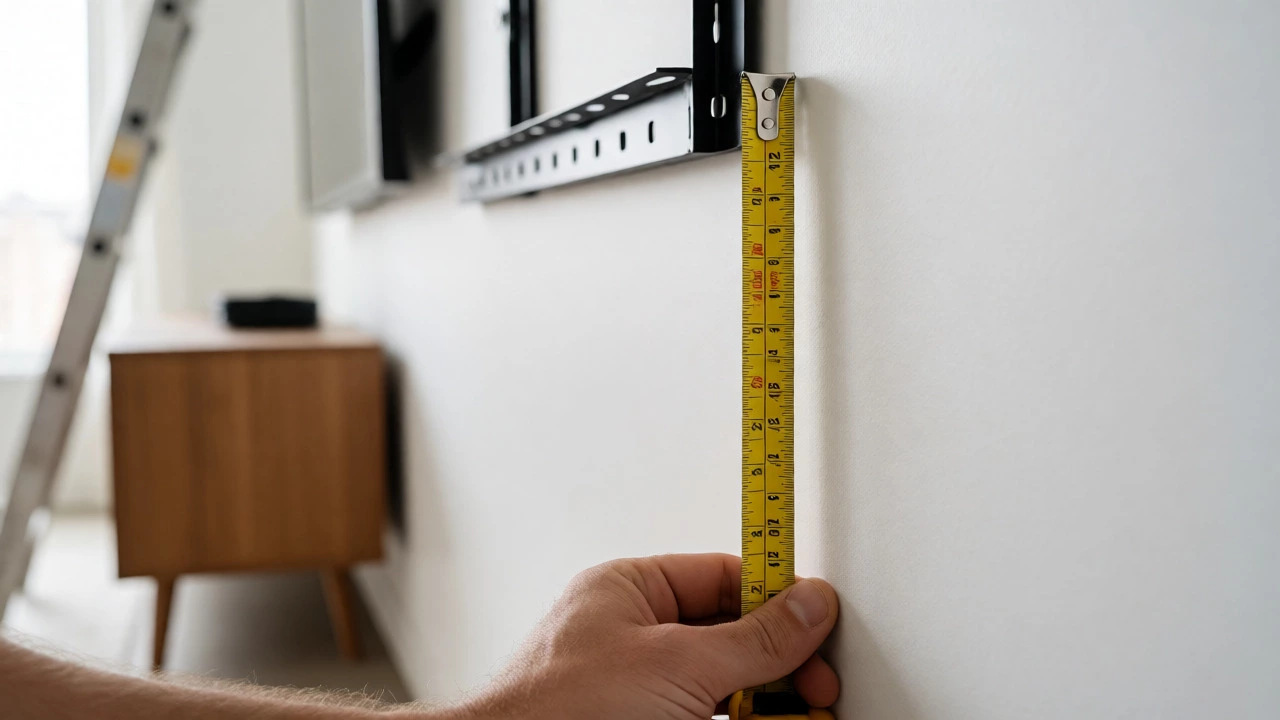
- Measure your eye height while seated. Sit on your primary viewing spot (usually the main sofa). Have someone measure from the floor to your eyes. Don’t guess-use a tape measure. Most standard sofas place adult eye level between 38 and 42 inches.
- Find your TV’s center point. A 65-inch TV has a diagonal measurement, but we need the vertical height. Measure the actual screen height (excluding bezels) and divide by two. For a typical 65-inch 16:9 TV, the screen height is about 32 inches, so the center is 16 inches from the bottom edge.
- Do the math. Subtract half the screen height from your eye height. Example: If your eye height is 42 inches, and half the TV height is 16 inches, then 42 minus 16 equals 26. That means the bottom of your TV should be 26 inches off the floor.
This calculation ensures the center of the screen aligns with your natural line of sight. Remember, this applies whether you’re using a TV stand or a wall mount.
Mounting vs. Standing: Different Rules Apply
If you’re placing the TV on a media console, you have less flexibility because the unit’s height is fixed. Most modern consoles range from 18 to 24 inches tall. Add the TV’s stand legs (usually another 2-4 inches), and you’re often pushing the screen higher than ideal.
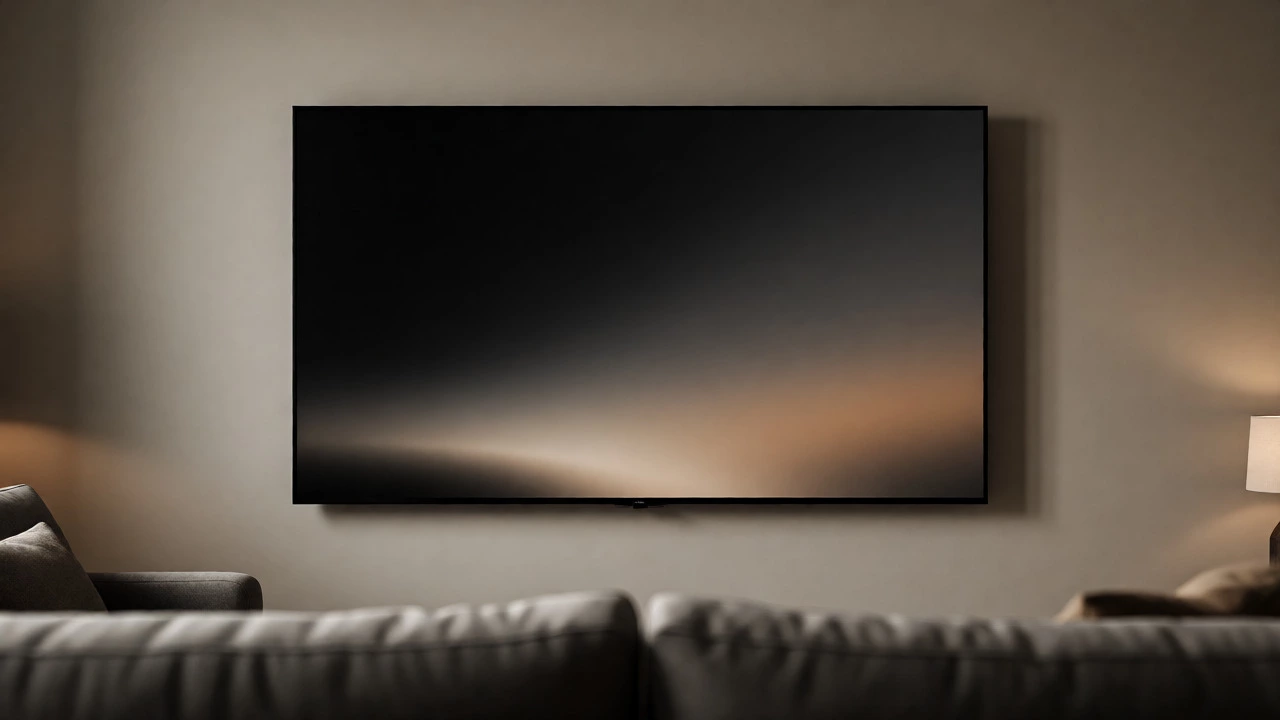
To compensate, choose a lower-profile stand or one with adjustable shelves. Alternatively, use spacers under the front feet of the TV to tilt it slightly backward, bringing the top closer to eye level. If you’re mounting the TV, you control every inch. This is why wall mounting is preferred for larger screens-it allows you to position the center exactly where your eyes are, regardless of furniture constraints.
The Impact of Viewing Distance
Height isn’t the only factor; distance plays a huge role in perceived comfort. The Society of Motion Picture and Television Engineers recommends a viewing distance of 1.5 to 2.5 times the screen’s diagonal size for immersive viewing. For a 65-inch TV, that means sitting between 8 and 13.5 feet away.
Here’s the catch: the farther you sit, the more forgiving the height becomes. If you’re 12 feet away, being 3 inches too high won’t bother you much. But if you’re only 7 feet away, even a small misalignment causes noticeable strain. Check your room layout first. If your sofa is close to the wall, prioritize precise eye-level alignment. If it’s across a large open-plan space, you can afford to raise the TV slightly to accommodate architectural features like fireplaces or windows.
Common Mistakes to Avoid
Many homeowners fall into traps that ruin their viewing experience. Here are the big ones:
- Mounting above the fireplace. Heat rises, which can damage electronics over time. Plus, mantels force TVs much higher than eye level. If you must do this, use a full-motion mount that pulls the TV out and tilts it down significantly.
- Ignoring ceiling fans. Ensure there’s at least 12 inches of clearance between the top of the TV and any ceiling fan blades to avoid visual clutter and safety hazards.
- Forgetting cable management. If you’re mounting, hide wires behind the wall or in a raceway. Visible cables draw the eye downward, disrupting the clean line of sight.
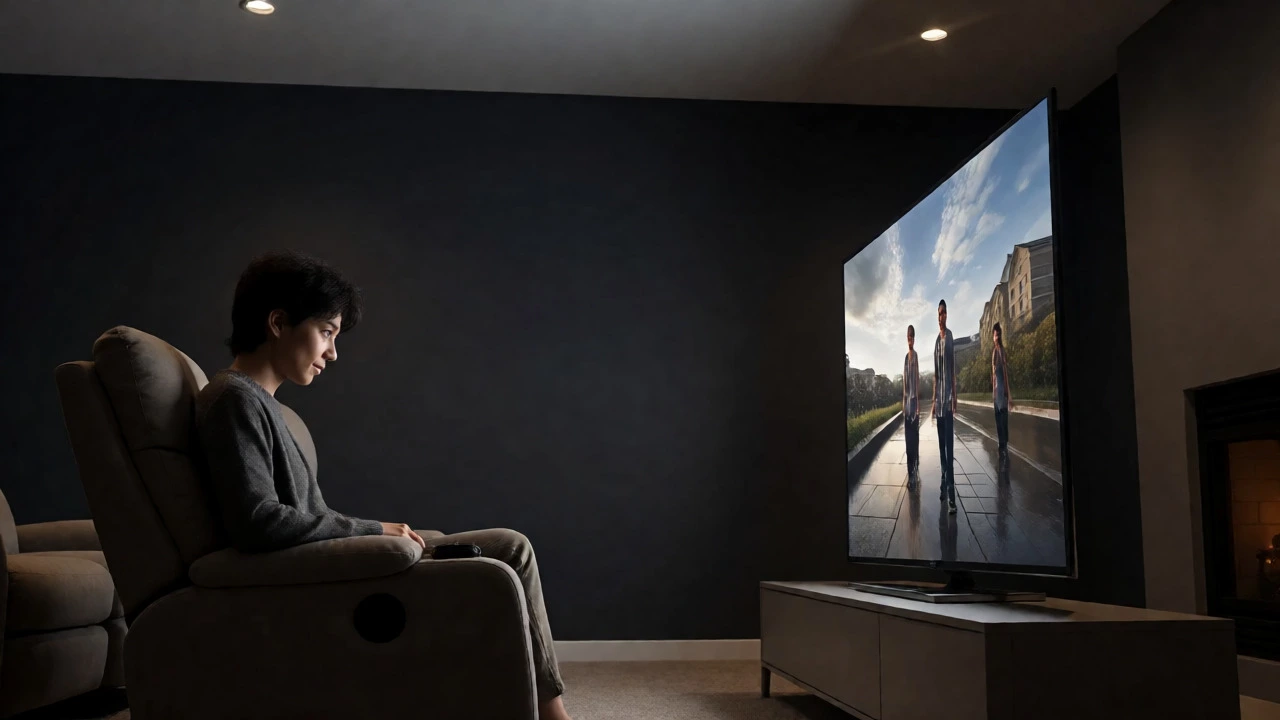
- Assuming all sofas are equal. Recliners lower your body significantly compared to upright sectionals. Always measure from your actual sitting position, not a hypothetical one.
Tips for Multi-Purpose Rooms
In spaces like bedrooms or studios, you might watch TV from bed rather than a chair. Beds vary wildly in height, but a standard mattress puts eye level around 24-30 inches when lying flat. However, most people prop themselves up with pillows, raising their eyes to about 36-40 inches. Treat bedroom setups similarly to lounge chairs: aim for a lower center point, perhaps 36-38 inches, and consider a tilt-mount to angle the screen toward your face when reclined.
Another trick for shared rooms is using an articulating arm. These mounts let you pull the TV out and swivel it, allowing different users to adjust the height and angle dynamically. It’s pricier upfront but solves the "one size fits all" problem effectively.
Final Checklist Before Drilling Holes
Before you commit to a permanent installation, test the height temporarily. Use painter’s tape to mark the proposed center point on the wall. Sit in your usual spot and look at the mark. Does it feel natural? Do you have to tilt your head up or down? Make adjustments until it feels effortless. Then, measure twice and drill once. Getting the height right transforms your TV from a piece of tech into a seamless part of your living space.
Is 65 inches too big for a small room?
Not necessarily. While 65 inches requires more space, modern ultra-HD resolution allows you to sit closer without seeing pixels. As long as you maintain at least 8 feet of viewing distance, a 65-inch TV can work in compact living areas, provided the height is adjusted correctly to prevent neck strain.
Should I mount my TV centered on the wall or offset?
Center it horizontally relative to your seating arrangement, not necessarily the wall itself. If your sofa is off-center due to doorways or windows, align the TV with the viewer's perspective, not the architecture. Visual balance matters more than geometric symmetry.
What if my ceiling is very low?
Low ceilings limit upward expansion. Stick strictly to the eye-level rule (center at ~42 inches). Avoid mounting too high just to fill empty wall space above. Instead, decorate the area above the TV with art or shelving to draw the eye upward without forcing you to look up constantly.
Can I put a 65-inch TV on any stand?
No. Check the stand's weight capacity and width. A 65-inch TV typically weighs 35-50 pounds and is about 57 inches wide. Ensure the stand is at least 60 inches wide for stability and rated for the weight. Also, verify the stand height keeps the screen center near eye level.
Does glare affect placement height?
Yes. If you have large windows, mounting the TV too high can increase reflections from overhead lights or sky glare. Position the TV lower and consider anti-glare screens or curtains. Sometimes, moving the TV to a perpendicular wall eliminates direct light sources entirely.