Sofa Durability & Foam Density Checker
Fill in the details to see your recommended foam density and estimated lifespan.
| Density (kg/m³) | Expected Lifespan | Feel | Best For |
|---|---|---|---|
| 18-20 | 2-3 years | Very soft, quick to flatten | Guest rooms, occasional use |
| 25-30 | 4-6 years | Balanced softness and support | Daily use, standard households |
| 35-40+ | 8-10+ years | Firm, resilient, slow recovery | Heavy users, high-traffic living rooms |
Nothing kills the vibe of a living room faster than a sofa that feels like a hammel. You sit down, and instead of firm support, your hips sink into the cushion. Within a year, the seat looks permanently depressed, and guests start avoiding the center seat. If you are tired of replacing cushions every few years or buying furniture that lasts less than two seasons, you need to understand what actually prevents sagging. It isn't just about how it looks in the showroom; it is about the engineering inside.
A sofa sags when its internal structure fails to distribute weight evenly over time. This happens due to low-quality fill materials, weak frames, or poor stitching. To find a piece that holds its shape for ten or more years, you have to look past the fabric and inspect the bones. Here is exactly what to check before you hand over your credit card.
The Frame: The Skeleton of Your Sofa
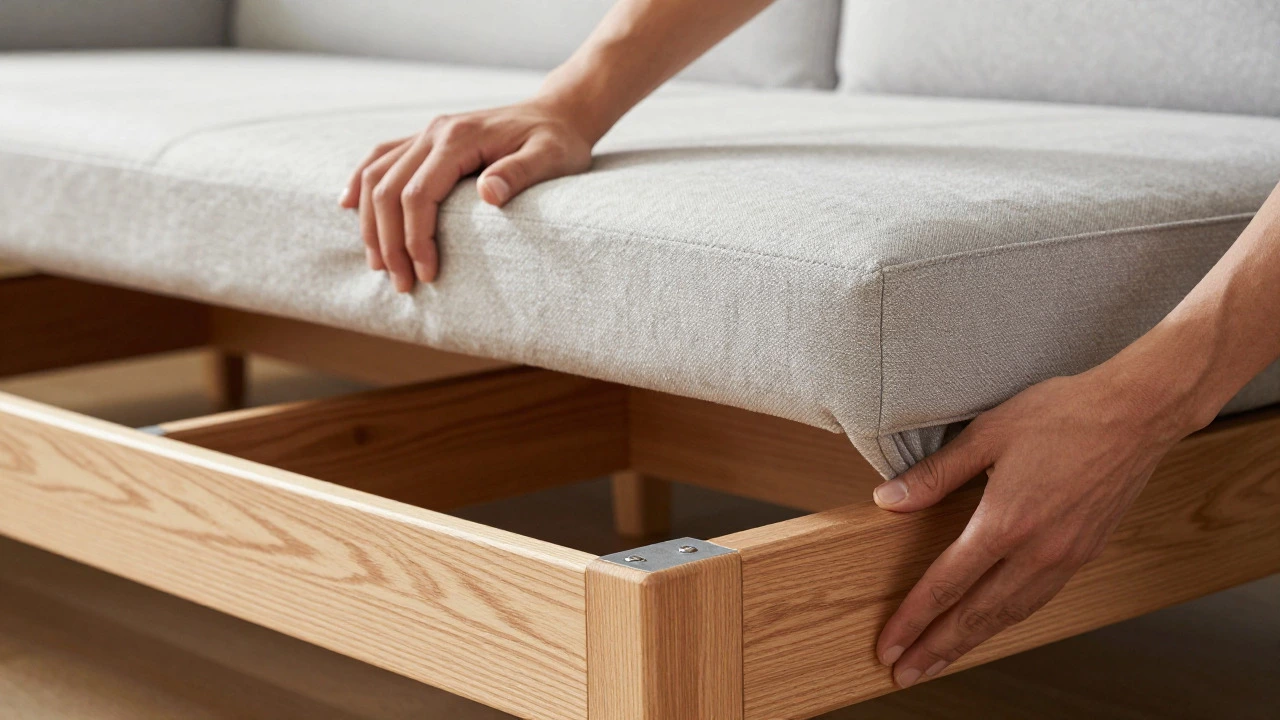
Before you even touch the cushions, you need to assess the frame. The frame supports all the weight, so if it is weak, no amount of good foam will save the sofa from collapsing. Most durable sofas use kiln-dried hardwoods like oak, ash, or beech. Avoid softwoods like pine unless they are reinforced with corner blocks, as pine can warp or crack under heavy load.
When you visit a store, ask the salesperson to show you the underside of the sofa. Look for these specific structural elements:
- Kiln-dried wood: This process removes moisture from the wood, preventing it from shrinking or warping after delivery. Fresh wood often has high moisture content, leading to cracks within months.
- Corner blocks and glue joints: Solid wood frames should have triangular corner blocks at the joints. These add tensile strength. If you see only staples or thin glue lines without reinforcement, the joint may split under stress.
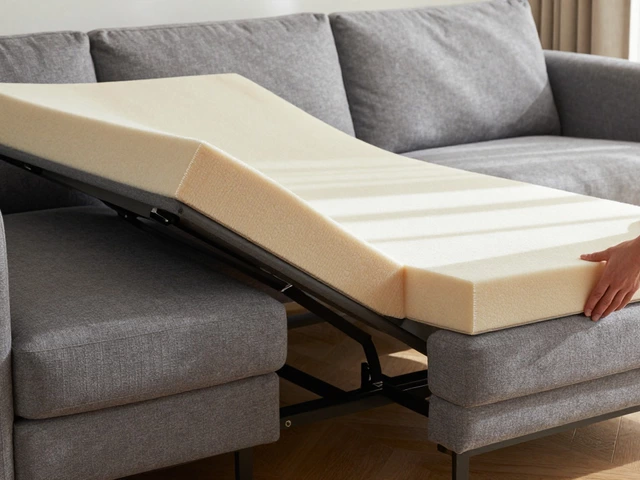
- Springs vs. webbing: High-end sofas use eight-way hand-tied springs. These provide individual tension points that bounce back after compression. Cheaper models use elastic webbing (serpentine springs). While webbing is fine for light use, it stretches out faster, leading to a hammock effect in the center seat.
If you cannot see the frame because the sofa is fully upholstered, press down on the arms and backrest. A solid frame will feel rigid. If it wobbles or makes creaking sounds, walk away. Creaks usually indicate loose joinery that will worsen over time.
Foam Density: The Secret to Long-Lasting Comfort
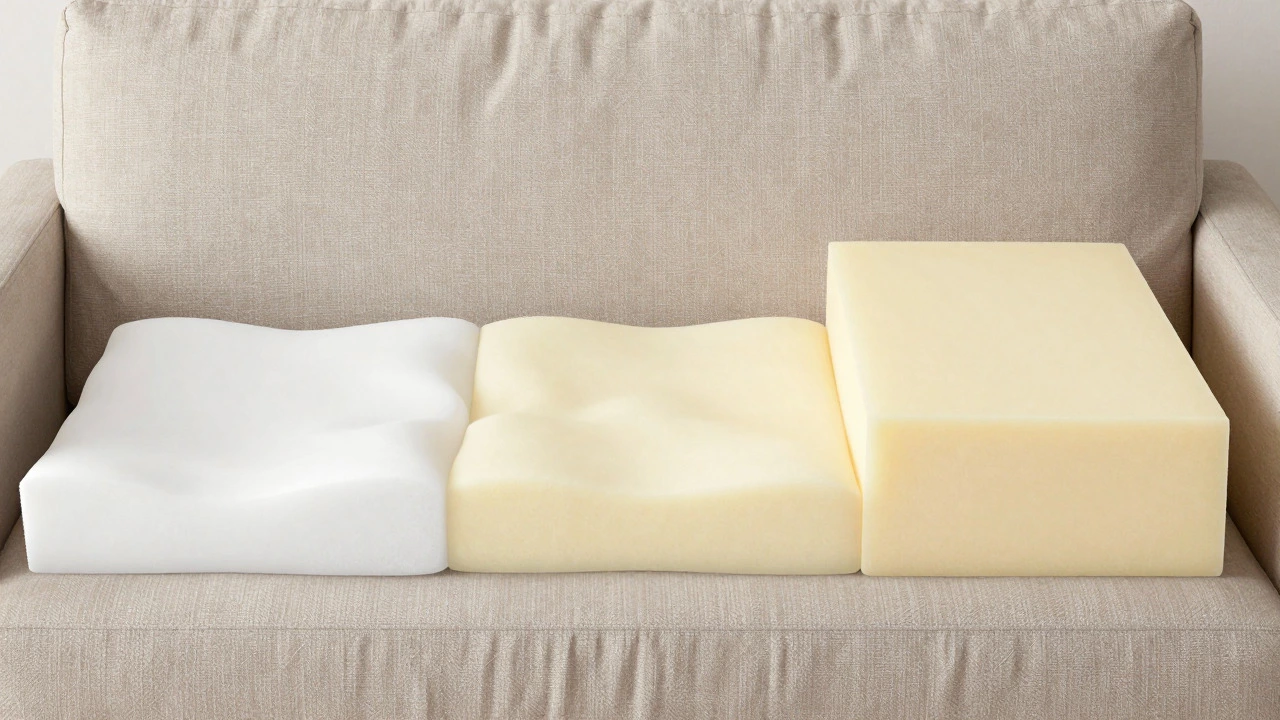
This is the most critical factor for preventing seat sag. Foam is measured by density, which refers to the weight of the material per cubic foot. Higher density means tighter cell structure, which resists compression better. Many retailers hide this information, but you can ask for it directly.
| Density (kg/m³) | Expected Lifespan | Feel | Best For |
|---|---|---|---|
| 18-20 | 2-3 years | Very soft, quick to flatten | Guest rooms, occasional use |
| 25-30 | 4-6 years | Balanced softness and support | Daily use, standard households |
| 35-40+ | 8-10+ years | Firm, resilient, slow recovery | Heavy users, high-traffic living rooms |
For a sofa that truly does not sag, aim for a minimum density of 30 kg/m³. If you weigh over 90 kg or have children who jump on the couch, go for 35 kg/m³ or higher. Low-density foam (under 25) feels luxurious in the first week because it is squishy, but it loses its shape quickly as the cells break down. High-density foam feels firmer initially but maintains its contour much longer.
Also, pay attention to the type of foam. Polyurethane foam is common, but memory foam tends to retain heat and can lose elasticity faster if not layered correctly. A hybrid approach-high-density polyurethane core with a thin layer of memory foam on top-often provides the best balance of durability and comfort.
Cushion Construction and Stitching
Even the best foam will fail if the cushion cover is poorly constructed. The way the foam is encased determines how well it distributes weight. Look for cushions with piped edges or tight, double-stitched seams. Loose stitching allows the foam to shift inside the cover, creating uneven pressure points that accelerate sagging in specific areas.
Check the zippers. They should be sturdy and hidden. If the zipper breaks, you cannot replace the inner foam insert, forcing you to buy a whole new sofa. Additionally, consider the cushion shape. Square cushions tend to sag in the middle because there are no corners to anchor the foam. Rectangular or contoured cushions distribute weight more evenly across the surface area.
Another pro tip: test the cushions by sitting on them for at least five minutes. Do not just bounce once. Sit, lean back, cross your legs, and then stand up. Watch how the cushion recovers. Good high-density foam should return to its original shape within 10-15 seconds. If it stays indented for a minute or more, the foam is too low-density for long-term use.
Weight Capacity and Usage Patterns
A sofa's ability to resist sagging depends heavily on how you use it. Manufacturers rate sofas by maximum weight capacity, but this number is often theoretical. In reality, dynamic loads (people moving, jumping, shifting) put more stress on the structure than static loads (just sitting still).
If you have a large family or pets that climb onto the furniture, prioritize sofas with reinforced frames and higher foam densities. A standard three-seater might be rated for 300 kg total, but if one person weighs 100 kg and sits in the center, that single point bears disproportionate stress. Sofas with segmented seats (where each seat section has its own independent suspension) handle this better than single-piece bases.
Consider your daily habits. Do you watch movies for hours? Do you work at the table while sitting on the sofa? Heavy, prolonged use requires premium materials. For light use, such as a guest bedroom or reading nook, mid-range materials are sufficient and more affordable.
Maintenance Tips to Extend Sofa Life
Even the best-built sofa will degrade if neglected. Regular maintenance can add several years to its lifespan. Here are practical steps to keep your cushions plump and your frame intact:
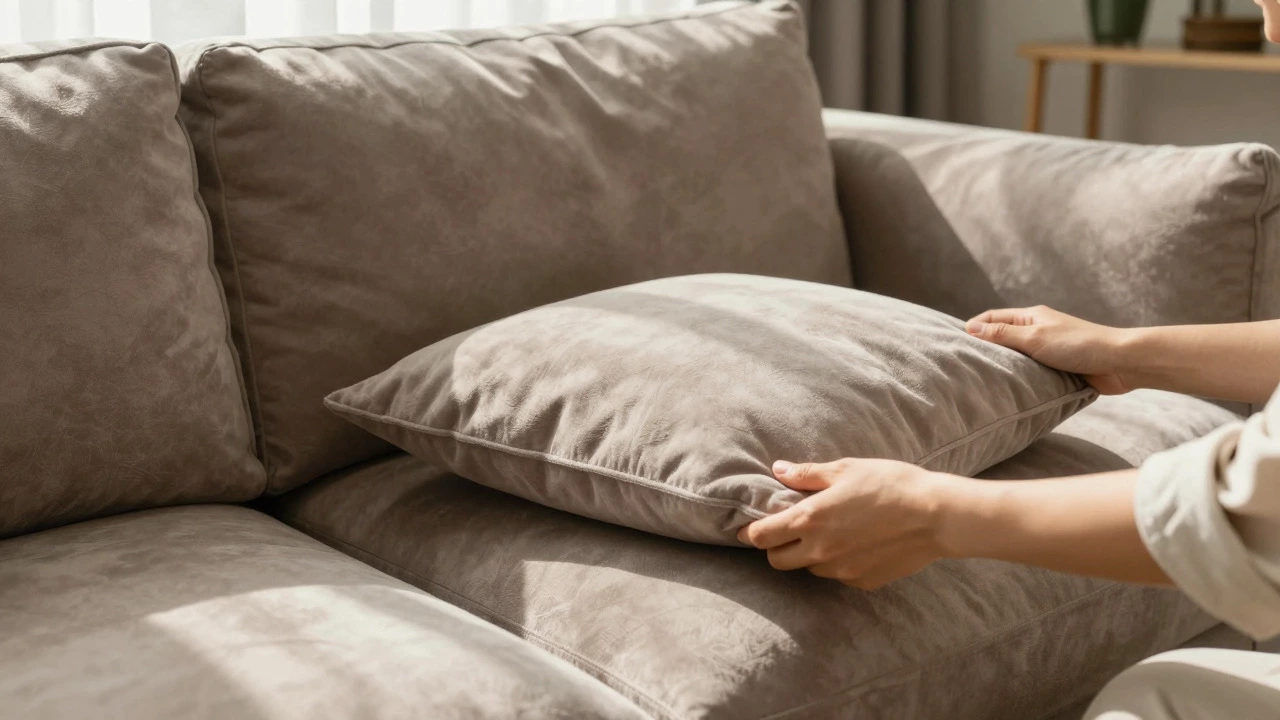
- Rotate cushions monthly: Turn front-to-back and left-to-right. This ensures even wear distribution. If you always sit on the left side, rotate the cushions so the right side takes some load.
- Use a vacuum cleaner: Dust and dirt accumulate in the seams and compress the foam fibers. Vacuum weekly to remove debris that can abrade the fabric and weaken the internal structure.
- Avoid direct sunlight: UV rays break down foam cells and fade fabric. Use curtains or blinds during peak sun hours. Sun exposure can reduce foam resilience by up to 30% over five years.
- Re-plump cushions: Some cushions have removable covers. Take them off, shake out the foam, and gently knead it to restore loft. This works best with high-resilience foam.
Ignoring these simple tasks leads to premature sagging. Dirt acts as an abrasive, wearing down the fabric and stressing the seams. Sunlight dries out the foam, making it brittle. By treating your sofa with basic care, you protect your investment.
Common Mistakes to Avoid When Buying
Many buyers focus on aesthetics and ignore structural integrity. Here are the most common errors that lead to early sagging:
- Choosing softness over support: A sofa that feels like a cloud in the store often collapses in the home. Prioritize firmness that offers resistance. You want support, not just softness.
- Ignoring the warranty terms: Read the fine print. Some warranties exclude "normal wear and tear" after 12 months. Others require professional cleaning to remain valid. Ensure the warranty covers frame and foam separately.
- Buying online without checking specs: Online images are deceptive. Always ask for foam density, frame material, and spring type via email or chat before ordering. If the seller cannot answer, they likely do not know.
- Underestimating pet impact: Dogs and cats scratch fabric and dig into cushions. If you have pets, choose durable fabrics like leather or performance weaves, and ensure the foam is enclosed in a tight, zipless cover to prevent punctures.
By avoiding these pitfalls, you increase your chances of finding a sofa that remains comfortable and structurally sound for a decade or more.
What is the best foam density for a sofa that won't sag?
For most households, a foam density of 30 kg/m³ or higher is recommended. If you are a heavier user or have active children, aim for 35-40 kg/m³. This density provides enough resilience to maintain shape over 8-10 years of regular use.
Do memory foam sofas sag faster than traditional foam?
Pure memory foam can lose elasticity faster if exposed to heat, as it becomes softer and less supportive. However, hybrid cushions that combine high-density polyurethane with a thin memory foam layer offer the best of both worlds: durability from the base and comfort from the top layer.
How can I tell if a sofa frame is made of solid wood?
Ask the retailer to show you the underside. Solid wood frames have visible grain and are joined with corner blocks or dowels. Particle board or plywood frames are lighter, may have a flat, uniform texture, and often rely solely on metal brackets. Press on the arms; solid wood feels rigid, while engineered wood may flex slightly.
Is it worth paying extra for eight-way hand-tied springs?
If you plan to keep the sofa for 10+ years, yes. Eight-way hand-tied springs provide superior support and longevity compared to elastic webbing. They distribute weight more evenly and resist stretching. For a budget-friendly option or light-use sofa, webbing is acceptable, but expect replacement within 5-7 years.
Can I fix a sagging sofa myself?
Sometimes. If the sag is minor, you can try rotating cushions or adding a booster pad underneath. If the foam is compressed, you might be able to purchase replacement inserts if the manufacturer offers them. However, if the frame is broken or the springs are stretched, professional repair or replacement is usually more cost-effective.