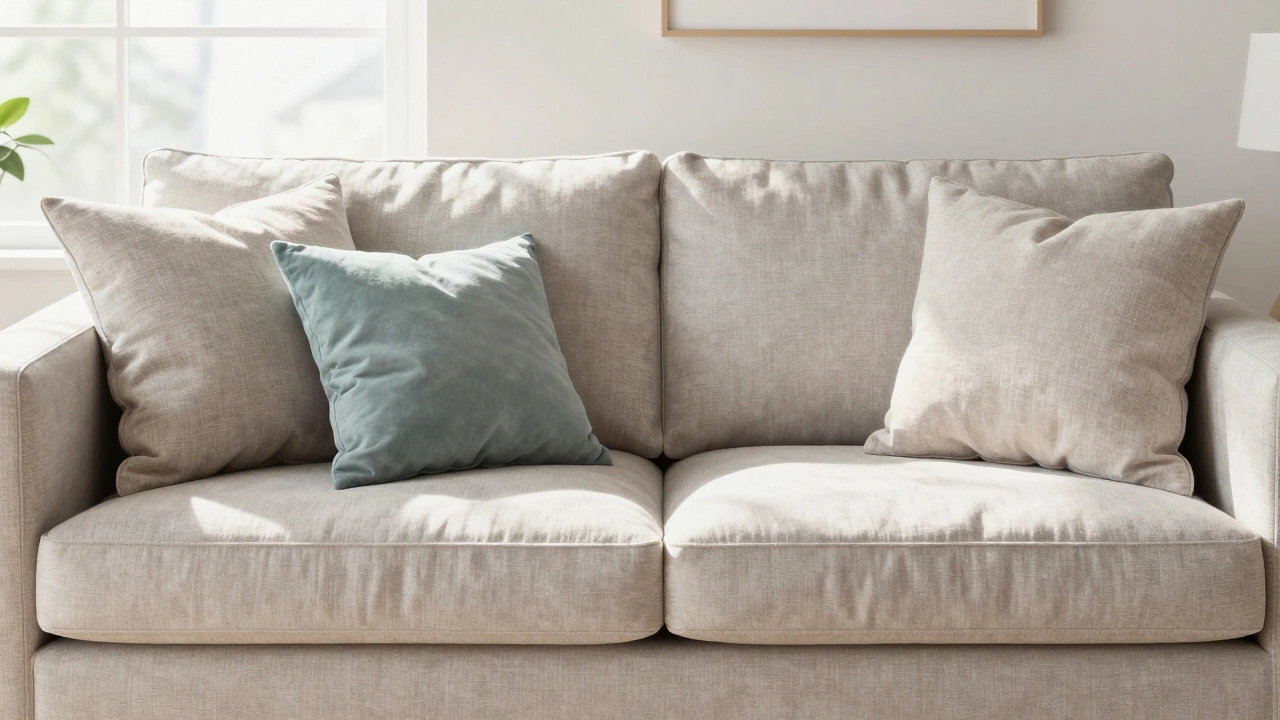
Sofa Cushion Balance Calculator
Recommended Setup
Quick Guide to Sofa Cushioning
- Small Sofas (2-seater): 2 to 3 cushions.
- Standard Sofas (3-seater): 3 to 5 cushions.
- Sectionals/L-Shapes: 5 to 7 cushions.
- The Golden Rule: Always prioritize seating space over a "perfect" look.
When we talk about cushions, we aren't talking about the heavy seat pads that come with the furniture. We're talking about Throw Pillows is decorative pillows used to add color, texture, and support to seating areas. These are the versatile pieces that allow you to change the vibe of your room without buying a whole new couch.
The Basic Math for Different Sofa Sizes
The size of your piece of furniture dictates how many accessories it can handle before it looks cluttered. If you have a compact 2-seater, adding five pillows basically turns your sofa into a bed. You'll find yourself tossing pillows onto the floor every time a guest arrives, which is a hassle for everyone.
For a standard three-seater, the magic number usually lands around three to five. Start with two larger pillows in the corners-these anchor the look. Then, add one or two smaller, contrasting pillows in the center or slightly offset. This creates a visual triangle that feels balanced to the eye. If you go over five, you risk creating a "pillow wall" that prevents people from actually leaning back.
Sectionals are a different beast entirely. Because they occupy more visual space, they can handle more weight. A large L-shaped Sectional Sofa is a large sofa composed of multiple sections that can be arranged in various configurations, typically including a chaise longue. For these, aim for five to seven cushions. Distribute them across the corners and the chaise section. If you bunch them all in one corner, the rest of the sofa looks naked and unfinished.
| Sofa Type | Ideal Range | Placement Strategy | Vibe |
|---|---|---|---|
| 2-Seater / Loveseat | 2-3 | Corners and center | Minimalist/Clean |
| Standard 3-Seater | 3-5 | Symmetrical or asymmetrical | Balanced/Inviting |
| L-Shaped Sectional | 5-7 | Corners and chaise end | Luxe/Cozy |
| U-Shaped Sectional | 7-9 | All three corners + center | Maximum Comfort |
Mixing Sizes and Shapes
It's not just about the number; it's about the variety. If you put four identical square pillows on a couch, it looks like a showroom display rather than a home. To make it look natural, you need to vary the Textile Design is the process of creating patterns and textures using fabric, yarn, and weaving techniques.
Try the "Layering Method." Start with your largest pillows (usually 20x20 or 22x22 inches) in the back. These are your foundation. Layer smaller 18x18 pillows in front of them. Finally, add a Lumbar Pillow is a rectangular cushion designed to support the lower back and add a horizontal element to a layout. A single rectangular lumbar pillow in the center ties the whole look together and provides actual ergonomic support for anyone sitting up to read a book.
Color and Texture Coordination
Once you've decided on the count, you have to deal with the colors. A common mistake is matching the pillows exactly to the sofa color. While this looks "safe," it's also incredibly boring. It's like wearing a beige shirt with beige pants; you just disappear into the furniture.
Instead, use a complementary color palette. If you have a charcoal grey sofa, try adding a mix of cream, muted gold, and navy blue. Use different fabrics to add depth. Combine a chunky knit wool pillow with a smooth velvet one and perhaps a linen option. This variety makes the sofa look curated over time rather than bought as a pre-packaged set from a big-box store.
If you're unsure, follow the 60-30-10 rule. 60% of the room (including the sofa) should be a dominant neutral, 30% a secondary color, and 10% a bold accent color. Your cushions are the perfect place to inject that 10% accent. A bright mustard yellow pillow on a navy couch is a classic move that adds instant energy to the room.
Common Pillow Placement Mistakes
One of the biggest errors is the "Symmetry Trap." While symmetry (one pillow on each end) is clean, it can feel stiff. Try an asymmetrical arrangement: put three pillows on one side and two on the other. It feels more relaxed and lived-in.
Another pitfall is ignoring the scale of the room. If your living room is tiny, a massive oversized pillow can swallow the space and make the room feel even smaller. Conversely, tiny 12-inch accent pillows on a massive sectional look like postage stamps; they get lost in the fabric and don't provide any visual impact.
Finally, watch out for the "Over-Stuffing" problem. When you add too many cushions, you're essentially telling your guests, "Please don't actually sit here." If you have to move six pillows just to sit down, the decor has won over the functionality. Always test your sofa by actually sitting on it with the pillows in place. If you feel squeezed, remove one.
When to Break the Rules
Design rules are helpful, but your lifestyle matters more. If you have kids or pets, you might find that having fewer, more durable pillows is better. A Performance Fabric is textiles treated to be water-repellent, stain-resistant, and highly durable for high-traffic areas. Choosing a few high-quality performance pillows over a dozen cheap ones is a smarter move for a busy household.
If you use your sofa primarily for napping or movie marathons, lean toward more cushions but choose softer, fluffier materials like down or faux fur. In this scenario, the number of cushions is less about aesthetics and more about creating a "nest." Just make sure you have a designated spot-like a large basket or a corner of the room-to store the excess pillows when you need the full seating area for guests.
Does the number of cushions depend on the sofa color?
Not directly, but color affects visual weight. Dark-colored sofas can look heavy, so adding a few light-colored cushions helps break up the mass and makes the piece feel more inviting. Light-colored sofas can handle a wider variety of bold, dark cushions without feeling overwhelming.
Should I use the same pillows that came with the sofa?
You can, but it often looks generic. The pillows that come with a sofa set are usually designed to be neutral. Replacing one or two of them with unique textures or colors is the easiest way to make your living room feel professional and personalized.
What is the best way to arrange pillows on a sectional?
Focus on the corners. Place your largest cushions in the deep corners of the L-shape to define the boundaries. Then, place a few smaller accents along the back and one lumbar pillow on the chaise end. This prevents the center of the sectional from feeling cluttered while still looking cozy.
How do I know if I have too many pillows?
Use the "Sit Test." If you or a guest cannot sit comfortably without moving more than two pillows, you've likely crossed the line into over-decorating. The sofa should be a place of rest, not a puzzle you have to solve before sitting down.
Can I mix different patterns on my cushions?
Yes, and you should! The trick is to vary the scale of the patterns. Mix one large-scale pattern (like a big floral or wide stripe) with a medium-scale pattern (like a geometric print) and a small-scale pattern or a solid texture. This creates a sophisticated look without clashing.
Next Steps for Your Living Room
If you're staring at your couch and feeling unsure, try this: clear everything off. Start with just two large pillows in the corners. Add one more in the center. Step back and look at the room. Does it feel empty? Add a lumbar pillow. Still too plain? Add one small accent pillow in a contrasting color. By building up slowly, you'll find exactly where your personal balance lies.
If you find that your current pillows are flat or losing their shape, consider upgrading the inserts. Switching from cheap polyester fill to feather or down-alternative inserts will give your cushions that "designer" plump look and make them much more comfortable to lean on.