Couch Quality Evaluator
Select the features of the couch you are inspecting to determine its estimated quality grade and longevity.
Your Quality Score
Quick Checklist for Quality
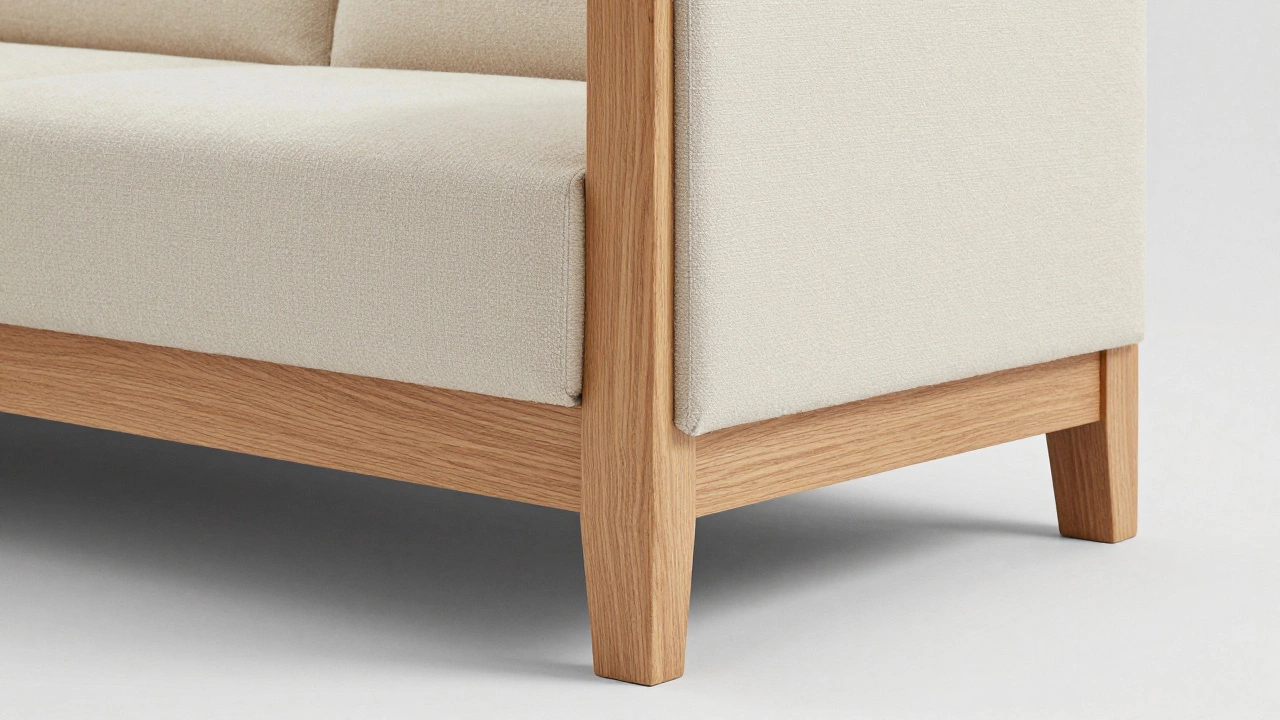
- Frame: Look for kiln-dried hardwood (oak, maple, or ash) over particle board.
- Suspension: Eight-way hand-tied springs are the gold standard for longevity.
- Cushions: High-density foam wrapped in down or fiber prevents premature sagging.
- Fabric: Check the double-rub count for durability; higher is better for pets and kids.
- Joinery: Mortise-and-tenon joints are far superior to staples and glue.
The Skeleton: Understanding the Sofa Frame
The frame is the foundation of your furniture. If the frame is weak, no amount of fancy fabric can save the couch. Most cheap sofas use Particle Board is an engineered wood product made from sawdust and resin. It's lightweight and cheap, but it warps and cracks under pressure. If you see a frame made of plywood or particle board, be careful; it's likely to creak and sag within a few years.
Instead, you want to find a frame made of Kiln-Dried Hardwood. This is wood that has been oven-dried to remove moisture, preventing the frame from warping or shrinking as the humidity in your home changes. Hardwoods like oak, maple, or ash are the heavy hitters here. If you can't see the frame, give the couch a good shake from side to side. If it wobbles or squeaks, the joints are weak.
The way the wood is put together matters just as much as the wood itself. Look for Mortise-and-Tenon Joints, where a projecting piece of wood fits perfectly into a hole in another piece. This is a classic woodworking technique that provides massive structural integrity. In contrast, cheap manufacturers rely on staples and glue, which eventually fail, leaving you with a couch that feels like it's swaying in the wind.
The Magic of Suspension: Why Springs Matter
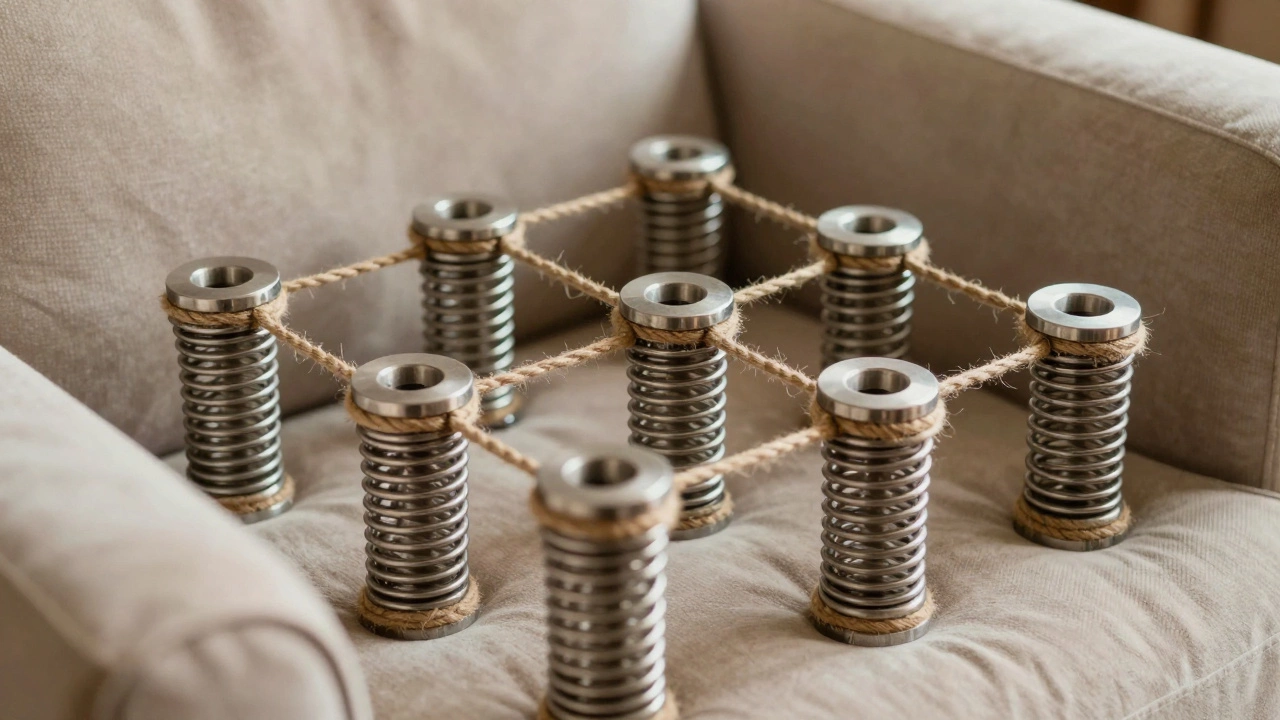
Once you've checked the frame, look at what's holding you up. The suspension system determines how the couch feels and how long it keeps its shape. The absolute peak of quality is the Eight-Way Hand-Tied Spring system. In this method, eight individual coils are tied by hand with twine to create a supportive, flexible grid. Because each spring is independent, the weight is distributed evenly, and you won't get those annoying 'dents' where you always sit.
If you're on a tighter budget, you'll likely see Sinuous Springs. These are S-shaped wires that run from the front to the back of the seat. While they aren't as durable as hand-tied springs, they're still a decent choice if they are made of heavy-gauge steel. The red flag here is "webbing"-basically thick strips of elastic. Webbing is fine for a budget piece, but it loses its tension quickly, leading to that dreaded 'sinking' feeling.
| Suspension Type | Durability | Comfort Level | Price Point |
|---|---|---|---|
| Eight-Way Hand-Tied | Exceptional | High/Customized | Premium |
| Sinuous Springs | Moderate | Consistent | Mid-Range |
| Elastic Webbing | Low | Initial Softness | Budget |
Cushioning and Fill: Avoiding the Sag
You've probably sat on a couch that felt amazing in the store but turned into a pancake after a year. That's usually a problem with the fill. The gold standard for comfort and longevity is a High-Resiliency (HR) Foam core wrapped in a layer of down or polyester fiber. HR foam is designed to bounce back to its original shape much faster than standard polyurethane foam.
If a couch is filled only with polyester fiber, it will feel soft initially, but it packs down quickly. Down-filled cushions (goose or duck feathers) feel incredibly luxurious, but they require constant 'fluffing' to keep their shape. The best of both worlds is a "down-wrap," where a sturdy foam core provides the support and the down outer layer provides the plush feel.
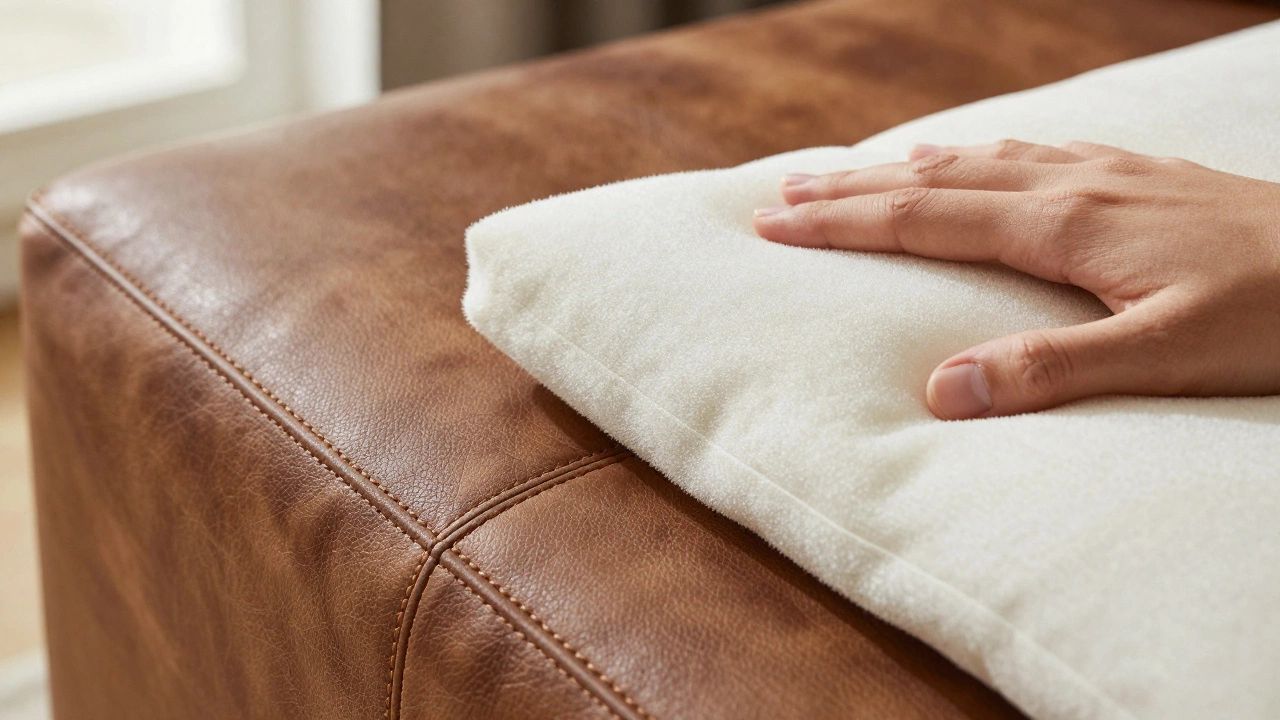
A pro tip for testing cushions: press your hand firmly into the seat. If the foam recovers instantly, it's high quality. If it leaves a slow-rising indentation, the density is too low, and you'll be replacing those cushions in three years.
Upholstery and Fabric: More Than Just a Color
The fabric is the first thing we notice, but its quality is measured by a metric called the "double-rub count." This is a laboratory test that mimics a person rubbing a fabric back and forth to see when it wears through. For a couch that gets daily use, you want a Performance Fabric with a rating of at least 15,000 to 30,000 double-rubs. Anything above 50,000 is considered commercial grade and virtually indestructible.
When choosing between materials, think about your lifestyle. Top-Grain Leather is the most durable and develops a beautiful patina over time. However, avoid "bonded leather" or "vegan leather" if you want longevity. Bonded leather is essentially shredded leather scraps glued together with polyurethane; it peels and cracks, often within just two years of use.
If you're going with fabric, check the seams. High-quality couches have tight, straight stitching with no loose threads. Look for "French seams" or double-stitching in high-stress areas like the armrests and the base of the cushions. If you see gaps in the seams or uneven stitching, the craftsmanship is lacking.
The Finishing Touches: Legs and Hardware
Don't overlook the legs. While they might seem like an afterthought, they carry the entire weight of the couch and the people on it. Solid wood legs are the best choice, and they should be bolted or screwed in securely. If the legs feel wobbly or are made of thin plastic, it's a sign that the manufacturer cut corners everywhere else too.
Check the zippers and Velcro. High-end sofas use heavy-duty, oversized zippers that glide smoothly without catching. If the zippers feel flimsy or the Velcro is peeling off the fabric, you're looking at a budget-build disguised as a luxury item. Also, check the underside of the couch. A high-quality piece will have a neatly finished Dust Cover (the black fabric on the bottom) that is stapled tightly and evenly.
Common Pitfalls to Avoid When Shopping
One of the biggest mistakes buyers make is equating a heavy couch with a quality couch. While a solid frame is heavy, some manufacturers add unnecessary weight (like heavy MDF boards) to make a cheap couch feel "substantial." Focus on the materials, not the weight.
Another trap is the "softness test." Many budget couches use very soft, low-density foam that feels incredible for the first five minutes in the showroom. However, this lack of support is exactly why they sag. A high-quality couch should feel supportive, not just soft. If you feel the frame or the springs through the cushion, the padding is insufficient.
Is a more expensive couch always better?
Not necessarily. You often pay a premium for the brand name, the showroom's rent, or a trendy design. A mid-priced couch with a kiln-dried hardwood frame and eight-way hand-tied springs is far better than a luxury-branded couch made of particle board and cheap foam.
What is the difference between top-grain and bonded leather?
Top-grain leather is the outermost layer of the hide, making it breathable and durable. Bonded leather is made from leather scraps glued together. Bonded leather is much cheaper but is prone to peeling and cracking over time.
How do I know if a frame is truly kiln-dried?
Since you can't see the drying process, ask for the manufacturer's specifications. Reputable brands will explicitly state that they use kiln-dried hardwood. If the salesperson is vague or only says "solid wood," it might be unseasoned wood, which is prone to warping.
Are sinuous springs bad?
They aren't "bad," but they are a step below hand-tied springs. They are very common in modern furniture and provide a consistent feel. As long as they are high-gauge steel, they can last many years, though they won't have the same lifelong durability as a hand-tied system.
What should I look for in a performance fabric?
Look for fabrics treated for stain resistance or those made from synthetic blends like polyester and acrylic. Check the double-rub count; for a main living room couch, aim for at least 15,000 to 30,000 rubs to ensure the fabric doesn't wear thin quickly.
Next Steps for Your Search
If you're currently shopping, start by narrowing down your non-negotiables. If you have pets or kids, prioritize high-quality couch fabrics with high double-rub counts and avoid bonded leather. If this is a "forever" piece for your formal living room, insist on a kiln-dried hardwood frame and eight-way hand-tied springs.
When you visit a store, don't just sit on the couch-interrogate it. Shake the frame, feel the foam recovery, and look underneath the dust cover. If a salesperson can't tell you exactly what the frame is made of or how the springs are constructed, it's usually because they're selling a product designed for a short lifecycle. Take your time, and remember that the best value isn't the lowest price, but the lowest cost per year of use.