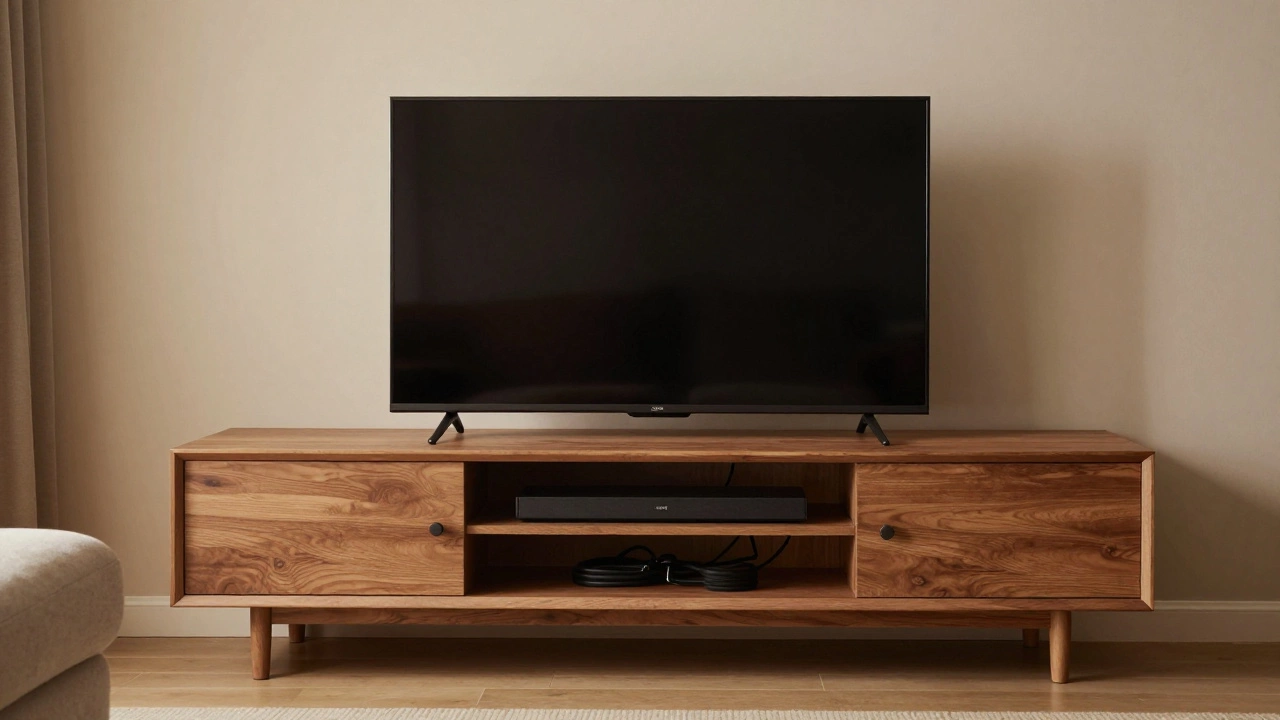
How Big Does a TV Stand Need to Be for a 65-Inch TV?
A 65-inch TV needs a stand at least 67 inches wide for safety and function. Learn the ideal width, depth, height, and how to avoid common mistakes when choosing a TV stand.
When you buy a new TV, TV stand clearance, the space between the bottom of the TV and the surface it sits on, including the stand’s width and depth requirements. Also known as TV base clearance, it’s not just a number on a spec sheet—it’s what keeps your TV from tipping, your cables from tangling, and your room from looking cluttered. Too little clearance and your TV might not fit. Too much and you’re wasting space—or worse, risking instability. This isn’t about fancy design. It’s about function.
Most TVs need a stand that’s at least as wide as the TV’s base, and often wider. A 65-inch TV might have a base only 40 inches wide, but the stand underneath it could be 50 inches to give it balance. If your stand is only 42 inches, the TV might still sit on it—but it’ll wobble. And if you’ve got kids, pets, or a busy hallway nearby? That’s a hazard waiting to happen. The TV stand size, the physical dimensions of the furniture piece holding the TV, including width, depth, and height needs to match your TV’s footprint. But it’s not just width. Depth matters too. If your stand is too shallow, the TV will hang over the edge. That looks bad. And it’s dangerous. Then there’s height. A stand that’s too tall or too short changes your viewing angle. You end up looking up or down all day, which strains your neck. The TV placement, how and where a TV is positioned in a room, including distance from seating, height from floor, and surrounding furniture affects comfort as much as the stand itself.
Some people skip the stand entirely and wall-mount. But even then, clearance still matters. Wall mounts need room for cables, ventilation, and sometimes a soundbar underneath. A TV stand isn’t just a shelf—it’s part of a system. It needs to fit your TV, your room, your cables, and your lifestyle. You can’t just grab the first one that looks nice. You need to measure. Twice. Then check the TV’s manual. And don’t assume all 75-inch TVs are the same. One might need a 58-inch-wide stand. Another might only need 52. The difference? Design choices, not size.
What you’ll find below are real examples of what works—and what doesn’t. From why a 75-inch TV needs more than just a bigger stand, to how to fit a TV in a small space without a stand at all. You’ll see how storage furniture, cable management, and even recliner placement can tie into your TV setup. No fluff. Just what you need to make sure your TV doesn’t end up on the floor.
A 65-inch TV needs a stand at least 67 inches wide for safety and function. Learn the ideal width, depth, height, and how to avoid common mistakes when choosing a TV stand.

30 Oct
Is It Safe to Sleep in a Recliner Every Night?

5 Mar
What Type of Office Chair Is Best for Sitting All Day?
1 Apr
Optimal Viewing Distance for a 55-inch TV: Finding Your Sweet Spot
2 Feb
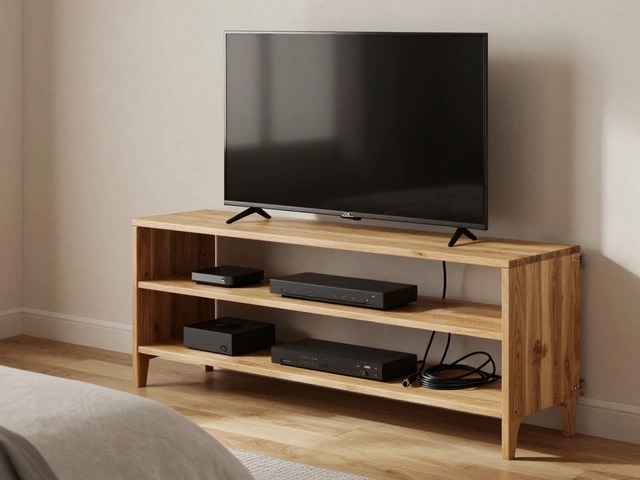
What Can I Use as a TV Stand in My Bedroom? 10 Practical Alternatives
17 Mar
Can You Really Use a Dresser as a TV Stand?