Outdoor Furniture Durability & Value Calculator
Configure Your Needs
Ready to Calculate
Adjust your budget and preferences on the left to see which material offers the best durability and value for your specific situation.
Picture this: you’ve just spent a pretty penny on a beautiful dining set for your patio. You host that first summer barbecue, everything looks great. Then comes the rain. The next week, the sun beats down relentlessly. By autumn, the wood is cracking, the metal is rusting, or the fabric has faded to a ghostly shade of its former self. It’s a frustrating scenario that happens far too often.
The question isn’t just about style; it’s about survival. When you ask, "what type of outdoor furniture is the most durable?", you’re really asking which materials can withstand the brutal combination of UV rays, moisture, temperature swings, and physical wear without falling apart after one season. In 2026, with climate patterns becoming increasingly unpredictable, durability is no longer a luxury feature-it’s a necessity.
We aren't looking for furniture that lasts a year. We are talking about pieces that survive decades. To find the real winners, we need to strip away marketing buzzwords like "weather-resistant" (which usually means "won't dissolve in light drizzle") and look at the material science behind what actually holds up against the elements.
The Gold Standard: Teak Wood
If money were no object, teak would be the undisputed champion. This isn’t just any wood; it’s dense, oily, and naturally repels water. Unlike pine or oak, which require constant sealing and staining, teak contains natural oils that prevent it from drying out and cracking. It also has silica, which makes it hard enough to resist insect boring.
Here is the reality check, though. Not all teak is created equal. Grade A teak comes from the heart of the tree and has very little sapwood. Cheaper options might use lower grades or even other woods stained to look like teak. Real Grade A teak will turn a silvery-gray color if left untreated. This is not damage; it’s a protective patina. If you want to keep the honey-gold hue, you’ll need to apply teak oil annually, but honestly? The silver look is arguably more charming and requires zero effort.
- Lifespan: 50+ years with minimal care.
- Pros: Naturally rot-proof, heavy (won’t blow away), ages beautifully.
- Cons: Extremely expensive upfront cost; heavy to move around.
For those who view their garden as an extension of their living room and plan to stay in their home for the long haul, teak is the only logical choice. It’s an investment piece, much like a good suit or a quality watch.
The Modern Contender: Powder-Coated Aluminum
While wood feels traditional, Aluminum is the workhorse of modern outdoor design. Specifically, we are talking about cast or wrought aluminum that has been powder-coated. This is not the flimsy, thin aluminum you find in cheap folding chairs that bends if you sit on them wrong.
Cast aluminum is molten metal poured into molds, creating thick, intricate designs that mimic wrought iron but without the weight. The secret sauce here is the powder coating. This is a dry finishing process where electrostatically charged paint is sprayed onto the metal and then cured under heat. The result is a finish that is significantly more durable than liquid paint. It doesn’t peel, crack, or chip easily.
In 2026, advancements in powder coating technology have made these finishes incredibly resistant to UV fading and chalking. If you live in a coastal area, aluminum is superior to steel because it does not rust. Steel forms iron oxide (rust) when exposed to salt air; aluminum forms a dull gray oxide layer that actually protects the metal beneath it.
- Lifespan: 15-20 years before the finish may need refreshing.
- Pros: Lightweight, rust-proof, low maintenance, sleek modern look.
- Cons: Can dent if struck hard; cheaper versions can feel hollow.
If you want furniture that looks sharp, fits a contemporary aesthetic, and you don’t mind moving it around for parties or cleaning, aluminum is likely your best bet. Just ensure you buy from a reputable brand that specifies "cast aluminum" rather than "extruded" or "sheet" aluminum, which are thinner and less durable.
The Synthetic Option: High-Density Polyethylene (HDPE)
You might know this by its brand names like TimberTech or Trex, but the material itself is HDPE. Originally developed for industrial piping, HDPE has taken the outdoor furniture world by storm. It’s plastic, but not the cheap, brittle kind that becomes chalky and breaks in the sun. This is high-density polyethylene, often mixed with recycled plastics and wood fibers.
Why is this relevant to durability? Because it cannot rot, warp, or splinter. It is impervious to water and insects. Unlike wood, it doesn’t absorb moisture, so it won’t swell or shrink with humidity changes. Unlike metal, it doesn’t get scorching hot in the direct midday sun or freezing cold in winter.
In recent years, manufacturers have improved the texture and color stability of HDPE. Early versions looked obviously fake and faded quickly. Today’s top-tier HDPE furniture uses UV inhibitors that lock the color in for years. It mimics the grain of wood convincingly well from a few feet away.
- Lifespan: 20-30 years.
- Pros: Zero maintenance, eco-friendly (recycled materials), consistent appearance.
- Cons: Can look artificial up close; limited color options compared to painted metal.
This is the ideal choice for people who hate maintenance. If the idea of sanding wood or touching up paint stresses you out, HDPE is the answer. It’s perfect for poolside areas where chlorine exposure would destroy wood and rust metal.
Avoiding the Traps: Wicker and Rattan
Let’s talk about what *not* to buy if durability is your primary concern. Natural rattan and cane are beautiful, airy, and tropical-looking. However, they are organic materials. They thrive in controlled indoor environments. Outdoors, they will dry out, become brittle, and snap. Even "all-weather" wicker needs to be stored away during harsh winters or heavy rains.
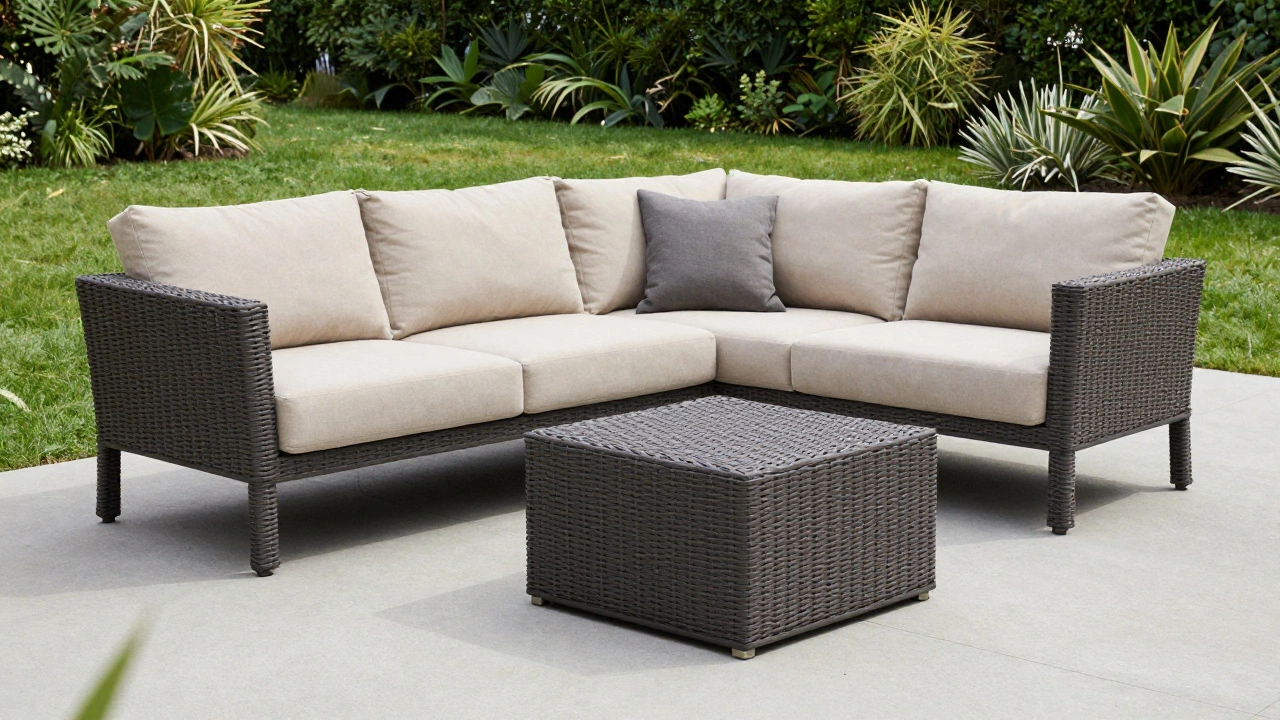
Synthetic resin wicker (often called All-Weather Wicker) is a different story. It’s made from PVC or PE strands woven over an aluminum frame. This is genuinely durable. But there is a catch: the weave can trap debris, and if the bottom layer rots or gets damaged, it’s nearly impossible to repair. Also, cheap resin wicker can fade and become brittle under intense UV exposure within 3-5 years. If you choose wicker, invest in high-quality PE wicker on a solid aluminum frame, and always use covers.
The Weak Link: Cushions and Fabrics
You can have the sturdiest teak table in the world, but if your cushions are soaked through every time it rains, your comfort is gone. The frame is only half the battle. The fabric is where most outdoor furniture fails first.
Forget standard cotton or polyester blends. You need solution-dyed acrylics. Brands like Sunbrella are the industry standard for a reason. Solution dyeing means the pigment is added to the fiber before it’s spun into yarn, not printed on top. This makes the color incredibly resistant to UV fading and chemical bleaching.
Look for fabrics with a tight weave and a water-repellent finish. Even breathable fabrics should shed water like a duck’s back. And here is a pro tip: never leave cushions outside uncovered. Even the best fabric degrades faster when subjected to direct sunlight and bird droppings (yes, really). Invest in high-quality, breathable covers, or store cushions in a dry shed during winter.
| Material | Expected Lifespan | Maintenance Level | Best For |
|---|---|---|---|
| Grade A Teak | 50+ Years | Low (optional oiling) | Long-term investments, classic aesthetics |
| Cast Aluminum | 15-20 Years | Very Low | Modern styles, coastal areas, easy mobility |
| HDPE Plastic | 20-30 Years | None | Poolsides, low-maintenance lifestyles |
| Synthetic Wicker | 5-10 Years | Medium (cleaning/covers) | Enclosed patios, shaded areas |
| Stainless Steel | 20+ Years | Low | Minimalist designs, high-end commercial spaces |
Hardware and Construction Details Matter
Even the best material can fail if it’s held together with cheap screws. When inspecting outdoor furniture, flip it over. Look at the joinery and hardware.
Wood furniture should use stainless steel screws and bolts. Galvanized steel might seem okay, but eventually, the zinc coating wears off, and rust stains will bleed through your beautiful teak. Stainless steel (specifically 304 or 316 grade) is corrosion-proof. Also, look for mortise-and-tenon joints reinforced with dowels. Glue alone will fail outdoors due to moisture expansion and contraction.
For metal furniture, check how the legs attach to the seat. Welded joints are stronger than bolted ones, provided the welds are smooth and ground down. Rough welds can trap moisture and start corrosion points. Ensure all welded areas are properly coated with the same powder finish as the rest of the piece.
How to Extend the Life of Any Outdoor Furniture
No matter what you buy, proactive care extends life significantly. Here is a simple checklist:
- Clean Regularly: Dirt and pollen hold moisture against the surface. Wash wood with mild soap and water once a month. Rinse metal to remove salt spray or bird droppings immediately.
- Use Covers: Buy fitted, breathable covers. Plastic tarps trap condensation underneath, which causes mold and rot. Breathable canvas allows air circulation while keeping rain off.
- Store Cushions: As mentioned, bring cushions inside or store them in sealed bins during winter.
- Move Strategically: If possible, move furniture to a shaded area during peak afternoon sun. UV radiation is cumulative; reducing exposure slows fading dramatically.
- Check Hardware Annually: Tighten loose bolts and replace any showing signs of rust immediately before they stain the surrounding material.
Durability isn’t just about buying the hardest material; it’s about respecting the environment your furniture lives in. A $2,000 teak set left exposed to hosing down with a pressure washer will last less than a $500 aluminum set cared for properly. Treat your furniture well, and it will reward you with years of comfortable outdoor living.
Is teak furniture worth the high price?
Yes, if you plan to keep the furniture for more than five years. While the upfront cost is high, teak rarely needs replacement. Its longevity and resale value make it cost-effective over a decade compared to cheaper alternatives that may need replacing every 3-5 years.
Does aluminum outdoor furniture get hot in the sun?
It depends on the color. Dark-colored aluminum absorbs heat and can become uncomfortably hot. Lighter colors reflect heat better. However, aluminum cools down much faster than stone or concrete. Using cushions mitigates this issue entirely.
Can I leave my outdoor furniture outside all winter?
It depends on your climate and material. Teak and stainless steel can handle snow and freeze-thaw cycles well. Aluminum is also safe but may develop condensation issues. Wicker and cushioned furniture should be stored indoors or covered tightly to prevent moisture damage and fabric degradation.
What is the difference between powder-coated and painted metal?
Powder coating is a dry finish that is baked onto the metal, creating a thicker, more uniform, and chemically bonded layer. Traditional liquid paint sits on the surface and is prone to peeling, chipping, and scratching. Powder coating is significantly more durable for outdoor use.
How do I clean teak furniture without damaging it?
Use a soft brush, warm water, and a mild detergent specifically designed for teak. Avoid pressure washers, as they can etch the wood grain and force water deep into the timber, causing swelling. For stubborn stains, a specialized teak cleaner can restore the original color before it turns gray.