Armoire Value Calculator
Is that expensive armoire worth it? Compare the annual cost of high-quality solid wood furniture against cheaper alternatives over time.
Armoire Cost/Year
Based on years of use.
Wardrobe Cost/Year
Based on years of use.
The Verdict
Enter values to see which option offers better long-term value.
Note: This calculation ignores inflation and disposal fees. Solid wood armoires often retain resale value or can be refinished, further improving their ROI compared to disposable composite wardrobes.
| Feature | Solid Wood Armoire | Composite Wardrobe |
|---|---|---|
| Durability | High (50+ Years) | Low (5-10 Years) |
| Repairability | Excellent (Refinishable) | Poor (Swells/Breaks) |
| Environmental Impact | Lower (Heirloom Quality) | Higher (Landfill Waste) |
You walk into a showroom, see a stunning armoire, and your heart skips a beat. It’s beautiful, sturdy, and perfect for that empty corner in your bedroom. Then you check the tag. The price makes your eyes water. Why does this tall wooden box cost three times as much as a standard flat-pack wardrobe? You’re not imagining it. Armoires are expensive because they represent a convergence of rare materials, skilled craftsmanship, and historical design integrity that mass-produced furniture simply cannot replicate.
This isn’t just about paying for a brand name. When you buy an armoire, you are buying hours of labor, specific types of timber, and construction techniques that have survived centuries. If you’ve ever wondered if the sticker shock is justified or if you’re being ripped off, this guide breaks down exactly where your money goes. We’ll look at the materials, the human element, and the hidden costs that make these storage giants so pricey.
The Material Difference: Solid Wood vs. Particle Board
The biggest factor driving up the price of an armoire is what it’s made of. Most affordable wardrobes on the market today are constructed from engineered wood products like particle board, MDF (medium-density fiberboard), or plywood veneers. These materials are cheap to produce, easy to cut, and lightweight for shipping. An armoire, by contrast, is traditionally defined by its use of solid wood. This includes hardwoods like oak, walnut, mahogany, or cherry, which are significantly more expensive per board foot than composite materials.
Solid wood isn’t just a premium label; it’s a structural necessity for large, free-standing pieces. A two-door armoire can weigh over 200 pounds. If you built that with particle board, the shelves would sag under the weight of winter coats within a year. Solid wood has natural tensile strength that allows it to support heavy loads without bowing. Furthermore, high-quality armoires often use quarter-sawn lumber, a cutting method that yields boards with superior stability and resistance to warping. This process wastes more wood during milling, increasing the raw material cost before the first nail is even hammered.
| Material Type | Average Cost Index | Durability | Repairability |
|---|---|---|---|
| Particle Board/MDF | $ (Low) | Low (5-10 years) | Poor (swells when wet) |
| Plywood Veneer | $$ (Medium) | Medium (10-15 years) | Fair |
| Solid Hardwood | $$$ (High) | High (50+ years) | Excellent (can be refinished) |
Labor Intensity and Joinery Techniques
If materials account for 30% of the price, labor accounts for the rest. Modern furniture manufacturing relies heavily on automation. Robots cut sheets of particle board with laser precision, and machines apply glue and edge banding in seconds. Armoires, especially those labeled as "antique" or "custom," resist full automation. They require traditional joinery techniques that demand a skilled human hand.
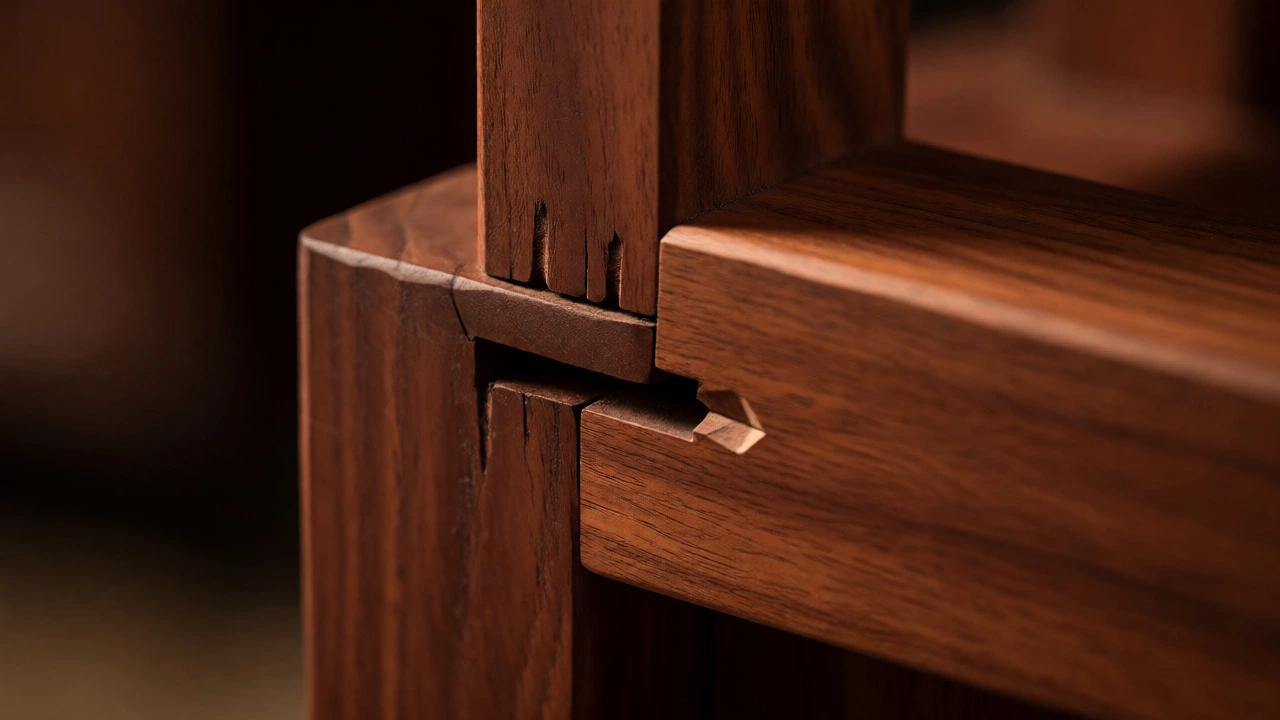
Look closely at the corners of a high-end armoire. You won’t see visible screws or staples holding the frame together. Instead, you’ll find dovetail joints, mortise-and-tenon connections, or tongue-and-groove panels. Creating a dovetail joint requires precise angles and tight fits. While some factories use machine-cut dovetails, the finishing-chamfering edges, smoothing transitions, and ensuring the fit is seamless-is done by hand. A single master carpenter might spend 40 to 60 hours building one armoire. At a fair hourly wage for a skilled artisan, that labor alone adds thousands of dollars to the final cost.
Consider the doors. An armoire door is often massive, sometimes weighing 50 pounds or more. Hanging such a heavy door requires robust hinges and a perfectly squared frame. If the frame isn’t square, the door drags or gapes open. Achieving this precision takes time and experience. Mass-produced furniture accepts minor imperfections because they are sold as disposable items. An armoire is expected to function flawlessly for decades, requiring a level of tolerance that automated assembly lines often miss.
Design Complexity and Ornamentation
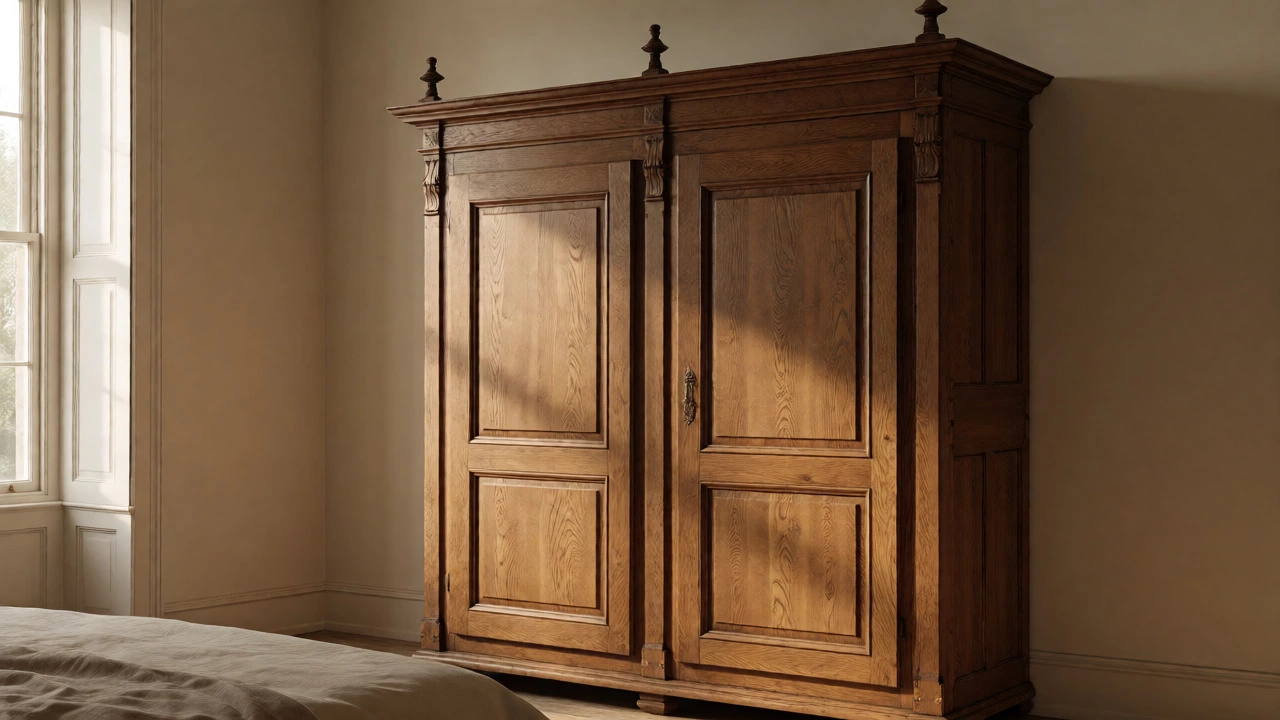
Armoires are rarely just boxes. They are architectural elements in a room. Many feature intricate carvings, raised panel doors, decorative moldings, and complex interior layouts. Each of these details adds layers of complexity to the production process.
Raised panel doors, for example, are created by routing a groove into the center of a solid wood panel and fitting it into a frame. This technique prevents the wood from cracking due to humidity changes, but it also creates depth and shadow that flat doors lack. Routing these panels accurately on solid wood is slower and riskier than pressing them out of MDF. If a router bit slips on solid wood, you ruin an expensive piece of timber. On MDF, you just throw away a cheap sheet.
Ornamentation further drives up costs. Hand-carved floral motifs, turned finials on top, and inlaid wood accents require specialized tools and artists. In the 18th and 19th centuries, a cabinetmaker’s reputation depended on these flourishes. Today, reproducing them requires either highly skilled artisans or expensive CNC (Computer Numerical Control) machinery programmed to mimic hand work. Even with CNC, the setup time and tool wear add to the expense. A plain box is cheap; a sculpted piece of art is not.
Antique Value and Scarcity
If you are shopping for a vintage or antique armoire, you are entering a different economic realm. Here, the price is driven by scarcity and provenance. True antiques, typically defined as items over 100 years old, are finite resources. Every year, fewer survive in good condition. Fire, flood, neglect, and landfills have claimed countless pieces. What remains is collected by enthusiasts and interior designers who value history.
Condition plays a huge role. An original finish on an oak armoire from 1890 is valuable because it represents authentic aging. Refinishing it poorly can drop its value by half. Buyers pay a premium for pieces that retain their original hardware, patina, and structure. Restoration itself is costly. Fixing warped doors, replacing broken drawer runners, and stabilizing loose joints require specialist knowledge. Unlike modern furniture, where you might just buy a replacement part, antique restoration often involves fabricating parts from matching period-correct wood.
Provenance matters too. An armoire documented as coming from a specific region, like a French Louis XV provincial piece or a Pennsylvania German painted armoire, carries cultural weight. Collectors pay for the story and the style. The aesthetic appeal of these older designs-often featuring curved legs, ornate pediments, and rich stains-cannot be easily replicated by modern factories aiming for minimalism.
Shipping and Handling Logistics
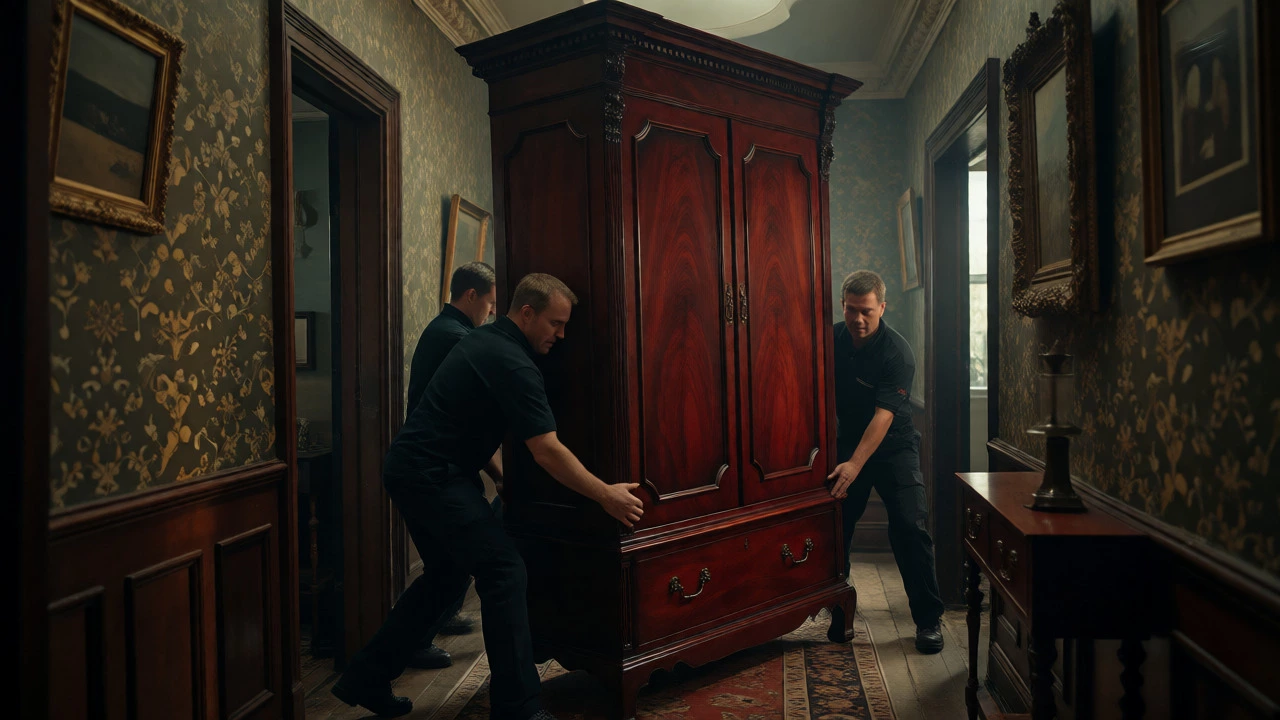
You might not think about it until the delivery truck arrives, but getting an armoire into your home is a logistical challenge. These pieces are bulky, heavy, and fragile. Shipping a standard wardrobe via courier is relatively straightforward because many arrive disassembled in flat packs. Armoires, however, are often shipped fully assembled or partially assembled to preserve their structural integrity.
Freight shipping for oversized items incurs higher rates due to dimensional weight pricing. Carriers charge based on the space the item occupies, not just its actual weight. An armoire takes up significant volume in a truck. Additionally, white-glove delivery services, which include unpacking, assembly, and removal of packaging debris, add another $100 to $300 to the bill. If your home has narrow staircases or tight turns, special equipment or extra manpower may be needed to maneuver the piece inside. These hidden logistics costs are baked into the retail price.
Is It Worth the Investment?
So, should you pay the premium? That depends on your goals. If you need temporary storage for a rental apartment and plan to move in two years, a $200 particle-board wardrobe is sufficient. But if you want a heirloom piece that will hold your clothes, linens, and memories for thirty years, an armoire is a smart financial choice.
Think of it as amortized cost. A $2,000 armoire used for 40 years costs $50 per year. A $200 wardrobe replaced every five years costs $40 per year, plus the hassle of disposal and reassembly. Over time, the difference shrinks, but the quality gap widens. Solid wood armoires can be repaired, refinished, and passed down. Composite wardrobes usually end up in the landfill. The initial pain of the price tag buys you longevity, aesthetic depth, and environmental sustainability.
When shopping, inspect the back panel. Cheap furniture uses thin hardboard stapled to the back. Quality armoires use solid wood or thick plywood fitted into grooves. Check the drawers. Do they glide smoothly on metal runners or wood rails? Open and close the doors repeatedly. Listen for squeaks or sticks. Feel the weight. Heftiness usually correlates with density and durability. Don’t be afraid to ask about the wood species and construction methods. A reputable seller will be proud to explain why their piece costs more.
What is the main difference between an armoire and a wardrobe?
While the terms are often used interchangeably, an armoire is traditionally a free-standing, ornate piece of furniture with a distinct architectural presence, often featuring carved details and solid wood construction. A wardrobe is a broader term that can include built-in closets or simpler, flat-pack storage units. Armoires are generally larger, heavier, and more decorative than standard wardrobes.
Why do antique armoires cost more than new ones?
Antique armoires cost more due to scarcity, historical significance, and the high cost of restoration. Original finishes and period-correct hardware add value. New armoires, while well-made, lack the historical narrative and the aged character that collectors seek. Additionally, finding intact antiques is increasingly difficult, driving up prices through supply and demand dynamics.
Can I save money by buying a second-hand armoire?
Yes, buying second-hand can save 50-70%. However, factor in transportation costs and potential restoration fees. Inspect for woodworm, water damage, or structural instability. Sometimes, the cost of hiring movers and a restorer equals the price of a new, mid-range solid wood armoire. Always calculate total landed cost before deciding.
Do all armoires require professional installation?
Not always, but it is recommended for heavy pieces. Some modern armoires come with flat-pack options that allow DIY assembly. However, traditional solid wood armoires are often shipped assembled. Due to their weight and awkward shape, professional delivery ensures they don’t get damaged in transit or injure you during setup. Check the product specifications for assembly requirements.
How long does a quality armoire last?
A well-maintained solid wood armoire can last 100 years or more. With proper care, including avoiding direct sunlight and controlling humidity, the wood remains stable. Hardware may need occasional tightening or replacement, but the core structure remains sound for generations. This longevity justifies the higher upfront investment compared to composite alternatives.