Bookcase Tip-Over Risk Calculator
Enter your bookcase details below to calculate its stability risk. This tool helps you decide if you need to install or replace anti-tip hardware.
Fill in the details to see your safety rating.
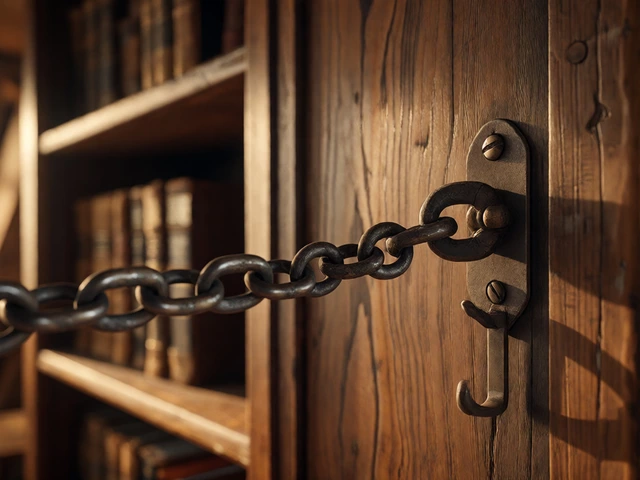
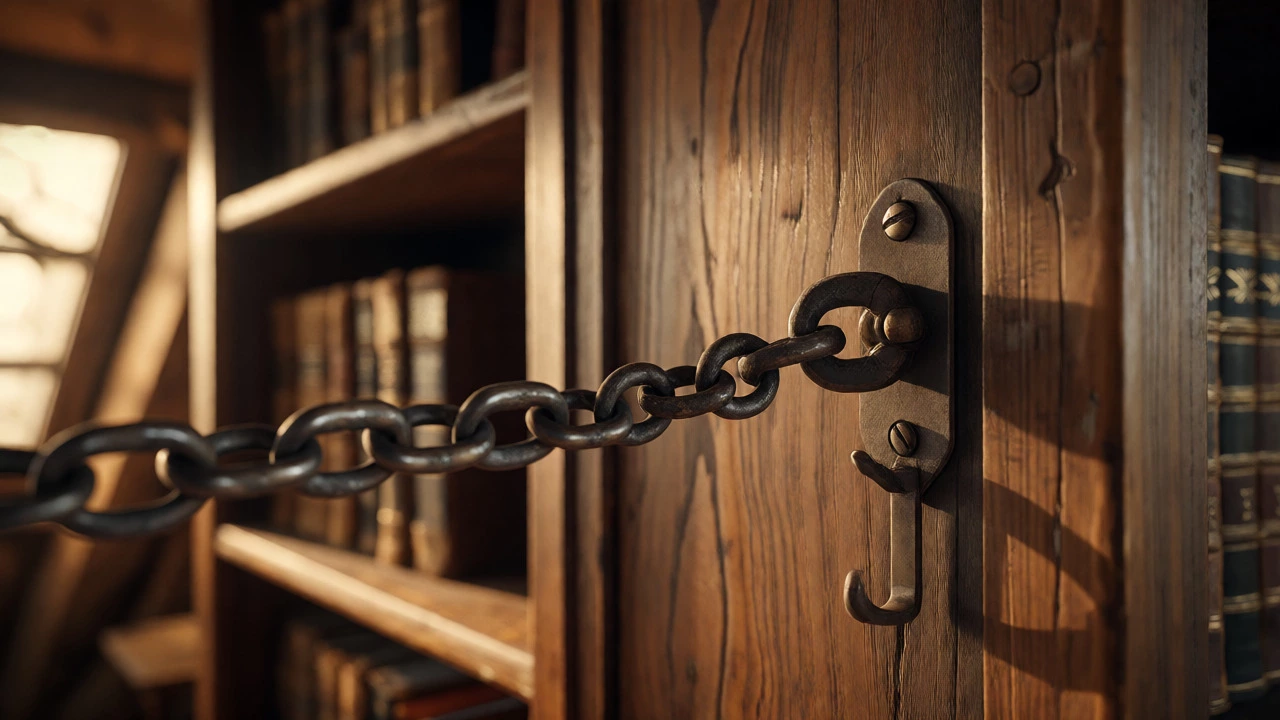
You walk into a second-hand shop or your grandparents' attic and spot a beautiful, towering oak bookcase. It’s sturdy, classic, and full of character. But then you notice something odd dangling from the top back panel: a metal chain, usually with a hook on one end and a screw eye on the other. You might assume it’s decorative, a leftover from shipping, or perhaps a way to keep doors shut. You’d be wrong. That chain is a critical piece of anti-tip hardware designed to anchor heavy furniture to the wall.
This isn't just a quirk of old manufacturing. It’s a direct response to physics and tragedy. In the 1980s and 90s, before strict safety standards were universally enforced in homes, tip-over accidents involving tall storage units claimed lives-mostly children who climbed them like ladders. The chain was the industry's quick fix for a deadly problem. Today, while materials have changed, the principle remains identical. If you are buying vintage furniture or moving into an older home, understanding why those chains exist-and whether you should keep them-is essential for keeping your family safe.
The Physics of Tipping: Why Tall Furniture Falls Over
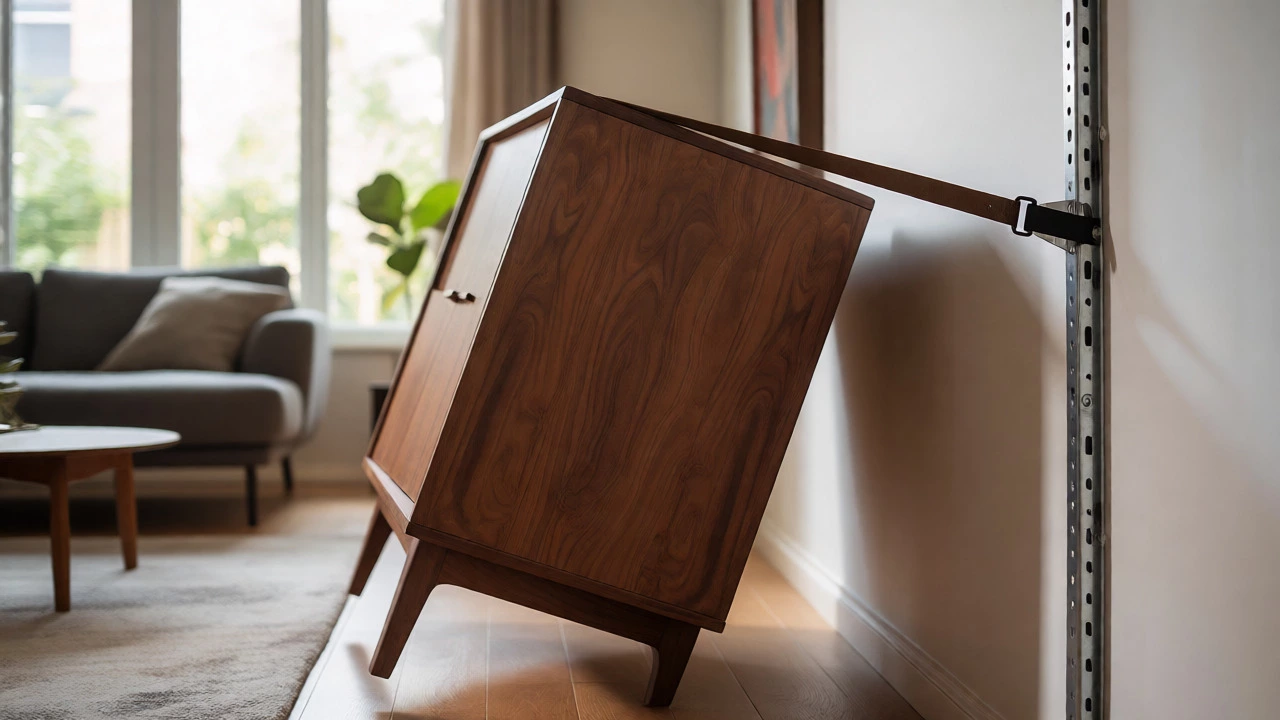
To understand the chain, you first need to understand the danger. Tall, narrow pieces of furniture have a high center of gravity. When you pull out a drawer or place a heavy book on a top shelf, the weight shifts forward. If that shift exceeds the base's stability, the unit tips over.
Imagine a Victorian-style mahogany cabinet. It’s solid wood, weighing maybe 60 kilograms. Now imagine a toddler climbing onto the bottom shelf, pulling themselves up, and swinging their legs. Their dynamic force adds momentum. Suddenly, the static weight calculation fails. The cabinet pivots on its front feet and crashes down. Without an anchor, there is nothing stopping it. The chain provides the counter-force needed to prevent this pivot.
Modern building codes and consumer safety guidelines, such as those from the U.S. Consumer Product Safety Commission (CPSC) and WorkSafe New Zealand, now mandate that tall storage units must be anchored. The old chains were the manual version of what we now do with plastic straps and steel brackets.
How the Chain Anchor System Works
The mechanism is surprisingly simple but effective. It relies on tension rather than compression. Here is how the system functions:
- The Screw Eye: This is screwed directly into the back panel of the bookcase, usually near the top corners where the leverage is greatest.
- The Wall Hook: A corresponding hook or screw is driven into the wall studs behind the furniture.
- The Chain: The link between them. When the bookcase tries to fall forward, the chain tightens. Because the chain is attached to the wall stud (which doesn't move), it stops the bookcase from rotating past a certain point.
It’s crucial to note that the chain only works if the wall anchor hits a wooden stud. Screwing a hook into drywall alone will not hold a 50kg bookcase during a tip-over event; the drywall will simply rip out. This is a common mistake people make when trying to reuse old hardware without checking the wall structure.
Are Old Chains Still Safe to Use?
If you’ve bought a vintage bookcase with original chains, you might wonder if they are still fit for purpose. The short answer is: probably not, unless they are in pristine condition and correctly installed.
Over decades, metal fatigues. Screws loosen. Wood shrinks and expands with humidity changes (a big issue in places like Auckland with our fluctuating weather). An old chain might look fine, but the screw eyes could be stripped, or the links corroded. More importantly, modern safety standards require that furniture can withstand specific impact forces. Old chains often lack the tensile strength testing that modern anti-tip kits undergo.
Furthermore, the design of the back panel matters. Many old bookcases had thin plywood backs glued into grooves. Drilling through this for a screw eye can weaken the panel. Modern furniture often uses thicker MDF or particleboard specifically designed to hold anchor screws. If you’re unsure about the integrity of the old hardware, replace it. It costs less than $20 at any hardware store and offers peace of mind.
Modern Alternatives to the Classic Chain
While the chain has historical charm, it’s bulky and visible. Most homeowners today prefer discreet solutions. If you are restoring an old piece, you can hide the new anchors behind the unit or use clear adhesive mounts if you can’t drill into studs (though drilling is always safer).
| Method | Material | Visibility | Installation Difficulty | Safety Rating |
|---|---|---|---|---|
| Original Metal Chain | Metal Link + Hook | High (Visible) | Moderate (Requires Stud Finding) | Low/Medium (Aging Risk) |
| Nylon Strap Kit | Woven Nylon Webbing | Low (Hidden) | Easy (Adhesive or Screw) | High (If screwed to stud) |
| Steel L-Bracket | Galvanized Steel | Medium (Behind unit) | Moderate (Drilling required) | Very High |
| Anti-Tip Wedge | Rubber/Plastic | None (Underneath) | Very Easy | Low (Prevents sliding, not tipping) |
Notice the distinction between preventing sliding and preventing tipping. Rubber wedges under the feet stop the bookcase from walking across the floor when you open drawers. They do not stop it from falling over if a child climbs it. For true safety against tipping, you need a positive mechanical connection to the wall, like a strap or bracket.
Step-by-Step: How to Anchor Your Vintage Bookcase
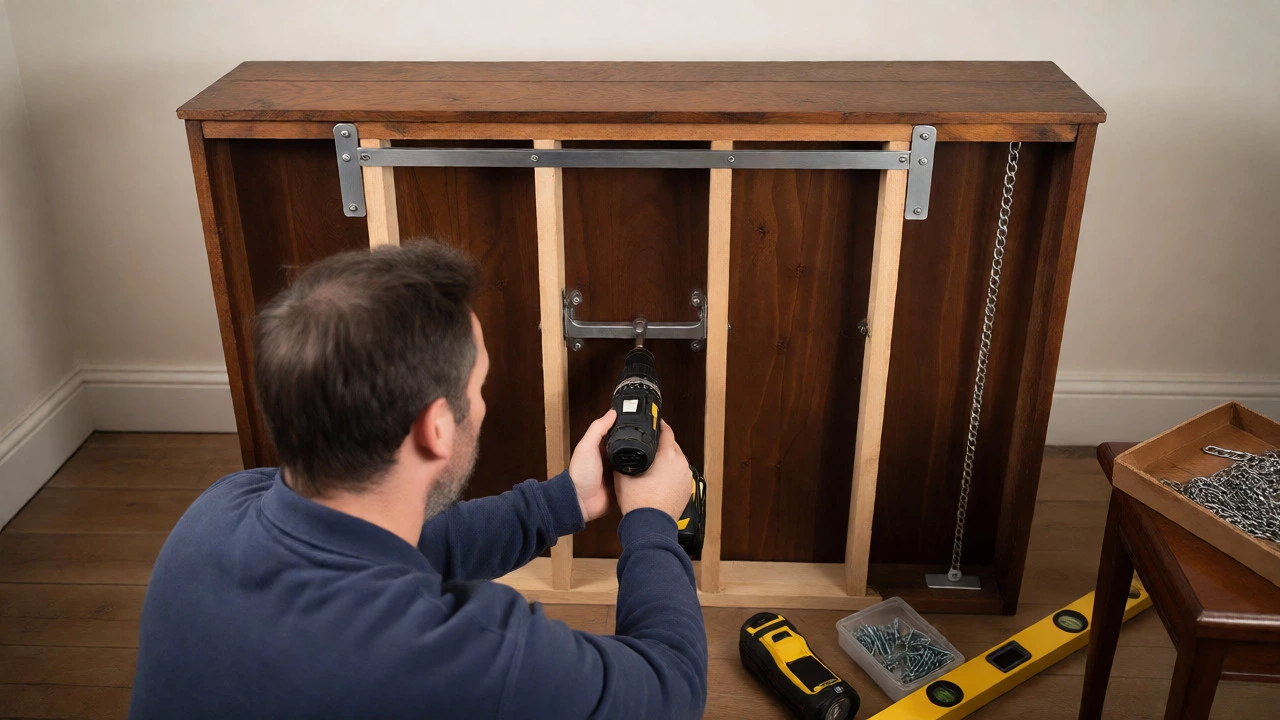
Don’t let the age of the furniture intimidate you. Anchoring it is a weekend project. Here is how to do it properly, ensuring you don’t damage the woodwork.
- Pull the bookcase away from the wall. You need access to the back panel. Clear the area so you can work comfortably.
- Locate the wall studs. Use a stud finder. Mark the centers of the studs with pencil lines on the wall. Standard spacing is usually 45cm or 60cm apart. Aim to hit the middle of a stud for maximum holding power.
- Prepare the bookcase. Remove any old, rusty chains. Fill the old screw holes with wood filler if you want a clean look later, or leave them if you plan to reuse the same spots. Ensure the back panel is solid. If it’s very thin, consider adding a small wooden block inside the cabinet behind the anchor point to spread the load.
- Install the wall anchors. Drive two screws with large heads (or cup hooks) into the marked stud locations. These should be positioned roughly 10-15cm below the top edge of the bookcase.
- Attach the furniture anchors. Install the corresponding hooks or D-rings on the back of the bookcase. Align them horizontally with the wall screws.
- Connect and tighten. Push the bookcase back against the wall. Connect the straps or chains between the furniture hooks and wall screws. Tighten them until there is no slack, but don’t overtighten so much that you warp the back panel.
- Test it. Give the top of the bookcase a firm push forward. It should not move more than a few centimeters. If it moves significantly, the anchors aren’t tight enough or didn’t hit the stud.
Beyond Safety: Why Keep the Chain?
Some collectors argue that removing original hardware devalues antique furniture. There is truth to this. If you own a rare Edwardian walnut library case, the original brass-finished chain might be part of its provenance. However, safety trumps aesthetics when children are involved.
A compromise is possible. You can install modern, invisible anti-tip straps for daily safety and keep the original chain stored in a box. Or, if the chain is in good condition, polish it and reattach it using new, longer screws to ensure it bites deep into fresh wood. Just remember: a pretty chain that fails to hold is worse than no chain at all because it gives a false sense of security.
In New Zealand, where earthquakes are a reality, anchoring furniture takes on another layer of importance. While the chain won’t stop a bookcase from shaking violently, it prevents it from completely overturning and blocking exits or crushing occupants during seismic events. So, whether you’re worried about toddlers or tremors, that little bit of metal linking your furniture to your house is doing serious work.
Can I use command strips instead of chains for light bookcases?
For very light bookcases (under 15kg) made of hollow-core materials, high-strength adhesive strips can provide some resistance to tipping. However, they are not recommended for solid wood or heavy antique pieces. Adhesives fail under sudden dynamic loads, like a child jumping on a shelf. Mechanical anchors (screws into studs) are always superior for safety-critical applications.
What if I rent and cannot drill holes in the wall?
This is a common dilemma. You have three options: 1) Ask your landlord for permission to drill and patch the holes later. 2) Use a freestanding bookcase that is wider than it is tall, reducing the risk. 3) Use a specialized anti-tip kit that clamps to the side of the bookcase and presses against the wall with a rubber pad, though these are less secure than drilled anchors. Never rely solely on the weight of books to keep a tall unit stable.
Do all old bookcases come with these chains?
No. Chains became common in mass-produced furniture from the late 1970s through the 1990s as safety awareness grew. Earlier antiques (pre-1970s) rarely had them because they were designed for adult use in formal rooms, not nurseries. Very modern IKEA-style flat-pack furniture often comes with a small plastic bag containing a strap and screws, but not always a metal chain.
Is it safe to remove the chain if my kids are grown up?
You can, but consider why you kept it in the first place. Even adults can cause tip-overs by loading shelves unevenly or bumping into furniture. Additionally, if you ever sell the bookcase, leaving the anchor points intact makes it easier for the next owner to secure it safely. Removing it might also strip the wood, making future anchoring difficult.
How do I know if my wall has studs?
In most New Zealand homes built after the 1970s, walls are timber-framed with plasterboard. You can find studs by tapping the wall (it sounds hollow between studs and solid on them) or using a magnetic stud finder to locate the nails/screws in the frame. If you have concrete brick veneer walls, you may need masonry anchors, which require different drills and bits.