Grey Sofa Styling Simulator
Status: Dated / Cold Industrial (2015)
Customize Your Look
Adjust the sliders to update your grey sofa's vibe based on 2026 trends.
Walk into any furniture store today, and you might feel a sudden pang of doubt about that sleek dark grey sofa you bought three years ago. It looks different now. The lighting is warmer, the rugs are brighter, and the walls are no longer painted in cool, sterile tones. You might be asking yourself: did I make a mistake? Is my favorite piece of furniture suddenly outdated?
The short answer is no. Dark grey couches are not out of style. In fact, they remain one of the most versatile foundations for modern living rooms. However, the way we style them has changed dramatically. If your grey sofa feels "dated," it’s likely not the sofa itself-it’s the company it keeps.
Why Dark Grey Remains a Design Staple
To understand why this color isn't going anywhere, we have to look at what a sofa actually does in a room. It anchors the space. A light beige sofa can get lost against white walls or bright sunlight. A bold red statement piece demands too much attention from every other item in the room. Dark grey sits right in the middle. It provides visual weight without overwhelming the senses.
In interior design theory, this is called a "neutral anchor." Whether you lean towards minimalist Scandinavian vibes or cozy mid-century modern aesthetics, a dark charcoal or slate grey base works because it reflects less light than white but absorbs less mood than black. It creates depth. According to data from major home decor retailers like Wayfair and IKEA, grey sofas consistently rank in the top five best-selling colors year after year, even as trends shift toward earthier tones.
Think of it like a black t-shirt in your wardrobe. Fashion cycles through neon greens and pastel pinks, but the black tee never truly disappears. It just gets styled differently. Your sofa is the same.
The Shift: From Cool Industrial to Warm Organic
If you feel your grey couch looks "old," it’s probably because the surrounding palette has shifted. For over a decade, the dominant trend was "cool grey." We paired our grey sofas with silver accents, glass tables, blue-grey walls, and chrome finishes. This created an industrial, almost hotel-like atmosphere. Clean, yes. But often cold and impersonal.
In 2024 and 2025, the pendulum swung hard toward "warm minimalism" and "organic modern." People wanted homes that felt lived-in, soft, and inviting. This didn't mean ditching the grey sofa; it meant changing the context around it. Instead of cool blues and silvers, the new palette includes warm woods (oak, walnut), terracotta, olive green, and cream.
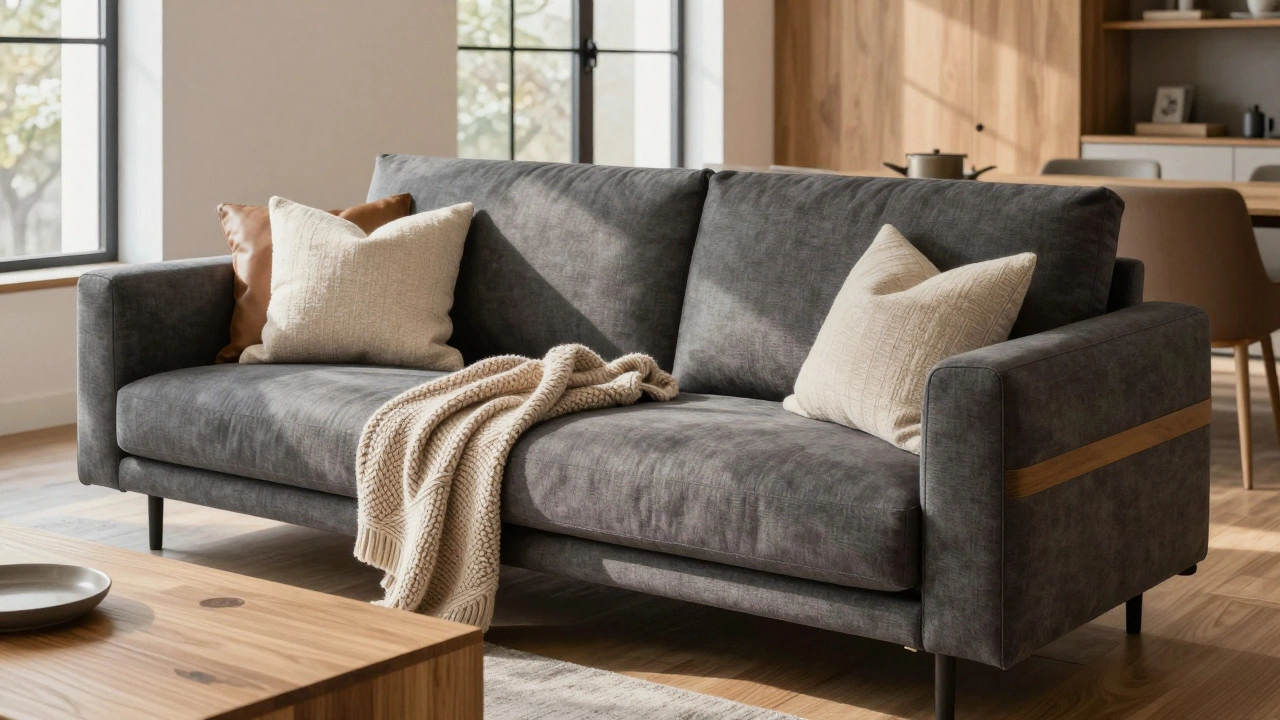
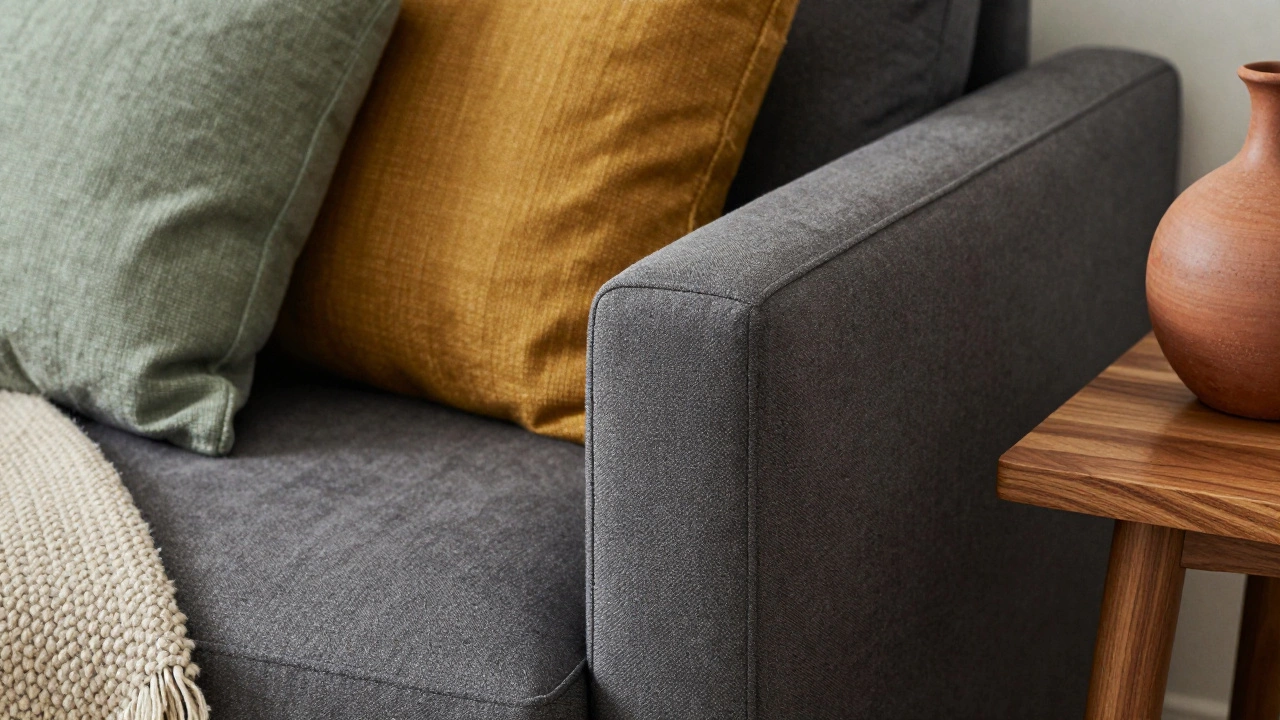
When you place a dark grey sofa next to a raw wood coffee table and throw on some linen cushions in oatmeal or mustard yellow, the grey stops looking like concrete and starts looking like sophisticated shadow. The color hasn't changed, but its personality has.
| Element | Dated Look (2015-2020) | Current Trend (2026) |
|---|---|---|
| Wall Color | Cool greys, stark whites | Warm whites, earthy ochres, sage greens |
| Metals | Chrome, brushed nickel, silver | Brass, matte black, aged bronze |
| Textiles | Synthetic leathers, shiny velvets | Linen, boucle, wool blends, cotton canvas |
| Wood Tones | Dark espresso, high-gloss lacquer | Light oak, natural walnut, rattan |
| Decor Accents | Geometric shapes, glass, steel | Curved lines, plants, ceramics |
Styling Strategies for 2026
You don’t need to buy a new sofa to keep up with current tastes. You just need to refresh the layers around it. Here are three specific ways to make a dark grey couch feel fresh and intentional in 2026.
1. Embrace Texture Over Pattern
In the past, we relied heavily on patterned pillows-stripes, florals, abstract prints-to break up the monotony of a solid grey seat. Today, texture is king. Swap those printed polyester cushions for chunky knit throws, boucle pillows, or smooth leather lumbar supports. The contrast between the flat, matte finish of the grey fabric and the tactile roughness of a woven throw adds immediate visual interest. It makes the sofa look expensive and curated rather than generic.
2. Introduce Warm Wood Tones
Grey loves wood. Specifically, lighter woods. If your coffee table is black metal or dark stained wood, consider swapping it for a live-edge oak slab or a teak side table. The warmth of the grain cuts through the coolness of the grey, creating a balanced temperature in the room. Even small touches, like a wooden tray on the ottoman or a bamboo floor lamp nearby, can soften the overall aesthetic.
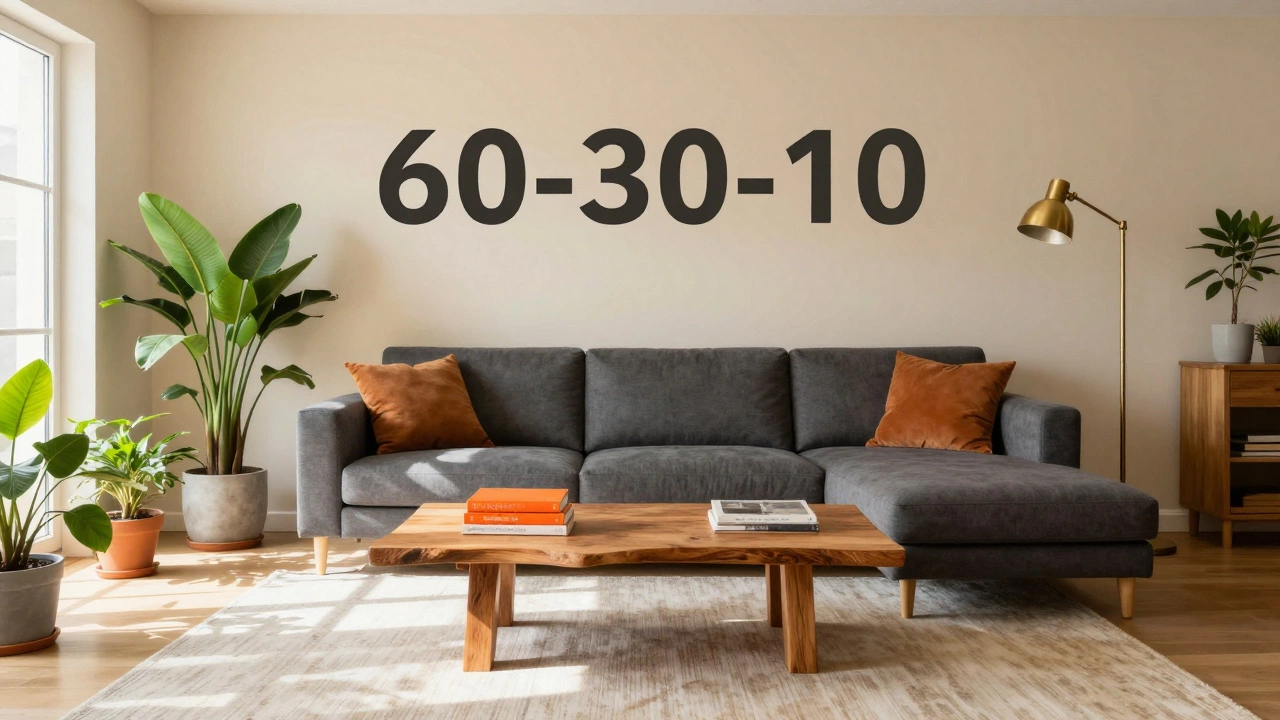
3. Use the "60-30-10" Rule with New Colors
This classic design rule helps you balance your room without chaos.
- 60% Dominant Color: Your walls and large rug (keep these light and airy).
- 30% Secondary Color: Your dark grey sofa. It provides the necessary contrast.
- 10% Accent Color: This is where you play. Add terracotta pots, emerald green art, or burnt orange books.
When Might You Consider Replacing It?
While the color is safe, there are scenarios where a dark grey couch might genuinely hold your decor back. If you are moving into a very small apartment with limited natural light, a massive charcoal sectional can make the space feel cave-like. In tight spaces, lighter tones reflect available light and create an illusion of spaciousness. A light beige or off-white sofa would serve that function better.
Additionally, if your lifestyle involves young children or pets, and your current grey fabric is a cheap, stain-resistant synthetic that pills easily, upgrading to a higher-quality performance fabric (like Sunbrella or Crypton) in a similar shade could be worth the investment. Not because the style is out, but because the quality impacts the longevity of the look.
The Verdict on Neutrals
Furniture trends move fast, but good design moves slow. A dark grey couch is a neutral tool, much like a white canvas. It doesn't dictate the style; it supports it. If it feels dated, look at your accessories, your lighting, and your wall colors before blaming the upholstery. By warming up the surrounding elements with wood, textiles, and earthy accents, you can keep your sofa relevant for years to come.
So, breathe easy. That grey sofa isn't trash. It's just waiting for a makeover.
Is dark grey still a popular sofa color in 2026?
Yes, dark grey remains a top choice for sofas in 2026. While the peak of "cool grey" industrial design has passed, grey continues to be a foundational neutral. The key difference is how it is styled; it is now paired with warmer woods and earthy tones rather than cold metals and blues.
What colors go well with a dark grey couch?
To achieve a modern 2026 look, pair a dark grey couch with warm neutrals like cream, oatmeal, and beige. For accent colors, try terracotta, olive green, mustard yellow, or deep navy. Avoid pairing it with too many cool blues or silvers, which can make the room feel cold.
Does a grey sofa make a room look smaller?
It can, if the room lacks sufficient light. Dark colors absorb light, so in a small, windowless room, a dark grey sofa might feel heavy. To counteract this, use light-colored walls, a light rug, and plenty of layered lighting to keep the space feeling open and airy.
Should I replace my grey sofa with a beige one?
Not necessarily. Beige and light neutrals are trending for their ability to brighten spaces, but grey offers more durability against stains and fading. If you love the comfort and structure of your current grey sofa, update it with warm textures and wood accents instead of replacing it.
What is the best fabric for a grey sofa?
For a contemporary look, linen and cotton blends are highly recommended as they add texture and breathability. For households with kids or pets, performance fabrics like microfiber or treated velvet in grey offer excellent durability and ease of cleaning while maintaining a stylish appearance.