Coffee Table Height Compatibility Checker
Enter your measurements in inches (or cm). The tool will automatically detect units.
Analysis Result
You’ve just moved into your new place, or maybe you’re rearranging the living room for the hundredth time. You pull up to your sofa, ready to relax with a book and a cup of tea, but something feels off. Your arm is cramping because the coffee table is too high, or perhaps it’s so low that you have to hunch over to reach your remote. This brings us to a common dilemma in interior design: is it OK to have a coffee table higher than your sofa?
The short answer is yes, it is perfectly fine, provided you understand the nuances of ergonomics and visual balance. While traditional design rules suggest the table should be level with or slightly below the seat cushion, modern furniture styles often break this mold. The real question isn't about rigid rules; it's about comfort, safety, and how the pieces work together in your specific space.
The Golden Rule of Height Proportions
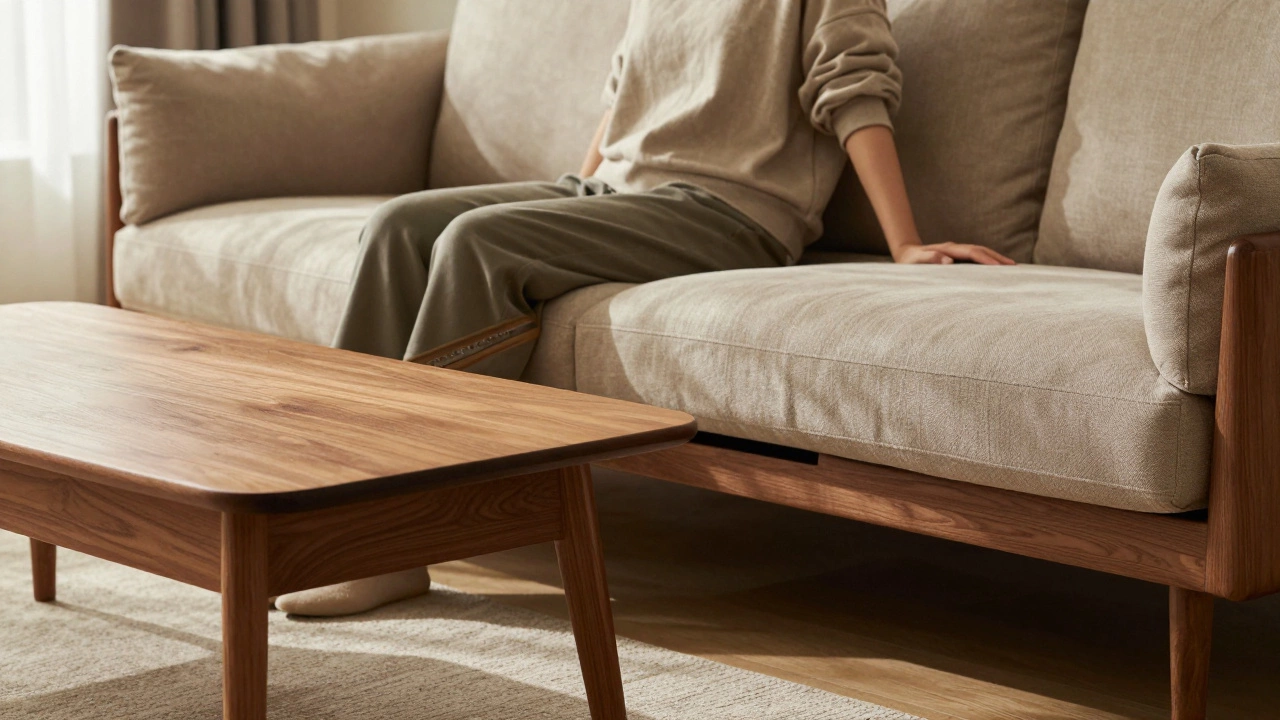
For decades, interior designers have relied on a simple heuristic: the top of your coffee table should align with the bottom edge of your sofa cushions. If the cushions are thick and plush, the table might sit slightly lower. If the cushions are thin and firm, the table can be slightly higher. Ideally, there should be a gap of 4 to 6 inches between the floor and the bottom of the sofa seat, allowing the table legs to tuck underneath visually without getting stuck physically.
Why does this matter? It’s all about sightlines and accessibility. When you sit down, your eyes naturally drop to the surface in front of you. If the table is significantly higher than your knee level while seated, you’ll feel like you’re looking at a desk rather than a lounge piece. Conversely, if it’s too low, you’ll strain your neck to see what’s on the surface. Most standard sofas have a seat height of 17 to 19 inches from the floor. Standard coffee tables range from 16 to 18 inches. This overlap creates that harmonious alignment most people instinctively prefer.
When a Higher Coffee Table Makes Sense
There are scenarios where breaking the "level with cushion" rule actually improves your living experience. Consider the type of seating you own. Low-slung mid-century modern sofas often have seat heights as low as 15 inches. Pairing these with a standard 18-inch table would make the table look dominant and awkward. In this case, you’d want a lower table. However, if you have a high-backed, deep-seated sectional or a firm, European-style sofa with a seat height of 20 inches or more, a taller coffee table becomes necessary.
A higher table also serves functional purposes. If you use your coffee table as a makeshift dining surface for breakfast in bed or working on a laptop, a height closer to 20-22 inches might be more ergonomic for your arms. Think of it like a desk: if the surface is too low, your shoulders hike up, causing tension. A higher table supports better posture for tasks that require writing or typing, even if it’s not ideal for lounging with a drink.
Another factor is the scale of the room. In a large, open-plan living area with high ceilings, a substantial, higher-profile coffee table can anchor the space. A tiny, low table might get lost visually. Here, the height contributes to the visual weight needed to balance the volume of the room.
The Risks of Going Too High
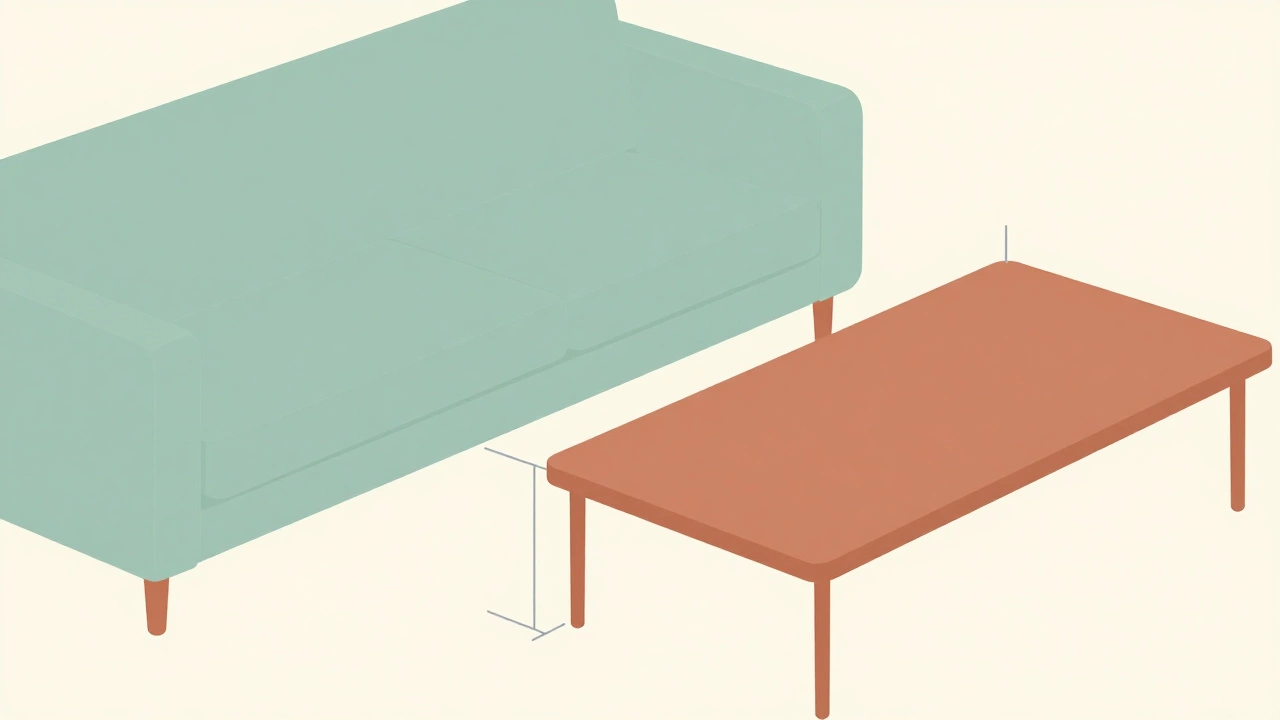
While flexibility is good, there are limits. If your coffee table is more than 2-3 inches higher than your sofa seat, you run into practical problems. First, there’s the issue of legroom. When you sit back comfortably, your knees bend. If the table is too high, your thighs will collide with the underside of the tabletop. This forces you to sit forward on the edge of the sofa, defeating the purpose of relaxation.
Second, consider safety. A high table with sharp corners poses a tripping hazard, especially in homes with children or pets. Imagine running across the room and bumping your shin on a hard, elevated edge. That’s a painful lesson no one wants to learn. Additionally, a very high table can create a visual barrier. It blocks the view from the sofa to the rest of the room, making the space feel segmented and smaller than it is.
What is the ideal height difference between a coffee table and a sofa?
The ideal difference is minimal. The top of the coffee table should be within 1-2 inches of the sofa seat height. If the sofa seat is 18 inches high, an 18-inch table is perfect. An 17-inch table is also acceptable, creating a slight step-down effect that is easy on the eyes and body.
Can I use a dining table as a coffee table?
Yes, but only if your seating is similarly tall. Dining tables are typically 29-30 inches high. To use one as a coffee table, you need chairs or stools with a seat height of around 24-26 inches. Using a standard sofa with a dining table will result in a massive height mismatch, making it unusable for most activities.
How much clearance should be between the sofa and coffee table?
You should aim for 14 to 18 inches of clearance between the front edge of the sofa and the coffee table. This allows enough space to walk behind the table comfortably while keeping items on the table within easy reach. Less than 12 inches feels cramped; more than 20 inches makes reaching for things difficult.
Does the thickness of the sofa cushion affect table height choice?
Absolutely. Thick, pillow-top cushions compress when you sit, effectively lowering your seat height by 1-2 inches. For these sofas, choose a coffee table that matches the uncompressed cushion height, not the compressed sitting height. Thin, firm cushions don’t compress much, so match the table to the actual seat frame height.
What if my sofa is very low to the ground?
If your sofa has a seat height under 16 inches, look for "low profile" or "mid-century" style coffee tables that are 14-15 inches high. Avoid standard tables. You can also raise the sofa with risers or thicker pads under the legs to bring it closer to standard table heights, though this affects stability.
Visual Balance and Style Considerations
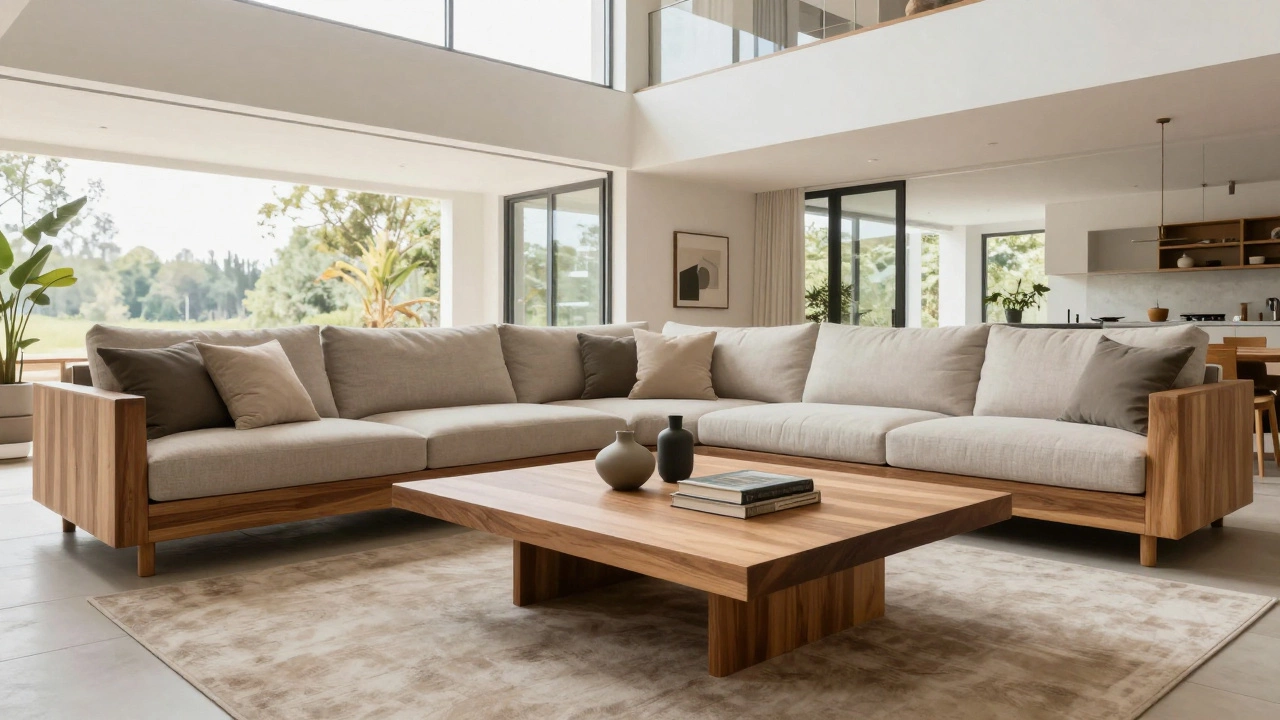
Beyond ergonomics, aesthetics play a huge role. A coffee table that is significantly higher than the sofa can look disjointed, as if it belongs in a different room. The goal is cohesion. If you opt for a higher table, ensure it shares design elements with the sofa-similar wood tones, metal finishes, or line styles. This creates a visual link that bridges the height gap.
Consider the base of the table. A pedestal base or a solid block base takes up less visual floor space than four spindly legs. If the table is high, a bulky base might make it look top-heavy. A slender, elegant base can help a taller table feel lighter and more integrated with a low sofa. Conversely, a low table with a heavy, chunky base can ground the space nicely.
Practical Tips for Measuring and Choosing
Before buying, measure everything. Don’t rely on product descriptions alone. Use a tape measure to find the exact height of your sofa seat from the floor. Then, add or subtract 1-2 inches based on your preference for reach. Remember to account for rug thickness if you plan to place the table on a plush carpet.
Test the setup before committing. Place books or boxes on the floor to simulate the table height. Sit on your sofa and try to reach them. Do your arms feel natural? Is your back straight? If you find yourself leaning forward excessively, the table is too far away or too high. If you’re hunching, it’s too low or too close.
Finally, think about usage. If you mostly use the table for decor and occasional drinks, strict height matching matters less. If you use it for work, eating, or gaming, prioritize ergonomic height over aesthetic perfection. Your comfort should always come first in a living space designed for daily life.