Outdoor Furniture Rain Care Planner
Select your primary furniture material to get a customized care plan for protecting it from rain and moisture.
Vulnerability Alert
Immediate Actions After Rain
Long-Term Maintenance
Select a material above to see the recommended care strategy.
There is nothing quite like the sound of heavy rain hitting a wooden deck, except for the sinking feeling when you realize your favorite teak chair has been sitting in it for three days straight. Most people buy outdoor furniture expecting it to withstand the elements, but "weather-resistant" is not the same as "weather-proof." Water is the enemy of almost every material used in garden settings, whether it’s rotting wood, rusting metal, or growing mold on fabric. If you want your patio set to last more than two seasons, you need a strategy that goes beyond just hoping the sun comes out tomorrow.
| Action | Why It Matters | Frequency |
|---|---|---|
| Elevate Furniture | Prevents water pooling and ground moisture absorption | Always |
| Use Breathable Covers | Stops rain while allowing trapped humidity to escape | During storms/long dry spells |
| Apply Sealants/Oils | Repels water and protects natural fibers | Annually (or bi-annually) |
| Dry Cushions Promptly | Prevents mildew and permanent staining | Immediately after rain stops |
The Myth of "Weather-Resistant" Materials
Let’s clear up a common misconception right away. When a salesperson tells you a piece of polywood or recycled plastic lumber is weather-resistant, they mean it won’t warp instantly if left outside. They do not mean it can survive being submerged in mud or subjected to freeze-thaw cycles without help. Every material reacts differently to moisture, and treating them all the same way is how you end up with cracked wicker and rusty bolts.
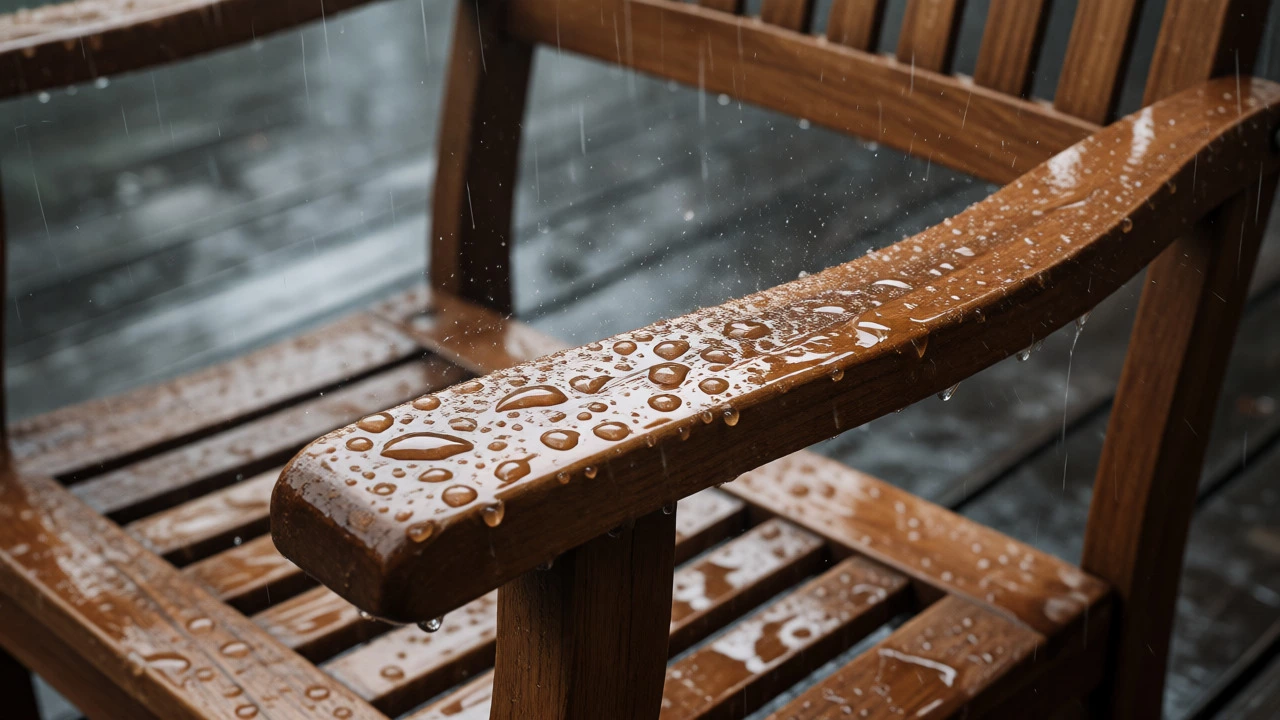
Teak is often hailed as the gold standard for outdoor durability because it contains natural oils that repel water. However, even teak will turn gray and develop surface cracks if it stays wet for too long. The wood needs to breathe. If you trap moisture against the grain with a non-breathable cover, you’re creating a greenhouse effect that encourages fungal growth. On the other hand, aluminum frames are great because they don’t rust, but the powder coating can chip, exposing the metal underneath to corrosion over time. Understanding these specific vulnerabilities is the first step in effective maintenance.
Immediate Actions After a Downpour
You don’t need expensive equipment to save your furniture; you just need to be quick. As soon as the rain stops, go outside. Your primary goal is to remove standing water. Puddles on seat surfaces act like magnifying glasses for the sun later, accelerating UV damage, and they seep into seams where you can’t easily reach.
- Squeegee the Surfaces: Use a soft-bristle brush or a squeegee to push water off cushions and solid surfaces. Do this before the sun hits the furniture.
- Flip and Tilt: Turn chairs upside down if possible. This allows water trapped under the seat to drain out rather than soaking into the frame joints.
- Airflow is Key: Open up any folding mechanisms. If you have an umbrella, keep it open until it is completely dry inside the ribs. Closed umbrellas hold moisture against the fabric, leading to black mildew spots that rarely wash out.
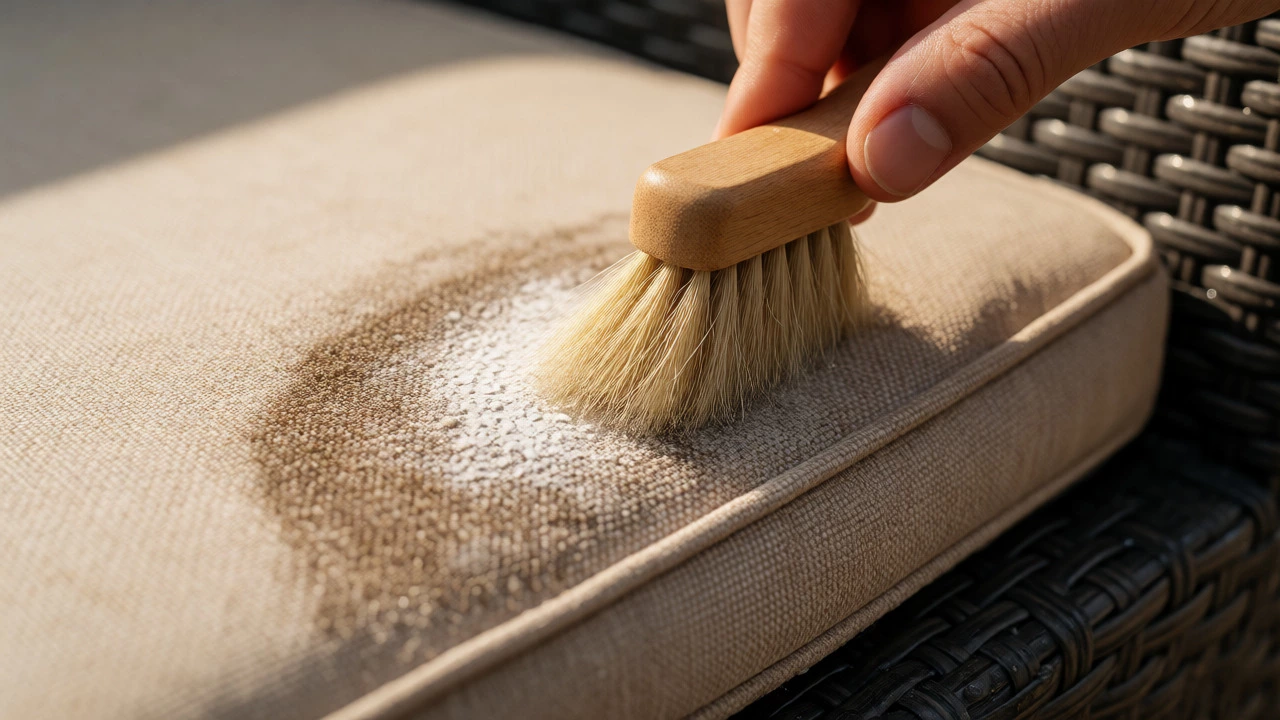
If you have cushions, check the zippers. Many modern outdoor fabrics are hydrophobic, meaning water beads up on them. But once water gets inside the foam core, it takes days to dry. If your cushions feel heavy, take them indoors immediately. Place them in a well-ventilated area, preferably near a fan or dehumidifier. Never put damp cushions back on the furniture; you’ll create a damp sandwich that smells like a locker room within hours.
Covers: Your Best Friend (If Used Correctly)
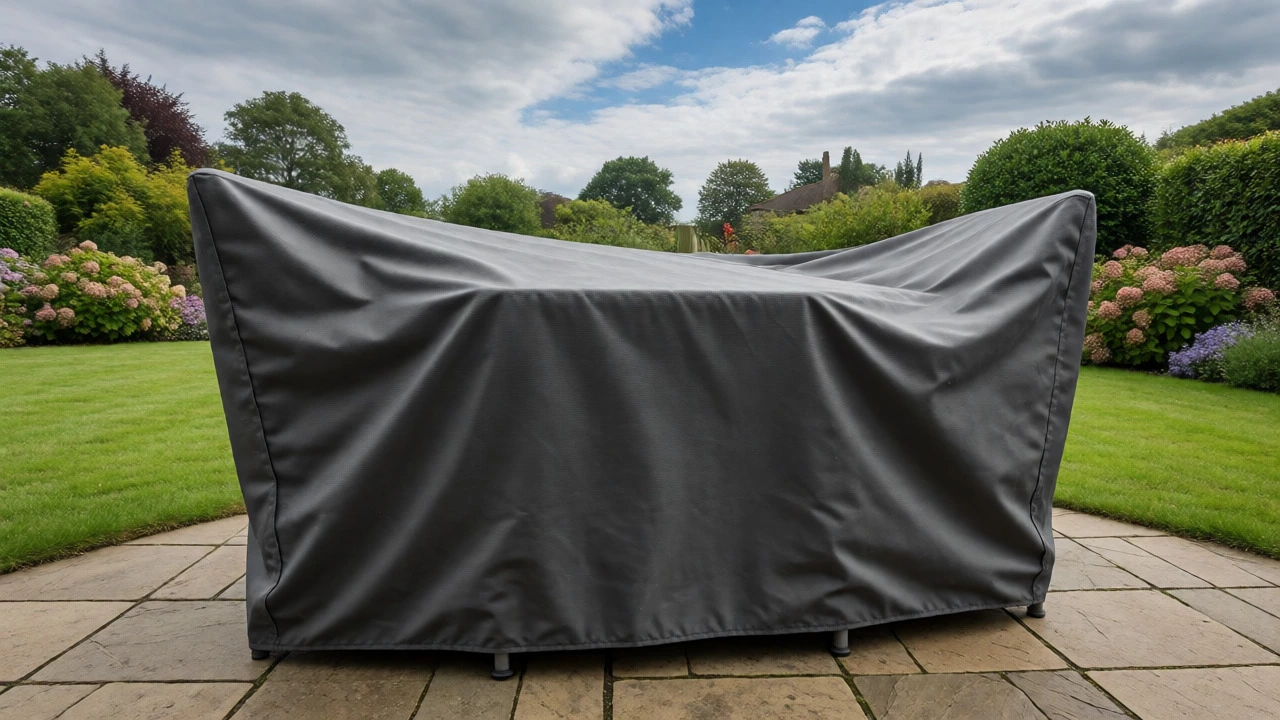
Many homeowners make the mistake of throwing a tarp over their furniture during a storm and leaving it there for weeks. This is a disaster waiting to happen. Tarps and cheap vinyl covers are non-porous. They stop rain from getting in, but they also stop humidity from getting out. Trapped moisture creates a breeding ground for mold and accelerates rust on metal parts.
You need breathable covers made from materials like Sunbrella fabric or specialized polyester blends. These covers allow air to circulate while blocking liquid water. Here is the golden rule for covering: never cover wet furniture. Always ensure the pieces are bone-dry before putting the cover on. If you cover damp furniture, you are essentially sealing in the problem.
Should I store my outdoor furniture indoors during winter?
Yes, especially if you live in a climate with freezing temperatures. Water expands when it freezes. If water is trapped in the pores of wood or concrete, it will expand and crack the material. For metals, freeze-thaw cycles weaken protective coatings. Storing furniture in a garage, shed, or basement extends its life significantly compared to keeping it outside year-round.
Material-Specific Rain Care Strategies
Not all furniture requires the same level of fussiness. Let’s break down the most common types found in gardens today.
Wooden Furniture (Teak, Eucalyptus, Pine)
Wood is hygroscopic-it absorbs and releases moisture. In rainy climates, wood swells; in dry heat, it shrinks. This constant movement causes cracking. To mitigate this, apply a teak oil or sealer once or twice a year. This replenishes the natural oils and adds a barrier against water penetration. If you notice green algae or mold, scrub it off with a mixture of warm water and mild soap. Avoid pressure washing unless you know what you’re doing, as high pressure can blast away the softer wood fibers, making the surface rougher and more prone to holding dirt and water.
Metal Furniture (Aluminum, Steel, Wrought Iron)
Wrought iron looks beautiful but is highly susceptible to rust. Even a tiny scratch in the paint can let water reach the raw iron. Inspect your metal pieces regularly for chips. Touch them up with matching enamel paint immediately. Aluminum is naturally rust-resistant, but it can suffer from oxidation, which appears as white, chalky residue. Clean this off with a vinegar-water solution. Ensure that drainage holes in metal legs are clear; clogged holes turn table legs into little buckets that hold stagnant water, promoting internal corrosion.
Wicker and Rattan
Natural rattan hates rain. It absorbs water quickly and becomes brittle when it dries out unevenly. If you have natural wicker, try to keep it under a pergola or roofed area. Synthetic wicker (resin) handles rain much better but can still accumulate grime in the weave. Hose it down gently after heavy rains to rinse off pollen and dust that turns into mud when wet. Mud in the weave traps moisture against the frame, potentially causing the inner aluminum or steel structure to corrode.
Long-Term Maintenance Habits
Rain care isn’t just about reacting to storms; it’s about prevention. One of the easiest habits to adopt is elevating your furniture. Most outdoor tables and chairs come with small glides, but these often wear down. Replace them with rubber feet or add extra height using pavers. Keeping the base of the furniture at least an inch off the ground prevents it from sitting in puddles and reduces contact with damp soil, which is full of fungi and insects.
Another critical aspect is cleaning. Dirt holds moisture. A layer of grime on your patio set acts like a sponge, keeping the surface wetter for longer after the rain stops. Regular cleaning-every few months-removes this moisture-retaining layer. Use a soft cloth and a pH-neutral cleaner. Harsh chemicals can strip protective coatings, making the furniture more vulnerable to the next rainstorm.
What to Do If You’ve Already Neglected Your Furniture
So, you forgot to bring the chairs in, and now they’re covered in mold or starting to rust. Don’t panic. Mold on synthetic fabrics can usually be removed with a solution of one part bleach to four parts water (test a hidden spot first). Scrub gently with a soft brush and rinse thoroughly. For rust on metal, use a wire brush to remove loose flakes, then apply a rust converter or primer before repainting. If wood has developed deep cracks, sand the area lightly and apply a generous coat of sealant. It might not look brand new, but you’ll stop the deterioration from spreading.
Remember, the goal isn’t perfection; it’s preservation. By taking ten minutes after a rain shower to wipe down surfaces and check for pooling water, you save yourself hundreds of dollars in replacements down the line. Your outdoor space should be a place of relaxation, not a source of stress about maintenance. With a few simple adjustments to your routine, your furniture can handle whatever the sky throws at it.
Can I leave my outdoor furniture out in the rain all summer?
You can, but it depends on the material and your local climate. High-quality resin, aluminum, and sealed teak can handle occasional rain. However, prolonged exposure to constant humidity and frequent showers will degrade cheaper materials faster. Using breathable covers and ensuring proper drainage will significantly extend the lifespan of furniture left outdoors.
How do I get mold off outdoor cushions?
Mix a solution of warm water and mild detergent or a cup of white vinegar per gallon of water. Scrub the affected areas with a soft-bristled brush. Rinse thoroughly with a hose and let them air dry completely in direct sunlight before putting them back on the furniture. For stubborn mold, a diluted bleach solution may be necessary, but always test for colorfastness first.
Do waterproof sprays work on outdoor fabric?
Yes, products like Scotchgard Fabric & Upholstery Protection can enhance the water-repellent properties of outdoor fabrics. However, they are not a substitute for bringing cushions inside during heavy storms. Reapply these sprays annually or after deep cleaning, as the coating wears off over time due to UV exposure and friction.
Is it better to store furniture in a shed or under a cover?
Storage in a dry, enclosed space like a shed or garage is superior to covering. Enclosed storage protects against wind, UV rays, extreme temperature fluctuations, and pests. If you must use a cover, ensure it is specifically designed for outdoor furniture, is breathable, and fits snugly to prevent wind from lifting it and letting rain in.
How often should I oil my teak furniture?
For optimal appearance, oil teak furniture once or twice a year. If you prefer the natural silver-gray patina that develops over time, you can skip oiling entirely. Just clean it regularly to remove dirt and mold. Oiling keeps the wood darker and richer in color but requires more consistent maintenance.