Wardrobe Style Selector
Answer these questions to find the perfect storage solution for your space.
Your Recommendation:
Why this fits you:
Style Match Score
Picture this: you walk into your bedroom in the morning, ready to start your day. You reach for your favorite shirt, but instead of seeing it clearly on a shelf or hanging neatly behind glass, you have to yank open heavy sliding panels that stick halfway. Or maybe you pull out an open rail system, only to realize your clothes are covered in a fine layer of dust that settled there overnight. The choice between wardrobe doors and open shelving isn't just about aesthetics; it’s about how much energy you want to spend maintaining your space versus how much visual access you need.
I’ve spent years looking at furniture layouts in homes across Auckland, where humidity plays tricks on wood and space is often at a premium. The answer to whether a wardrobe should have doors depends entirely on your lifestyle, your climate, and your tolerance for tidiness. There is no single right answer, but there are definitely wrong choices for specific situations.
The Case for Closed Wardrobes: Hiding the Chaos
Closed wardrobes with solid doors are the traditional standard for a reason. They act as a visual filter. When you close those doors, clutter disappears. If your life involves kids throwing gym uniforms on the floor, partners who leave suits draped over chairs, or simply a large collection of clothes that look messy when hung together, closed storage is your best friend.
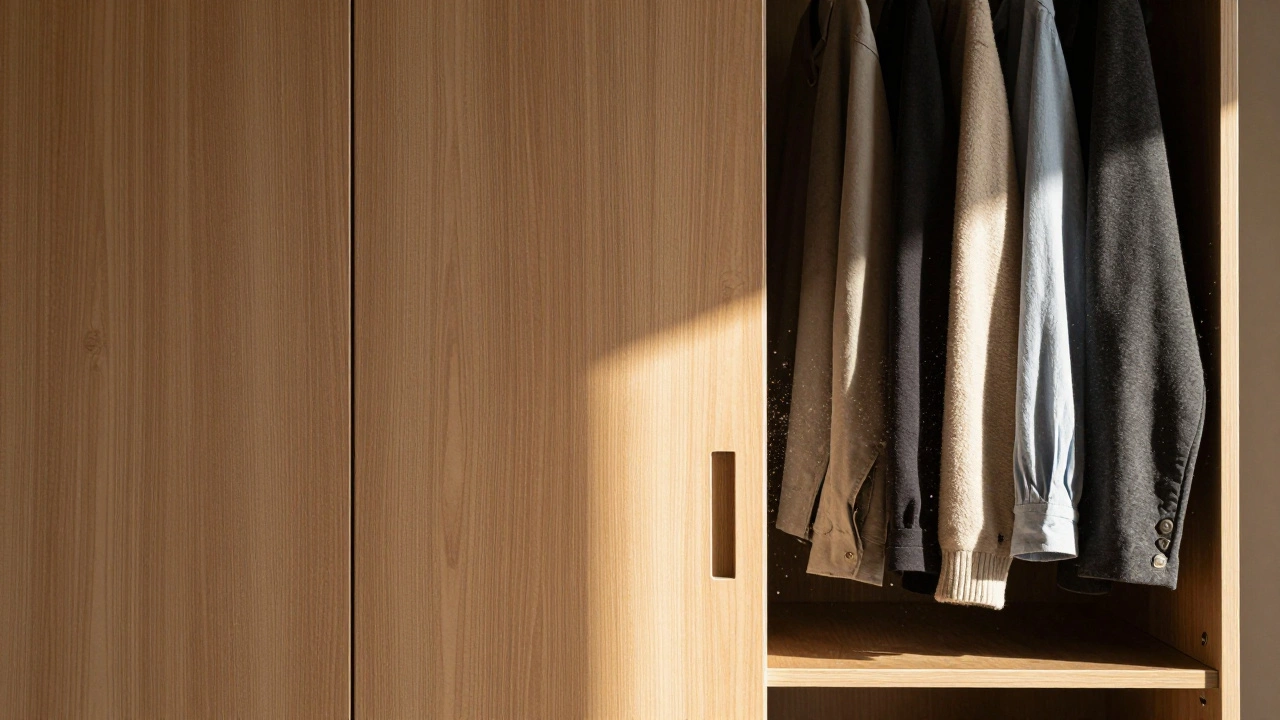
Beyond the psychological relief of a tidy room, closed wardrobes offer practical protection. Dust is the enemy of fabric. In cities like Auckland, pollen and street dust can settle on clothes left exposed for weeks. A closed wardrobe keeps your garments cleaner for longer, meaning fewer washes and less wear and tear on the fibers. It also protects against moths and silverfish, which are attracted to the warmth and darkness of hidden fabrics but struggle to penetrate sealed spaces if you use proper deterrents inside.
Light control is another factor. Direct sunlight fades colors rapidly. If your wardrobe faces a window, closed doors (especially opaque ones) shield your wardrobe from UV damage. An open wardrobe near a west-facing window might turn your bright red shirts orange within a year.
The Appeal of Open Wardrobes: Speed and Style
Open wardrobes, often called "closet systems" or "walk-in style" rails, trade privacy for speed. You can see everything at a glance. This eliminates the "what did I pack last week?" mystery. For people who live out of their suitcases or change outfits daily, the visual inventory saves time.
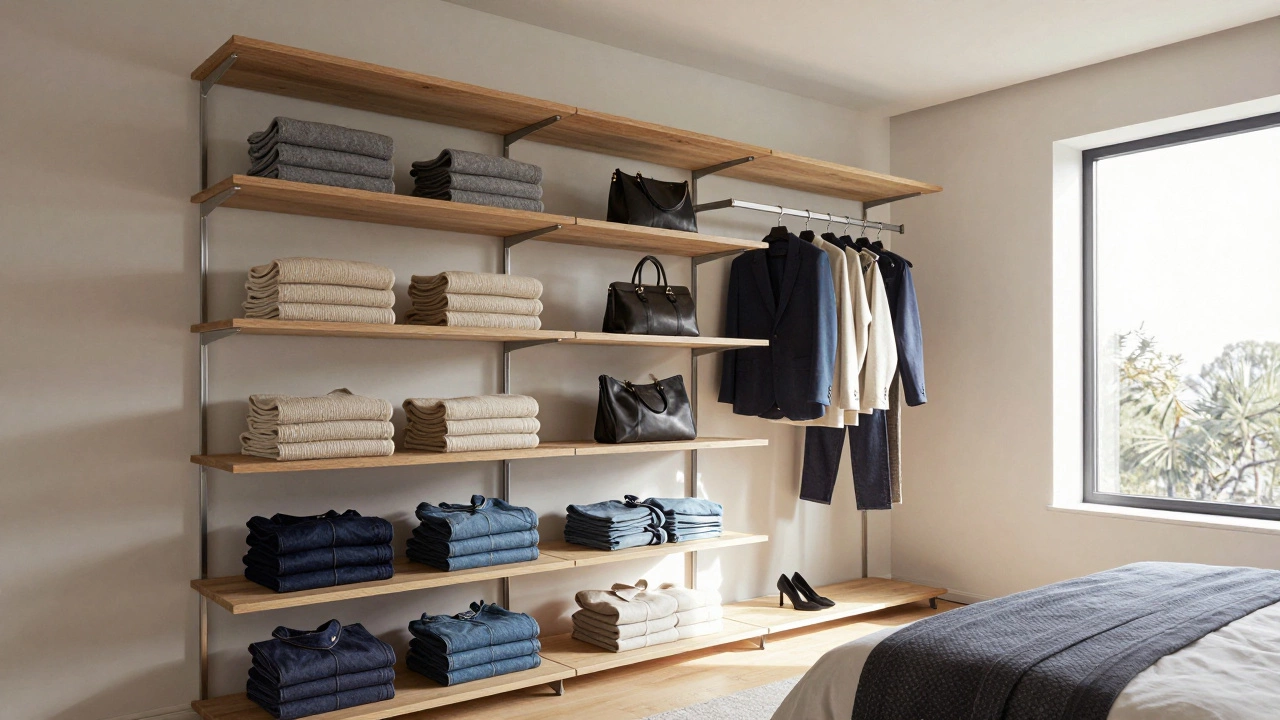
From a design perspective, open wardrobes make small rooms feel larger. Solid doors create visual bulk. Removing them allows light to flow through the room, reducing the feeling of being boxed in. Many modern minimalist interiors rely on open storage to display curated collections-think designer bags, vintage denim, or neatly folded cashmere stacks. It turns your clothes into decor.
However, this aesthetic comes with a steep maintenance tax. Open wardrobes require constant organization. Clothes must be hung perfectly, shoes aligned, and accessories tucked away. One stray sock on the floor ruins the entire look. If you are not naturally organized, an open wardrobe will quickly become a source of stress rather than convenience.
Door Types Matter: Sliding vs. Hinged
If you decide you need doors, the type of door changes the experience significantly. Hinged doors (swing-out) are generally superior for functionality. They allow full access to the interior without obstruction. You can see everything inside when they are open, and they don’t suffer from track issues.
Sliding doors save space in front of the wardrobe, which is crucial in narrow bedrooms or hallways. However, they have drawbacks. You can only access half the wardrobe at a time. Tracks collect dust and hair, requiring regular cleaning. Heavy sliding doors can derail if not installed perfectly. If you choose sliding doors, opt for high-quality hardware with ball-bearing rollers to ensure smooth operation for years.
| Feature | Hinged Doors | Sliding Doors | No Doors (Open) |
|---|---|---|---|
| Space Required | Needs clearance in front | Minimal front clearance | None |
| Dust Protection | High | Medium (gaps at bottom/top) | Low |
| Visual Clutter | Hides all clutter | Hides most clutter | Shows all clutter |
| Maintenance | Low (hinges) | Medium (tracks) | High (dusting/organizing) |
| Best For | Standard bedrooms | Narrow rooms/hallways | Large closets/minimalists |
Climate Considerations: Humidity and Mold
In humid climates like New Zealand’s, airflow is critical. Closed wardrobes can trap moisture, leading to mold growth on clothes and unpleasant odors. If you live in a damp area, consider these strategies:
- Ventilation: Choose doors with perforated panels or mesh inserts to allow air circulation.
- Material Choice: Avoid solid MDF (medium-density fiberboard) doors in high-humidity areas, as they can swell and warp. Opt for solid timber or aluminum frames.
- Dehumidifiers: Place a small dehumidifier inside or near the wardrobe during wet seasons.
- Regular Airing: Open the doors weekly to let fresh air circulate, even if you prefer closed storage.
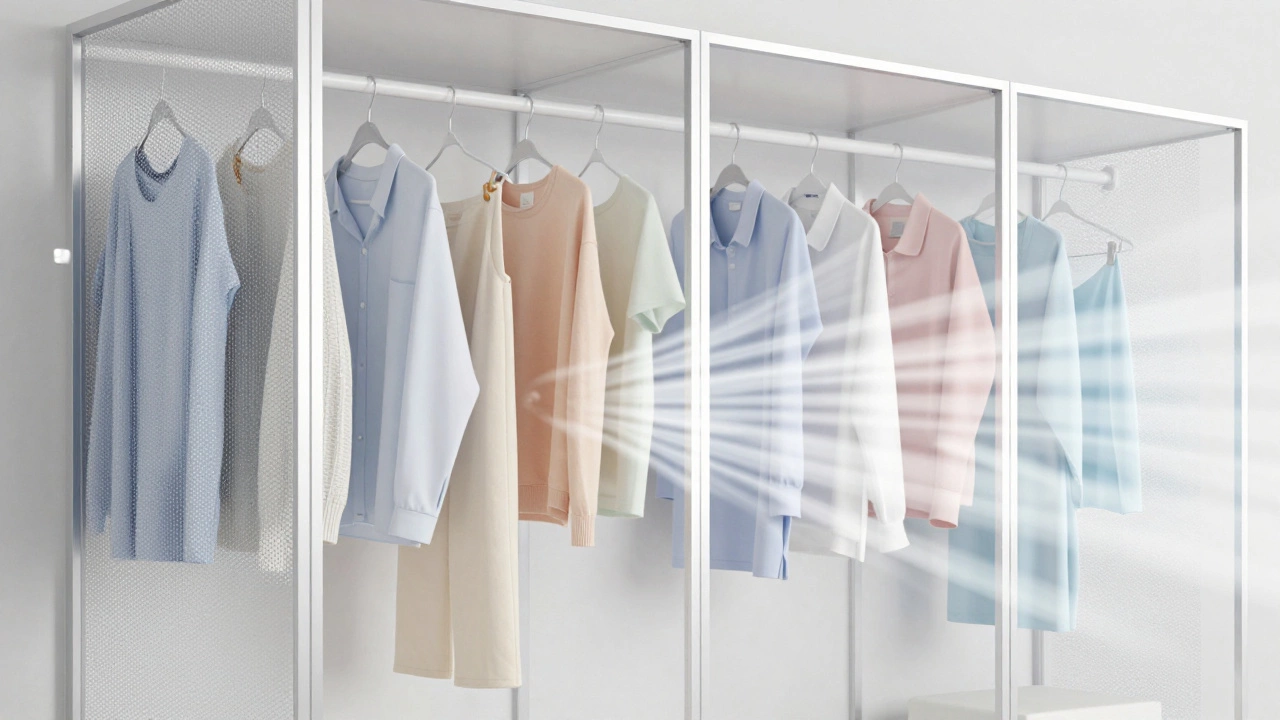
Open wardrobes naturally breathe better, reducing mold risk. But again, this comes with the dust trade-off. Balance is key.
Hybrid Solutions: The Best of Both Worlds?
You don’t have to choose strictly between open and closed. Hybrid designs are gaining popularity. Consider these options:
- Glass Doors: Offer visibility while protecting against dust and light. Frosted glass provides privacy for less attractive items, while clear glass showcases prized possessions.
- Partial Enclosure: Use closed cabinets for shoes, linens, and seasonal items, and open shelves for everyday wear. This reduces visual clutter while keeping frequently used items accessible.
- Curtains: A soft, inexpensive alternative to hard doors. Curtains hide clutter, are easy to install, and add texture to the room. They don’t protect against dust as well as solid doors, but they’re better than nothing.
Who Should Choose Which?
Your personal habits dictate the best choice. Ask yourself these questions:
- How often do you clean? If you dislike dusting, avoid open wardrobes.
- Do you have children? Kids rarely put things back neatly. Closed doors hide the mess.
- Is your room small? Open wardrobes can make tiny rooms feel airy, but only if you keep them meticulously organized. Otherwise, they look chaotic.
- Do you value speed? If you dress in under five minutes every morning, open storage helps. If you take your time, closed doors don’t hinder you.
For renters, temporary solutions like tension rods with curtains or freestanding open racks offer flexibility without permanent installation costs. Homeowners can invest in built-in closed wardrobes for long-term value and resale appeal.
Final Thoughts on Wardrobe Design
There is no universal rule that says wardrobes must have doors. The trend toward open storage reflects a desire for transparency and ease, but it ignores the reality of daily life for many people. Closed wardrobes remain the pragmatic choice for most households because they accommodate imperfection.
Think about your routine. Are you willing to spend ten minutes every evening reorganizing your clothes to keep an open wardrobe looking good? If yes, go open. If no, install doors. Your future self will thank you for making a decision based on honesty about your habits, not just Pinterest inspiration.
Are open wardrobes bad for dust?
Yes, open wardrobes expose clothes to airborne dust, pollen, and pet dander. In urban environments or areas with high traffic, dust accumulation can be significant within days. Regular dusting of shelves and hangers is required to maintain cleanliness.
Do sliding wardrobe doors block access?
Sliding doors only allow access to half the wardrobe at any given time. To reach items on the opposite side, you must slide the door, which may reveal items you didn’t intend to show. Hinged doors provide full access when opened.
Can I convert a closed wardrobe to open?
Yes, but it requires removing hinges and tracks, which may leave marks or holes in the frame. Ensure the internal structure is sturdy enough to support shelves without door reinforcement. Adding LED strip lighting enhances the open look.
What is the best material for wardrobe doors in humid climates?
Solid timber or aluminum-framed glass doors are best for humid climates. MDF and particle board can swell and warp when exposed to moisture. Ensure proper ventilation inside the wardrobe to prevent mold growth.
Do wardrobe doors affect resale value?
Closed wardrobes generally appeal to a broader range of buyers because they hide clutter and appear neat. Open wardrobes may deter buyers who perceive them as high-maintenance. Neutral-colored closed doors are safest for resale.