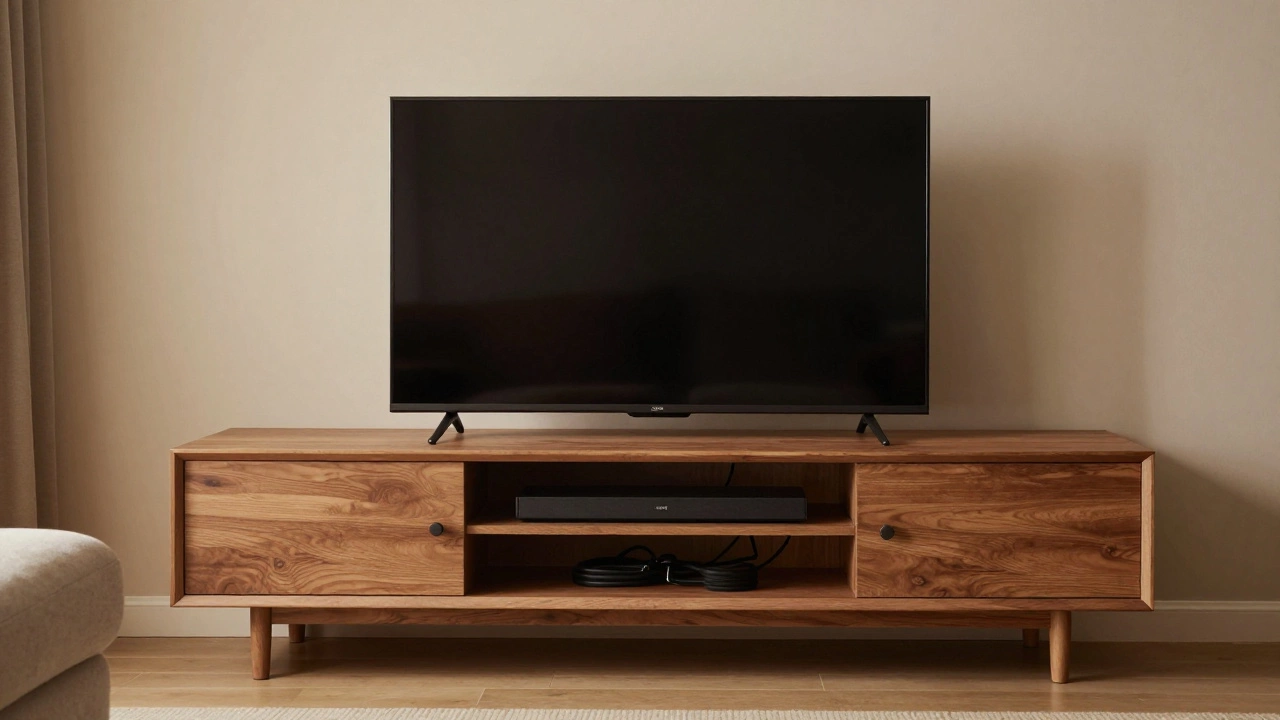
How Big Does a TV Stand Need to Be for a 65-Inch TV?
A 65-inch TV needs a stand at least 67 inches wide for safety and function. Learn the ideal width, depth, height, and how to avoid common mistakes when choosing a TV stand.
When you buy a 65 inch TV, a television with a screen diagonal measuring 65 inches. Also known as 65-inch display, it’s one of the most popular sizes for living rooms today because it’s big enough to feel immersive, but not so huge it overwhelms most spaces. But here’s the thing — the TV size doesn’t tell you what kind of stand it needs. A 65-inch TV can be anywhere from 56 to 58 inches wide, depending on the bezel. That means your stand needs to be at least 60 inches wide, and ideally more, to give it breathing room and avoid tipping risks. Many people buy a stand that looks right, then realize their TV overhangs the edges — and suddenly, it’s not just ugly, it’s unsafe.
That’s where TV stand width, the horizontal measurement of the furniture piece holding the TV. Often confused with TV base size, this dimension directly affects stability, cable management, and how well the TV fits into your room layout. A stand that’s too narrow forces you to center the TV awkwardly, leaves no room for soundbars or game consoles, and makes the whole setup look like an afterthought. On the flip side, a stand that’s too wide can eat up floor space in smaller rooms. The sweet spot? Go 6 to 10 inches wider than your TV’s width. That gives you a balanced, intentional look. And don’t forget depth — most 65-inch TVs are 3 to 4 inches deep, so your stand should be at least 12 inches deep to prevent the TV from tipping forward.
TV furniture, any piece designed to hold or support a television, including stands, consoles, and media units. Also known as TV cabinet, it’s not just a shelf — it’s part of your room’s structure. The right piece holds your TV securely, hides wires, and stores remotes, streaming boxes, and speakers. But if you’re shopping online and see a stand labeled "fits up to 75 inches," don’t assume it’s perfect for your 65-inch model. Always check the actual width of the top surface, not the TV size range listed. People think TV stands are one-size-fits-all, but they’re not. A stand made for a 55-inch TV might hold a 65-inch TV, but it won’t hold it well. And a stand meant for a 75-inch TV might look ridiculous under a smaller set.
And then there’s TV placement, where and how you position your TV in the room to balance viewing comfort, safety, and aesthetics. Also known as TV positioning, it’s not just about the stand — it’s about height, angle, distance from seating, and avoiding glare from windows or lights. If your stand is too low, you’re looking down at the screen all night. Too high, and your neck hurts. A 65-inch TV should be centered at eye level when seated — usually around 40 to 42 inches off the floor. That means your stand’s top surface needs to be at that height, not the bottom of the TV. Many people buy a stand and then realize their TV is too high or too low because they didn’t measure the stand’s height, not the TV’s.
You’ll find posts here that break down exact measurements, compare stand types, and show real examples of what works — and what doesn’t — for 65-inch TVs. Some talk about how a 75-inch TV changes the game, others show how to avoid common mistakes when pairing a TV with a stand. You’ll learn why some stands crack under the weight, why cable clutter ruins the look, and how to pick a stand that lasts. This isn’t about guessing. It’s about knowing the numbers, understanding the risks, and making sure your TV doesn’t just fit — it belongs.
A 65-inch TV needs a stand at least 67 inches wide for safety and function. Learn the ideal width, depth, height, and how to avoid common mistakes when choosing a TV stand.

27 Jul
Why Office Chairs Sink and How to Fix a Sinking Chair

22 Mar
What Is a Daybed Couch? A Simple Guide to This Versatile Piece of Furniture
23 Jun
Wardrobe vs Closet: Differences, Benefits, and Which One Fits Your Space

29 Mar
Timeless Bedroom Furniture Colors: A Guide to Choosing Lasting Styles

1 Dec
Can a Coffee Table Be 2 Inches Higher Than a Couch? Here’s What Works in Real Life