70/30 Wardrobe Rule Calculator
Calculate your ideal wardrobe distribution based on the 70/30 rule. Enter your total number of clothing items to see how many should be basics versus statement pieces.
0 items
Neutrals, versatile pieces that mix and match effortlessly.
0 items
Trendy, bold, or unique pieces that reflect your personality.
You stand in front of your open closet, staring at a sea of hangers, and you have absolutely nothing to wear. It’s a frustrating paradox that millions of people face every single morning. You own enough clothes to last weeks, yet your daily options feel limited, repetitive, or uninspired. This isn’t just a problem of having too little; it’s often a problem of having the wrong mix. Enter the 70/30 wardrobe rule, a simple but powerful framework designed to fix this exact issue by balancing reliability with excitement.
This rule suggests that 70% of your wardrobe should consist of neutral, versatile basics that you can mix and match effortlessly, while the remaining 30% is reserved for trendy, bold, or statement pieces that reflect your current personality and style interests. By adhering to this ratio, you eliminate decision fatigue, reduce clutter, and ensure that every item in your closet serves a specific purpose. It transforms your closet from a chaotic storage unit into a curated collection that works for you, not against you.
Why the 70/30 Ratio Works Better Than Total Minimalism
Pure minimalism often fails because it strips away too much individuality. When you try to live with only ten items, as some extreme capsule wardrobes suggest, you might find yourself bored or unable to dress appropriately for social events, creative workplaces, or personal hobbies. The 70/30 rule strikes a middle ground. It acknowledges that we need stability in our daily lives (the 70%) but also crave expression and novelty (the 30%).
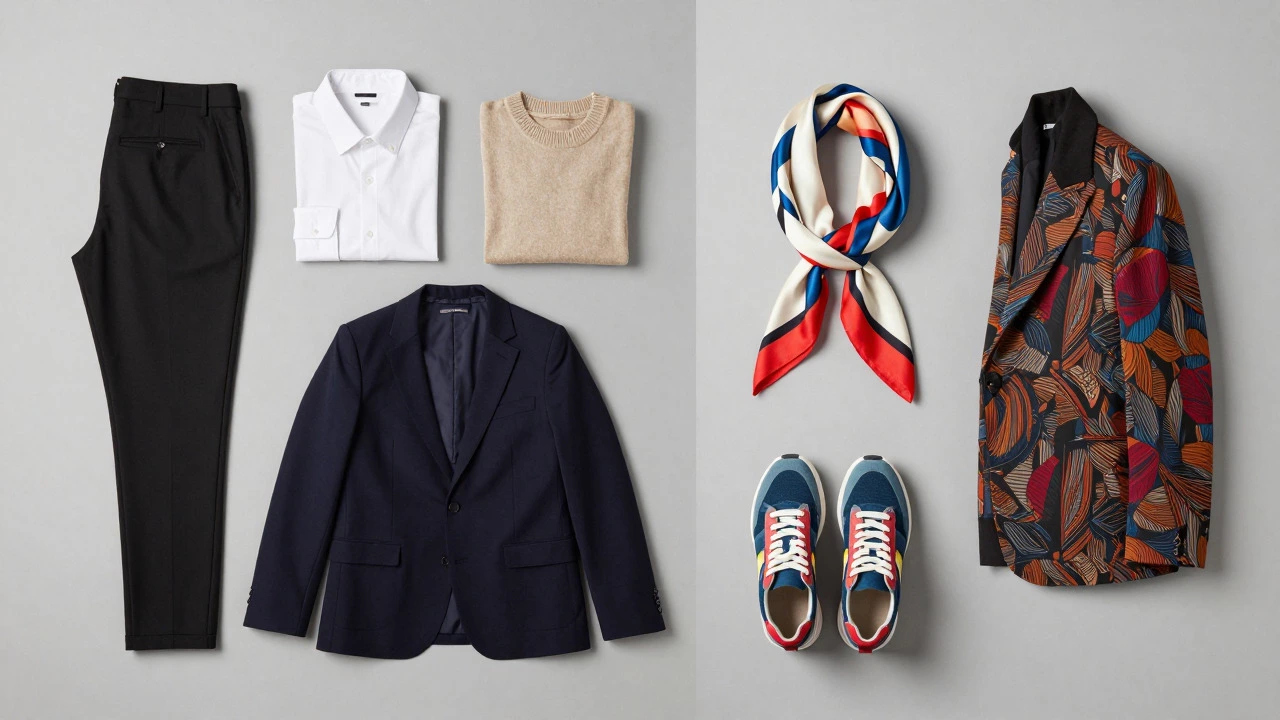
The core benefit here is cognitive ease. Your brain doesn't have to work hard to put together an outfit when the foundation is already solved. If you know that your black trousers, white button-down, and navy blazer always look good together, you’ve automated half the equation. The other half-the 30%-is where you play. Maybe it’s a silk scarf, a pair of vibrant sneakers, or a vintage jacket. These items add flavor without breaking the system.
From a financial perspective, this approach saves money. You invest in high-quality staples that last for years, reducing the need for constant replacement. Meanwhile, your trendier purchases are fewer in number, meaning you’re less likely to impulse-buy cheap fast-fashion items that fall apart after two washes. You spend more per item on the 70%, but less frequently on the 30%.
Defining Your 70%: The Foundation of Function
The 70% section of your wardrobe is all about versatility, comfort, and longevity. These are the items you reach for when you’re running late, when you don’t care what you look like, or when you need to look professional without trying too hard. They form the backbone of your daily appearance.
To build this base effectively, focus on neutral colors. Think black, white, gray, navy, beige, and denim blue. These shades coordinate with almost anything, allowing you to create multiple outfits from a small number of pieces. Quality matters significantly here because these items get worn repeatedly. A well-tailored wool coat or a perfectly fitting pair of jeans will serve you better than five cheaper alternatives that lose their shape.
- Tops: Plain t-shirts in cotton or linen, crisp button-down shirts, fine-gauge knitwear, and a reliable cardigan.
- Bottoms: Dark wash jeans, tailored trousers in wool or stretch blends, chinos, and a simple midi skirt or shorts depending on your climate.
- Outerwear: A structured blazer, a classic trench coat, a denim jacket, or a heavy winter parka.
- Footwear: White leather sneakers, black ankle boots, loafers, or clean minimalist trainers.
Ask yourself: "Can I wear this with at least three other items in my closet?" If the answer is no, it probably belongs in the 30% category, or perhaps not in your closet at all. The goal is interchangeability. Your white shirt should look equally good with your black trousers as it does with your denim skirt.
Defining Your 30%: The Space for Self-Expression
If the 70% is the canvas, the 30% is the paint. This portion of your wardrobe allows you to experiment with trends, textures, patterns, and silhouettes. It’s where you express your mood, celebrate occasions, or simply inject some fun into your routine. Without this segment, your style can become flat and predictable.
The key difference with the 30% is that these items are often seasonal or trend-driven. You might buy a bright yellow handbag one year and a sequined top the next. Because they make up a smaller percentage of your total inventory, you can afford to take risks. If a trend doesn’t age well, it’s easier to let go of a few statement pieces than to overhaul an entire foundation of basics.
However, even within the 30%, there should be some cohesion. While you can experiment with color, try to keep certain elements consistent with your 70%. For example, if your basics are mostly cool-toned (blacks, grays, navies), a warm-toned orange sweater might clash unless you use it intentionally as a pop of contrast. Use accessories to bridge the gap. A patterned scarf can tie a neutral suit to a colorful blouse.
Consider the occasion. Do you need evening wear? Party dresses? Creative casual looks for weekend outings? These needs dictate what fills your 30%. If you rarely attend formal events, your 30% might lean heavily towards quirky streetwear rather than cocktail attire. Be honest about your lifestyle so you don’t fill this space with items that gather dust.
How to Audit Your Current Closet Using the Rule
Implementing the 70/30 rule starts with a brutal honesty session. You need to clear out everything and categorize each piece. This process can feel overwhelming, but it’s necessary to see where you currently stand. Most people find they are skewed heavily toward the 30%-too many unique items that don’t mix-or stuck in the 70% with no variety.
- Empty the closet: Take everything out. Lay it on your bed or floor. Seeing the volume helps you understand how much you actually own.
- Categorize by function: Separate items into 'Basics' (70%) and 'Statements' (30%). If an item is neither useful nor expressive, set it aside for donation.
- Check the fit: Does the basic fit well? If your foundational jeans pinch or your staple shirt sags, replace them. Bad-fitting basics ruin the entire system.
- Analyze the ratio: Count the items. If you have 100 pieces, 70 should be basics. If you only have 20 basics, you need to shop for foundations before buying more trendy items.
- Identify gaps: Are you missing a neutral layer? Do you lack comfortable shoes? Note these down for your next shopping trip.
During this audit, pay attention to duplicates. Do you have five identical black t-shirts? Keep two or three, donate the rest. Do you have twenty different colored tops that never match your pants? Those likely belong in the 30%, but if they don’t spark joy, they should go. The aim is to reduce friction. Every time you open your closet, you should see options that work together immediately.
| Feature | 70% Basics | 30% Statements |
|---|---|---|
| Color Palette | Neutrals (Black, White, Navy, Beige) | Bold colors, prints, metallics |
| Lifespan | Long-term (3-5+ years) | Short-to-medium term (1-2 seasons) |
| Priority | Fabric quality and fit | Design uniqueness and trend relevance |
| Mix & Match | Must work with everything else | Works with selected basics |
| Shopping Frequency | Infrequent (replace when worn out) | Regular (seasonal updates) |

Building a Sustainable Shopping Strategy
Once you’ve audited your closet, your shopping habits need to shift. The 70/30 rule naturally encourages sustainability because it discourages impulsive buying. Before purchasing any new item, ask which bucket it falls into. If you’re buying a basic, scrutinize the fabric and construction. Is it natural fiber? Will it hold up to frequent washing? If it’s a statement piece, consider whether you’ll truly wear it multiple times, or if it’s a fleeting whim.
Avoid the trap of "completing the set." Fast fashion brands love to sell you coordinated outfits that only work together. Instead, buy standalone pieces. A floral dress (30%) should be able to be paired with a denim jacket (70%) and white sneakers (70%). If it requires a specific belt and shoes that you don’t own, it’s not a good addition to your capsule.
Also, consider the cost-per-wear metric. A $200 coat that you wear 100 times costs $2 per wear. A $20 top that you wear twice costs $10 per wear. Prioritize spending on your 70% items because they anchor your daily life. Save your disposable income for the 30% items that bring you immediate happiness, knowing they won’t break the bank if they go out of style quickly.
Troubleshooting Common Pitfalls
Even with a clear plan, mistakes happen. One common error is letting the 30% creep into the 50%. This happens when you buy trendy items that you think are "basics" because they’re popular. Just because everyone is wearing wide-leg cargo pants doesn’t mean they’re a neutral staple for you. If they limit your pairing options, they’re a statement piece. Keep them in check.
Another pitfall is neglecting maintenance. Your 70% items are workhorses. They need regular care. Wash dark jeans inside out to prevent fading. Steam your shirts instead of ironing to preserve fibers. Rotate your shoes to let them air out. Neglecting these steps shortens the lifespan of your foundation, forcing you to replace them sooner and disrupting your balance.
Finally, don’t be rigid. Life changes. Your job might require more formal wear, shifting your 70% needs. You might move to a colder climate, requiring heavier coats. Re-evaluate your ratio every six months. The 70/30 rule is a guideline, not a law. Its purpose is to serve you, not restrict you. If you find yourself constantly reaching for the same three items, those three items are your true 70%. Build around them.
What exactly counts as a "basic" in the 70%?
A basic is any item that is neutral in color, simple in design, and highly versatile. Examples include plain white t-shirts, black trousers, navy blazers, and denim jackets. These items should easily pair with at least three other pieces in your wardrobe without clashing. They form the structural foundation of your outfits.
Can I adjust the 70/30 ratio based on my lifestyle?
Absolutely. If you work in a conservative corporate environment, you might need an 80/20 split to ensure professionalism. Conversely, if you work in a creative field or enjoy frequent social events, a 60/40 split might feel more natural. The key is maintaining a balance between reliability and expression, regardless of the exact numbers.
How do I handle seasonal changes with this rule?
Your 70% basics should remain largely consistent year-round, focusing on layers that adapt to temperature changes (e.g., swapping short-sleeve tees for long-sleeve knits). Your 30% statement pieces can rotate more frequently with seasons. Store off-season statement items in separate storage to keep your active closet streamlined and focused on current weather-appropriate choices.
Is the 70/30 rule expensive to maintain?
Not necessarily. In fact, it often saves money over time. By investing in higher-quality basics that last longer, you reduce replacement frequency. You also avoid impulse buying cheap trendy items that quickly fall out of favor. The initial investment in good foundations may be higher, but the cost-per-wear decreases significantly compared to fast-fashion cycles.
What if I hate neutrals? Can I still use this rule?
Yes, but your definition of "neutral" might differ. For some, olive green or burgundy acts as a neutral if it pairs well with most of their other clothes. The principle isn’t strictly about beige and black; it’s about versatility. Choose colors that you find calming and easy to mix, even if they aren’t traditional neutrals, as long as they serve the function of anchoring your outfits.