Sofa Depth & Comfort Calculator
Your Details
Enter your stats to find your perfect seat.
Visualizer & Result
Analysis:
Based on your height and preference, a 22-inch depth offers the best balance of support and comfort.
Ever sit on a sofa that feels like a bench? You’re perched right on the edge, your legs dangling slightly, and after twenty minutes, your lower back starts complaining. Now imagine the opposite: you sink into a plush seat, but there’s so much space between your back and the armrests that you end up slouching forward, creating a weird gap where your thighs don’t get proper support. Both scenarios are frustrating, and both come down to one specific measurement: sofa depth.
We often obsess over the width of a sofa-will it fit through the door? Will three people squeeze in?-but we rarely think about how deep the seat actually is. That depth determines whether you can relax fully or if you’ll be fighting the furniture every time you want to watch TV. Getting this right isn’t just about luxury; it’s about ergonomics. It’s about making sure your spine stays neutral and your circulation remains healthy while you unwind.
What Is Seating Depth, Anyway?
When we talk about sofa depth, we aren’t talking about the total height from the floor to the top of the backrest. We’re talking specifically about seating depth, which is the horizontal distance from the front edge of the cushion to the point where the backrest begins. This is the zone where your body actually rests.
Think of it as the runway for your torso. If the runway is too short, you crash into the wall (the backrest) before you’ve had a chance to land comfortably. If it’s too long, you float off into space, losing all structural support. Most standard sofas have a seating depth ranging from 19 to 23 inches. But "standard" doesn’t always mean "comfortable" for you.
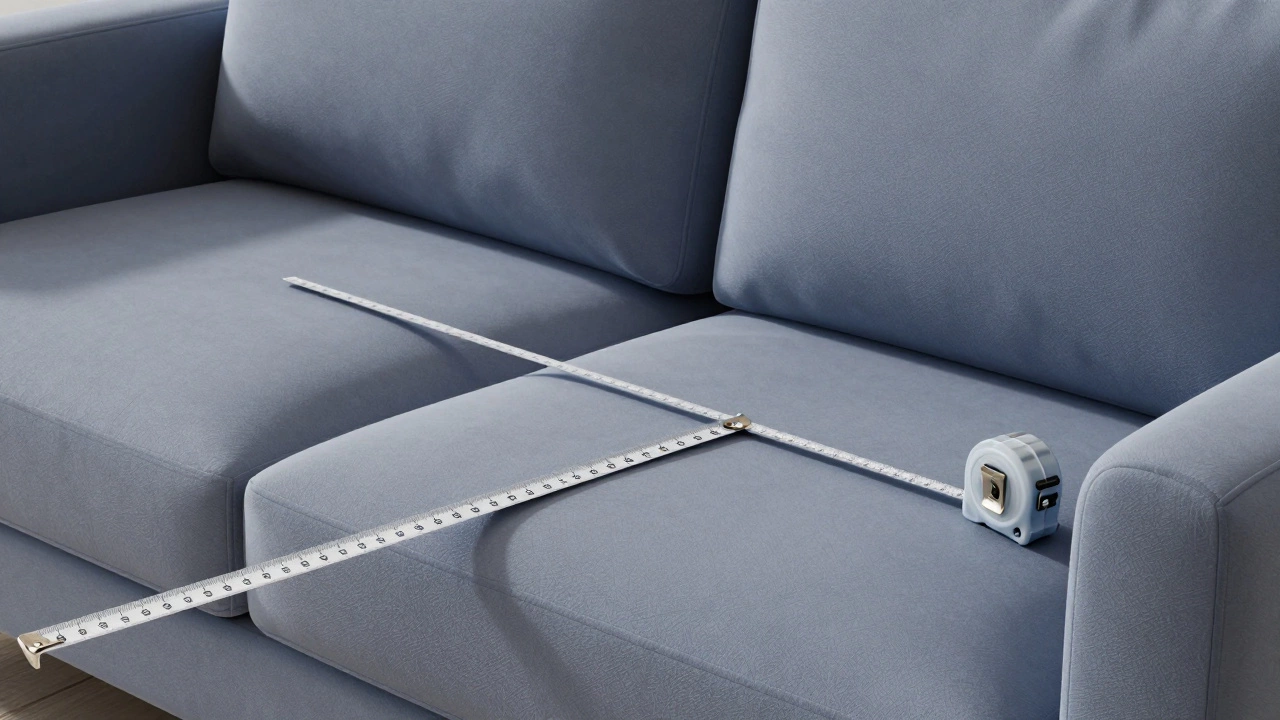
To measure this yourself, grab a tape measure. Sit on the sofa with your back against the backrest. Have someone measure from the front edge of the seat cushion to the back of your knees. Ideally, you should have about 2 to 4 inches of space left. If your knees are pressing against the backrest, the sofa is too shallow. If there’s more than 6 inches of empty cushion behind your knees, the sofa might be too deep for your frame, causing you to slump.
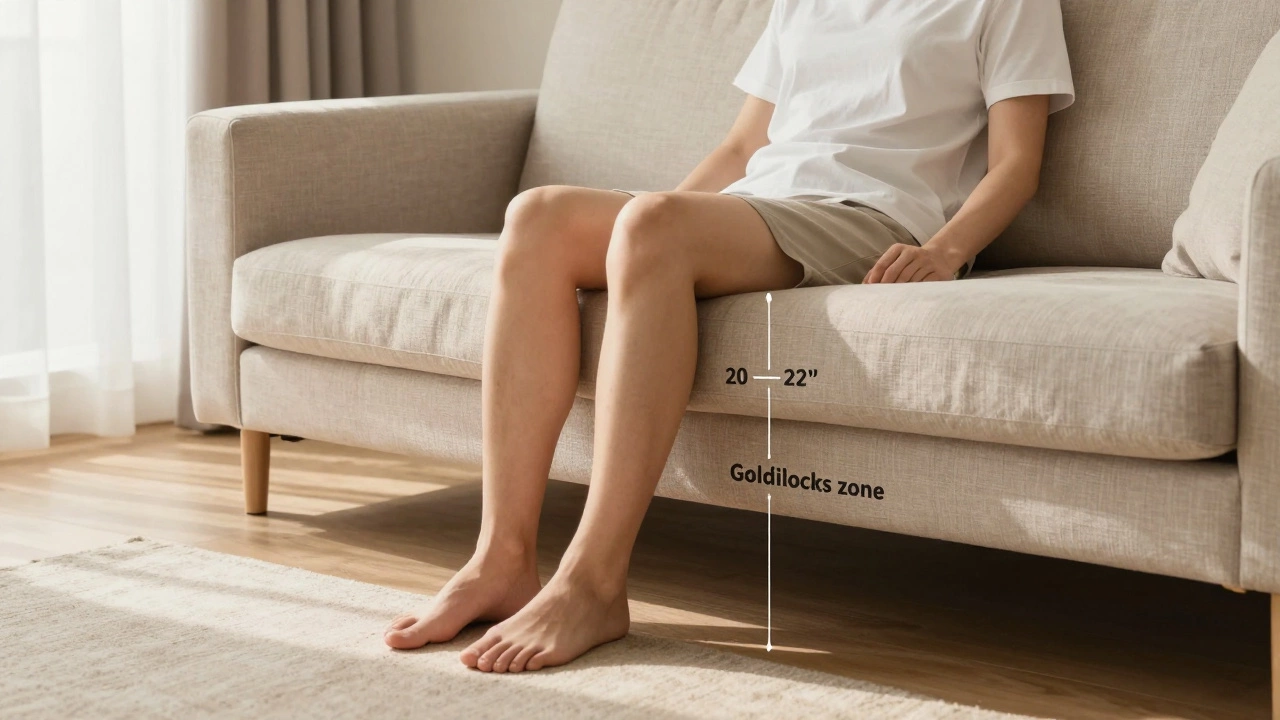
The Goldilocks Zone: 20 to 22 Inches
For the average adult, the sweet spot for seating depth is generally between 20 and 22 inches. This range allows most people to sit with their backs flat against the backrest while keeping their feet flat on the floor and their knees bent at a natural 90-degree angle.
- 19-20 inches: This is considered "shallow." It’s great for upright sitting, like when you’re eating dinner or working on a laptop at a coffee table. It forces good posture because you can’t really recline. However, taller individuals will feel cramped here.
- 21-22 inches: The universal comfort zone. It accommodates a wide range of heights and builds. You can sit straight up or lean back slightly without losing thigh support.
- 23+ inches: This is "deep seating." It’s designed for lounging, napping, and sprawling. It’s fantastic for relaxation but terrible for upright activities like reading or eating unless you use throw pillows for lumbar support.
If you are 5'9" (175 cm) or shorter, a 20-inch depth might feel perfect. If you are 6'2" (188 cm) or taller, you likely need at least 22 inches to avoid that "perching" sensation. Your inseam length matters more than your overall height here. A longer leg means you need more cushion to bridge the gap between your hips and your knees.
Why Deep Sofas Are Taking Over Living Rooms
In recent years, the trend has shifted heavily toward deeper sofas. Why? Because our living habits have changed. We spend less time sitting formally with guests and more time binge-watching series, gaming, or taking afternoon naps. The "sectional" boom is partly driven by the desire for extra-deep seats, often exceeding 25 inches.
A deep-seat sofa is a piece of furniture with a seating depth of 24 inches or more, designed for reclining and lounging rather than upright sitting. These sofas change the dynamic of the room. They invite you to lie down. But they come with trade-offs.
| Depth Range | Best For | Pros | Cons |
|---|---|---|---|
| 19-20 inches | Small spaces, dining nooks, formal sitting | Encourages good posture; fits in tight rooms | Uncomfortable for tall users; not for lounging |
| 21-22 inches | General use, families, mixed-height households | Balanced support; versatile for sitting and leaning | May not satisfy heavy loungers |
| 23-26 inches | Lounging, napping, large living rooms | Maximum comfort for relaxing; feels luxurious | Takes up more floor space; requires pillows for back support |
The downside of going super-deep is that you lose the ability to sit upright comfortably. Without a pillow propped behind your lower back, you’ll slide forward. This can strain your neck and shoulders over time. So, if you buy a 25-inch deep sofa, plan on investing in high-quality lumbar pillows. They aren’t just decor; they’re ergonomic necessities.
How Backrest Angle Changes Everything
Depth doesn’t exist in a vacuum. It works in tandem with the angle of the backrest. A vertical backrest (90 degrees) demands a shallower seat. If you have a 90-degree back and a 24-inch seat, you’ll be sliding off the cushion like you’re on a sled. Conversely, a reclined backrest (100-110 degrees) pairs perfectly with a deeper seat because gravity pulls you back into the corner formed by the seat and the back.
When testing a sofa, pay attention to the "heel drop." This is the difference in height between the front and back of the seat cushion. Some sofas slope downward toward the front. This design feature helps keep you from sliding forward, effectively allowing for a deeper seat without the discomfort. If you have bad knees or hip issues, look for sofas with a slight heel drop or adjustable headrests that can fill the gap.
Fitting the Sofa Into Your Room
Comfort isn’t just about your body; it’s about your space. A deep sofa takes up more square footage. In a small apartment, a 25-inch deep sofa might make the room feel claustrophobic. You need to leave enough walking space around the furniture. The general rule is to keep at least 30 inches of clearance between the sofa and any opposing furniture (like a TV stand or bookcase).
If your living room is narrow, prioritize a shallower depth (19-21 inches). You can still achieve comfort by choosing a sofa with a thick, high-resilience foam cushion that doesn’t bottom out. A firm, shallow seat can feel more supportive than a soft, deep one that swallows you whole. Don’t let the trend toward deep seating dictate your choice if your floor plan screams for efficiency.

Testing Before You Buy: The 15-Minute Rule
You can read all the specs in the world, but your body knows best. When you visit a showroom, don’t just plop down and stand up. Use the 15-minute rule. Sit on the sofa for at least 15 minutes. Read a magazine, scroll through your phone, or cross your legs. Notice how your body reacts.
Ask yourself these questions:
- Do I feel supported along my entire thigh?
- Is there pressure on the back of my knees?
- Do I find myself adjusting my position frequently?
- Can I sit upright without feeling like I’m falling backward?
Maintaining Comfort Over Time
Sofa cushions compress over time. A sofa that feels perfectly deep today might feel too shallow in two years as the foam loses its loft. High-density foam retains its shape better than low-density polyurethane. If you’re prone to sinking into your sofa, look for models with high-resilience (HR) foam cores wrapped in softer layers. This maintains the structural depth even after years of use.
Flipping and rotating your cushions regularly can also help maintain an even wear pattern. Uneven compression can create dips that alter the effective depth of the seat, leading to poor posture. Treat your sofa like an investment in your daily comfort, not just a static object in your living room.
What is the ideal sofa depth for a tall person?
For individuals over 6 feet tall, a seating depth of 22 to 24 inches is usually ideal. This ensures that your thighs are fully supported without your knees pressing against the backrest. Look for sofas labeled as "deep seat" or check the specifications for a minimum of 22 inches of usable cushion space.
Is a 20-inch sofa depth too shallow?
Not necessarily. A 20-inch depth is perfect for smaller spaces and for people who prefer an upright sitting position. It encourages good posture and is great for activities like eating or working. However, it may feel uncomfortable for taller individuals or those who like to lounge and recline.
How do I measure the depth of a sofa correctly?
Measure from the front edge of the seat cushion to the point where the backrest begins. Do not include the thickness of the back cushion in this measurement. This gives you the "seating depth," which is the actual space available for your body. Compare this number to your own thigh length plus 2-4 inches for comfort.
Can I adjust the depth of my current sofa?
You can’t change the physical frame, but you can adjust the perceived depth. If the sofa is too deep, add a large lumbar pillow behind your back to push you forward. If it’s too shallow, you can’t easily extend it, but you can choose a firmer cushion that doesn’t compress as much, giving you more surface area.
What is the difference between seat depth and overall depth?
Overall depth includes the arms, the backrest, and the frame. Seat depth (or seating depth) only measures the usable cushion space where you sit. Always look for seat depth when evaluating comfort, as overall depth can be misleading due to thick armrests or bulky back cushions.