Shelf Stability & Triangle Rule Calculator
Use this tool to determine the required shelf thickness and support strategy based on your bookcase dimensions and material choice, applying the principles of the triangle rule for maximum rigidity.
You’ve probably seen it happen. Someone loads up a beautiful new bookshelf with heavy hardcovers, maybe some ceramics or glass jars, and within weeks-or even days-the middle of the shelf bows downward like a tired smile. It’s annoying, but worse, it can be dangerous. That bowing isn’t just an aesthetic flaw; it’s a warning sign that your furniture is on the verge of failure.
This is where the triangle rule for shelves comes in. It sounds like something you’d learn in geometry class, but in reality, it’s one of the most practical principles in carpentry and interior design. The triangle rule explains why some shelves hold tons of weight without bending while others collapse under a few books. Understanding this simple concept can save your collection from disaster and keep your home safer.
The Geometry of Strength: Why Triangles Work
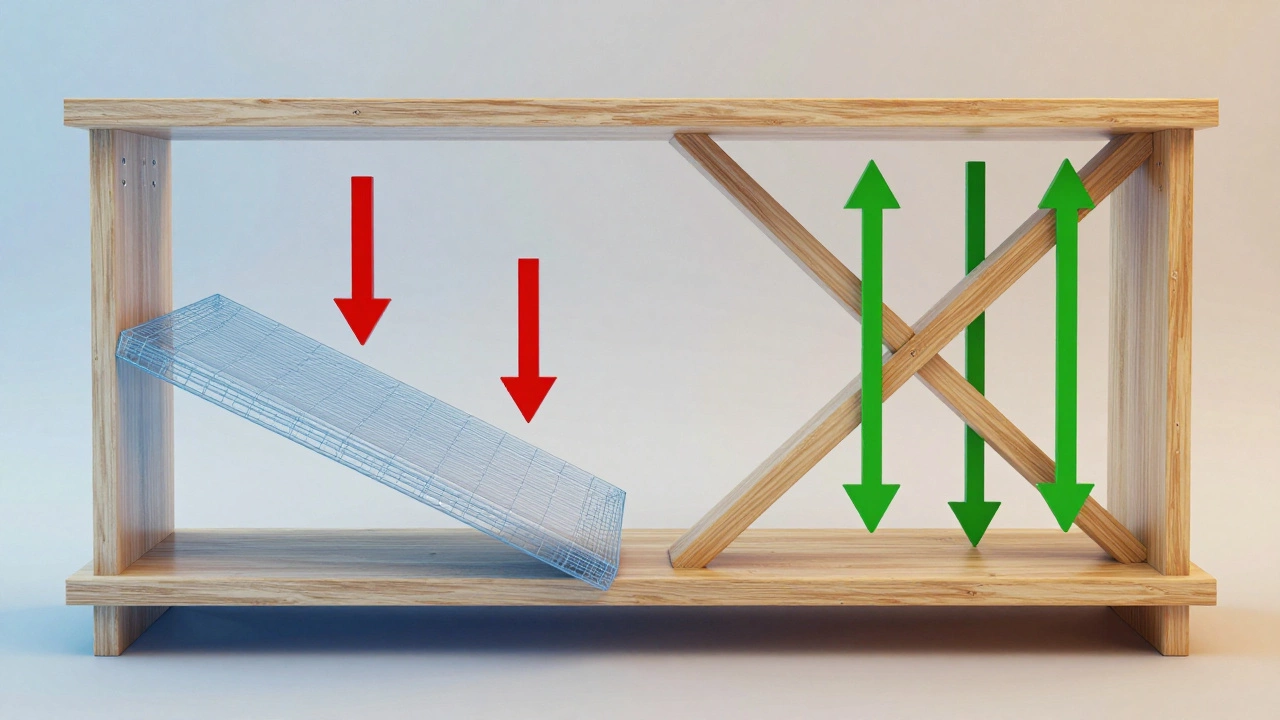
To understand the triangle rule, you first have to look at how shapes behave under pressure. Imagine a square frame made of four sticks connected by hinges. If you push on one side, the square easily collapses into a diamond shape. It has no internal strength because the angles can change freely. Now, imagine a triangle made of three sticks. Push on any side, and nothing happens. The shape stays rigid. This is because a triangle is the only polygon that cannot be deformed without changing the length of its sides. In engineering terms, we call this "statically determinate" structure.
When applied to shelving, the triangle rule means that support should not come from just two points (the ends of the shelf). Instead, you need to create triangular bracing or supports that transfer the weight directly down to the floor or wall. Without these triangles, the shelf board acts as a beam spanning a gap, and beams want to bend when loaded in the middle.
Why do shelves sag in the middle?
Shelves sag because they act as horizontal beams. When weight is placed in the center, gravity pulls down, creating tension on the bottom fibers and compression on the top fibers. Without intermediate support or triangulated bracing, the material bends until it reaches its elastic limit or breaks.
How the Triangle Rule Applies to Bookcases
In a typical bookcase, the vertical sides and the horizontal shelves form rectangles. As mentioned earlier, rectangles are unstable structures. If you pull a bookcase apart slightly, the corners will shift unless they are reinforced. The triangle rule fixes this by adding diagonal braces or ensuring the back panel is securely attached to all four sides.
Think about a ladder. A freestanding ladder without spreaders would fall flat. But add cross-braces that form X-shapes (which are essentially two triangles sharing a base), and it becomes stable. Similarly, many high-quality bookcases feature diagonal wood braces inside the corners or behind the shelves. These invisible triangles prevent the case from racking (twisting) and help distribute the load more evenly across the structure rather than concentrating it on the shelf edges.
If you’re buying ready-made furniture, look for units that have a solid back panel nailed or screwed into the frame. This back panel effectively turns every rectangular section of the bookcase into two triangles, providing immense rigidity. Cheap particleboard shelves often lack this reinforcement, relying solely on metal brackets that can strip out over time.
Shelf Span and Material Thickness: The Hidden Variables
The triangle rule isn’t just about adding braces; it’s also about reducing the unsupported span of the shelf itself. Every material has a maximum span before it sags. For standard plywood or melamine-faced chipboard, this span is surprisingly short.
Here’s a rough guideline for shelf thickness based on width:
- 12 inches (30 cm): Can use ¾ inch (19 mm) thick boards safely.
- 24 inches (60 cm): Requires at least 1 inch (25 mm) thickness or additional support.
- 36+ inches (90+ cm): Needs substantial thickness (1.5 inches+) or intermediate supports like corbels or a center bracket.
If you have wide shelves, you must break up the rectangle. Adding a single central support bracket creates two smaller spans, effectively halving the stress on the board. You can also install a "sag brace"-a small piece of wood glued underneath the front edge of the shelf, running perpendicular to the grain. This stiffens the shelf significantly without being visible from above.
| Shelf Width | Min. Thickness (Softwood) | Min. Thickness (Hardwood/Plywood) | Support Needed? |
|---|---|---|---|
| Up to 24 inches | 1 inch | ¾ inch | No, if properly anchored |
| 24-36 inches | 1.5 inches | 1 inch | Yes, center support recommended |
| Over 36 inches | 2+ inches | 1.5 inches | Yes, multiple supports required |
Practical Ways to Apply the Triangle Rule at Home
You don’t need to be a master carpenter to use the triangle rule. Whether you’re building custom shelves or fixing existing ones, here are actionable steps to ensure stability.
1. Use Diagonal Bracing
If you’re building a bookcase from scratch, cut diagonal pieces of scrap wood and glue/nail them into the interior corners between the sides and the shelves. These triangles lock the structure in place. Even a thin ½-inch plywood strip works wonders if positioned correctly.
2. Anchor to the Wall
This is the most critical safety step. No matter how well-built your bookcase is, it can tip forward if pulled or climbed on. By anchoring the top of the bookcase to a wall stud, you create a massive triangle with the floor and the wall. This prevents tipping and adds lateral stability. Always use appropriate wall anchors for drywall or direct screws into studs.
3. Add Corbels or Brackets
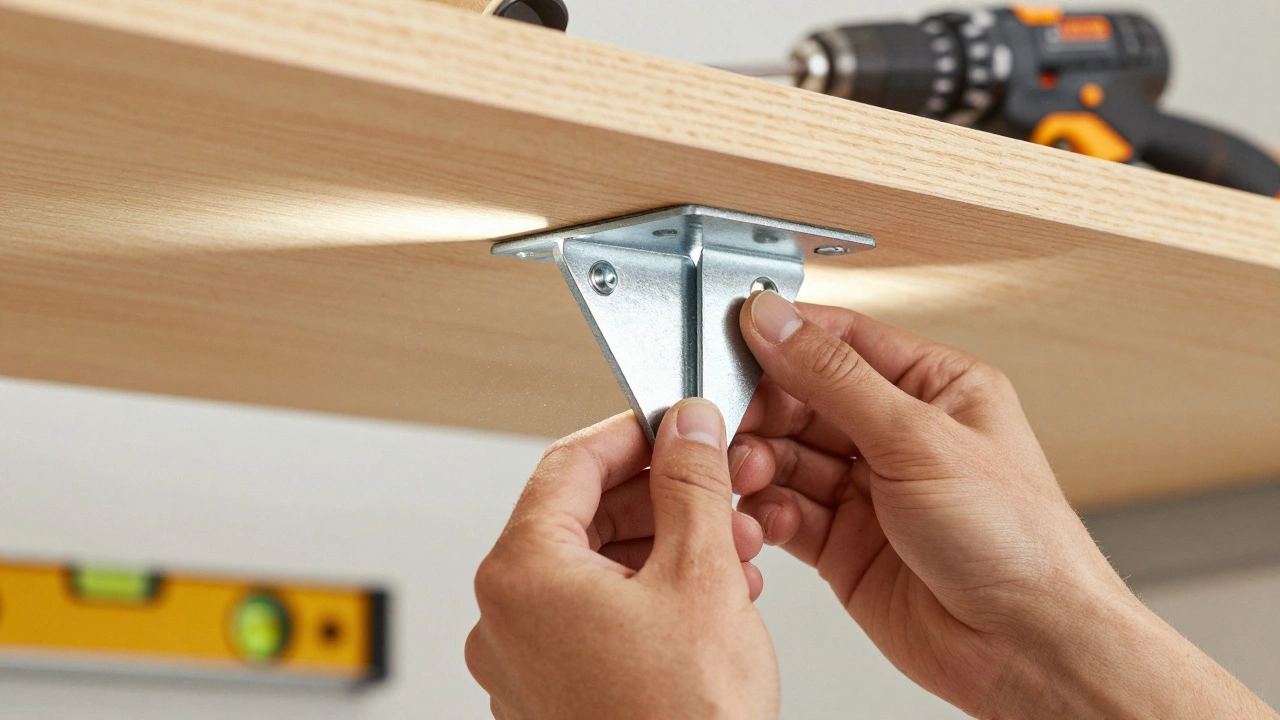
For open shelving without a cabinet frame, use decorative corbels. These L-shaped or curved supports introduce a triangular element beneath the shelf end. They take the weight off the shelf board and transfer it directly to the wall. Space them every 2-3 feet for long runs.
4. Reinforce the Back Panel
If your bookcase feels wobbly, check the back panel. If it’s loose, re-screw it tightly. If it’s missing, consider adding a thin sheet of plywood or even heavy-duty cardboard temporarily. The key is connecting the left and right sides so they move as one unit, not independently.
Common Mistakes That Break the Rule
Even experienced DIYers make errors that ignore the triangle rule. Here’s what to avoid:
- Overloading the Center: Placing the heaviest items in the middle of a long shelf maximizes bending force. Distribute weight evenly or place heavy objects near the supports (ends or brackets).
- Ignoring Grain Direction: Wood is strongest along the grain. Shelves should run horizontally with the grain parallel to the depth, not the width. If the grain runs side-to-side across a wide shelf, it will snap easily.
- Using Weak Connectors: Cam locks and dowels alone don’t provide enough shear strength for tall bookcases. Use pocket screws, biscuits, or dominoes for stronger joints that resist twisting.
- Neglecting Floor Levelness: If your floor is uneven, the bookcase will twist over time, stressing the joints. Shim the legs to ensure the entire unit sits plumb and square.
Material Matters: Plywood vs. Particleboard
The triangle rule helps, but the material itself dictates performance. Solid hardwoods like oak or maple are strong but expensive. Plywood offers excellent strength-to-weight ratio due to its cross-grain construction, making it resistant to warping. Particleboard (MDF) is cheap but weak in tension and prone to sagging. If you must use particleboard, always increase the thickness or add more supports to compensate for its lower structural integrity.
For example, a ¾-inch particleboard shelf might sag after six months with books, while the same size in Baltic birch plywood could last decades. This is why high-end bookcases cost more-they use materials that respect the physics of load distribution.
Testing Your Shelf Stability
Before loading your new shelves, perform a simple test. Stand on the bottom shelf (if sturdy enough) or press firmly on the center of each shelf. Does it flex noticeably? Do you hear creaking? If yes, reinforce it immediately. A good shelf should feel rigid, like a plank, not like a trampoline.
You can also use a level to check if the bookcase is square. Measure diagonally from corner to corner. If both measurements are identical, the case is square. If not, adjust the position or tighten the joints until they match. Squaring ensures the triangular forces are distributed evenly.
Final Thoughts on Safe Shelving
The triangle rule for shelves isn’t just theory-it’s the difference between a functional storage solution and a hazardous hazard. By understanding how triangles provide rigidity, choosing the right materials, and applying proper bracing techniques, you can build or buy bookcases that stand the test of time. Don’t wait for a sagging shelf to become a collapsed one. Check your current setup today, anchor it to the wall, and reinforce weak points. Your books-and your peace of mind-will thank you.
Can I fix a sagging shelf without replacing it?
Yes, you can often fix a sagging shelf by adding a sag brace underneath. Glue a thin strip of wood along the front edge, perpendicular to the grain. Alternatively, install a central support bracket or corbel to reduce the span. Remove heavy items while the adhesive cures.
How far apart should shelf supports be?
For standard ¾-inch shelves, supports should be no more than 24 inches apart. For wider or thinner shelves, reduce the spacing to 18-20 inches. Heavy loads require closer spacing or thicker materials.
Is it necessary to anchor bookcases to the wall?
Absolutely. Anchoring prevents tipping, which is a major risk for children and pets. It also stabilizes the structure against lateral movement. Use anti-tip kits available at hardware stores, securing the top of the unit to a wall stud.
What is the best wood for bookshelves?
Baltic birch plywood is excellent for strength and stability. Hardwoods like oak, maple, or cherry offer durability and beauty. Avoid particleboard for heavy loads unless reinforced significantly.
How do I know if my bookcase is square?
Measure the diagonals from opposite corners. If both measurements are equal, the bookcase is square. Unequal measurements indicate twisting or misalignment, requiring adjustment of legs or joints.