IKEA Product Origin Estimator
Select the product type to see where it is most likely manufactured based on IKEA's global supply chain strategy.
Select a product
Choose a category from the menu to view specific countries involved in production.
Click 'Check Origin' to learn about the logistical reasons behind this manufacturing location.
When you stand in the warehouse holding a flat-pack box for a BILLY bookcase or a MALM dresser, it’s natural to wonder about its origins. The label might say “Made in Poland” or “Made in Vietnam,” leaving you curious about the massive global network behind that simple sticker. You aren’t just buying a piece of wood; you’re buying into one of the most complex supply chains in the world.
IKEA doesn’t have one single factory where everything is born. Instead, they operate a decentralized model with over 1,000 suppliers spread across more than 50 countries. This strategy allows them to keep costs down, manage risks, and source materials close to where they are naturally abundant. If you want to know exactly where your new furniture comes from, you need to look at the specific product type, because the answer changes depending on whether you’re looking at a sofa, a lamp, or a particleboard shelf.
The Big Picture: How IKEA Sources Its Products
To understand where the furniture is made, you first have to understand how IKEA thinks about manufacturing. They don’t own most of the factories themselves. Instead, they work with independent manufacturers who specialize in specific tasks. One factory might only cut wood, while another specializes in upholstery. This division of labor means a single item often has parts from multiple countries before being assembled in a final location.
The core philosophy here is proximity. IKEA tries to manufacture products as close to the raw material sources or the end markets as possible. For example, solid wood furniture is often made in Europe or North America because those regions have vast forests. Meanwhile, textiles and smaller accessories are frequently produced in Asia, where textile industries are highly developed and efficient. This isn’t just about cost; it’s also about reducing carbon footprint by shortening transport distances for heavy items.
| Product Category | Primary Manufacturing Region | Key Countries Involved |
|---|---|---|
| Solid Wood Furniture | Europe & North America | Poland, Romania, Sweden, USA |
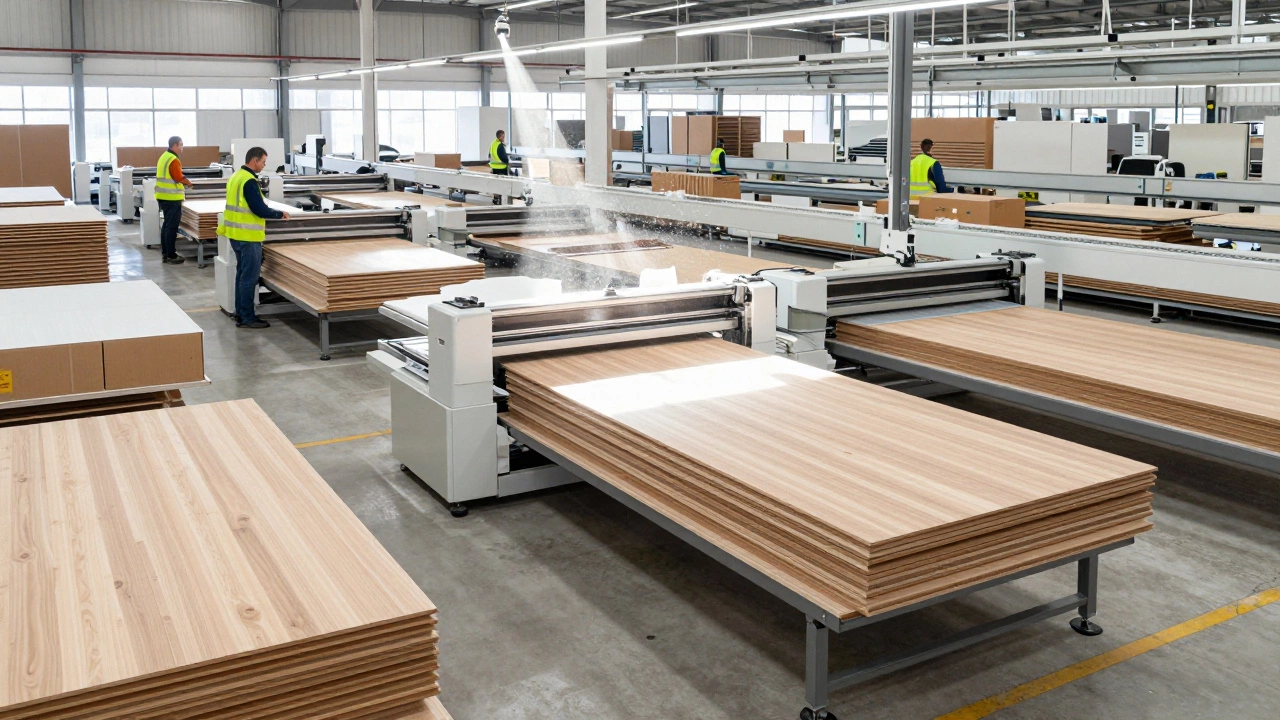
| Particleboard & MDF | Eastern Europe | Poland, Czech Republic, Slovakia |
| Textiles & Upholstery | Asia | Vietnam, China, India, Turkey |
| Metal & Lighting | Asia & Eastern Europe | China, Poland, Hungary |
| Kitchen Appliances | Global (Partner Brands) | Italy, Germany, China |
Europe: The Heart of Wood Processing
If you buy a classic wooden bookcase or a dining table, there’s a high chance it was made in Europe. Poland is arguably the most important country in IKEA’s European supply chain. It hosts dozens of supplier factories that process both solid wood and engineered wood panels. The country’s strategic location in Central Europe makes it an ideal hub for distributing goods to Western and Northern Europe.
Romania is another major player, particularly for solid wood products. With extensive forest resources, Romanian factories produce high-quality oak, beech, and pine furniture. You’ll often see “Made in Romania” on higher-end solid wood lines like the HEMNES collection. These factories benefit from lower labor costs compared to Western Europe while maintaining strict quality controls required by IKEA’s standards.
In Scandinavia, IKEA still maintains some production capabilities, though fewer than in the past. Sweden remains home to design centers and some specialized manufacturing, particularly for innovative prototypes and certain metal components. Finland contributes significantly through its partnership with Stora Enso, one of the world’s largest producers of wood-based panels used in IKEA’s particleboard and fiberboard products.
Asia: Textiles, Metals, and Small Goods
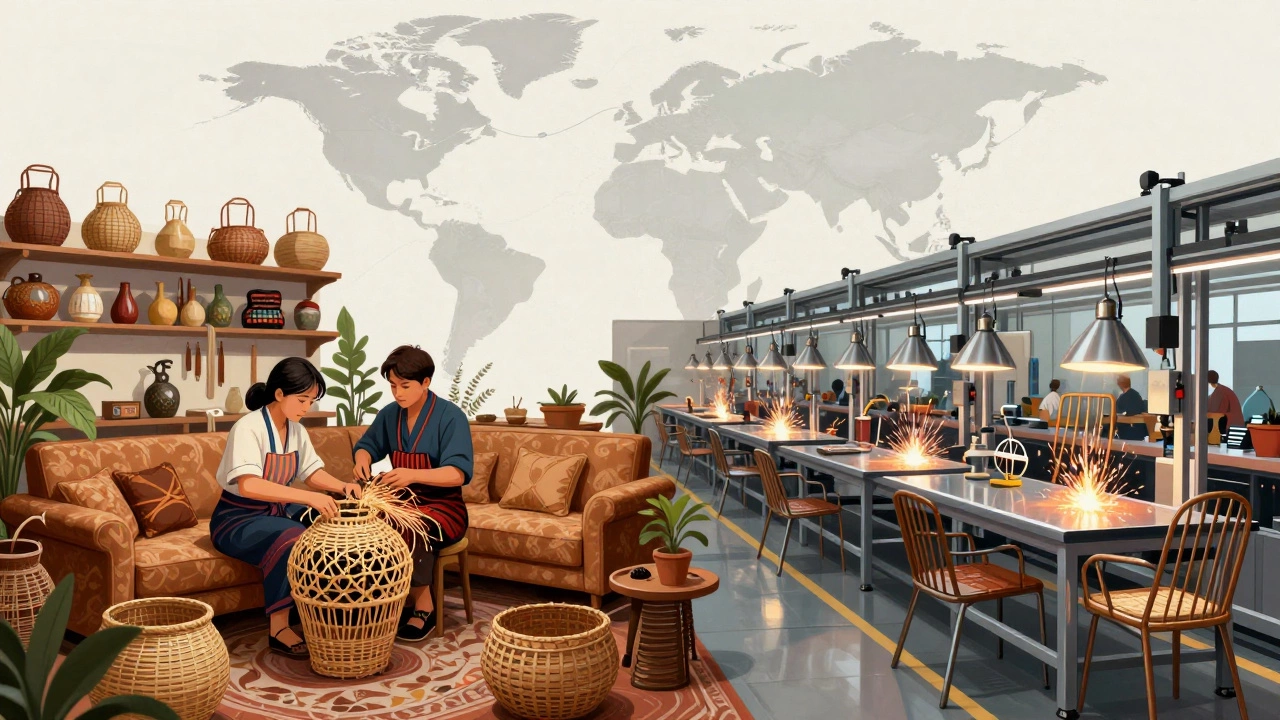
While Europe handles much of the woodwork, Asia dominates the production of textiles, metal frames, lighting, and small household items. Vietnam has emerged as a critical manufacturing base for IKEA in recent years. The country produces everything from rattan baskets to upholstered sofas and mattresses. Its growing industrial infrastructure and competitive labor costs make it attractive for large-scale production.
China remains a key supplier despite shifting trends. Many of IKEA’s metal furniture pieces, kitchen cabinets, and electronic accessories still originate there. However, IKEA has been diversifying its Asian supply chain to reduce dependency on any single country. India plays an increasingly important role, especially for cotton textiles and handcrafted items. Turkish factories contribute significantly to carpet production and some furniture assembly.
This geographic shift reflects broader economic realities. As labor costs rise in traditional manufacturing hubs, companies like IKEA move production to emerging economies. But it’s not just about cheap labor-it’s also about building resilient supply networks that can withstand disruptions like pandemics or trade wars.
North America: Localizing Production
In the United States and Canada, IKEA has invested heavily in local sourcing to meet demand quickly and reduce shipping costs. The U.S. market alone accounts for a significant portion of global sales, making localized production essential. Several factories in states like North Carolina, Tennessee, and California produce bedroom furniture, living room sets, and office chairs specifically for North American stores.
American-made IKEA furniture typically uses locally sourced wood species such as maple, cherry, and walnut. This approach supports regional forestry industries and reduces environmental impact. Additionally, producing closer to consumers allows faster response times when restocking popular items-a crucial advantage during peak shopping seasons.
Canada follows a similar pattern, with operations focused on utilizing domestic timber resources. Quebec and Ontario host facilities that process hardwoods and softwoods into finished products. By keeping production within North America, IKEA ensures compliance with local regulations and takes advantage of favorable trade agreements between the two nations.
Why Does Origin Matter?
You might ask why knowing where your furniture is made matters at all. After all, if it looks good and fits your space, does the country of origin really change anything? In many ways, yes. Different regions have varying environmental laws, labor practices, and quality control systems. Understanding these differences helps you make informed choices aligned with your values.
For instance, European Union regulations enforce stringent rules regarding formaldehyde emissions from wood products. This means particleboard furniture made in Poland or Romania must meet rigorous safety standards before reaching shelves. Similarly, certifications like FSC (Forest Stewardship Council) ensure that wood comes from responsibly managed forests-an important consideration for eco-conscious buyers.
Labor conditions also vary widely across manufacturing locations. While IKEA publishes annual reports detailing their efforts to improve worker welfare globally, transparency varies by region. Knowing which countries produce your favorite items lets you research further into ethical considerations surrounding those supply chains.

How to Check Where Your Specific Item Was Made
Finding out exactly where your particular piece of furniture originated is easier than you’d think. Every product sold by IKEA includes clear labeling indicating its country of manufacture. Look closely at the packaging or hangtag attached to the item-you’ll find phrases like “Made in [Country]” printed prominently.
If you’ve already unpacked your purchase but kept the documentation handy, check the assembly instructions or warranty card. These documents often list additional details about component origins, especially for multi-part assemblies involving hardware or fabrics sourced elsewhere. Online receipts may also provide this information digitally.
For deeper insights, visit IKEA’s official website and navigate to the sustainability section. Here, they publish detailed maps showing supplier locations worldwide along with progress updates toward goals like renewable energy usage and sustainable forestry initiatives. Transparency extends beyond mere labels-it encompasses ongoing commitments to responsible business practices.
Common Misconceptions About IKEA Manufacturing
One common myth is that all IKEA furniture is cheaply made overseas using low-quality materials. Nothing could be further from the truth. While price points do reflect economies of scale achieved through mass production, quality varies considerably across collections. Higher-priced lines incorporate premium materials and craftsmanship techniques comparable to boutique brands.
Another misconception involves assuming uniformity among similarly styled items. Two identical-looking chairs might differ substantially based on their manufacturing location due to variations in available resources or technological capabilities. Always review specifications carefully rather than relying solely on visual cues.
Lastly, people sometimes believe that importing furniture automatically increases environmental harm. Actually, optimizing logistics routes and consolidating shipments can offset transportation impacts significantly. Plus, designing products for flat-packing reduces volume dramatically-allowing more units per truckload compared to bulky alternatives.
Is all IKEA furniture made in China?
No, only a fraction of IKEA products come from China. Most wood-based items are manufactured in Europe, particularly Poland and Romania. Textiles and metal goods often originate in Vietnam, India, or other Asian countries.
Can I trust the quality of furniture made outside Europe?
Yes, IKEA enforces strict quality standards regardless of manufacturing location. All suppliers undergo regular audits to ensure compliance with durability, safety, and environmental criteria.
Why does my IKEA bookcase say 'Made in Poland'?
Poland is one of IKEA's largest European manufacturing hubs, specializing in particleboard and solid wood furniture. Its central location facilitates efficient distribution throughout Europe.
Does IKEA own the factories where its products are made?
Generally no. IKEA works with independent supplier companies that specialize in specific types of production. This collaborative model enhances flexibility and innovation across the supply chain.
Are IKEA products environmentally friendly?
IKEA strives for sustainability by sourcing FSC-certified wood, minimizing waste, and investing in renewable energy projects. Their goal is to become climate positive by 2030.
What should I look for on the label to verify authenticity?
Authentic IKEA products feature clear branding, barcodes, and country-of-origin labels. Counterfeit items usually lack proper documentation or exhibit poor print quality.
How does IKEA handle defective items from different manufacturers?
Customers can return faulty products directly to any IKEA store worldwide. The company covers repair or replacement costs under standard warranty terms without requiring proof of original manufacturer.
Will future IKEA furniture rely less on international shipping?
Yes, IKEA plans to increase local production capacities globally to shorten delivery times and reduce carbon emissions associated with long-distance freight.