Elizabethan Fashion Decoder
Click on the elements below to uncover how Queen Elizabeth I used her wardrobe as a weapon of statecraft.
Purity and Virginity
Elizabeth wore hundreds of pearls to reinforce her identity as the "Virgin Queen." They reminded everyone she belonged only to England, not to any husband.
Political Function
Reinforced the "Virgin Queen" persona and signaled independence from foreign alliances through marriage.
Did You Know?
Elizabeth owned over 2,000 garments, while most nobles owned around 50. This disparity wasn't vanity; it was a display of national wealth to intimidate foreign ambassadors.
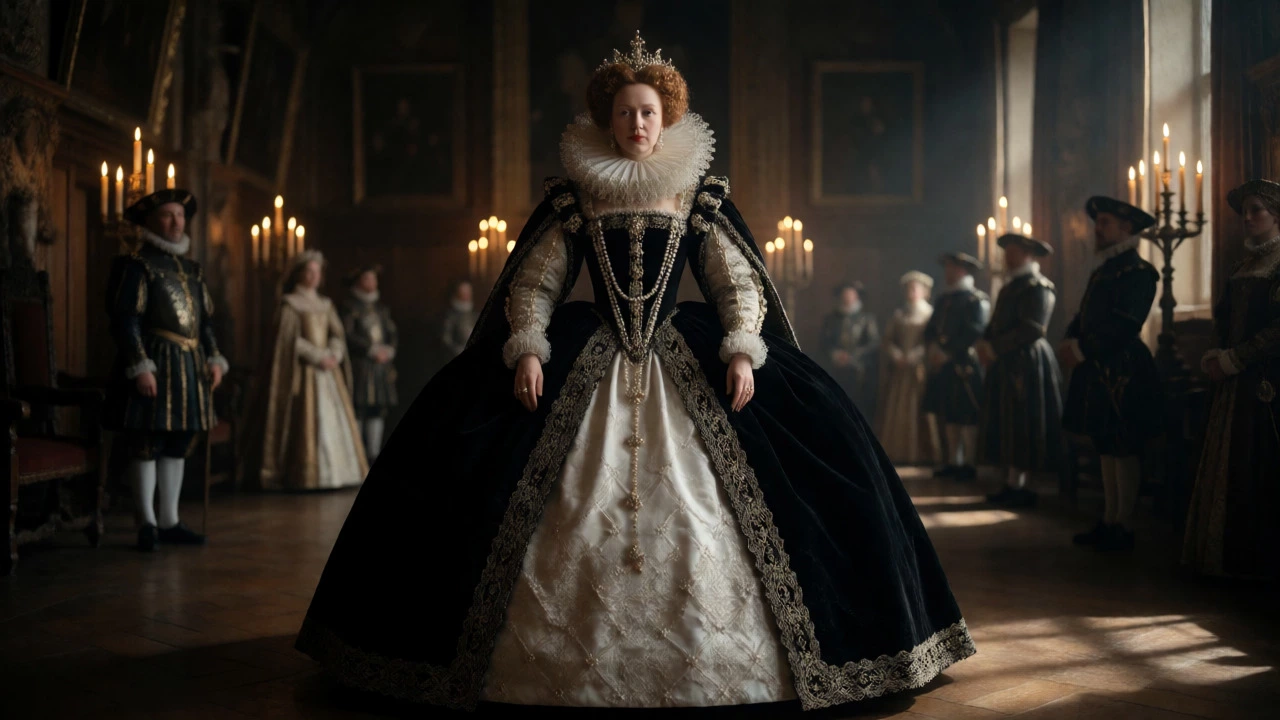
You might think of Queen Elizabeth I as a woman who loved expensive clothes. But her wardrobe wasn't just about vanity. It was a weapon. A shield. And a billboard. Every ruffle, every pearl, and every layer of silk had a specific job to do. If you look closely at her portraits, you aren't just seeing a queen. You are seeing a political strategy stitched into fabric.
Think about it. In an era where women were often seen as weak or secondary, Elizabeth ruled for 45 years. She never married. How did she pull that off? Part of it was intelligence, sure. But a huge part was how she looked. Her clothes told people what to think before she even opened her mouth. Let's unpack why her style was so calculated, and what we can learn from it today.
The Power of Visual Politics
Elizabeth understood something modern marketers still struggle with: image is everything. She didn't have an army she could trust completely in the early days. She didn't have a husband to share the burden. So, she used her appearance to project stability and divine right.
Her dresses were massive. We're talking wide skirts supported by structures called farthingales. These weren't just uncomfortable hoops; they made her take up space. Literally. When she entered a room, she physically dominated it. The sheer size of her silhouette said, "I am important. I am here. Look at me."
This was intentional. By making herself larger than life, she discouraged challengers. It’s hard to argue with someone who looks like a walking fortress. This concept, known as visual politics, meant that her royal wardrobe served as a tool for statecraft, not just decoration.
Symbolism Stitched into Silk
If you zoom in on any high-resolution portrait of Elizabeth, you’ll see symbols everywhere. She didn’t wear random patterns. She wore messages.
- Pearls: She wore hundreds of them. Pearls symbolized purity and virginity. Since she famously refused to marry, calling herself the "Virgin Queen," pearls reinforced this identity. They reminded everyone she belonged only to England.
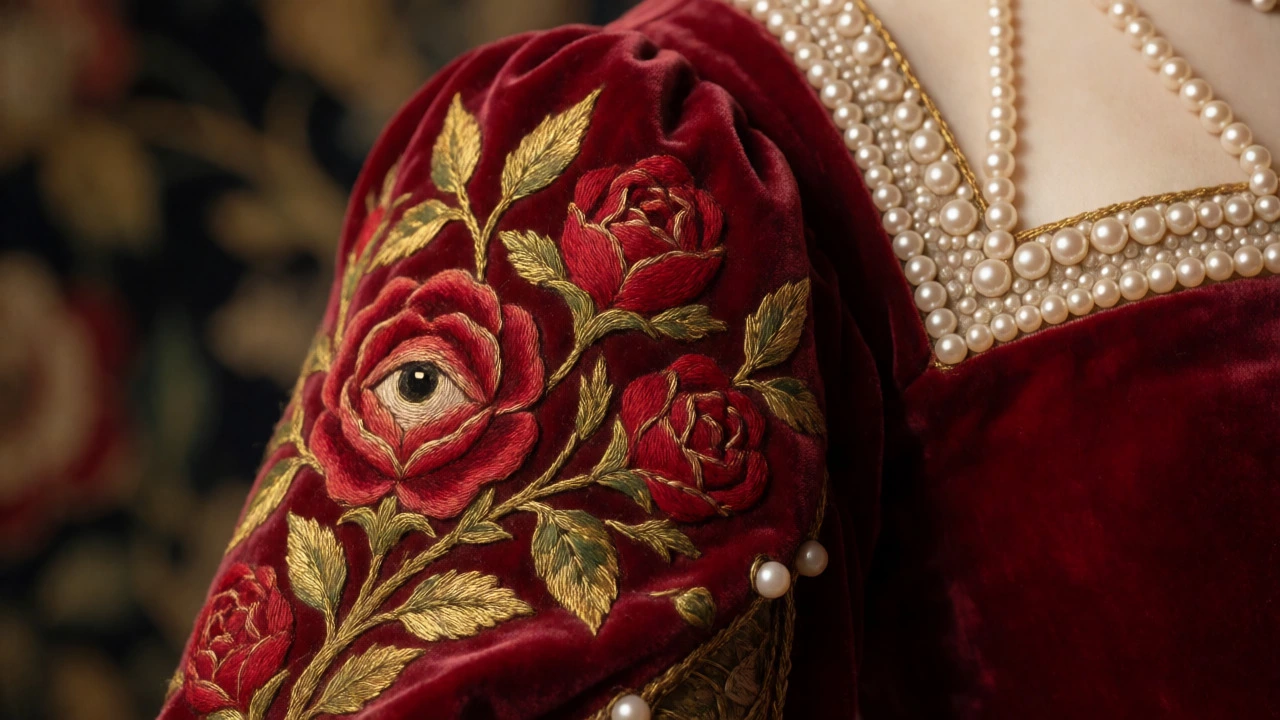
- Roses: The red rose was the emblem of the House of Lancaster. By wearing it, she connected herself to her father, Henry VIII, and legitimized her rule after his messy break from Rome.
- Eyes and Ears: Some gowns featured embroidered eyes and ears. This hinted that she saw all and heard all. It was a subtle warning to courtiers: behave, because the Queen is watching.
These details turned her body into a map of her power. You couldn't just glance at her; you had to read her. And reading her required paying attention to the crown.
The Role of Robert Dudley
We can't talk about Elizabeth's style without mentioning Robert Dudley, the Earl of Leicester. He wasn't just a favorite; he was her stylist and confidant. Historians believe he helped design many of her outfits. Why does this matter?
Dudley knew how to flatter her while keeping her authoritative. He pushed for bright colors-reds, golds, and silvers-that stood out against the dark backgrounds typical of Tudor art. This contrast made her pop. It drew the eye directly to her face and hands, the parts of her body that conveyed emotion and command.
Their relationship was complex, but professionally, it worked. Dudley ensured her image remained consistent. Consistency built trust. People knew what to expect from their monarch. That predictability was rare in the volatile world of 16th-century politics.
Fabric as Currency
In the 1500s, fabric cost more than labor. Silk came from China via trade routes. Velvet was dense and heavy. Cloth of gold was woven with actual metal threads. Wearing these materials was a flex of national wealth.
Elizabeth spent a fortune on clothes. Estimates suggest she owned over 2,000 garments in her lifetime. For context, most nobles owned maybe 50. This disparity wasn't accidental. It showed that England had resources. It signaled to foreign ambassadors that England was rich enough to buy its way out of trouble-or fund wars.
But there was a catch. Sumptuary laws restricted who could wear what. Only the monarch could wear purple and certain furs. By breaking these rules slightly or pushing the boundaries, Elizabeth asserted her uniqueness. She wasn't just another noblewoman; she was above the law that bound everyone else.
| Element | Material/Feature | Symbolic Meaning | Political Function |
|---|---|---|---|
| Ruff | Lace, starched linen | Status, refinement | Framed the face, emphasized speech and expression |
| Farthingale | Whalebone, wood | Stability, grandeur | Created physical presence, deterred close approach |
| Pearls | Natural gems | Chastity, wealth | Reinforced the "Virgin Queen" persona |
| Black & White | Silk, velvet | Mourning, piety | Showed respect for her mother Anne Boleyn (initially) and religious neutrality |
Practicality Behind the Pageantry
Was it comfortable? Absolutely not. Stiff collars, tight bodices, and layers of wool and silk in summer heat would make anyone miserable. But comfort wasn't the goal. Endurance was.
Elizabeth suffered from skin issues later in life, likely due to lead-based makeup. She applied thick white paint to cover smallpox scars and aging skin. This makeup was toxic, but it created a mask of perfection. Underneath the paint, she was human. On top, she was immortal.
This duality allowed her to remain relatable yet distant. Courtiers could admire the goddess but couldn't easily critique the woman. The costume protected her privacy. You don't ask personal questions of someone wrapped in ten pounds of brocade.
Legacy in Modern Wardrobes
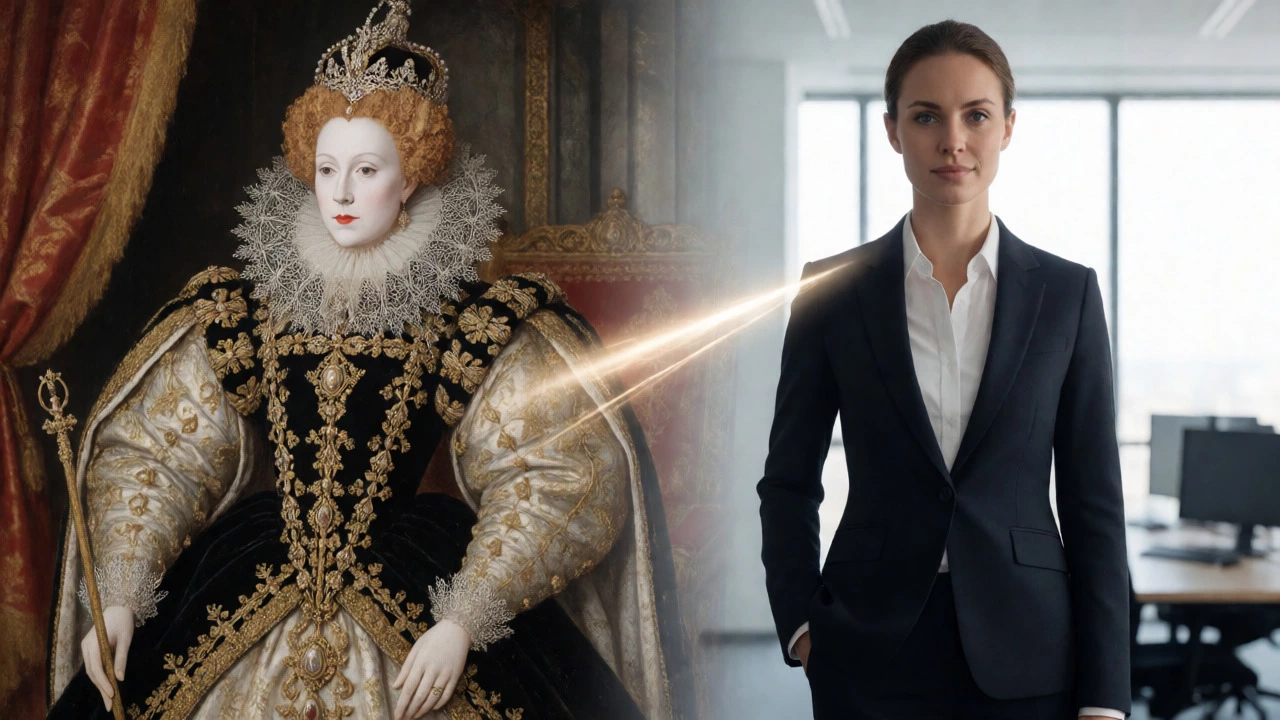
You might wonder why this matters to us now. We don't wear ruffs. But the principle remains. What you wear sends a message. CEOs wear tailored suits to signal authority. Creatives wear casual chic to signal innovation. Politicians roll up sleeves to signal approachability.
Elizabeth mastered this long before social media existed. She controlled the narrative through her historical clothing. Today, we have less control because cameras are everywhere. But we still choose our armor. Whether it's a uniform, a blazer, or sneakers, your outfit tells people how to treat you.
Next time you pick an outfit, think like Elizabeth. Are you dressing for comfort? Or are you dressing to communicate? There’s no wrong answer, but being aware of the message helps you stay in charge.
Did Queen Elizabeth I really own 2,000 dresses?
Yes, inventories from her reign list over 2,000 individual garments. This included gowns, cloaks, kirtles, and accessories. It was an unprecedented number for the time, reflecting both her personal taste and the state's wealth.
Why did Elizabeth I wear so much black?
Black dye was extremely expensive and difficult to produce, making it a status symbol. Additionally, black conveyed seriousness and authority. Early in her reign, she also wore black to mourn her mother, Anne Boleyn, subtly acknowledging her lineage without fully endorsing the scandal surrounding her execution.
What was a farthingale?
A farthingale was a structured undergarment, similar to a hoop skirt, used to shape the lower half of a dress. It widened the hips and created a conical or bell-shaped silhouette. This structure made the wearer appear taller and more imposing, enhancing the royal presence.
How did Elizabeth use makeup?
She used ceruse, a mixture of white lead and vinegar, to achieve a pale complexion. This covered blemishes and signified aristocratic status (since tanned skin implied outdoor labor). However, lead is toxic, which likely contributed to her skin deterioration and health issues later in life.
Did Elizabeth I copy other countries' fashion?
While influenced by French and Spanish styles, Elizabeth adapted them to create a distinct English identity. She rejected some extreme continental trends to maintain a sense of national pride. Her style became a brand unto itself, influencing European courts rather than just copying them.