Chair Matchmaking Quiz
Answer the questions below to find out which chair type best suits your specific needs.
You’ve probably seen the ads. Sleek racing-style seats with bold stitching, winged headrests, and enough lumbar pillows to make a cloud jealous. They look like they belong in an esports arena, not your spare room. But when you’re sitting for eight hours coding, writing, or just doom-scrolling, does that aggressive aesthetic actually translate to comfort? Or is it just marketing hype wrapped in faux leather?
Here’s the reality: the line between gaming chairs and traditional office chairs has blurred significantly. Yet, fundamental differences remain in how they support your spine, manage heat, and fit into a workspace. If you’re torn between buying a flashy gaming throne or a boring mesh task chair, this breakdown will help you decide which one actually serves your body and your budget.
The Core Design Philosophy: Racing Seats vs. Ergonomic Tasks
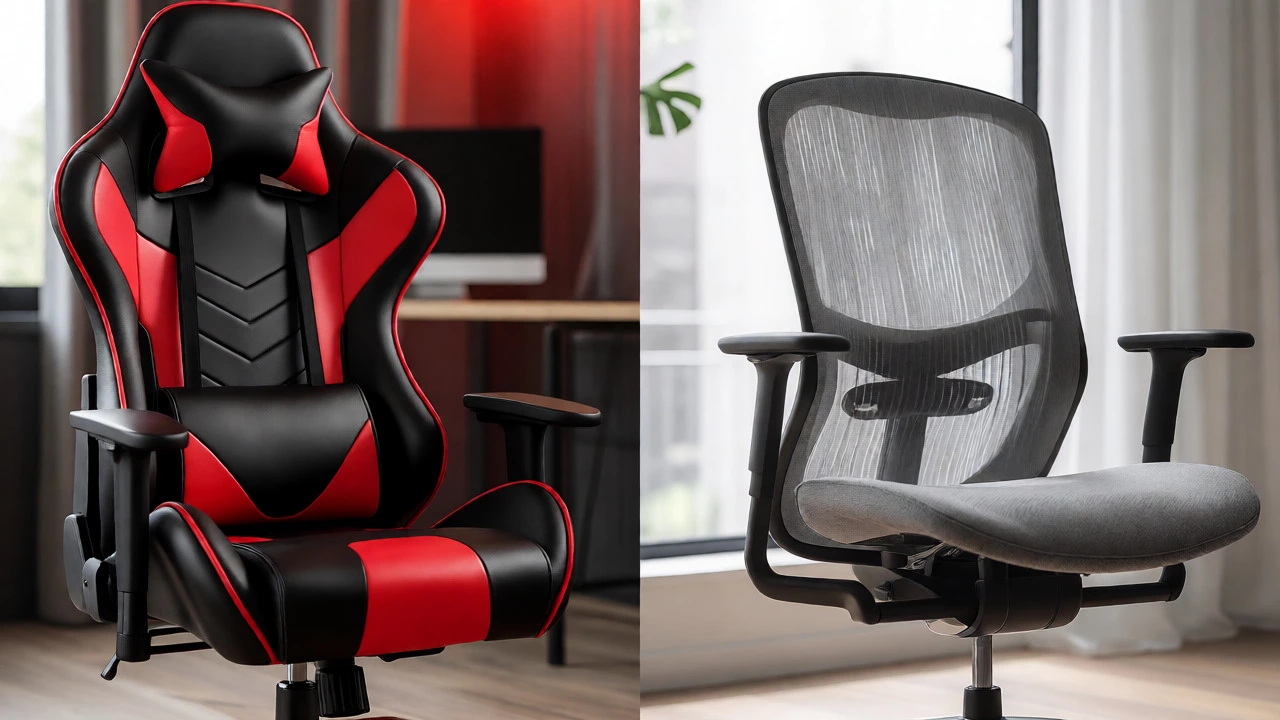
To understand why you might choose one over the other, you have to look at their origins. Most modern gaming chairs are direct descendants of automotive racing seats. The design prioritizes lateral support-keeping you snugly held in place during high-speed turns. This translates to a bucket-seat shape with prominent side bolsters on the backrest and seat cushion.
Office chairs, specifically ergonomic models, evolved from medical research into human anatomy. Their primary goal isn't to hold you in place; it's to allow micro-movements while maintaining spinal alignment. Brands like Herman Miller and Steelcase spent decades refining mechanisms that adapt to your posture changes automatically. A standard office chair usually features a flatter seat pan and a more open backrest design, allowing for greater freedom of movement.
This distinction matters because your daily activity dictates your needs. If you sit perfectly still, focused on a single screen, the rigid support of a gaming chair might feel secure. But if you shift positions often, lean forward to type, or recline to read, the restrictive nature of a racing-style seat can become annoying quickly.
Ergonomics and Adjustability: Where They Differ
Adjustability is where the rubber meets the road. High-end office chairs offer synchronized tilt mechanisms, adjustable seat depth, and 4D armrests that move up, down, left, right, forward, and backward. These features allow you to customize the chair to your exact limb lengths and angles.
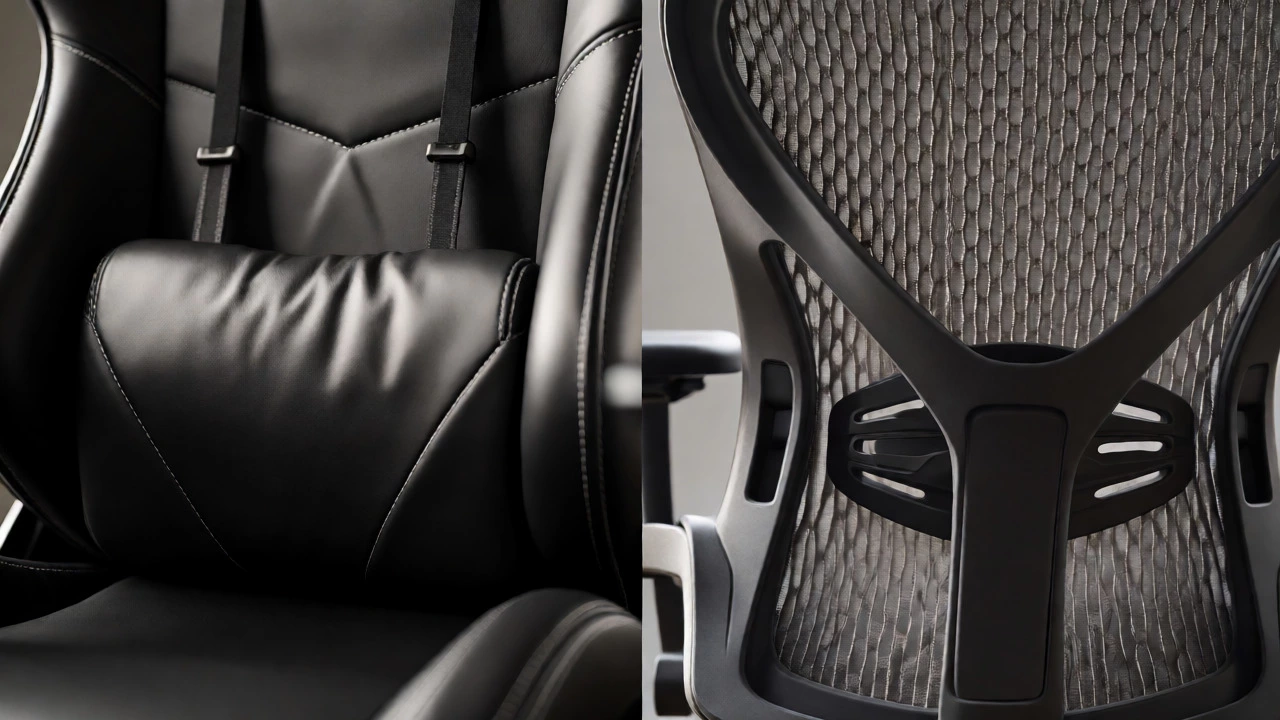
Gaming chairs typically offer fewer adjustment points. While many now include adjustable lumbar and neck pillows (often attached via straps), these are external add-ons rather than integrated mechanical adjustments. You can move the pillow up or down, but you can’t adjust the actual curvature of the backrest itself. Some premium gaming brands have started integrating better ergonomics, but generally, you get less precision control compared to a dedicated ergonomic office chair.
| Feature | Gaming Chair | Ergonomic Office Chair |
|---|---|---|
| Lumbar Support | External pillow (adjustable height) | Integrated mechanism (adjustable tension/height) |
| Seat Pan | Bucket style (restrictive sides) | Flat or waterfall edge (open sides) |
| Recline Angle | Often up to 180 degrees (flat) | Usually limited to 135 degrees |
| Armrests | Fixed or basic height/width | 4D or 5D (full range of motion) |
| Material | Faux leather or PU (less breathable) | Mesh or fabric (high breathability) |
Notice the recline angle difference. That ability to lay completely flat is a major selling point for gamers who want to nap or watch movies. For office workers, however, a 180-degree recline is rarely useful and can sometimes encourage poor posture habits like slouching.
Comfort and Temperature Control
If you live in Auckland, you know our summers can be humid. This brings us to material choice. Most gaming chairs use polyurethane (PU) leather or genuine leather. While they look sleek and are easy to wipe clean, they trap heat. After two hours of intense gaming or work, you might find yourself sticking to the seat. Ventilated holes help, but they don’t solve the fundamental issue of non-breathable materials against skin.
Ergonomic office chairs increasingly rely on mesh backs and fabric seats. Mesh allows air to circulate around your back, keeping you cool. It also provides dynamic support-the mesh stretches slightly as you lean, offering resistance that feels natural. If you tend to run hot, an office chair is almost always the superior choice for long-term comfort.
However, padding density varies wildly across both categories. Cheap gaming chairs often use low-density foam that flattens out within six months, leading to bottom pain. High-quality office chairs use high-resilience foam that maintains its shape for years. Always check reviews for comments on long-term durability before buying either type.
Aesthetics and Workspace Integration
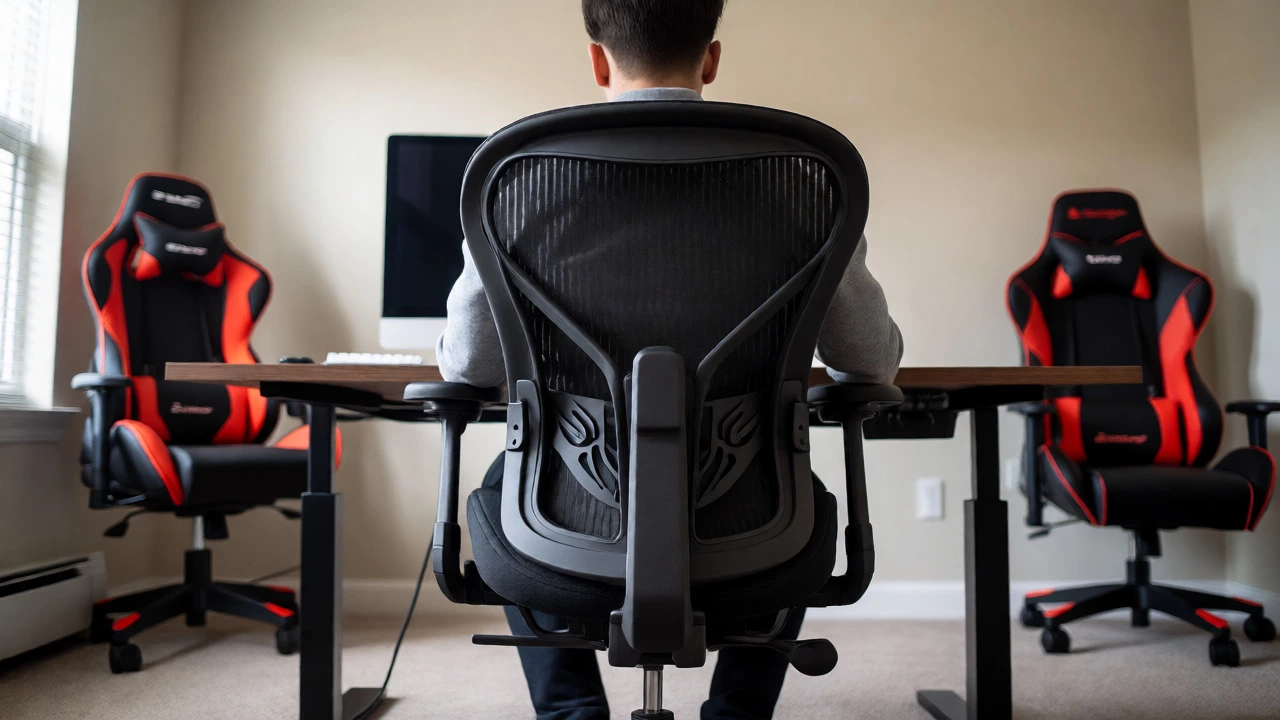
Let’s be honest: looks matter. A bright red and black gaming chair screams "gamer." In a professional home office shared with clients or partners, it might clash with the decor. An ergonomic office chair, particularly in neutral tones like grey, black, or white, blends seamlessly into most interior designs. It signals professionalism without saying a word.
That said, gaming aesthetics are evolving. Many modern gaming chairs now come in all-black, white, or minimalist designs that don’t look overly childish. If you love the racing silhouette but hate the neon colors, look for monochrome options. Conversely, some office chairs are adopting bolder colors and shapes to appeal to younger demographics, further blurring the visual lines.
Price and Value Proposition
Entry-level gaming chairs start around $150-$200. Entry-level ergonomic office chairs often start higher, around $250-$300, because the engineering required for adjustable mechanisms costs more. However, the value proposition shifts at the high end.
A top-tier gaming chair might cost $600-$800. A top-tier ergonomic office chair, like the Herman Miller Aeron or Embody, can cost $1,000-$1,500. Is the extra $700 worth it? For someone sitting 8+ hours a day, yes. The health benefits of proper ergonomic support reduce strain on the lower back and neck, potentially saving money on physiotherapy later. For casual users sitting 2-3 hours a day, a mid-range gaming chair offers better bang-for-buck regarding features like reclining and cup holders.
Who Should Buy What?
Choose a gaming chair if:
- You spend significant time reclining or napping in your chair.
- You prefer a snug, supportive fit that holds your shoulders in place.
- You enjoy the specific aesthetic of racing seats.
- You have a tighter budget but want many visible features (pillows, recline).
Choose an office chair if:
- You sit upright for long periods working at a desk.
- You run hot and need breathable materials.
- You require precise adjustments for seat depth and armrest position.
- You want a chair that looks professional in a shared workspace.
Final Verdict: Form Follows Function
There is no universally "better" option. It comes down to what you do while sitting. If your primary activity is gaming, especially console gaming where you might lean back heavily, a gaming chair’s deep recline and plush padding serve you well. If your primary activity is typing, reading, or professional work requiring focus and posture maintenance, an ergonomic office chair wins on health and comfort metrics.
Don’t buy based on logos or streamer endorsements alone. Sit in them if possible. Feel the lumbar support. Check if the armrests hit your elbows correctly. Your spine doesn’t care about brand loyalty; it cares about support. Choose the tool that respects your anatomy.
Are gaming chairs bad for your back?
Not inherently, but cheap ones can be. Low-quality gaming chairs often lack proper lumbar integration, relying on loose pillows that slip out of place. This forces your muscles to work harder to maintain posture, leading to fatigue. High-end gaming chairs with built-in lumbar support are comparable to mid-range office chairs in terms of back health.
Can I use a gaming chair for work?
Yes, absolutely. Many people use gaming chairs for remote work. Just be aware that the restricted side wings might limit how far you can twist to reach items on your desk. Ensure the chair has adjustable armrests to prevent shoulder strain while typing.
Why do gaming chairs have so many pillows?
Because the base frame is designed for racing cars, not human spines. The pillows compensate for the lack of integrated ergonomic curves. They provide customizable support for the neck and lower back, allowing users to adjust the fit since the chair structure itself is fixed.
Which lasts longer: gaming or office chairs?
High-end office chairs generally last longer due to superior gas lift cylinders and durable mesh/fabric materials. Budget gaming chairs often suffer from peeling faux leather and collapsing foam within 1-2 years. Look for warranties of 5+ years as a sign of longevity in either category.
Is mesh better than leather for office chairs?
For comfort and temperature regulation, yes. Mesh promotes airflow and reduces sweat buildup. Leather (or PU) is easier to clean and looks more luxurious but retains heat. If you live in a warm climate or tend to overheat, mesh is the practical choice.