Coffee Table Height Compatibility Checker
Enter Your Measurements
Measure from the floor to the top of the seat cushion (not the frame).
Enter measurements above to see if your setup follows the Golden Rule.
You’ve just bought that sleek, low-profile coffee table is a piece of furniture placed in front of a sofa or armchairs, typically used for holding drinks, books, and decorative items. It looks amazing in the showroom. But when you drag it into your living room and place it in front of your plush sectional, something feels off. Your feet hit the edge. You have to crane your neck to see the remote. Is this a disaster waiting to happen? Or are you overthinking it?
The short answer is: yes, it can be okay, but only under specific conditions. If your coffee table is significantly lower than your seat cushions, you’re likely setting yourself up for frustration. However, if the difference is subtle, or if you have a specific aesthetic goal, a lower table might actually work. Let’s break down the math, the ergonomics, and the style rules so you don’t end up with a living room that looks good but feels terrible.
The Golden Rule: The 1-3 Inch Gap
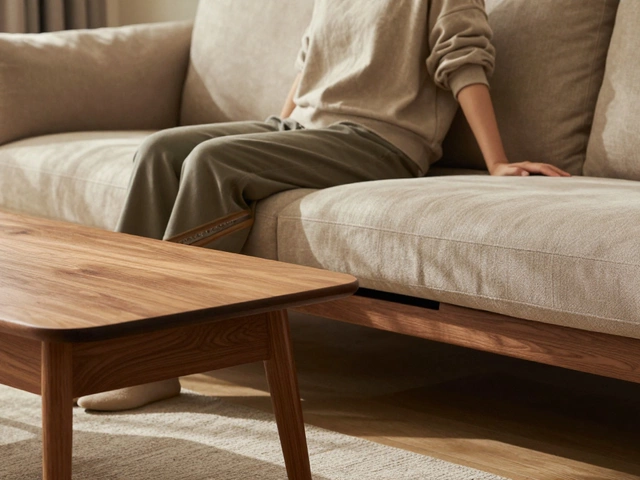
In interior design, there is a widely accepted standard for how high a coffee table should sit relative to your sofa. The rule is simple: the top of the coffee table should be within one to three inches of the height of the sofa’s seat cushion.
Why this range? It’s all about reach. When you’re sitting back, relaxed, you want to be able to rest your elbows on the arms of the sofa while your hands naturally fall onto the surface of the table. If the table is too high, your shoulders hike up, creating tension. If it’s too low, you’re constantly leaning forward, straining your back to grab a drink or adjust the TV volume.
Most standard sofas have a seat height between 17 and 19 inches from the floor. This means the ideal coffee table height usually falls between 16 and 18 inches. If your couch sits at 18 inches, an 18-inch table is perfect. A 16-inch table is acceptable. A 14-inch table? That’s where problems start.
| Sofa Seat Height | Ideal Coffee Table Height | Status |
|---|---|---|
| 16 inches | 14-16 inches | Perfect Match |
| 18 inches (Standard) | 16-18 inches | Perfect Match |
| 20+ inches (High-back) | 18-20 inches | Needs Taller Table |
When a Lower Table Actually Works
Just because the math says "no" doesn’t mean the eye says "no." There are scenarios where a coffee table that is lower than the couch creates a stunning visual effect. This is common in modern, mid-century, or Japanese-inspired interiors.
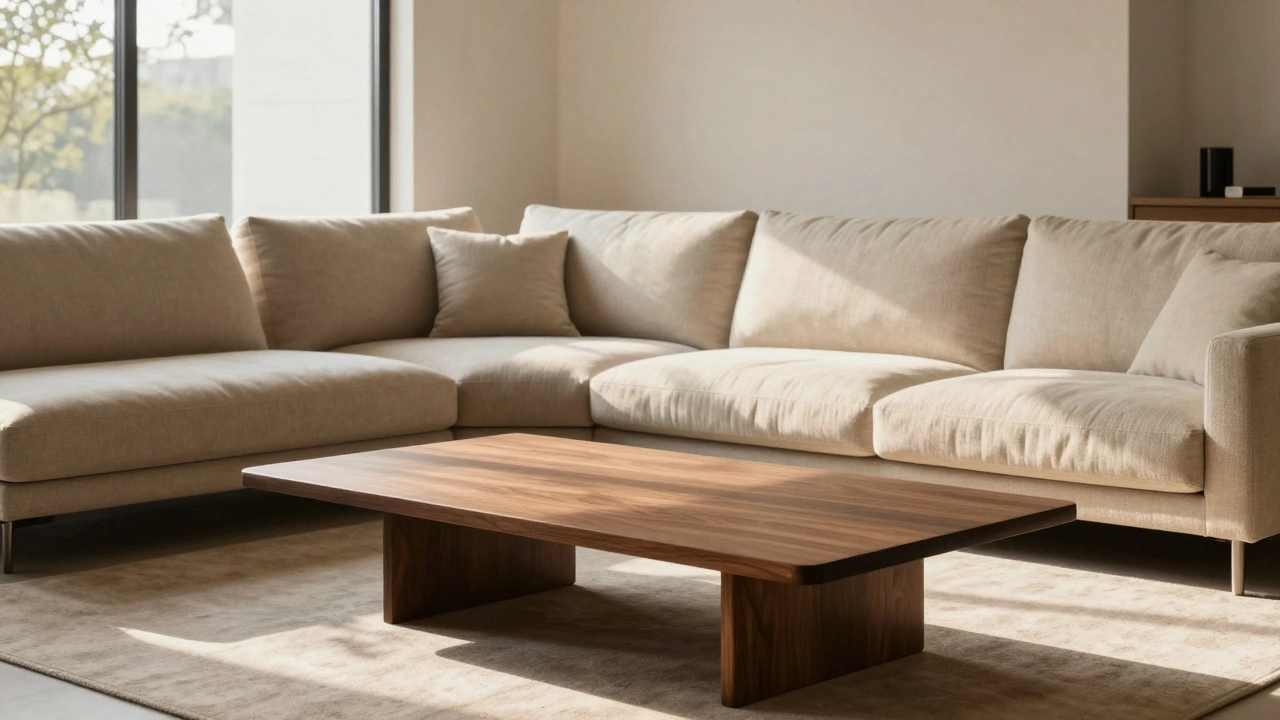
If you have a deep, low-slung sofa (like a sectional is a large modular sofa composed of multiple sections that can be arranged in various configurations.), a slightly lower table can emphasize the horizontal lines of the room. It makes the space feel more grounded and expansive. In these cases, the gap between the table and the seat might be 4 or 5 inches, but the overall silhouette remains cohesive because both pieces share a similar visual weight.
Another exception is when you use a layered approach. Instead of one massive table, you might use a cluster of smaller tables. One could be level with the sofa, while another, lower nesting table sits slightly behind or to the side. This adds depth and prevents the "one-size-fits-all" look. Here, the lower table isn’t the primary surface; it’s an accent. As long as your main functional surface is at the right height, the lower piece serves purely decorative purposes.
The Ergonomic Nightmare: Why Too Low Hurts
Let’s talk about the physical reality of using a table that is 5 or 6 inches lower than your seat. It sounds minor, but try this experiment: sit in your chair now, and imagine placing a book on the floor next to you. Now imagine trying to read it without bending your knees or twisting your spine. That’s what a severely low coffee table does to your posture.
Over time, consistently reaching down to a low surface can lead to:
- Lower back strain: You’re constantly hunching forward to bridge the gap.
- Neck pain: Looking down at a phone or book on a low surface forces your head into a flexed position.
- Shin bruising: If the table is not only low but also has sharp edges, your shins will collide with it every time you stretch out. This is especially true if the table lacks clearance underneath.
For households with children or pets, a very low table can also become a tripping hazard or a barrier that blocks movement around the seating area. If the table is too close to the floor, it disappears visually, making people walk into it unexpectedly.

Visual Proportions: Width and Depth Matter Too
Height isn’t the only dimension that matters. If your coffee table is lower than your couch, its width and depth need to compensate to maintain balance. A small, low table in front of a huge sofa looks like a toy. It creates a visual disconnect where the furniture feels unanchored.
A good rule of thumb for width is that the coffee table should be about two-thirds the length of your sofa. If your sofa is 84 inches wide, aim for a table that is roughly 56 inches wide. If you go lower in height, you generally need to go wider in footprint to keep the visual weight proportional. Think of it like a pyramid: the base needs to be broad enough to support the structure above it.
Depth is equally critical. You want at least 12 to 18 inches of clearance between the edge of the sofa and the edge of the coffee table. This allows legs to tuck in comfortably and provides walking space. If the table is lower, you might instinctively pull it closer to the sofa to make it easier to reach, which then crowds the space. Measure twice before you buy.
Fixing the Problem Without Buying New Furniture
So, you already have that low table, and it’s not working. Do you need to toss it? Not necessarily. There are several clever hacks to raise the effective height of your coffee table or adjust the perception of the gap.
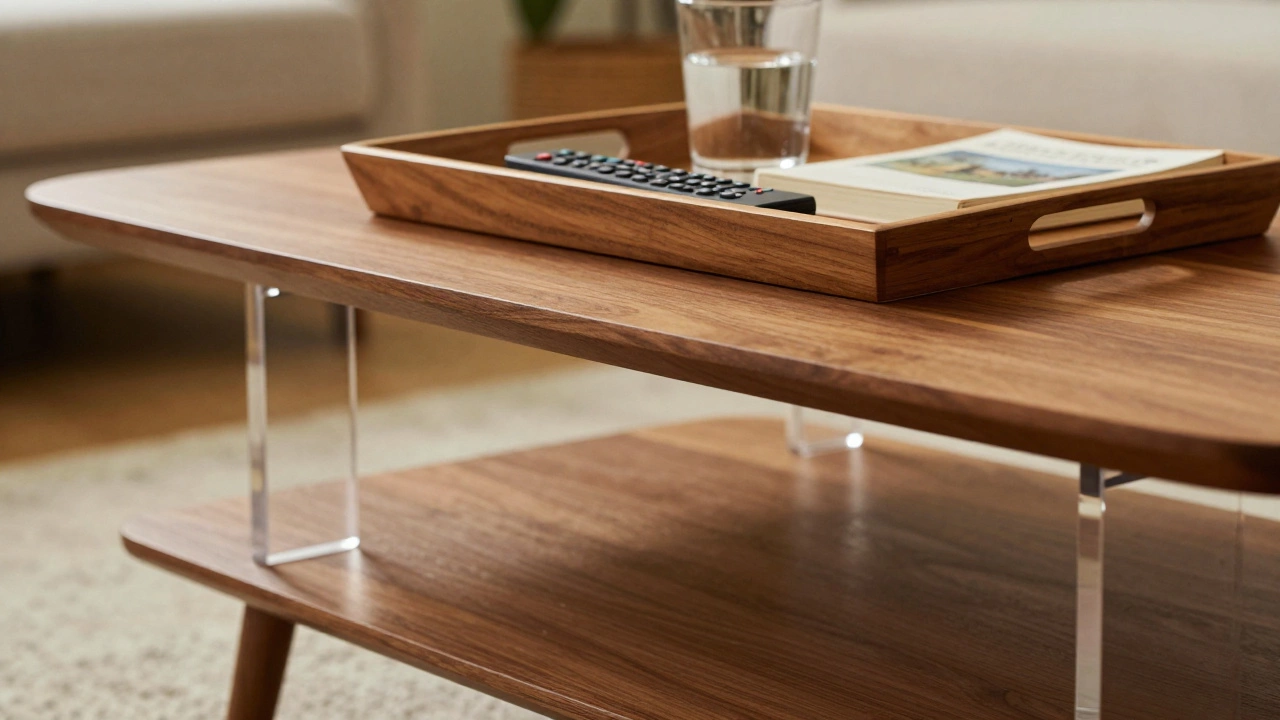
- Add Risers: Simple wooden blocks or acrylic risers can be placed under the legs of the table. Even raising it by 2 inches can make a world of difference in ergonomics. Just ensure the table is stable and won’t wobble.
- Use a Tray: Place a large, sturdy serving tray on top of the low table. This raises the surface level for your remotes, drinks, and books, bringing them closer to eye level while keeping the table itself intact.
- Layer with a Ottoman: If the table is too low, consider replacing it entirely with a large ottoman or bench that matches the sofa’s height. Ottomans are versatile-they can serve as footrests, extra seating, and coffee tables all in one.
- Adjust the Sofa Cushions: Sometimes the issue isn’t the table, but sagging sofa cushions. Fluffing or replacing the seat cushions can raise the sitting height by an inch or two, bringing it closer to the table’s level.
Style vs. Function: Making the Call
Ultimately, your living room is for living. While aesthetics matter, comfort should always win. If a lower-than-couch coffee table looks beautiful in a magazine but leaves you rubbing your shins and straining your neck after 20 minutes, it’s not the right choice for your home.
Consider who uses the space most. If you’re an elderly person with mobility issues, a higher table is essential for easy access. If you have toddlers, a lower, rounded-edge table might be safer and easier for them to climb onto (with supervision). If you’re a gamer who spends hours on the couch, ergonomic alignment is non-negotiable.
Don’t be afraid to break the rules if you understand why they exist. A lower table can work if it’s part of a deliberate design scheme with low-seating furniture. But if you’re pairing a standard-height couch with a floor-level table just because it was on sale, you’ll likely regret it once the novelty wears off.
Final Thoughts on Living Room Harmony
Furniture isn’t just about individual pieces; it’s about how they interact. The relationship between your coffee table and your couch sets the tone for the entire room. A well-proportioned setup feels effortless. You don’t think about the height because everything just works.
Before you commit to a new purchase, measure your current sofa’s seat height. Take that number to the store. Look for tables that fall within that 1-3 inch window. If you fall in love with a lower piece, ask yourself: "Can I live with the ergonomic trade-off?" If the answer is no, keep looking. Your back-and your remote control-will thank you.
How much lower can a coffee table be than a sofa?
Ideally, no more than 3 inches lower. Beyond that, you risk ergonomic issues like back strain and shin injuries. A difference of 1-2 inches is generally acceptable for aesthetic variety, but anything more requires careful consideration of usage patterns.
What is the standard height for a coffee table?
The standard height for most coffee tables ranges from 16 to 18 inches. This aligns with the average seat height of most sofas, which is typically between 17 and 19 inches.
Can I use a low coffee table with a high-back sofa?
It’s challenging. High-back sofas often have higher seat heights (20+ inches). Pairing them with a low table creates a significant gap. Consider using a taller console table behind the sofa or a cluster of tables with varying heights to balance the visual weight.
How do I fix a coffee table that is too low?
You can add leg risers to increase the height by 1-3 inches. Alternatively, use a large tray on top to raise the usable surface level. If these solutions aren’t viable, consider replacing the table with an ottoman or a taller model.
Does the width of the coffee table matter if it’s lower?
Yes. If the table is lower, it should ideally be wider to maintain visual proportion. A narrow, low table in front of a large sofa can look disproportionate and unstable. Aim for a table that is at least two-thirds the length of your sofa.