Patio Furniture Durability Estimator
Select your preferences below to see which materials best suit your environment and how long they are likely to last.
Your Environment
Top Recommendations
Select options to generate recommendations.
Detailed Material Analysis
| Material | Estimated Lifespan | Maintenance Level | Suitability Score | Notes |
|---|
Living in Auckland means your patio takes a beating. One minute it’s baking under UV rays, the next it’s getting hammered by southerly winds and sideways rain. If you’ve ever dragged a cheap resin chair inside because it cracked after one winter, you know the pain. The question isn’t just about what looks good; it’s about what survives. You want furniture that stays outside year-round without turning into rusted junk or moldy mush.
So, what actually holds up? It comes down to material science. Some materials fight nature; others surrender to it. Here is the breakdown of which patio furniture types offer the best defense against the elements, ranked by real-world durability.
Aluminum: The Low-Maintenance King
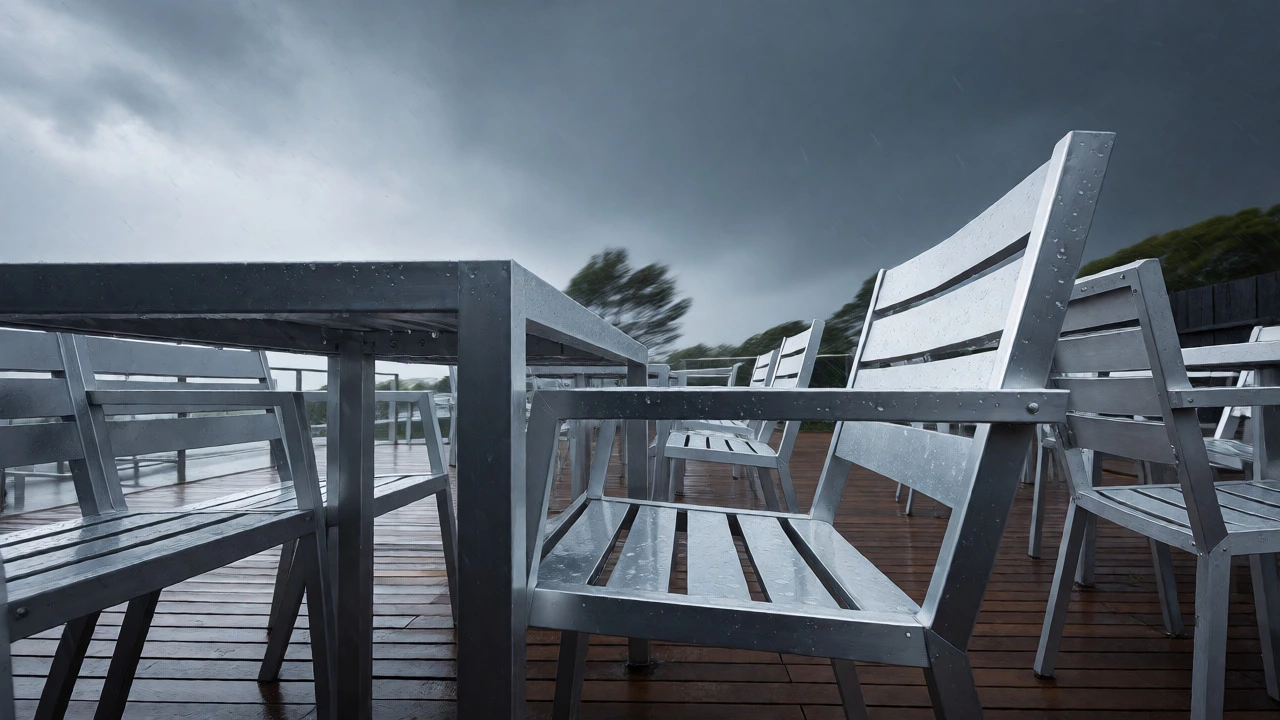
If you hate maintenance, aluminum is your best friend. Unlike steel, it doesn’t rust. Instead, it oxidizes, forming a protective layer that stops corrosion in its tracks. Most modern outdoor aluminum frames are powder-coated, which adds a thick, durable skin that resists chipping and fading.
Aluminum is a lightweight metal alloy commonly used in outdoor settings due to its high strength-to-weight ratio and natural resistance to corrosion. While raw aluminum can pit in salty coastal air (a big deal if you live near Piha or Mission Bay), marine-grade aluminum with proper coating shrugs off salt spray like water off a duck’s back.
- Pros: Lightweight (easy to move), never rusts, low upkeep.
- Cons: Can get hot in direct sun, feels less substantial than wood.
- Pro Tip: Look for "marine-grade" or "powder-coated" labels. Avoid thin, hollow tubes that bend easily in strong winds.
Teak Wood: The Natural Survivor
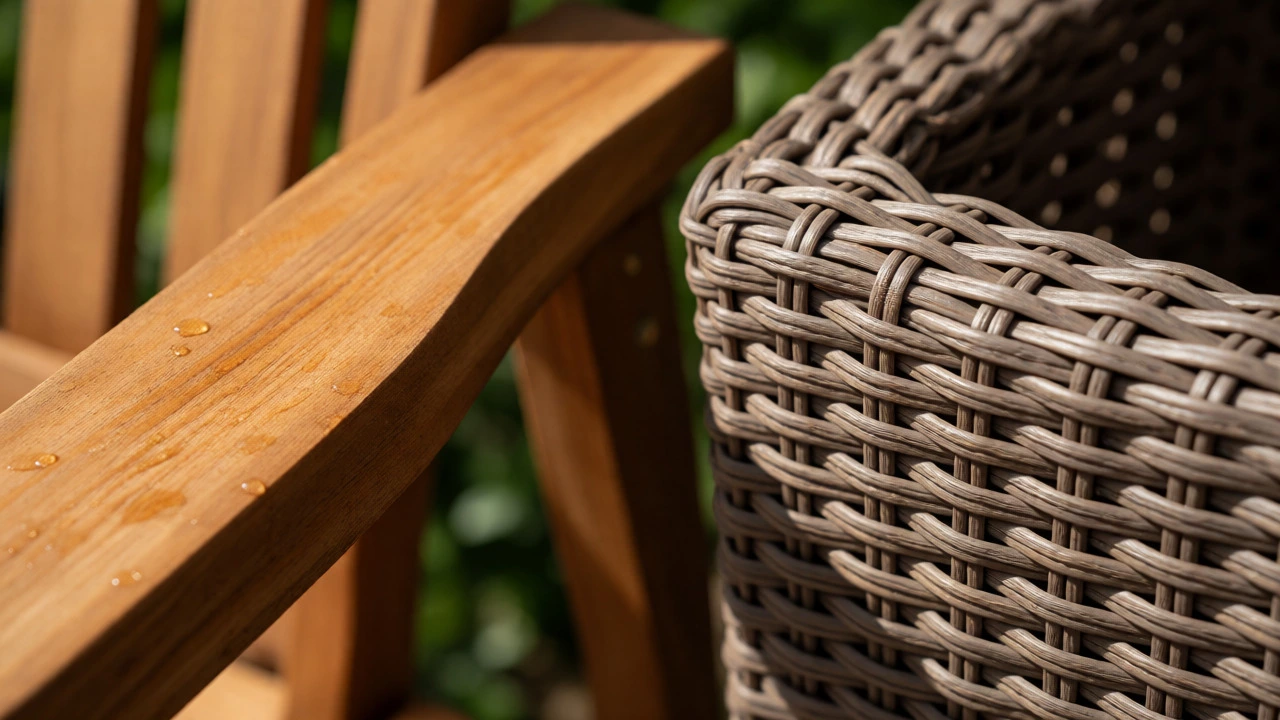
Teak isn’t just pretty; it’s practically indestructible. This hardwood from Southeast Asia contains natural oils and rubber that repel water, insects, and fungi. That’s why ships have used it for centuries. In a backyard context, teak furniture can last decades without treatment.
Over time, untreated teak turns a silvery-grey patina. Some people love this look; others prefer the rich golden-brown color. If you want to keep the gold tone, you’ll need to oil it once or twice a year. But here’s the secret: skipping the oil doesn’t hurt the wood’s structural integrity. It just changes the color. Teak is the only wood that truly thrives when left alone.
| Material | Lifespan | Maintenance Level | Weather Resistance |
|---|---|---|---|
| Teak | 50+ years | Low | Excellent |
| Aluminum | 15-20 years | Very Low | High |
| HDPE Wicker | 10-15 years | Medium | High |
| Eucalyptus | 5-10 years | High | Moderate |
| Vinyl/PVC | 5-7 years | Low | Low |
All-Weather Wicker: Style Meets Science
Wicker looks classic, but traditional rattan wicker hates moisture. It swells, cracks, and grows mold. Enter HDPE (High-Density Polyethylene) wicker, often called "all-weather wicker." This synthetic resin mimics the look of natural fiber but is engineered to withstand UV exposure and freezing temperatures.
The key difference between cheap plastic wicker and HDPE is UV stabilizers. Cheap versions fade within two summers. Quality HDPE includes additives that block UV degradation, keeping the color vibrant for over a decade. When shopping, squeeze the weave. If it feels brittle or snaps easily, it’s likely PVC or low-grade polypropylene. Good HDPE has a slight flex and a matte finish, not a glossy, toy-like shine.
Stainless Steel: Strength With Caveats
Steel is stronger than aluminum, but it’s heavier and prone to rust. Stainless steel solves the rust problem, but not all stainless is created equal. You need grade 316 stainless steel for true weather resistance, especially in coastal areas. Grade 304 is fine for inland suburbs with dry winters, but near the ocean, salt will attack it.
Check the welds. Rust often starts where the metal was heated during manufacturing. If the welds aren’t polished and sealed, you’ll see orange spots within months. Stainless steel is heavy, so it won’t blow away in an Auckland gale, but moving it around for cleaning is a workout.
Textiles: The Weakest Link
Furniture frames might survive, but cushions usually don’t. Standard polyester cushions absorb water, leading to mildew and rotting foam. For true weather resistance, look for solution-dyed acrylic fabrics like Sunbrella or Outdura. These fabrics are dyed before weaving, so the color goes through the entire fiber. They resist fading, dry quickly, and resist mold.
Even better, choose quick-dry foam inserts. Traditional foam acts like a sponge. Quick-dry foam has open cells that let water drain out immediately. If you leave cushions out overnight in rain, quick-dry foam saves them from becoming soggy bricks. Just remember: no fabric is invincible. Storing covers or bringing cushions in during prolonged storms extends their life significantly.
What to Avoid Completely
Some materials look tempting on price tags but fail fast in our climate.
- Wrought Iron: Unless it’s perfectly coated every year, it will rust. Once rust starts, it spreads under the paint, causing flakes and sharp edges.
- Bamboo: Great indoors, terrible outdoors. It splits, molds, and warps unless heavily treated, which defeats the eco-friendly appeal.
- Standard Plastic (Polypropylene): Becomes brittle in cold weather and fades rapidly in UV light. It cracks at the joints within three years.
- Untreated Pine: Softwood rots quickly when wet. Even pressure-treated pine needs sealing annually to prevent splintering and decay.
Local Climate Considerations
Auckland’s weather is tricky. It’s not just rain; it’s humidity and wind. High humidity accelerates mold growth on porous materials. Wind dries out wood, causing cracking if the wood lacks natural oils (like teak). Coastal salt spray corrodes metals faster than in inland areas.
If you live within 5km of the coast, prioritize aluminum or teak. Avoid steel and iron. If you’re inland, you have more flexibility, but UV protection remains critical for plastics and fabrics. Always check the warranty. A reputable brand offering a 5-year warranty on fading and rust is signaling confidence in their materials’ ability to handle local conditions.
Practical Maintenance Hacks
Even the most weather-resistant furniture needs basic care. Here’s how to maximize lifespan without spending hours scrubbing.
- Clean regularly: Dirt traps moisture and accelerates decay. Hose down aluminum and wicker monthly with soapy water.
- Elevate legs: Use rubber feet or stone pavers to keep wooden or metal legs off wet grass or concrete. Standing water causes bottom-up rot and corrosion.
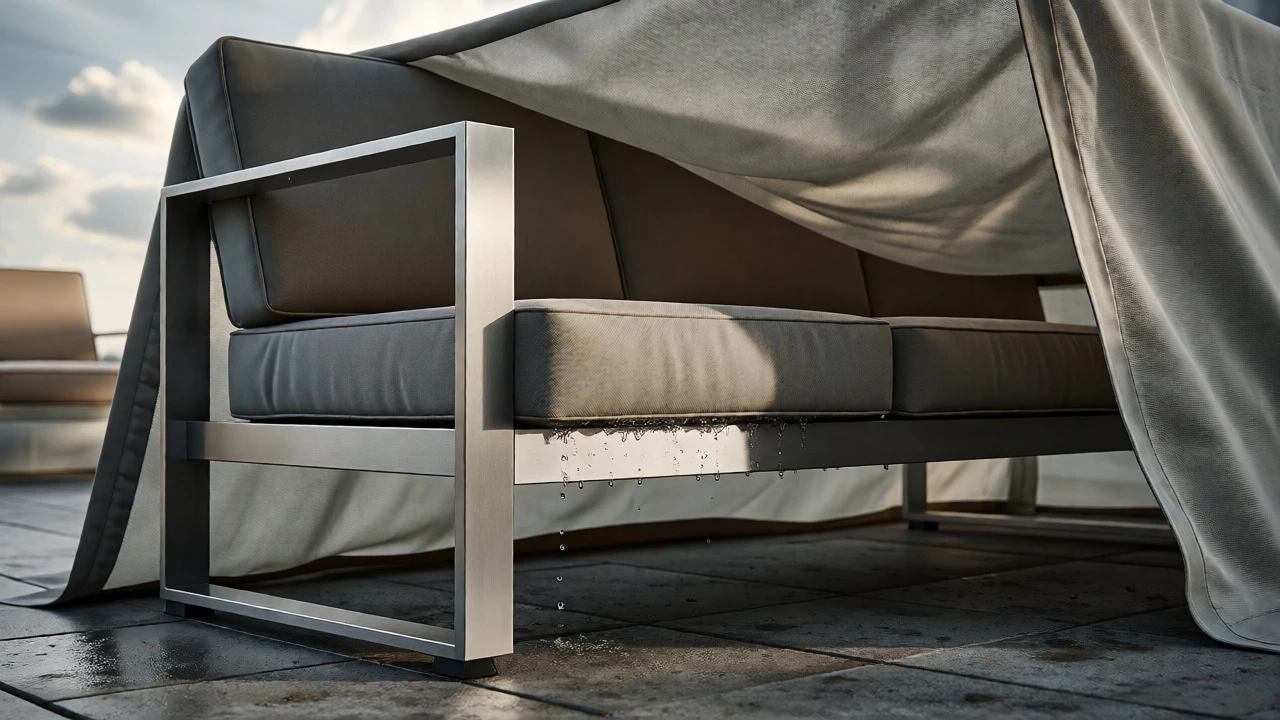
- Use breathable covers: Never use plastic tarps. They trap condensation, creating a greenhouse effect for mold. Use canvas or specialized breathable outdoor covers.
- Inspect early: Check for small rust spots or loose screws every few months. Fixing a tiny issue now prevents replacing the whole set later.
Choosing the right material depends on your tolerance for maintenance versus your budget. Aluminum offers the best balance of cost, weight, and durability for most households. Teak is the premium choice for those who want heirloom-quality pieces. All-weather wicker provides style with decent longevity if you pick high-quality HDPE. Whatever you choose, avoid the cheap stuff. It costs more in the long run when you’re buying replacements every second summer.
Is aluminum better than steel for patio furniture?
For most homeowners, yes. Aluminum does not rust, whereas steel requires perfect coating maintenance to prevent corrosion. Aluminum is also lighter, making it easier to rearrange. However, steel is stronger and more stable in very high winds if properly maintained.
Does teak furniture need to be oiled?
No, not for durability. Teak contains natural oils that protect it from water and insects. Oiling is purely aesthetic to maintain the golden-brown color. If you skip oiling, the wood will turn silver-grey but remain structurally sound for decades.
How do I tell if wicker is all-weather?
Look for HDPE (High-Density Polyethylene) labeling. Real all-weather wicker has a matte finish and feels flexible when squeezed. Cheap vinyl wicker is shiny, brittle, and may crack in cold weather. Also, check if the frame underneath is aluminum or rust-proof steel.
Can I leave cushions outside in the rain?
Only if they are made with quick-dry foam and solution-dyed acrylic fabric. Standard foam cushions act like sponges and will develop mold if left wet for more than 24 hours. During prolonged storms, it is always safer to bring them inside or use breathable covers.
Which wood lasts longest outdoors?
Teak is the top performer due to its natural oil content. Other durable options include ipe and acacia, though they require more frequent sealing than teak. Eucalyptus is a mid-range option that needs regular maintenance to prevent splitting.