Daybed Space Efficiency Calculator
Calculate how much space you save by using a daybed instead of separate sofa and bed furniture. Based on standard furniture dimensions from the article.
Space Savings Summary
With a standard daybed, you save 0 ft² of space compared to separate furniture.
That's 0% more usable area in your room.
Why this matters: "A daybed couch is one of the most space-efficient furniture choices available." - Article
A daybed couch isn’t just another name for a sofa bed. It’s a distinct piece of furniture with its own history, design, and purpose. If you’ve ever seen one in a dorm room, a guest room, or a sunroom and wondered how it differs from a regular couch or futon, you’re not alone. Many people confuse the two, but the truth is, a daybed couch offers something different - and sometimes better - than a traditional sofa bed.
What Exactly Is a Daybed Couch?
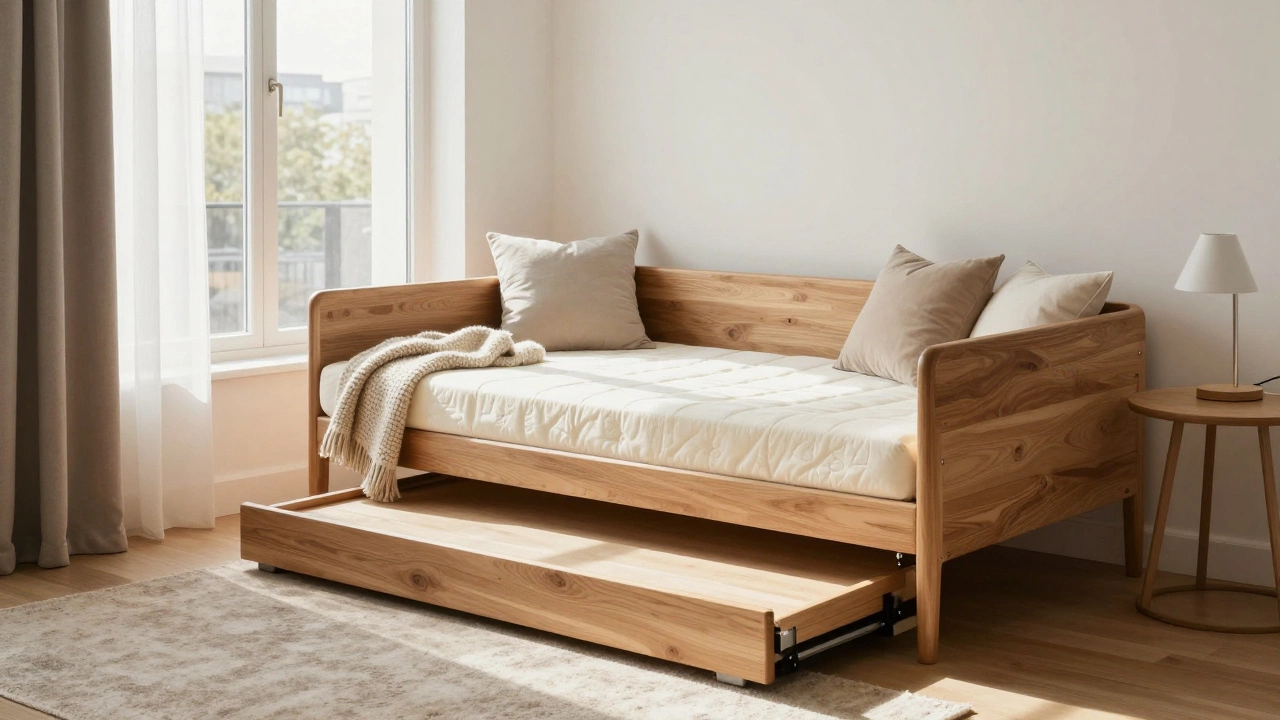
A daybed couch is a frame designed to function as both a seating area during the day and a sleeping surface at night. Unlike a sofa bed, which folds or pulls out to reveal a mattress, a daybed typically has a fixed, full-sized mattress that sits on a sturdy frame with three sides: two arms and a backrest. It often looks like a small sofa with a trundle or storage drawer underneath for extra space. The key difference? No moving parts. No awkward unfolding. Just a clean, simple design that works as-is.
Daybeds are commonly made from wood, metal, or upholstered fabric. You’ll find them in styles ranging from mid-century modern to rustic farmhouse. Many come with a matching trundle, which slides out to create a second sleeping space - perfect for kids’ rooms or occasional guests. Some even have built-in shelves or drawers for storage, turning them into a smart solution for small apartments.
How Is It Different From a Sofa Bed?
This is where most people get confused. A sofa bed is designed primarily as a couch. Its mattress is usually thinner and meant to be pulled out or flipped down into a bed. Over time, the mechanism can wear out. The mattress often doesn’t match the comfort of a regular bed, and the frame can feel flimsy when used daily.
A daybed couch, on the other hand, uses a standard twin or full mattress - the same one you’d find on a regular bed. It doesn’t need to fold, roll, or slide. That means:
- More durable - no mechanical parts to break
- More comfortable - thicker, higher-quality mattress options
- More stable - no wobbling or uneven surfaces
- More versatile - can be used as a seating area without sacrificing comfort
Think of it this way: a sofa bed is a couch that tries to be a bed. A daybed couch is a bed that doubles as a couch. It’s built for both roles from the ground up.
Where Do People Use Daybed Couches?
You’ll find daybed couches in all kinds of spaces - not just guest rooms. Here are the most common uses:
- Guest rooms: A daybed with a trundle gives you two sleeping spots without needing two beds.
- Small apartments: In studio or one-bedroom units, a daybed replaces both a sofa and a bed, saving space and money.
- Home offices: Need a place to sit during the day and nap on breaks? A daybed doubles as a lounge chair and a nap station.
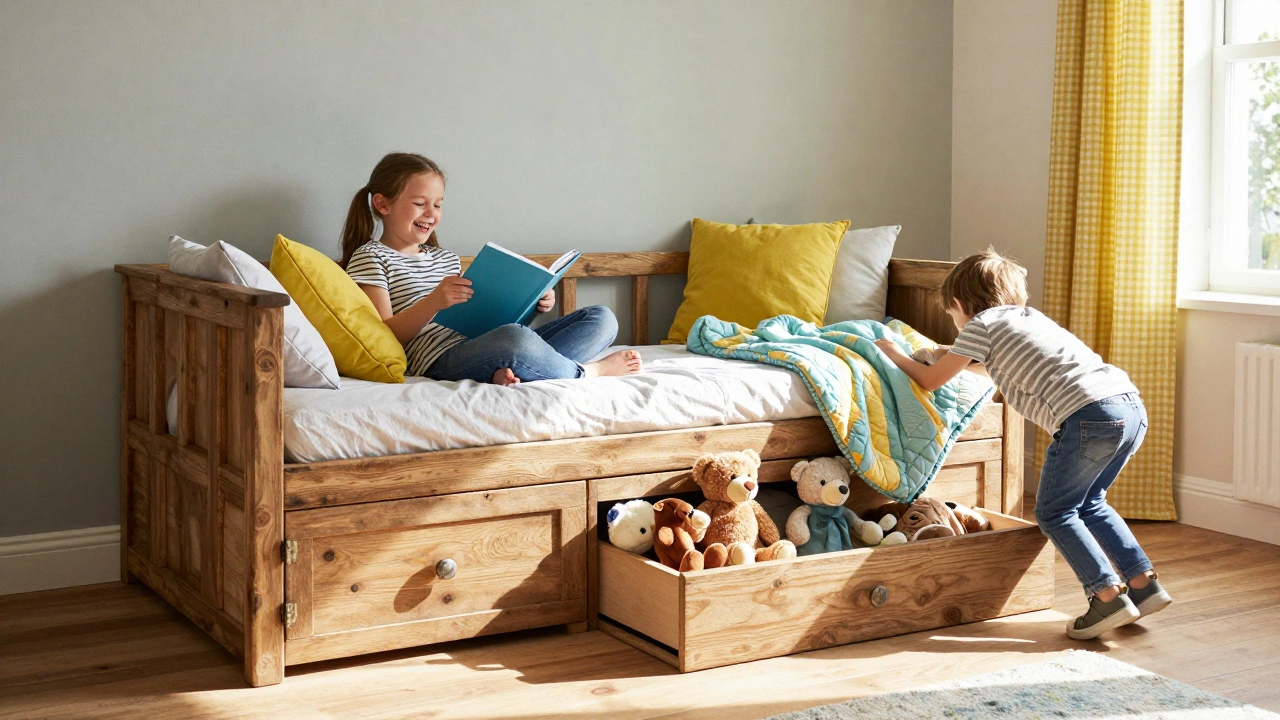
- Children’s rooms: Kids love them. They’re fun to sit on, easy to make up, and the trundle is perfect for sleepovers.
- Reading nooks: Place one by a window with a side table and lamp, and you’ve got the perfect reading corner.
Unlike sofa beds, which often look out of place in living rooms unless they’re high-end, daybeds blend naturally into almost any decor. They’re not bulky. They don’t dominate the room. They just fit.
What Are the Downsides?
No piece of furniture is perfect. Daybed couches have a few trade-offs:
- Not ideal for daily heavy use: If you’re sleeping on it every night, a full-size mattress might feel too narrow compared to a queen or king.
- Limited seating capacity: Most daybeds are designed for one or two people sitting side by side. You can’t comfortably fit three adults like you might on a large sectional.
- No reclining: Unlike recliner sofas or power-lift sofa beds, daybeds stay flat. No footrest. No head tilt.
- Assembly can be tricky: Some models require bolting the frame together, especially metal ones. If you’re not handy, it’s worth paying for delivery and setup.
But if you’re not using it as your primary bed, these aren’t dealbreakers. In fact, most people who choose a daybed couch use it as a secondary sleeping spot - and that’s where it shines.
What to Look for When Buying One
If you’re considering a daybed couch, here’s what actually matters:
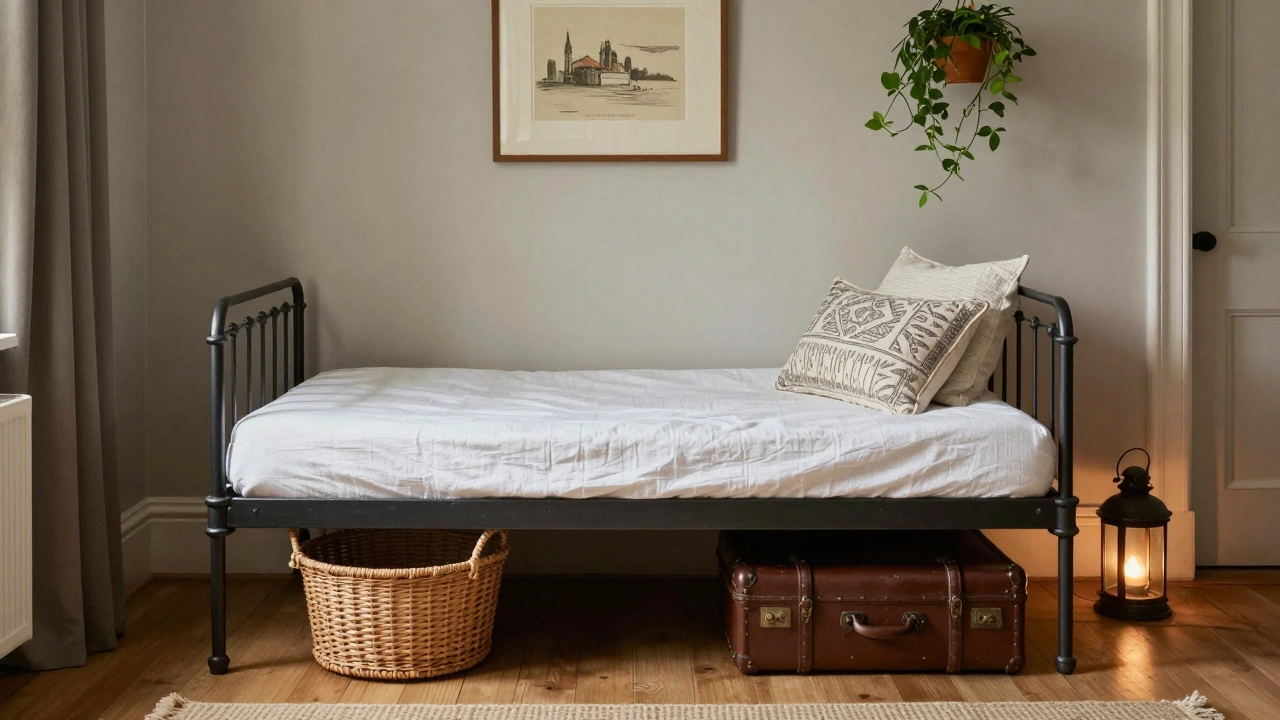
- Frame material: Solid wood lasts decades. Metal is sleek and modern but can feel cold. Avoid particleboard - it warps over time.
- Mattress size: Most are twin or full. Twin fits better in tight spaces. Full gives more room to stretch out.
- Trundle or storage: If you need extra sleeping space, go for a trundle. If you need storage, look for drawers underneath.
- Upholstery: If you have pets or kids, choose stain-resistant fabric. Microfiber or performance cotton works well. Avoid velvet unless you’re okay with lint.
- Height: A lower profile (around 14-16 inches) feels more like a traditional sofa. Higher frames (18+ inches) are easier to get in and out of - good for older adults or those with mobility issues.
Brands like IKEA, West Elm, and Pottery Barn offer solid options, but you’ll find better deals on direct-to-consumer sites like Burrow or Article. Prices range from $300 for a basic metal frame to over $1,200 for upholstered wood with storage.
Real-Life Example: A Studio Apartment Makeover
Last year, a friend moved into a 450-square-foot studio in Portland. She had $800 to spend on furniture. She bought a full-size daybed couch with a wooden frame, a 10-inch memory foam mattress, and a matching trundle for $650. She added a small side table, a floor lamp, and a rug. Now, her living room doubles as a bedroom. She has guests over once a month. She naps on it during weekends. She doesn’t have to store a second mattress. She saved space, money, and stress.
That’s the real power of a daybed couch. It doesn’t just save space - it simplifies life.
Daybed Couch vs. Futon: Which One Should You Choose?
Futons are often confused with daybeds. But here’s the truth:
| Feature | Daybed Couch | Futon |
|---|---|---|
| Frame | Sturdy, fixed (wood or metal) | Lightweight, often folding |
| Mattress | Standard twin/full mattress | Thinner, designed to fold |
| Comfort (sitting) | High - like a sofa | Medium - can feel flat |
| Comfort (sleeping) | High - mattress doesn’t compress | Low to medium - often lumpy |
| Storage | Often has trundle or drawers | None |
| Longevity | 10+ years | 5-7 years |
If you want something that lasts, sleeps well, and looks good, go with the daybed. If you’re on a tight budget and need something temporary, a futon might do - but you’ll likely replace it sooner.
Final Thoughts
A daybed couch isn’t a gimmick. It’s a practical, timeless solution for modern living. Whether you live in a tiny apartment, have frequent guests, or just want a cozy spot to read and nap, it delivers more value than a traditional sofa bed. It doesn’t try to be everything. It just does two things really well: sit and sleep.
And in a world where space is shrinking and budgets are tight, that’s more than enough.
Can a daybed couch be used as a primary bed?
Yes, but only if it’s a full-size model with a high-quality mattress. Twin daybeds are better suited for kids, guests, or small spaces. A full-size daybed with a 10-inch memory foam mattress can work as a primary bed for one person - especially in studios or efficiency apartments. Just make sure the frame is sturdy and supports the weight properly.
Do daybed couches require special bedding?
No. You can use standard twin or full-size sheets, comforters, and pillows. The only difference is the three-sided frame, so you may want to use a back pillow or bolster to fill the gap behind you when sitting. Some people use a fitted sheet with elastic on all sides to keep it snug, especially if the mattress is slightly larger than the frame.
Are daybeds good for small rooms?
Absolutely. Because they combine seating and sleeping in one piece, daybeds reduce the need for multiple furniture items. In a 10x10 room, you can fit a daybed, a small dresser, and a shelf - and still have walking space. They’re one of the most space-efficient furniture choices available.
Can I add a mattress topper to a daybed couch?
Yes, and many people do. A 2- to 4-inch memory foam or latex topper can add comfort, especially if the mattress is thin or feels too firm. Just make sure the topper doesn’t make it hard to sit up or block the trundle if you have one. A fitted topper works best to keep it in place.
Do daybed couches come with warranties?
Most reputable brands offer 1- to 5-year warranties on the frame, especially if it’s solid wood or metal. Mattresses usually have separate warranties - often 10 years for foam or innerspring. Always check the warranty terms before buying. Avoid cheap models with no warranty - they’re likely to break or sag within a year.