Recliner Price & Value Calculator
Estimated Total Investment
$0
Includes base price + estimated hidden fees
Cost Breakdown
Recommended Lifespan
Enter your details to see how much you should really spend and what tier of quality you're getting.
Buying a chair that moves is rarely as simple as picking a color and swiping your card. You sit in it, the footrest pops up, you feel good, and then you see the price tag. That number can swing wildly from $150 to over $3,000. It’s confusing. It’s frustrating. And if you get it wrong, you’re stuck with a piece of furniture that either breaks after six months or costs more than your first car.
The short answer to how much should you spend on a recliner? For most people, the sweet spot lands between $800 and $1,500. This range gets you durable materials, reliable mechanics, and enough comfort to last five to ten years. But "most people" is a broad group. If you are buying for a teenager’s dorm room, that budget is too high. If you have chronic back pain and need specific lumbar support, that budget might be too low.
Let’s break down exactly where your money goes when you buy a recliner, what features justify a higher price, and how to spot a cheap trap before you commit.
The Three Tiers of Recliner Pricing
To understand value, you have to look at the market segments. The recliner industry generally splits into three distinct tiers based on construction quality, mechanism type, and material grade.
| Tier | Price Range (USD) | Lifespan Expectancy | Key Characteristics |
|---|---|---|---|
| Budget | $150 - $400 | 1-3 Years | Fabric upholstery, basic spring mechanisms, particle board frames, limited warranty. |
| Mid-Range | $800 - $1,500 | 5-10 Years | Leather or high-grade fabric, kiln-dried hardwood frames, smooth-gliding mechanisms, better cushion density. |
| Premium/Luxury | $1,500 - $3,000+ | 10-20+ Years | Full-grain leather, custom tailoring, advanced motorized systems, brand reputation (e.g., La-Z-Boy, Leatherman), extended warranties. |
The budget tier is risky. These chairs often use resin-based foams that flatten quickly and metal brackets that bend under heavy use. They are fine for temporary housing or occasional guests, but not for daily relaxation. The mid-range is where the real value lives. Here, manufacturers start using solid wood frames instead of engineered wood, which prevents sagging. The premium tier adds brand prestige, exotic leathers, and sometimes smart-home integration, but the jump in comfort isn't always proportional to the jump in price.
What Actually Drives the Cost?
You aren't just paying for a seat; you're paying for engineering. When you recline, thousands of pounds of force transfer through a small pivot point. Cheap chairs fail here. Let’s look at the components that dictate the final price.
- The Frame: A cheap recliner uses plywood or particle board. A quality one uses kiln-dried hardwoods like oak, maple, or ash. Kiln-drying removes moisture, preventing warping and cracking over time. If the frame flexes when you push on the armrests, walk away.
- The Mechanism: There are two main types: manual and power. Manual mechanisms rely on springs and levers. They are cheaper upfront ($200-$500 less) but require physical effort to operate. Power recliners use electric motors. They add convenience and precision but increase the cost by $300-$600 due to the motor, wiring, and control panel.
- The Cushioning: High-resilience foam holds its shape longer than standard polyurethane foam. Down-blend cushions feel luxurious but require fluffing and offer less structural support. Look for "high-density" or "high-resilience" labels. If the seat feels rock-hard or marshmallow-soft, it’s likely low-quality foam.
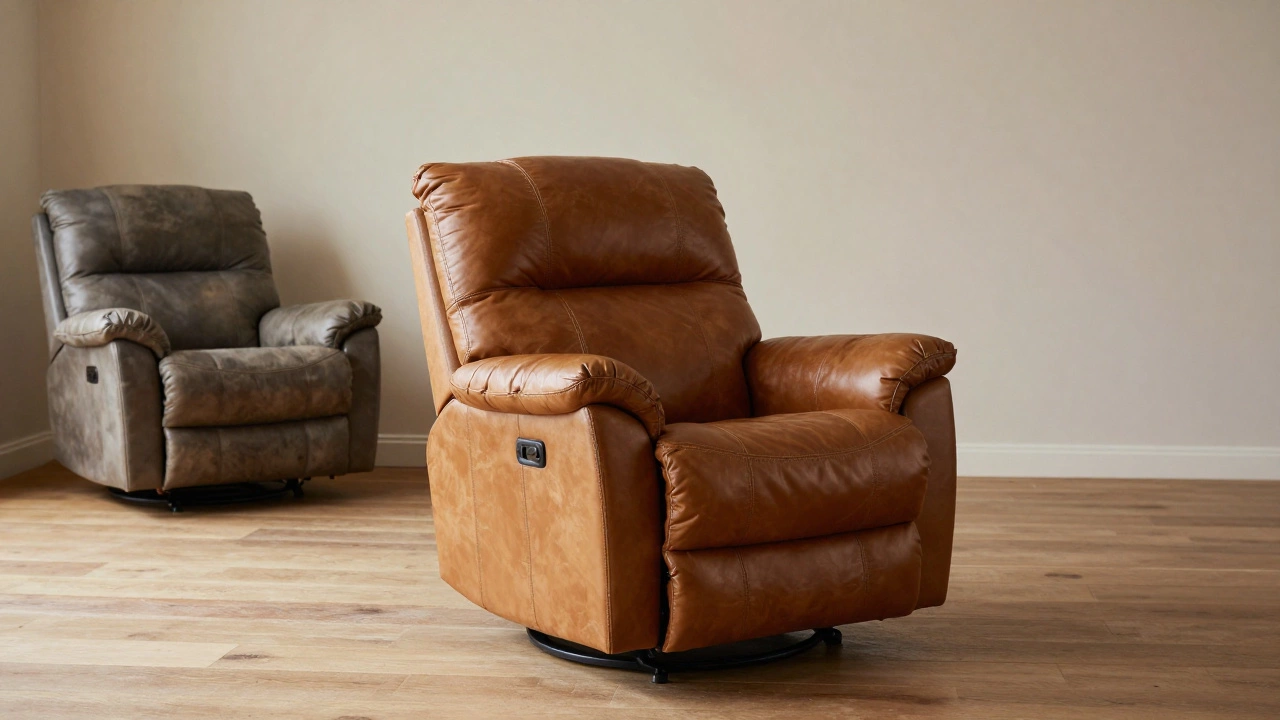
- The Upholstery: Fabric is generally cheaper than leather. However, bonded leather (a thin layer of leather glued to foam) is a trap. It peels within two years. Top-grain or full-grain leather costs significantly more but develops a patina and lasts decades. Microfiber is a durable, affordable middle ground that resists stains and pet hair.
Manual vs. Power: Which Is Worth the Extra Cash?
This is the biggest decision affecting your budget. A manual recliner is mechanically simple. Fewer parts mean fewer things to break. If you have mobility issues, however, pulling a lever or pushing back with your body weight can be difficult or impossible.
A power recliner solves this problem. With the touch of a button, the chair adjusts smoothly. Many modern power recliners also include USB ports, massage functions, and heating elements. These features add $200-$500 to the price. Ask yourself: Do I want to press a button, or do I want to save money? If you plan to keep the chair for more than five years, the longevity of a power mechanism from a reputable brand usually outweighs the initial savings of a manual model.
Hidden Costs to Consider
The sticker price is rarely the final number. Furniture shopping has hidden fees that can inflate your total spend by 10% to 20%.
- Delivery Fees: Most retailers charge for white-glove delivery (bringing it inside and assembling it). This can range from $50 to $150 depending on your location and floor level.
- Assembly: Some recliners come partially assembled. If you’re not handy, you might pay an extra fee for setup.
- Protection Plans: Retailers will try to sell you a fabric protection or extended warranty. Read the fine print. Most manufacturer warranties cover defects in materials and workmanship for 1-5 years. Extended plans often exclude normal wear and tear. Unless you have kids or pets who chew furniture, skip the extra insurance.
- Return Shipping: If the chair doesn’t fit your space or isn’t comfortable, returning it is expensive. Large item return fees can exceed $100. Measure your doorways and hallways before buying.
When to Splurge and When to Save
Not every recliner needs to be an investment piece. Your usage pattern dictates your budget.
Splurge if:
- You use the chair for 4+ hours a day for reading, TV, or napping.
- You have specific health needs like lower back support or zero-gravity positioning.
- You want a piece that matches a high-end sofa set and needs to last 10+ years.
- You prefer leather for easy cleaning and durability.
Save if:
- The chair is for a guest room used once a year.
- You are renting and might move within two years.
- You are testing out the idea of owning a recliner before committing to a high-end model.
- You prefer changing styles frequently and view furniture as disposable decor.
Pro Tips for Getting the Best Deal
Furniture pricing is opaque, but there are ways to negotiate and find value.
First, shop during holiday sales. Memorial Day, Labor Day, Fourth of July, and Black Friday are the big ones. Retailers often discount entire categories by 20-40%. Second, consider open-box or floor models. Stores need to clear inventory. You can often get a premium recliner for mid-range prices if you don’t mind minor cosmetic imperfections. Third, check local classifieds. People often sell barely-used high-end recliners because they moved or redecorated. Just inspect the mechanism thoroughly before handing over cash.
Finally, never buy online without checking the reviews for keywords like "sag," "broken motor," or "peeling." Photos in reviews tell the truth faster than any marketing copy.
Common Mistakes to Avoid
Many buyers focus too much on looks and ignore ergonomics. A beautiful recliner that hurts your neck is useless. Sit in it for at least 10 minutes in the store. Test the recline angle. Does it go flat? Does it lock in place comfortably? Check the armrest height. If your shoulders hike up, the arms are too high. If your elbows dangle, they’re too low.
Another mistake is ignoring the depth. Shorter people often struggle with deep seats because their knees hang off the edge, cutting off circulation. Taller people need deeper seats to avoid their thighs being compressed against the front edge. Measure your inseam and compare it to the seat depth.
Lastly, don’t overlook the warranty. A one-year warranty suggests the manufacturer expects failures. Look for brands offering at least a three-year limited warranty on the frame and mechanism. This signals confidence in their build quality.
Is a $500 recliner good quality?
A $500 recliner is entry-level. It may look nice, but it likely uses lower-density foam and a lighter frame. It’s suitable for light, occasional use but may sag or develop mechanical issues within 2-3 years of daily use. For long-term comfort, aim for at least $800.
Are expensive recliners worth the money?
Yes, if you prioritize longevity and specific features. Premium recliners ($1,500+) use hardwood frames, high-resilience foam, and top-grain leather, lasting 10-20 years. They also offer smoother mechanisms and better ergonomic support. For daily users, the cost per year is actually lower than replacing a cheap chair every three years.
What is the difference between a manual and power recliner price?
Power recliners typically cost $300 to $600 more than comparable manual models. This extra cost covers the electric motor, wiring, control panel, and sometimes additional features like USB charging ports or massage functions. Power models are easier to operate but depend on electricity.
Should I buy a leather or fabric recliner?
Leather is more expensive but easier to clean and more durable over time. It breathes well and ages nicely. Fabric is cheaper and offers more color/pattern options but stains easily and wears out faster. If you have pets or kids, microfiber fabric is a great compromise-it’s durable, stain-resistant, and affordable.
How long should a recliner last?
A well-made recliner should last 7 to 15 years with regular use. Budget models may only last 1 to 3 years. Factors affecting lifespan include frame material (hardwood lasts longest), foam density, and frequency of use. Proper maintenance, like tightening screws and conditioning leather, can extend its life.